
iFi Audio Neo Stream 3
iFi AUDIO NEO STREAM 3 REVIEW
A few years ago, I reviewed the original NEO Stream from iFi Audio and loved its natural, effortless sound, along with its plethora of digital outputs and flexibility to fit into most systems. Now, in 2026, iFi have released its follow-up to this brilliant streamer in the form of the NEO Stream 3, let’s take a closer look at what sets it apart from the original.
BUILD AND FEATURES OF THE NEO STREAM 3
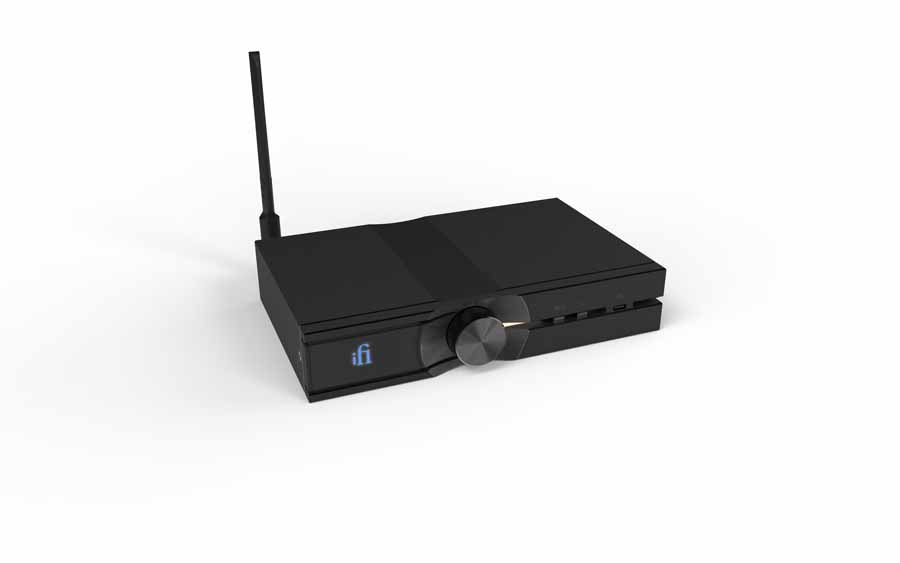
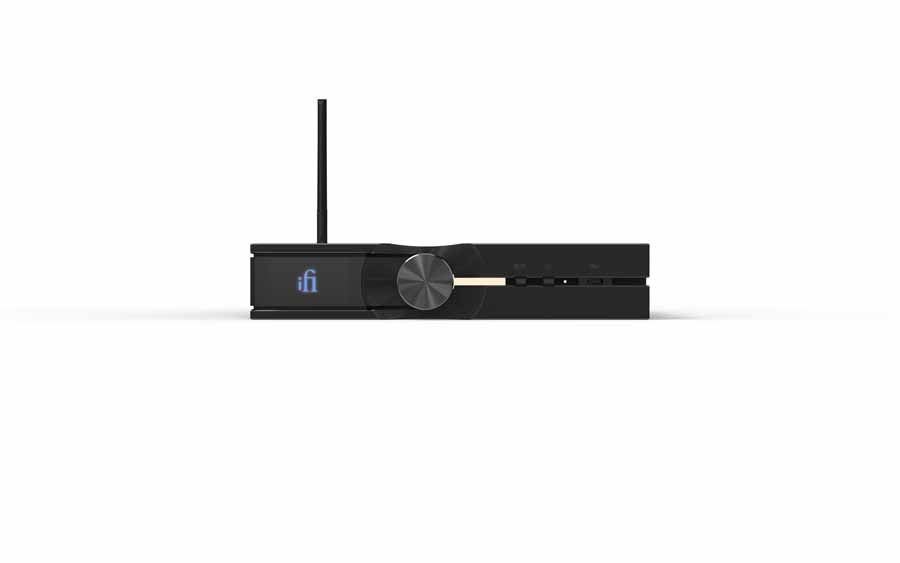
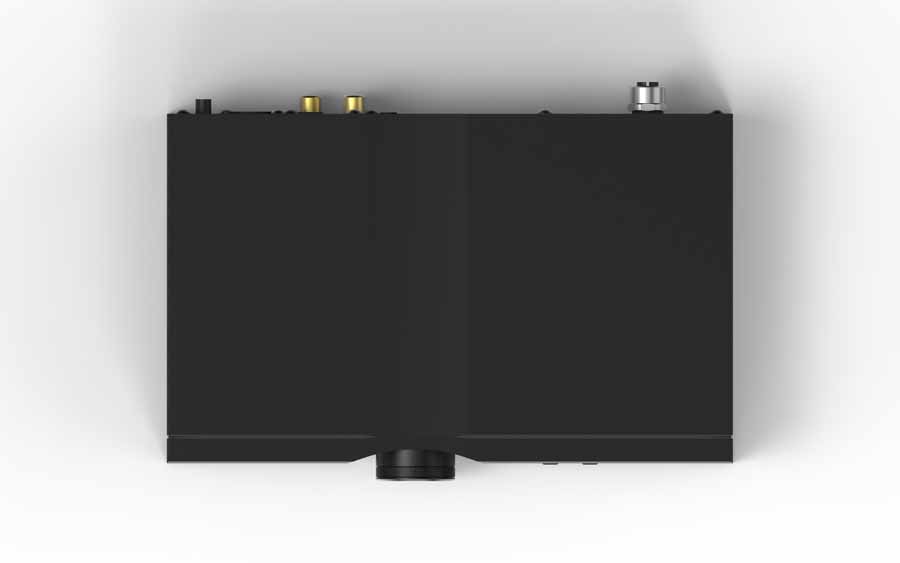
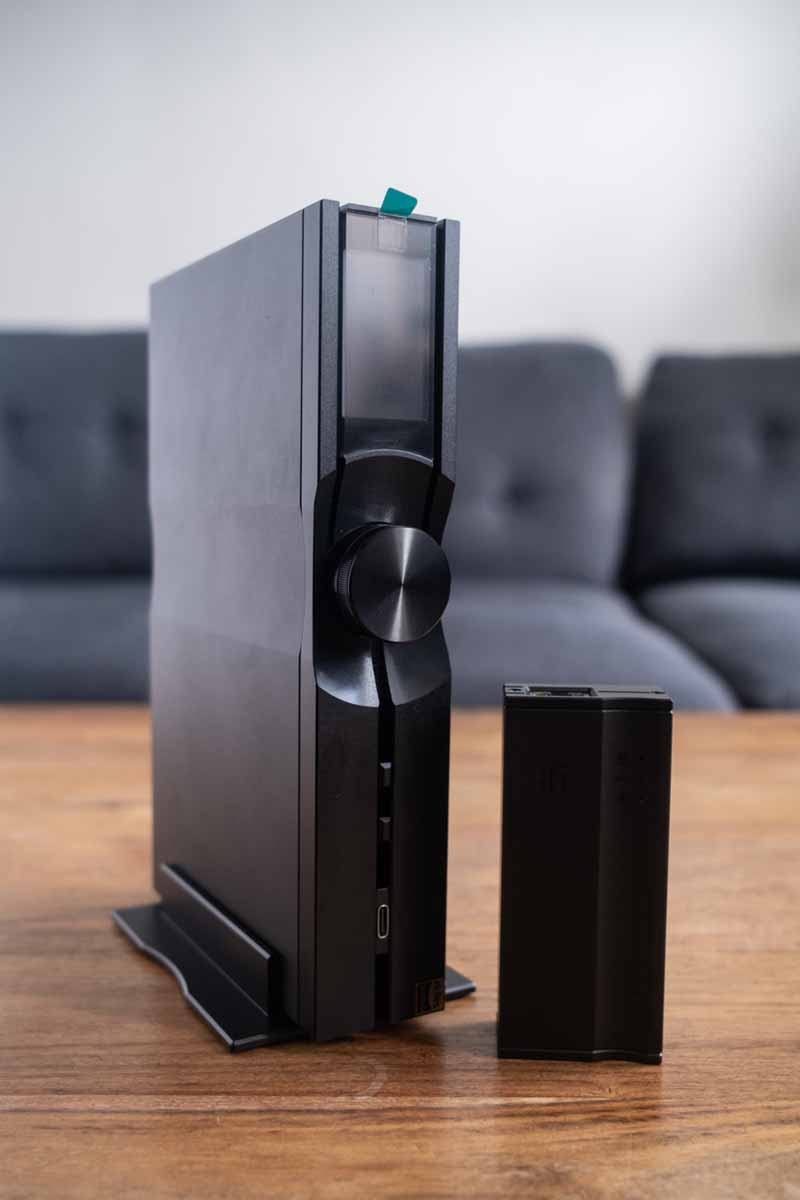
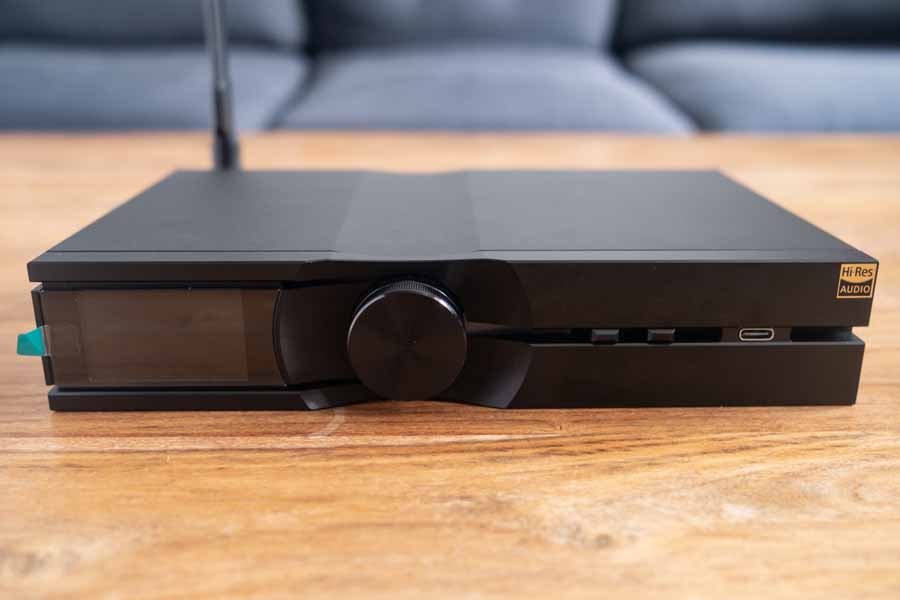
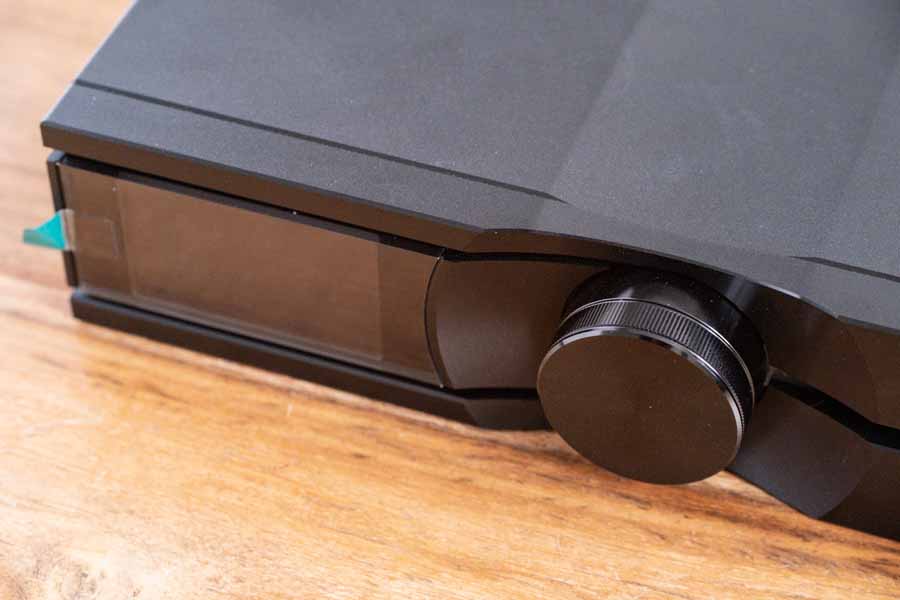
Firstly, the NEO Stream 3 is built in much the same way as the original, with similar casework and accessories, alongside a neat vertical mount. It does, however, now come in black instead of the usual iFi silver; it’s an aluminium chassis with a knob on the front alongside a few buttons, and inputs/outputs on the back (alongside a single USB-C on the front). The little screen is functional but isn’t really big enough to see well if you have this unit in a HiFi rack. Overall, the build quality is solid, and this is a well-made bit of kit.
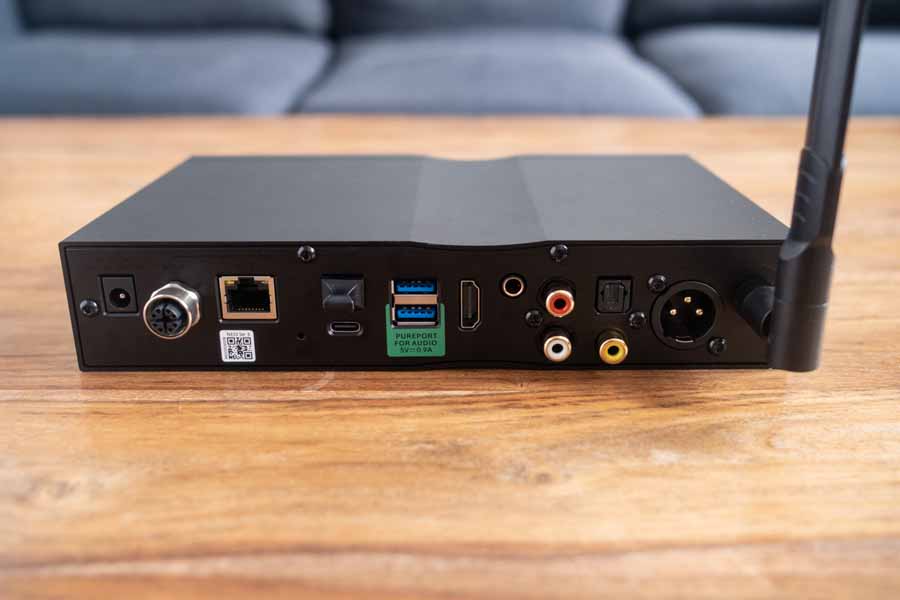
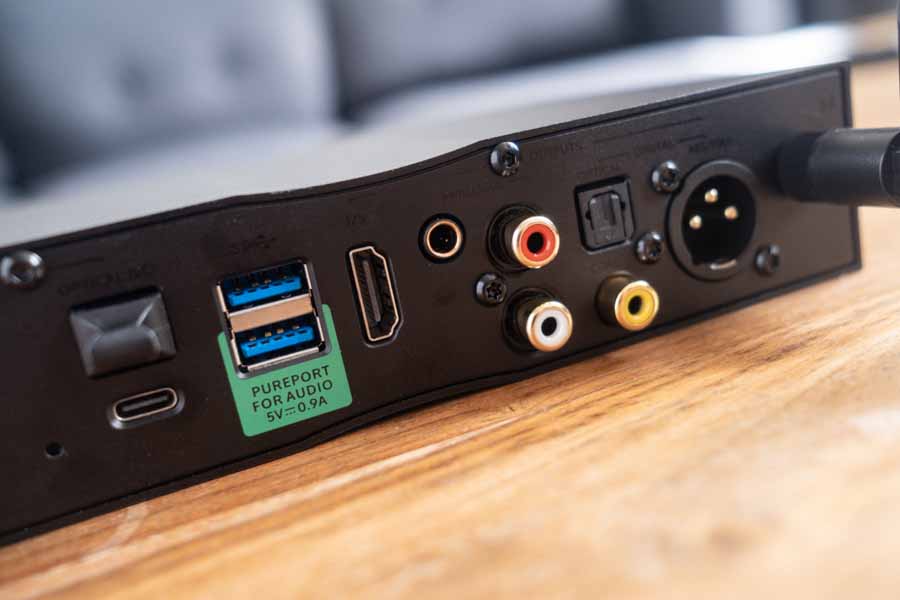
You have the power supply input on the back, along with network cable inputs (M12-X, RJ45, and Optical SC), 2 x USB-A ports, one for mass storage devices, the other for USB audio output, optical, coaxial, I2S, and AES digital outputs, along with RCA + 4.4mm balanced analogue outputs. This means you can use the NEO Stream 3 as either a simple streaming transport into a DAC of your choice, or you can use the internal DAC and run the analogue output into your amp of choice.
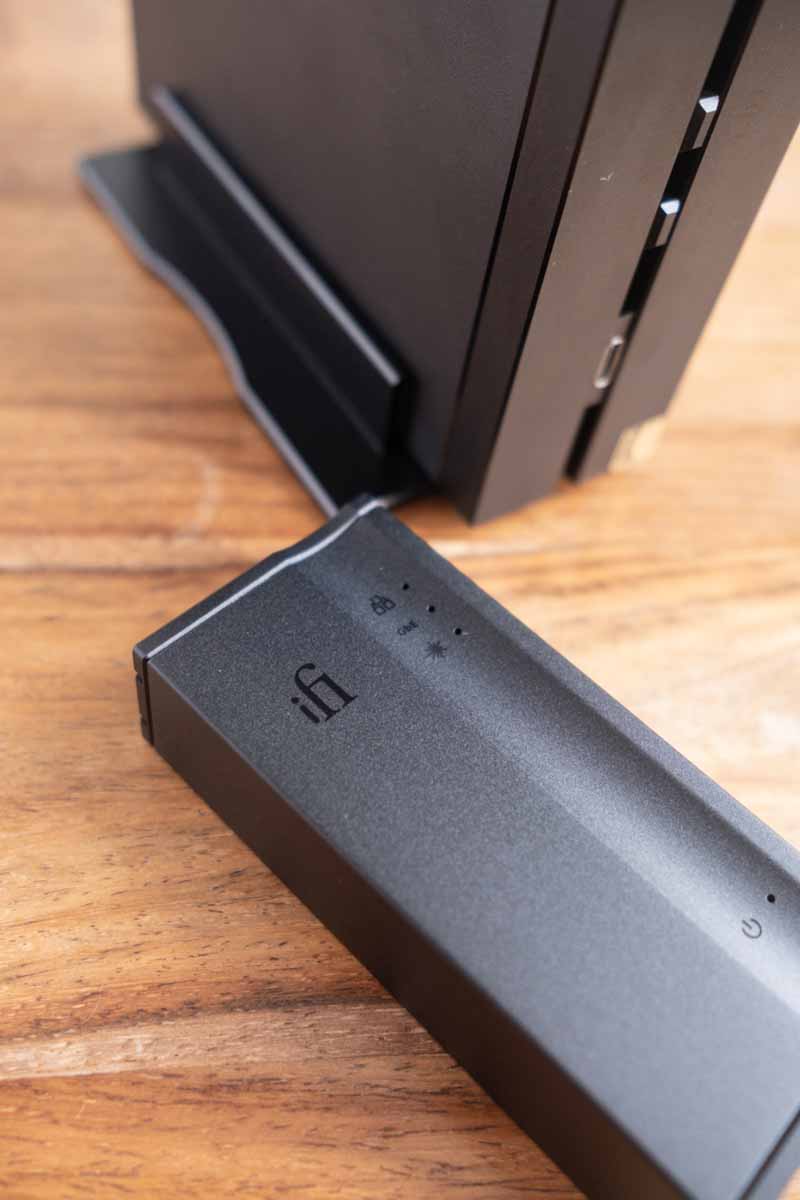
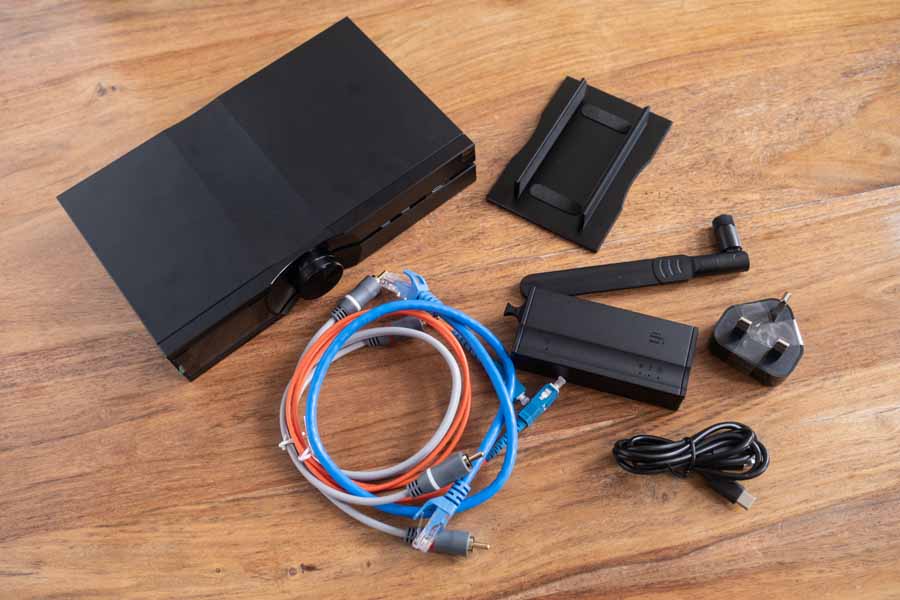
Accessory-wise, you get the iFi opti-box with this, like the original, which allows you to convert RJ45 into Optical SC for galvanic isolation. Personally, I don’t have too noisy a home network and haven’t found a huge uplift in sound quality using this; however, I do appreciate it may bring a nice upgrade in sound quality to some. You also get the WiFi antenna, power supply, simple RCA cable, adhesive feet, RJ45 and SC optical network cables, and the vertical stand mount. It’s always good to see a product ship with a decent power supply, and this one comes with the iFi iPower X low-noise power supply.

One thing about the original NEO Stream was the lack of a proprietary app; the new one is similar, yet iFi have revamped this unit with a custom Volumio 3-based firmware, and it now links to their revised Nexis app. This allows for easy firmware updates, streamer control, and setting accessibility. Still, it works without this app and supports all the usual connection methods, alongside DLNA, Roon and more. It has full DSD512 and PCM 768kHz support over network streaming, and also incorporates the JVCKENWOOD K2 and K2HD tech (a slightly different filter than your usual); this filter is applied to both the analogue and digital outputs, which is quite interesting. It does have the standard digital filters for the internal DAC too, including standard, bit-perfect, GTO, and Minimum Phase – each bringing subtle sound differences to the analogue output.
You can set this up to have adjustable output, so you can use it as a pre-amp should you wish. The NEO Stream 3 features the same DAC that is in the NEO iDSD 2, which is a Burr-Brown chip and supports full native DSD playback.
Setup was nice and easy; there is a slightly new way of doing this, and it is a huge improvement over the original – I did test it with both WiFi and wired network connections, and it was rock solid with both. I also did a firmware update via the Nexis app and didn’t encounter any problems.










One thing I will make a point to mention is that this is a streamer designed for music playback, and music playback alone. It does not feature extensive DSP options for EQ or room correction; instead, it focuses on providing a solid streaming foundation for your music, whether you use the internal DAC or not. It’s also quite compact, and fits neatly into most systems, making it very flexible in terms of where you can use it.
SETUP AND USE
I have been using the NEO Stream 3 in my main system, running fixed analogue output via RCA into the Keces S4 pre-amp, S300+ power amp, and Alchris TX-1 speakers – using mostly Tellurium Q cabling and a Puritan PSM156 mains conditioner.
I also used it running into the Cayin HA-6A MKII headphone amp, via RCA, running into various headphones.
I used Roon for the most part, with a mix of Qobuz streaming and local FLAC files.
SOUND QUALITY
I started out using the standard digital filter, and found the NEO Stream 3 to be quite a linear, yet still natural sounding streamer that has a lift in detail and depth compared to the original.
Take Gravity by With Confidence: vocals cut through with a great sense of bite and detail; the original NEO Stream erred on the warmer side of sound, whereas this new model has an uplift in detail and clarity. Snares are extremely tight and controlled, and the bass line is both articulate and precise; there is no overhang, yet it has body when called for. This is quite a transparent streamer, yet it doesn’t strike me as analytical either; it still has a sense of musicality that prevents it from straying into that territory. Everything in this track is easily separated; there is air between instruments, and they are well placed within the soundstage, yet it is delivered coherently and naturally. One thing I will point out, and it was the same on the NEO iDSD 2, is that the treble from this implementation of a BB DAC chip is fantastic, with plenty of air and crisp clarity, without a hint of fatigue.
The English Way by Fightstar also highlights this cleaner sound, with clear and neutral vocals and crisp treble without sounding overly emphasised. The bass through the NEO Stream 3 with standard digital filter is controlled and punchy; it comes out when called for yet remains reserved and tight throughout. It’s not as “romantic” a sound as the original NEO Stream, and for some may sound a little too clean when using the standard digital filter. The increase in detail and air between instruments is easily noticeable, and it retains the qualities of the NEO iDSD 2 (as mentioned, they use the same DAC stage), which is a fairly linear and clean-sounding DAC.
Turning on the K2 filter and the sound regains a subtle but pleasing warmth that brings it a touch more in line with the original NEO Stream. Those looking for a more linear sound will prefer this setting; however, those looking for a slightly more natural and easier-going sound will appreciate this setting. It takes away a little glare, and adds a subtle warmth to the midrange, and fullness down low, giving the sound a bit more body without taking away detail.
60 & Punk by Death Cab for Cutie came on with the K2 filter engaged, and it was a great track to highlight the small changes this filter brings. Vocals are a little fuller, and the snappy snares still retain their snap, with a slightly less aggressive delivery. The same goes for the cymbals; they still retain an airy presentation, with just the sharper edges smoothed ever so slightly. Personally, I do enjoy this kind of presentation. If you have warmer downstream components, then a more analytical sound may be more suitable; if you have a cleaner-sounding system, a slightly more natural source can work well. What I appreciate the most here is that the K2 filter isn’t drastically changing the sound; it subtly changes the sound to be a little more natural.
Changing it to the K2HD setting, which also upsamples the sound, brings a little more of the same; however, I feel that this mode retains a little more clarity over the regular K2 setting. The standard K2 setting adds a subtle warmth, whereas K2HD manages to add this whilst also slightly improving separation and soundstaging. Once again, it’s not a night-and-day difference; it does make a noticeable change to the sound from the NEO Stream 3 that allows you to pick the best sound for your personal setup. I’m not one to usually use upsampling settings, yet with the NEO Stream 3 I do think that K2HD is the sweet spot here, retaining an airy and spacious sound with warmer, fuller bass response, and a more natural mid-range.
A Deep Slow Panic by AFI came on with the K2HD filter engaged; the bassline is wonderfully articulate and full, digging down low with ease and excellent presence. Davey’s vocals are simply stunning, with plenty of detail and natural tonality, and the guitars are placed well within the soundstage; the separation is a highlight throughout. The treble is slightly smoother than without the K2HD filter engaged; this is a slight benefit on my system, yet cymbals still retain crisp transients and airy extension without any early roll-off. Overall, I found the sound to have a little more drive and slightly more engaging dynamics with the K2HD filter applied, whilst also giving the sound a little more body and reducing perceived glare/hard edges from notes.
The sound can be further tuned with the included digital filters, with the standard coming across as the most neutral, and minimum-phase sounding slightly more natural; this is without applying the K2HD settings. The standard, more neutral filter works well when running into the Cayin HA-6A MKII valve amp, for example, whilst putting the K2HD mode on when using it with my reference system was preferred. Using the digital output into the Matrix Audio TS-1 worked flawlessly; however, the internal DAC of the NEO Stream 3 is very well implemented – this does mean you need a very good external DAC to improve upon the internal one. As a digital streaming transport, it makes a lot of sense, though, as it comes in at a very reasonable price and features a lot of tech to reduce jitter and system noise, meaning you get a very quiet digital streaming transport for a sensible price.
QUIBBLES
If used for its purpose of streaming music, it works flawlessly and without issue. If you want something with all the bells and whistles, touchscreens, DSP and more – this really isn’t the streamer for you. Whilst iFi may not be ahead in terms of software, the NEO Stream 3 works flawlessly once set up properly.
CONCLUSION
Much like the original NEO Stream, iFi have gone for versatility with the NEO Stream 3, making it an easy streamer to implement in your system. Whether you use it as a streamer, streaming pre-amp, or streaming transport, it works reliably and sounds excellent doing all of the above. It does not aim to give you a lot of features; instead, it focuses on music playback, and the updated DAC stage gives it quite a neutral sound out of the box.
It has all the digital outputs to make it a superb digital streaming transport, whilst offering up a few filters to tune the output to your preference; some work with the internal DAC only, whilst the JVCKENWOOD K2 and K2HD filters work on the digital outputs too. I actually found the K2 and K2HD modes to be quite interesting, offering a slightly different flavour of sound that I appreciated in my cleaner-sounding reference system.
Overall, the NEO Stream 3 is a sensible update to the original NEO Stream, with a more detailed and linear sound than its predecessor, yet still managing to sound natural overall. It’s very much a background streamer, in the sense that they have not gone for a big touchscreen or tons of on-device controls. Instead, it benefits from simply integrating into your system and bringing out excellent sound from your streaming platform of choice.
AT A GLANCE

Build Quality And Features:
Solid casework, reliable connections, no proprietary app
Plethora of digital outputs, along with a well implemented internal DAC
Excellent low-noise power supply
Sound Quality:
Clean, and detailed out of the box
User selectable DAC filters allow fine tuning
JVCKENWOOD K2 and K2HD modes bring further sound tuning options
Value For Money:
For such a well-designed bit of kit, it’s rather reasonably priced and makes both a brilliant streamer, as well as a streaming transport.
It may not be as feature packed as some of the competition, what it lacks there, it makes up for in sound quality
We Loved:
Ease of use once setup
Tuneable sound
Excellent clarity and detail across the board
We Didn’t Love So Much:
May err on the analytical side with some systems out of the box, the tuning options greatly help here
Elevator Pitch Review: If you are the kind of person that wants a streamer that focusses on music playback, instead of colourful screens and multiple DSP options, the NEO Stream 3 is an excellent choice for the money. Its versatility is its biggest attraction, allowing you to either use the superb internal DAC that offers up a clean and crisp sound, or run one of the multiple digital outputs to a DAC of your choice. It doesn’t need any fancy app, and simply uses your streaming service or software of choice to control it.
It’s a fairly fuss-free device that simply gets out of the way and delivers excellent sound for a reasonable price, and for that reason, I can easily recommend this streamer – it does everything the original did, just better.
Price: £999

Oscar Stewart
SUPPLIED SPECIFICATIONS
- ANALOGUE OUTPUTS – 4.4mm Balanced, SE RCA
- ANALOGUE OUTPUT VOLTAGE – Balanced 4V RMS; SE 2V RMS
- DIGITAL INPUTS – Wi-Fi; Ethernet (RJ45, M12-X, Optical); 2x USB-A; USB-C (front)
- DIGITAL OUTPUT – 2x USB-A; S/PDIF Optical; S/PDIF Coaxial; AES/EBU; I2S
- DIMENSIONS – 214 x 151 x 41mm (8.4 x 5.9 x 1.6”)
- HI-RES SUPPORT – 768kHz PCM; DSD512 (22.6MHz)
- LIMITED WARRANTY – UK and US – 12 months* EU – 24 months*
- NET WEIGHT – 1.0 kg (2.26 lbs)
- OUTPUT IMPEDANCE – Balanced ≤74Ω; SE ≤37Ω
- POWER CONSUMPTION – ≤0.5W idle; 14W max.
- SNR – ≥106dBA @ 0dBFS
- SYSTEM UPDATE – USB-C (back)
- THD+N – ≤0.0025% @ 0dBFS
- POWER SUPPLY REQUIREMENT – DC 9V/2A; 12V/1.8A; 15V/1.2A (centre +ve)