
Rogers LS3/5A and AB3a Bass Unit
ROGERS LS3/5A and AB3a BASS UNIT REVIEW
Janine Elliot takes a look at Rogers’ classic LS3/5A along with the AB3a bass unit to enhance the lower-end performance of this iconic loudspeaker.
INTRODUCTION
When Andy Whittle, Rogers’ Head of Design, delivered the BBC-designed LS3/5a speakers plus his new AB3a bass unit, he knew I would be delighted to review them. After all, I had spent many years at the BBC listening to speech and music on the tiny two-way speakers that use the iconic KEF B110 110mm bass/mid Bextrene cone (originally developed in 1966, usually the SP1003) and T27 27mm Mylar dome tweeters (from 1967, also known as SP1032).










The LS3/5a is perhaps the best known of all loudspeakers and has been in production since 1975. Only the Morgan 4/4 has remained unchanged longer, from 1936 to 2018. The big problem with it is that it is so diminutive that the bass-end has always been weak, even when tucked up against a wall. Hence Andy has designed the new AB3a subwoofer, which also acts as a stand for the LS3/5a.
The bi-wired review sample of the LS3/5a sent to me comes in at £3,504, plus £3,199 for the AB3a. In the last century, the BBC designed their own speakers as it just wasn’t satisfied with the inconsistencies between identical models of speakers in the shops. People like Dudley Harwood (who later left to create Harbeth) and Spencer Hughes (who, with his wife Doris, created Spendor) were responsible for creating speakers at the BBC Kingswood Warren site that would satisfy both big studios (speakers labelled LS5/) and mobile recording vans (speakers with LS3/ nomenclature). In my early days at the BBC World Service, we had one of my favourites, the LS5/5 (i.e. fifth iteration of studio speaker), and for small studios and editing suites the iconic LS3/5a. I own an original Chartwell LS3/5a, which I use in my second music room. The Chartwell is often considered the best of them, as it has a better bass end.
HISTORY LESSON
The LS3/5 design began in the late 1960s and finally hit the BBC OB (outside broadcast) vans and small rooms in 1972. Rogers Ltd, meanwhile, had begun way back in 1947 building some iconic amplifiers, tuners and loudspeakers. With the original name Rogers International Ltd., their RD Junior, Ravensbourne, Ravensbrook and A75 amplifiers were great in their day. The company also built the 15-ohm (apparently also 8- and 25-ohm) Rogers BBC Monitor Loudspeaker in 1972. This was often incorrectly referred to as the LS3/6 but was actually built afterwards, and whilst looking similar, the Rogers was their own design. Indeed, Spencer Hughes designed the 3/6 (basing it on a smaller two-way version of the larger 3-way 5/5), but before it was ready for use, he left the Corporation to set up Spendor, and then finished it there, where it became the iconic BC1. The BBC meanwhile then continued to develop the two-way 3/6 with the help of now ex-BBC Spencer Hughes, and Rogers built them for Aunty. Interestingly, there ended up being more BC1s at the Beeb than LS3/6s! After that, Rogers built the Export Monitor, a mod on the LS3/6s so they would be suitable for the home market, which added a super-tweeter. In those days even the LS3/6 speakers (about 56 litres) were considered “small” speakers. The 15-ohm LS3/5 was so tiny when it came out (about 5 litres!) and was initially built in-house at the Beeb, with perhaps a total of 10 pairs in total. Its crossover design has had much debate over the years, with its complexity and unique frequency curve with a bulge in the mid-bass, and consequently has a very low 82.5dB/m/1kHz sensitivity. It was designed for speech and vocals really, so deep bass wasn’t quite so important to them, which is just as well. The careful design and critical testing also meant that you could get each speaker sounding the same as the very next one, something unheard of in the early days of domestic HiFi speakers, but vital for broadcasting, just as the “supertweeter” was later added on the Spendor BC1 to detect 625-line TV noise (and more importantly for avoiding purchase tax that was on non-professional products!) The BBC found that they had to refuse using many of the drivers for the LS3/5 as their specification just wasn’t good enough, necessitating a tapped autotransformer in the crossover with no less than 7 different possible settings, so you could match the tweeter level perfectly.







1975 was an important year. For a start, Jim Rogers, founder of Rogers (obviously), left the company that year when it had to be taken over by Swisstone. He created the JR149, a cylindrical version of the LS3/5a, which, being actually larger (38cm x 23cm diameter, as opposed to the 30cm x 19cm x 16.5cm of the LS3/5a), meant it had a bit bigger bass. I almost bought a pair as a child as I lived just 100ft from their factory. That same year, the BBC LS3/5 was modified. This was necessary because the supplier KEF had changed the design of the drivers. This resulted in the renamed LS3/5a. The famous rectangular felt strip was added around the tweeter to stop diffractions at the edge of the baffle that affected the sound, and the bass/mid driver had a new Gromex gasket around the edge where it fitted to the baffle to reduce colouration. Most importantly, the 9mm birch plywood cabinet plus lower-quality spruce plywood rear box was increased to 12mm birch wood all round. It retained the 15-ohm impedance. Now that the Beeb needed more speakers built, they offered the excellent 3/5a to be assembled on-license from other manufacturers. Initially, Rogers (who produced by far the most), then Audiomaster (parent company KJ Leisurecentre), Chartwell (started by an ex-BBC engineer but after difficulties were taken over by Rogers in 1978), RAM, Spendor, Goodmans and Harbeth were chosen. The change to 11-ohm LS3/5As came in 1987 after the BBC re-examined inconsistencies of the drivers. Ironically, even KEF produced 4000 LS3/5a’s in 1993. Later, other manufacturers gained licenses from the BBC, such as Stirling Broadcast, Falcon and Graham Audio. Even Linn built their Kan speaker from cabinets they picked up, and some unlicensed and lesser LS3/5a’s have also appeared from the Far East, of course. In 1981 and 1985, respectively, Rogers also started production of the LS5/8 (now with an improved polypropylene bass driver) and the LS5/9. They were again taken over in 1993 by Wo Kee Hong Holdings, but that year production of the LS3/5a stopped. Indeed, in 1998 Rogers stopped making speakers completely, though the new owners kept the name. However, in 2008 “Rogers” rose once again from the ashes, and again makes LS3/5As, but as KEF had stopped making the famous B110 and T27 drivers for it in 2003, all LS3/5a manufacturers now needed to either find appropriate drivers or make identical ones for it to retain that distinctive sound. Even when in production, the B110 stock wasn’t as consistent as they hoped, making it hard to get identical pairs built. One reason was that the Bextrene material for the cone of the B110 didn’t always have an accurately precise thickness. As Bextrene was normally used conversely for deadening sounds in the automobile industry, it didn’t actually need to be quite so precise.
Andy Whittle has had an enviable career in the audio business. He began at Goodmans in 1985 (where he made the Mkii Maxim), Celestion (making large 12” cones for guitarists), Mordaunt Short, and then in 1992 he joined Rogers as Technical Director. There he designed the AB1 subwoofer for the LS3/5a to improve its bass weakness, amongst other speakers. Jim Rogers had similarly, back in the late ‘70s, also created a larger cylindrical subwoofer, the JR Sub, for the matching JR149. This wasn’t so successful and is now very rare. Andy left Rogers in 2000 to run Exposure for 6 years (interestingly, their address is ‘Chartwell’ Road in Lancing), was a distributor for Akai and Nakamichi in Europe, and joined AudioNote in 2009. In 2018 Andy was contacted by Wo Kee Hong Holdings to build a 70th anniversary LS3/5a, and Rogers began making their iconic loudspeakers once more, including the LS5/9s and, very recently, returning an LS5/8 development originally from the 1980s, the PM510 S3. Building on from Andy’s passive AB1 sub from 1995, he has also now introduced the Class B active AB3a dual 5” drive subwoofer, which also, like the elder AB1, acts as a stand for the LS3/5a. As the AB1 was such a long time ago, Andy decided not to have an AB2, as the “3” and “a” also fitted nicely with the LS3/5a nomenclature.
BUILD AND FEATURES OF ROGERS LS3/5A and AB3A
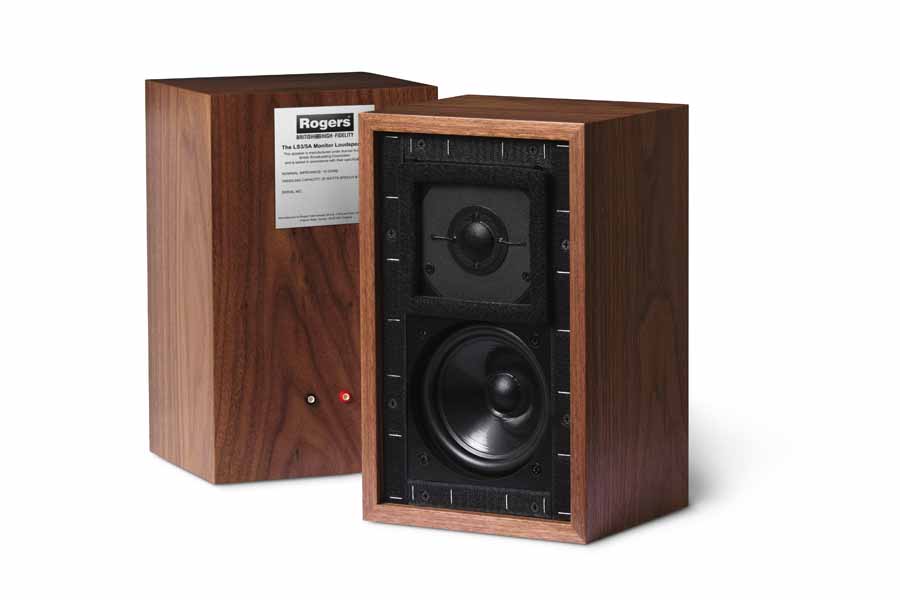
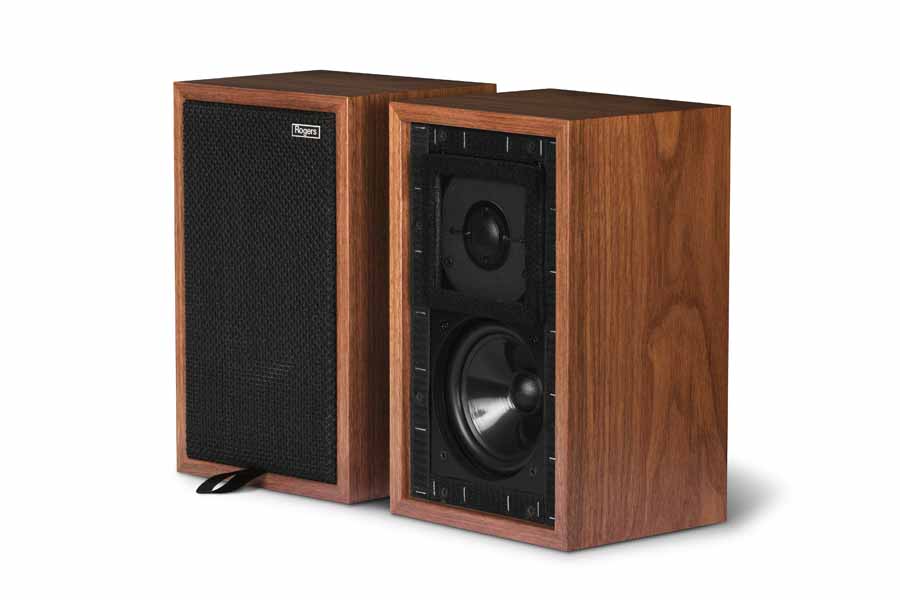
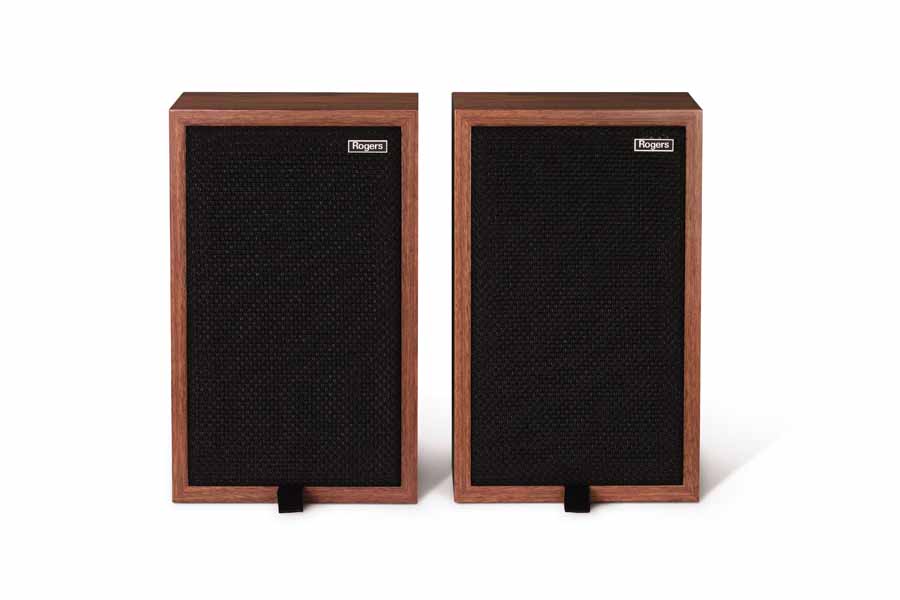
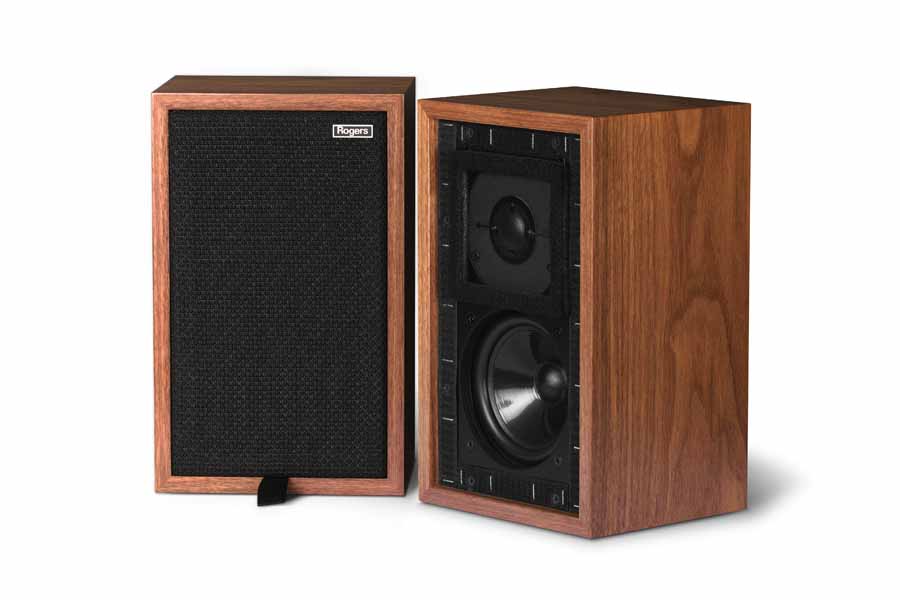
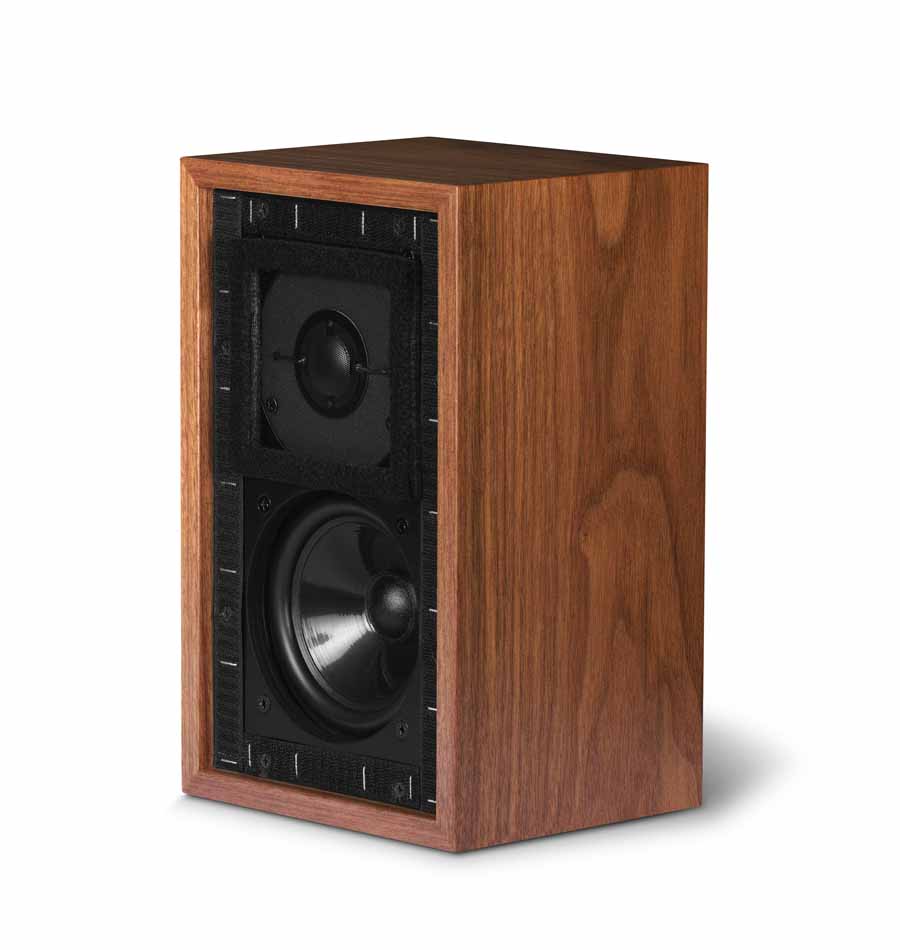
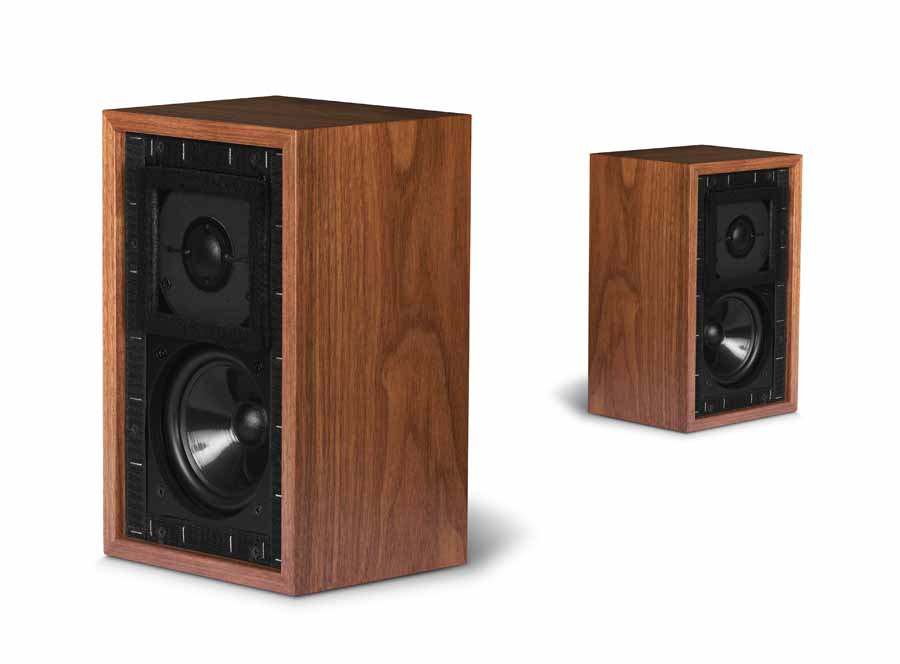
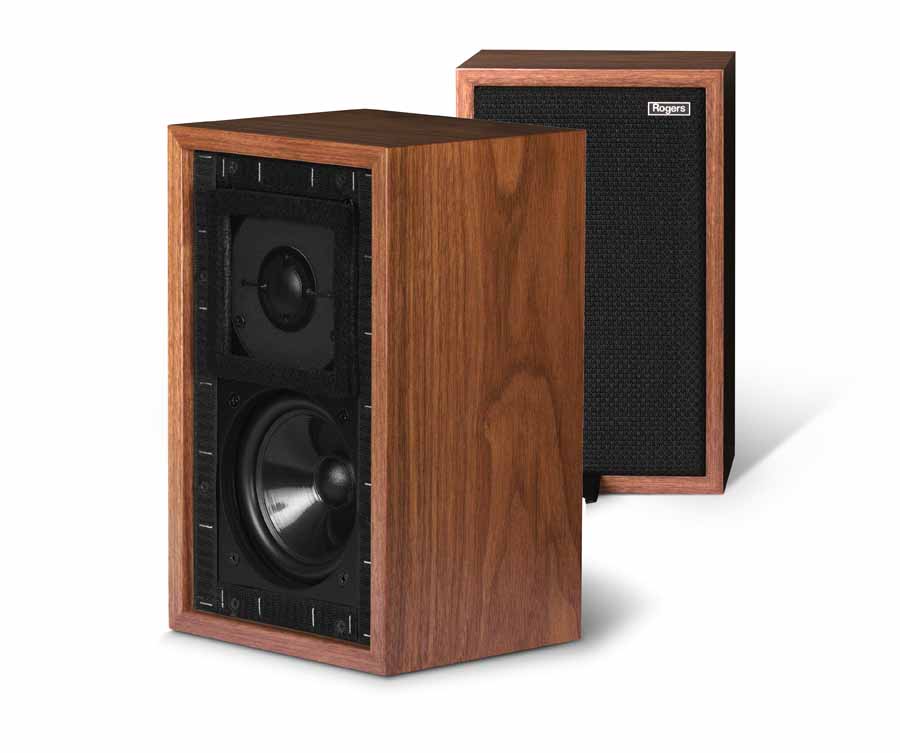
Both speakers arrived in a beautiful satin black finish, though the 3/5a is also available in Walnut, Olive, and Palisander (Rosewood). Custom veneer and RAL finishes that match your handbag are also available at additional cost. Both have a removable Tygan grille to protect the drivers – on the 3/5a it’s held by Velcro as in the original, but the AB3a uses more modern magnets to hold it in place. The cabinet is critically damped using 12mm birch ply with hardwood beech fillets to keep it together. As Andy told me;
“The cabinet is glued and strapped under tension. The 12 mm panel is thin and has a higher resonance than a thicker panel, and stores less energy, and is then damped with a damping pad, so minimal cabinet colouration.”
The woofer and tweeter have been reverse-engineered by Andy and are made in Taiwan – the drive units come to the UK, where they are modified. The tweeter has a Mylar dome with kraft Nomex voicecoil former, and the bass has a doped Bextrene cone. Internally, the complicated BBC-designed crossover includes laminated transformer-cored crossover inductors plus an autotransformer (for the tweeter’s accurate level-matching of each pair of LS3/5As). All soldering is via silver solder. There are also metalised high-voltage capacitors. Each pair’s measurements are recorded and stored against its serial number, just in case a new driver is required if you over-drive the unit. The original was designed for a 25W nominal load, but the Rogers can work to 80W without issues. The review model was 15-ohm, so I felt it would be interesting to do a comparison with my own 15W Chartwell. As expected, the Chartwell had more bass, but surprisingly the top end was extended a few more kHz. Where the Rogers was faster and had quicker transients and more detail, my elderly version was still extremely musical and enjoyable.
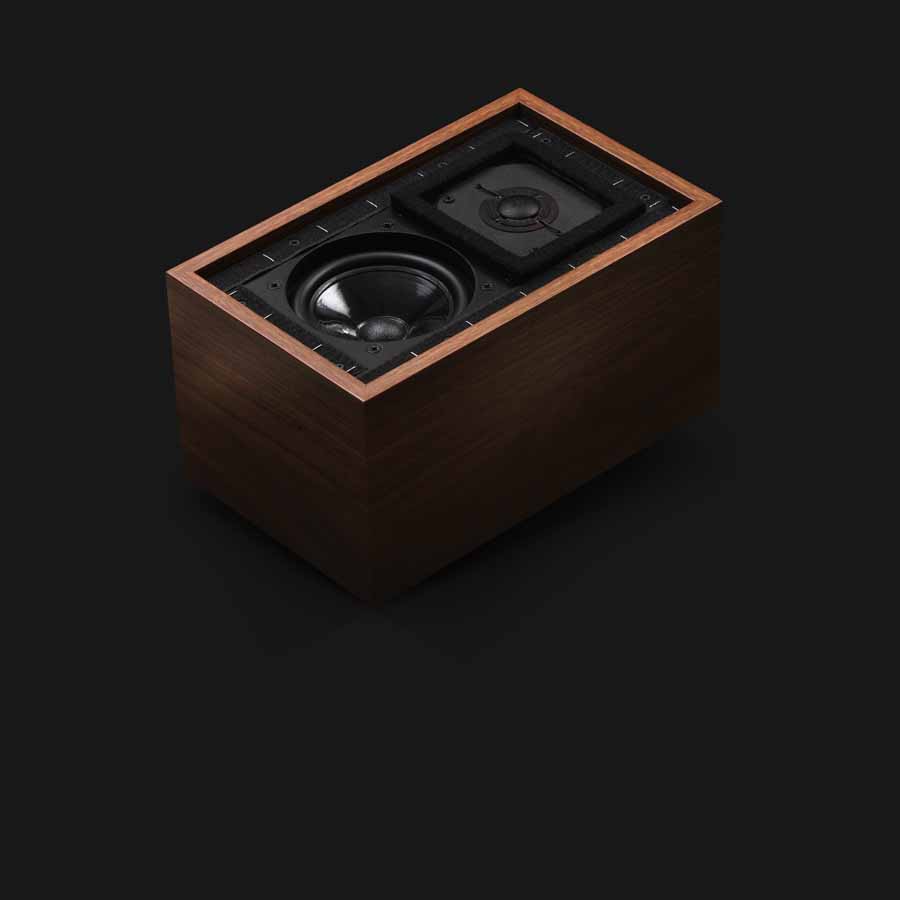
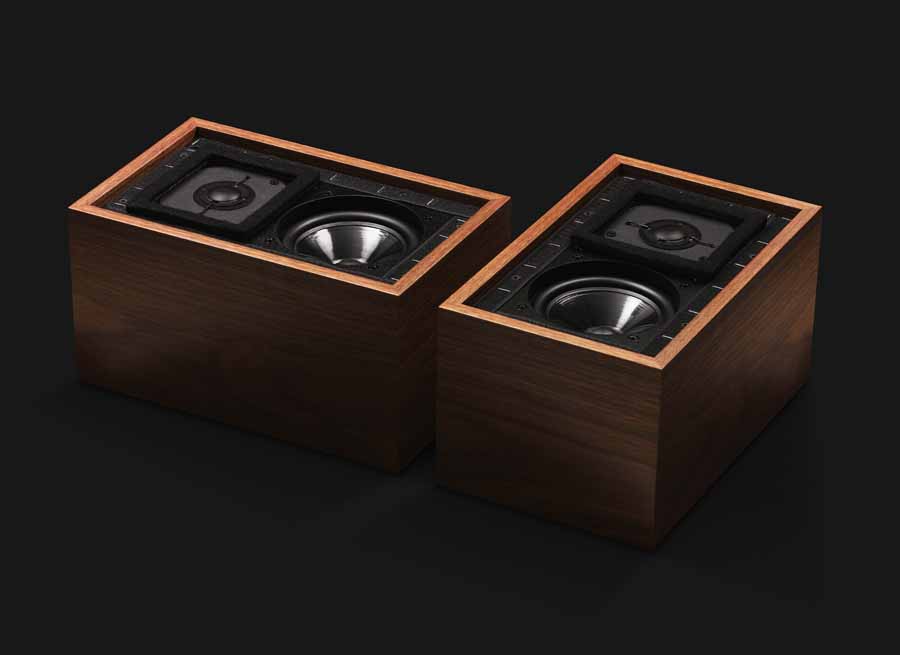
The AB3a is also an infinite baffle design, so no tuned port, and contains a 50W Class B amplifier from BK Electronics, a reputable manufacturer of subwoofers themselves. With two rear-facing bass drivers taken from the 3/5a, they are tuned to 80Hz using a specific resin to lower the resonant frequency and stiffen the Bextrene cone. As Andy informed me;
“For the AB3a woofers, we use 2 x 5-inch to double up the cone area, but 5-inch woofers do not have a very low resonance, so we mass-load the woofers with 5g of mass to lower the resonance. They are then closed-box loaded, which means the LF below resonance rolls off at 12dB per octave, as opposed to 24 dB for reflex loading.”
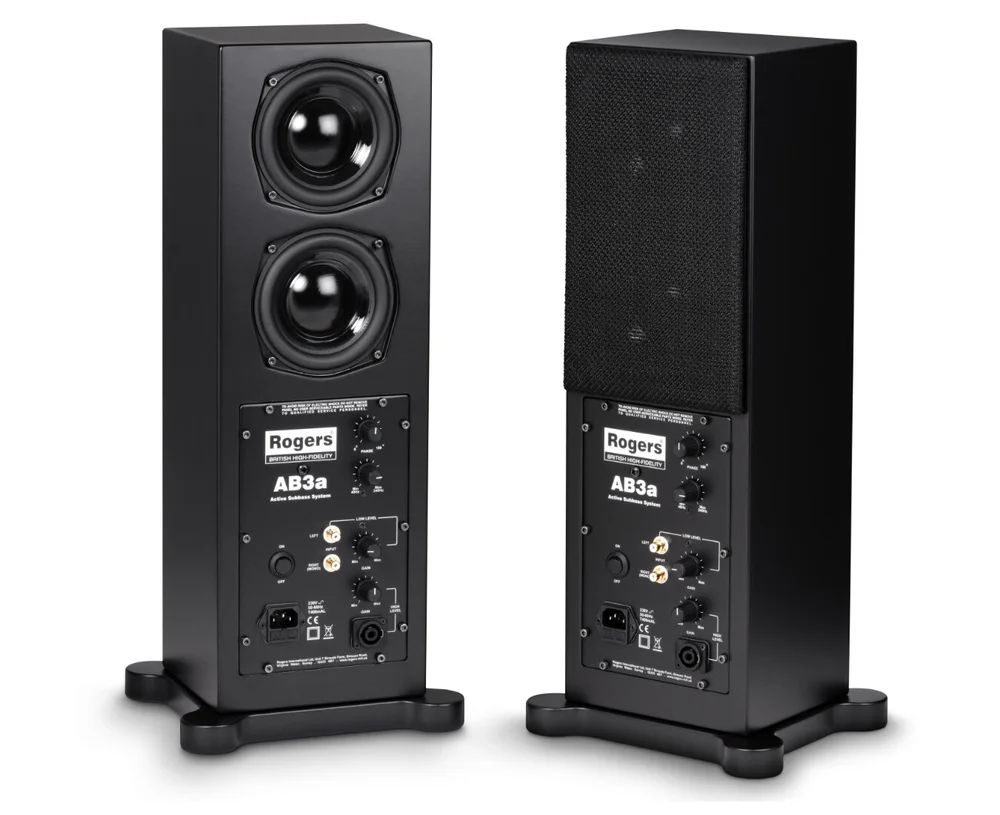
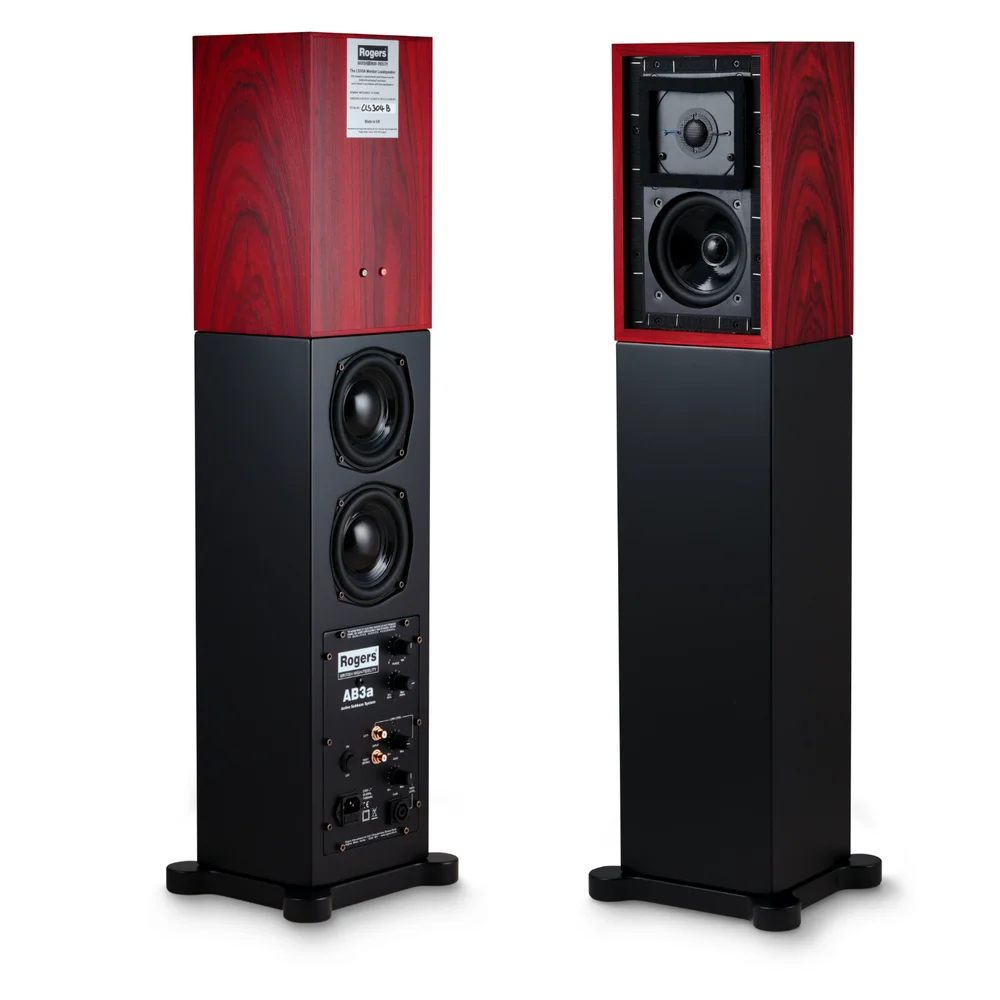
Indeed, in listening I was surprised just how deep the bass went from 2 little drivers, though having small drivers also improved the transient speed and the detail. My aged Meridian M2 powered speakers also use two KEF B110’s, though with the larger T52 tweeter sat between them. The bass always felt a bit unreal and not extended, despite the clever internal electronics, but the AB3a really did give me the bass to make me think I was more likely listening to my larger Graham LS5/9s. Where the Meridian was minimalist, the AB3a is full of controls and connection options at the rear. Each amplifier has a gain control (remember to set it like you would any subwoofer; below the point that it sticks out!), a frequency cut-off knob (40Hz – 240Hz) and a variable phase response from 0 to 180 degrees. Depending on the position of the unit and the 3/5a in your room, you may well need to alter this knob to get the best sound. The suggested connection is high-level direct from the LS3/5a via a supplied cable connecting to the LS3/5a terminals at one end and a screw-mount Speakon connector at the other. It was handy for this having the bi-wired version of the LS3/5a. Alternatively, low-level outputs from your amplifier can be connected to the RCA inputs, again with its own volume control. The AB3a comes with matching plinths and spiked feet, and will work with any LS3/5A speaker system, both the 15-Ohm and 11-Ohm versions, and from any manufacturer, too.
SETUP AND USE
Bearing in mind these were 15-ohm speakers, care needed to be taken in order to get the best sound. Initially using my Krell KAV250a amplifier was not so successful. This 500W/4ohm amplifier works best at 2-6 ohms. Luckily, I also had KT88 Synthesis monoblocks, A Slee SS amplifier, and my aged Leak Stereo 20 EL84/ECC83 power amplifier that I could set to 16 ohms. Setting up was very easy, but it is important to spend time adjusting the gain and phase controls on the subs. Sources were from CD, streamer and vinyl. For the review, I removed the Tygan grille on the LS3/5a. Interestingly, I did a pink noise test with it both on and off, and the results weren’t exactly identical, just as I expected. The BBC voiced them to have the grilles to be left on, probably for protection, too!
SOUND QUALITY
“Moving”, from Kate Bush, got my listening on a roll. The top cymbal detail was as only the T27 could do; detailed, precise, and organic. Similarly, the extreme detail of positioning and detail of the instruments showed why this speaker was so important for the BBC recording engineers. “The Saxophone Song” was very poignant in its delivery of all the necessary bass and treble, though the guitars did show somewhat the iconic mid-frequency lift. Playing King Crimson’s “In the Court of the Crimson King” illustrated, though, why big bass drivers are really needed to play this kind of music, and similarly the Krell was obviously not the best choice of amplification; it is vital to choose your amplifier carefully with 15-ohm or 11-ohm speakers. Graham Slee once designed amplifiers for the BBC and his Proprius mono-blocks worked wonders, but it was when I partnered the 55-year-old design with my rebuilt valve Leak Stereo 20 from 1958 that suddenly everything came together. Older HiFi designs are often still worth your attention. Now, even with volume from my MFA passive preamp halved (the Leak was designed when inputs were lower tape/tuner sensitivity), the music became completely organic and with great phase coherence.
Andy Whittle recently brought back the 1995 Class-A 6L6 valve E20a amplifier that was indeed designed for these BBC speakers, now in its E20a/ii version. The LS3/5a is so detailed, and instruments are perfectly placed for the BBC engineer to adjust and perfect his sound engineering.
Grace Jones “Don’t Cry – it’s only the rhythm” placed every instrument or noise in its own specific place and all with extremely fast transients. Beethoven’s “Ode to Joy” from his 9th Symphony (The LSO) really does work its best, positioning all the string and wind players into their specific seats. Wendy Carlos’s version of this, from the film “A Clockwork Orange”, really does make the loudspeaker duo excel, even with the awful hiss in the background from this early multitrack recording. The top frequency synthesiser notes really sounded razor sharp. Christopher DeLarge’s version of Beethoven’s 9th fourth movement keeps to the Wendy Carlos style, and with great detail and speed, especially in the top frequencies.
Wendy’s “Main Title” from the film “The Shining” (a film also directed by Stanley Kubrick) takes its theme from an ancient 13thcentury Gregorian chant. The opening deep melody comes across with great authority on the tiny 5” bass duo. The scary nature of the film music is brilliantly constructed on the wide and deep soundstage to almost give me the intentional heebie-jeebies.
Her “Funeral of Queen Mary March” from “A Clockwork Orange” trance remix by Gonzalo Schafer Canobra similarly shows strongly the tight transients and excellent soundstage afforded by the LS3/5a, and even though I don’t normally like to listen to this type of music, I really was now affixed. Just because the speaker design is old doesn’t mean you need to play old music.
I wondered how piano music might sound, so I listened to a solo piano version of “Orange Mecanique” from François Mardirossian. The bass certainly didn’t sound mechanical. With thick textures and moving chords, the detail of each note therein was surprisingly clear. That was similar to the piano accompaniments in Kate Bush’s ‘Aerial’ album. The “Aerial Tal” track contains lots of great blackbird sounds that she had recorded near to her home. She joins in with their beautiful tune with exquisite accuracy and affection. The cover of her album actually contains the waveform of the bird’s song, looking like mountains reflected in the waters.
Beethoven had also “recorded” bird sounds he heard in the Vienna countryside, though of course he would have had to jot them down on manuscript. The end of the 2nd movement of his beautiful Pastoral Symphony contains the bird songs of the quail (on oboe), the nightingale (on the flute) and the cuckoo (on clarinet). Each one of these instruments has a different tone, and the speakers made this ever so clear and as lifelike as only Beethoven knew best. The Beatles’ “Blackbird” song also has a slowed-down recording of the bird for Sir Paul McCartney to play guitar along to. With a tight footbeat on the right and guitars hard left and right, this was a very tight and memorable performance. The strong bass rhythm on the 1st, 4th and 7th half-beats of Jennifer Barnes’s “Bird on a Wire” was especially clear and agile, and I simply forgot that these were just 5” drivers. The sound had great phase coherence and depth. Even the lowest octave D# from the organ pedal keyboard on Nicholas de Grigny’s “Récit de Tierce en Taille” (DOR 90134) was as good as I have ever heard it (19.45Hz; so the AB3a does get down to the first harmonic, 39Hz, with ease!)
QUIBBLES
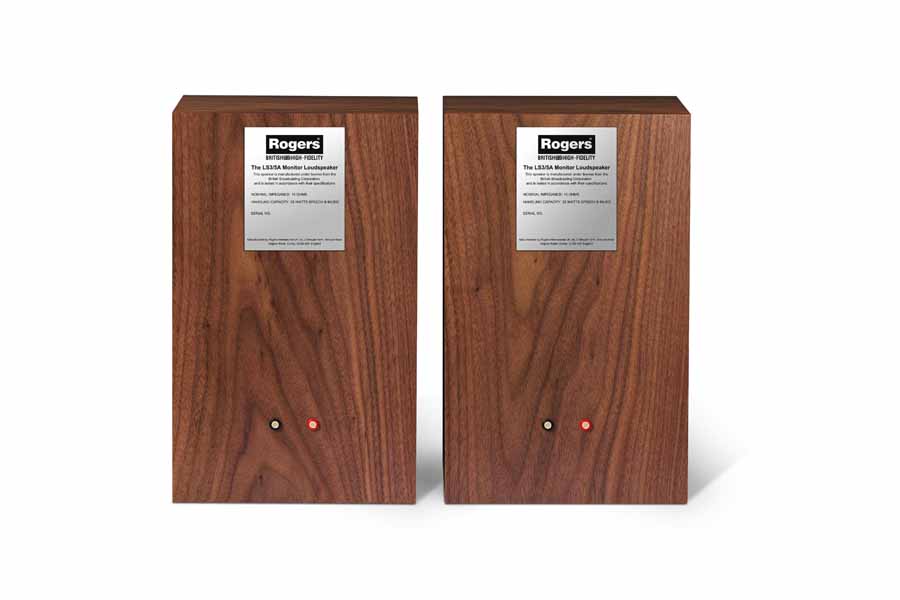
There are so many versions of the LS3/5a from Rogers, as well as other manufacturers, so there is a big choice! The single-wired versions from Rogers have recessed connections at the back which could make connecting the wires from the AB3a’s Speakon connectors just that little bit harder.
CONCLUSION
It’s hard to fault an almost 60-year iconic loudspeaker design when we already know it was flawed, but I had nothing but smiles putting this speaker through its paces, and with the AB3a added really gives it all that it has missed in those years. Do spend time setting it all up properly, and also selecting the correct amplifier. With so many variants of the LS3/5a, including 11- and 15- ohm, single and bi-wired, it can seem a bit of a jungle. But once you make terra firma, then the partnership of the Rogers LS3/5a and AB3a could well be a marriage made in heaven.
AT A GLANCE

Build Quality and Features:
Very well constructed and great features on the AB3a sub
Sound Quality:
Typical as I would expect from a LS3/5a
Great speed and detail
Value For Money:
The bi-wired version is well worth the additional outlay
We Loved:
Excellent positioning and detail of instruments
Great depth
Convincingly good sub for the price
Lots of adjustments in the AB3a
We Didn’t Love So Much:
Could be just a little too detailed
Elevator Pitch Review: When Porsche began their long-lasting 911 in 1963, they quickly realised that it needed development over the decades. After all, who would put a Beetle air-cooled engine at the back behind the rear wheels? At least MG put the F’s engine midway! Of course, the 911 is so much better now, with developments to improve its ride, speed, stability and looks. The LS3/5 design was similarly flawed, requiring a highly complex 13+ element crossover to make up for errors in the bass and treble drivers and resulting in very low sensitivity. It just isn’t perfect, but it is my favourite small speaker because of its detail, soundstage and musicality. Luckily, all the licensed manufacturers of this BBC icon haven’t been allowed to change its sound, though with improved crossover designs and different drivers, there are actually audible differences. One of its limitations has been its bass end, but Andy Whittle, Head of Design at Rogers, has now brought out the AB3a sub to make this baby sound more grown up.
Price: LS3/5a: £3,254 (single wired); £3,504 (bi-wiredd)
AB3a: £3,199

Janine Elliot
SUPPLIED SPECIFICATIONS
LS3/5a LOUDSPEAKERS
· System type: Two way infinite baffle
· Frequency response: 80Hz-20kHz +/-3dB
· Nominal Impedance: 15 Ohms
· Bass/midrange: 110mm Bextrene cone
· Tweeter: 19mm Mylar dome
· Crossover frequency: 3kHz
· Sensitivity: 82.5dB/W/m
· Finish: Walnut, Rosewood and Olive
· Grille: Black Tygan
· Dimensions: 305 x 190 x 165mm (HxWxD)
· Weight: 4.9Kg (each speaker)
· Recommended amplifier range 30-80 Watts
· BBC-licensed LS3/5A
AB3a SUB
. Woofers: 2 x Rogers Mass loaded LS3/5A woofers per AB3a
· Amplifier: 50 Watt Class B transistor amplifier
· Frequency cut range: 40Hz-220Hz
· High level: Speakon gain input (lead supplied)
· Phase control: 0-180 Degrees
· Standard Finish: Satin Black
· Rear Grille: Black Tygan
· Dimensions: H 60cm x W19cm x D16.5cm
· Weight: 11Kg (each AB3a)