

Luxsin X8 Headphone Amplifier
LUXSIN X8 DAC/HEADPHONE AMPLIFIER REVIEW
Luxsin is the sister company of Eversolo, and they make headphone-oriented products more for the desktop market. Their first model was the X9, an AKM-equipped powerhouse with an R2R volume control, coming in at £989. Earlier this year they announced the X8, a slightly more affordable device, at £699, incorporating Cirrus Logic DAC chips, DAC-controlled volume, and an intriguing AI-assisted parametric EQ built in.
The X8 is what I am looking at in this review; on paper it offers up a lot of features for the asking price, but how does that translate to real-world use?










BUILD AND FEATURES OF LUXSIN X8
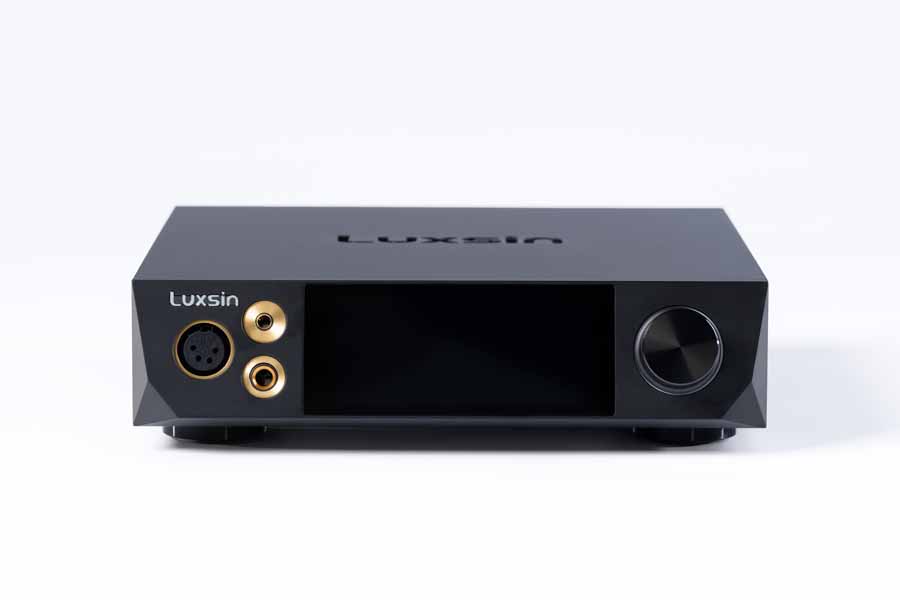
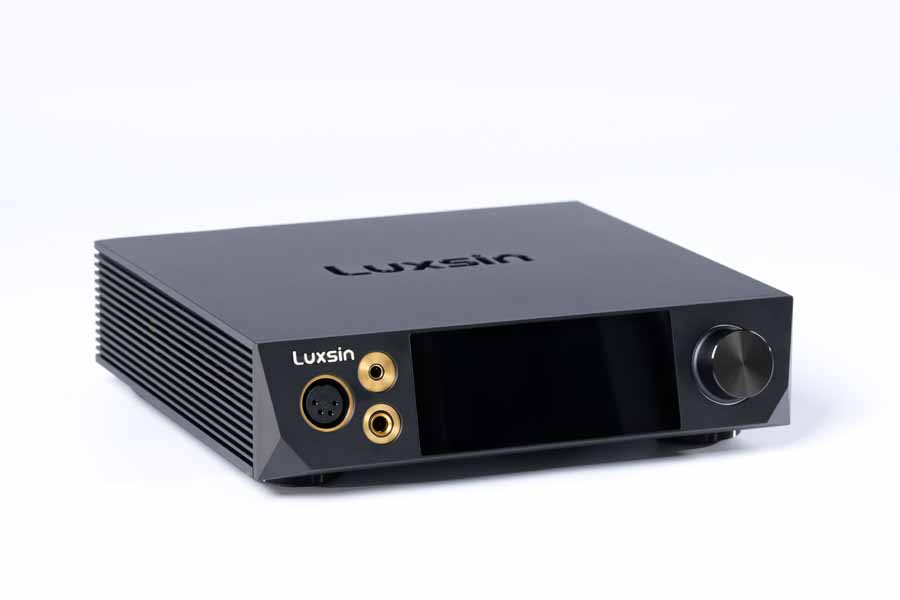
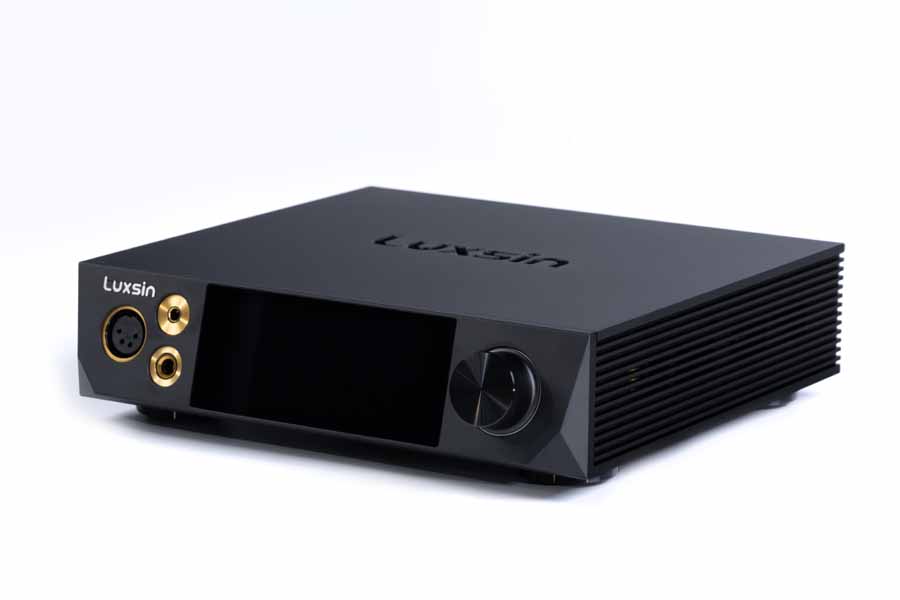
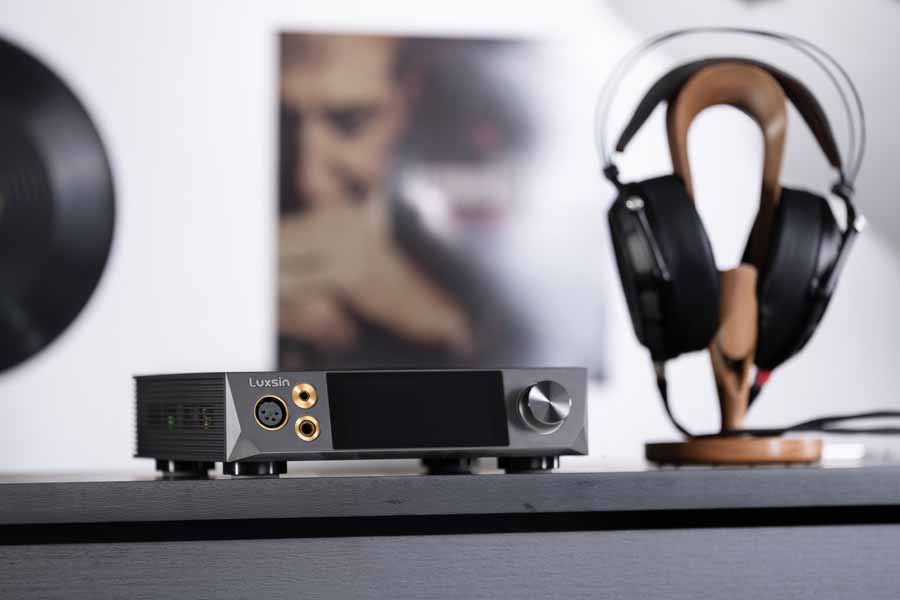
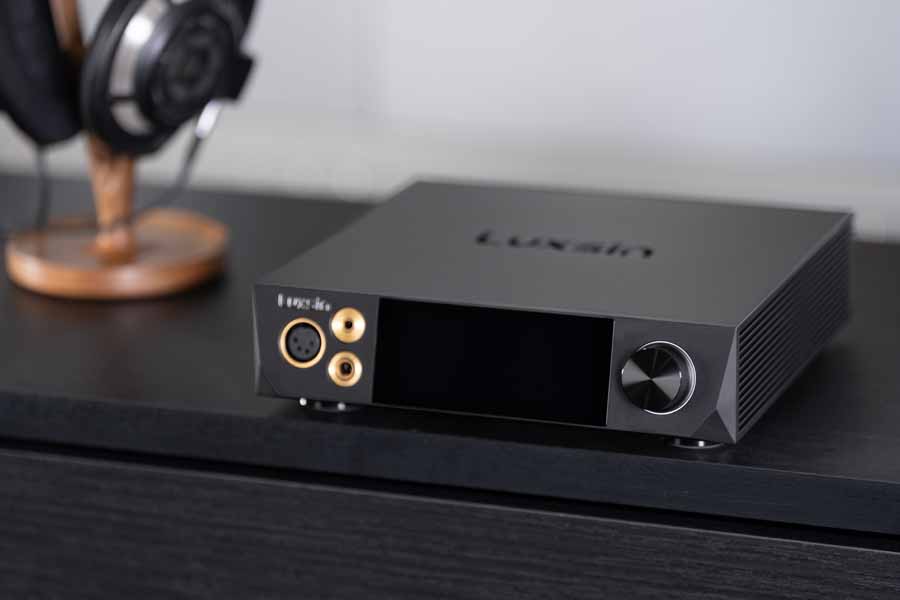
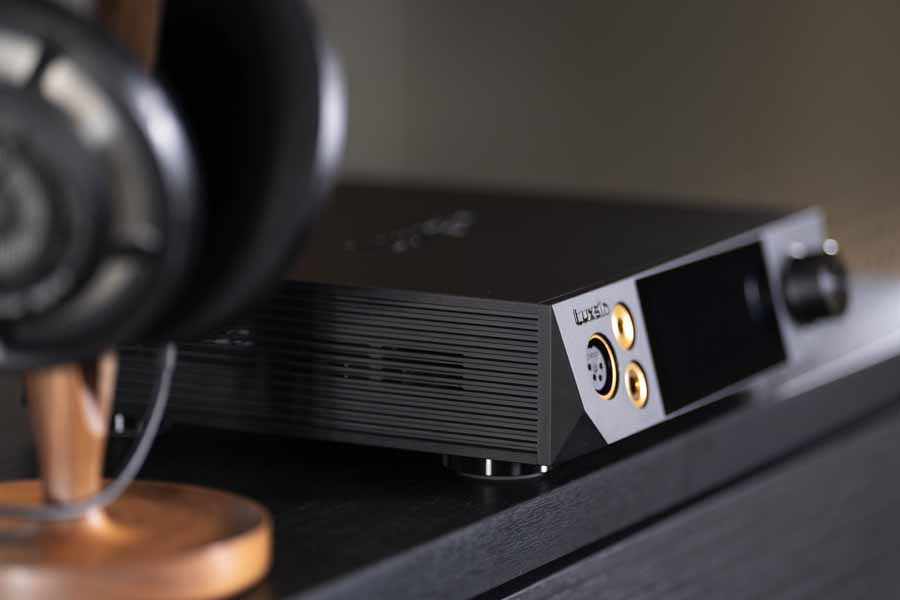
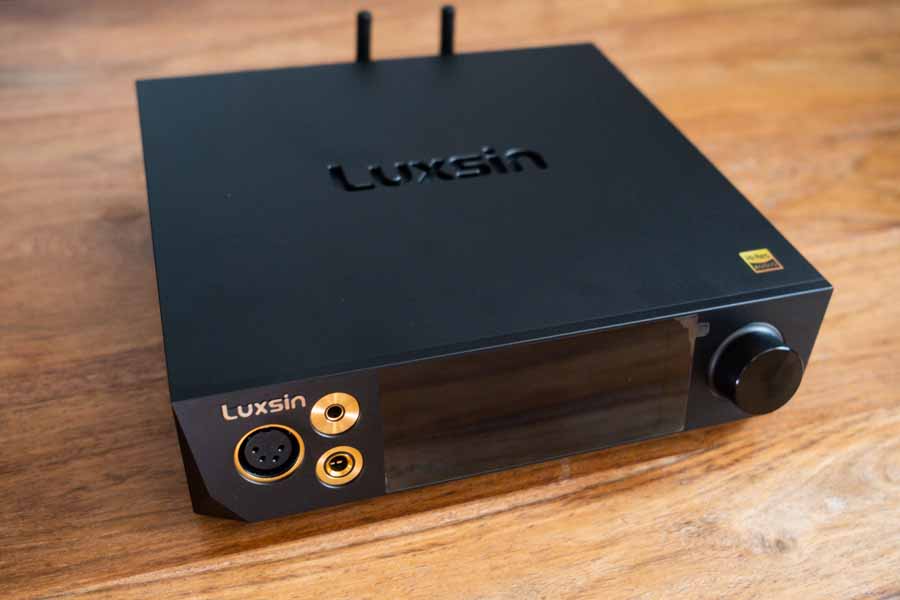
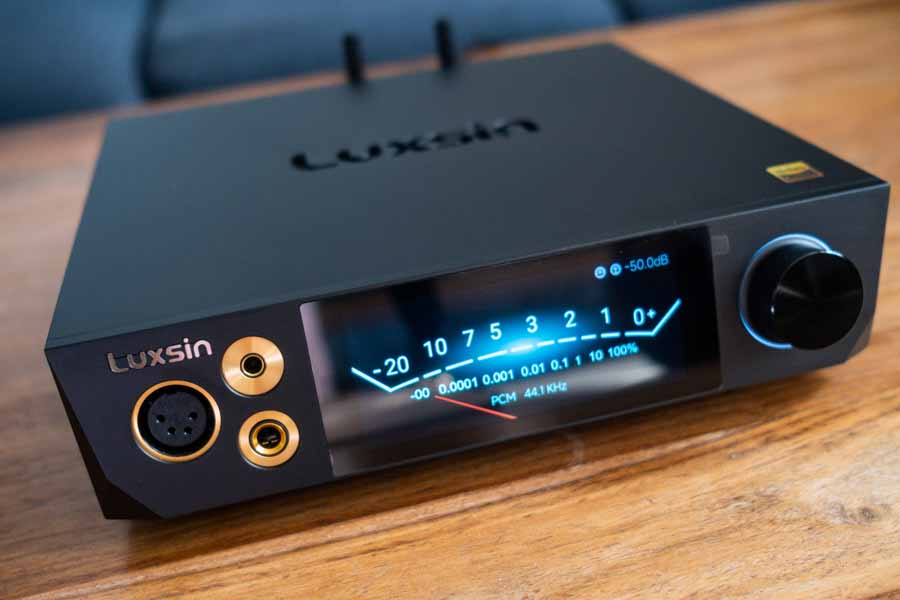
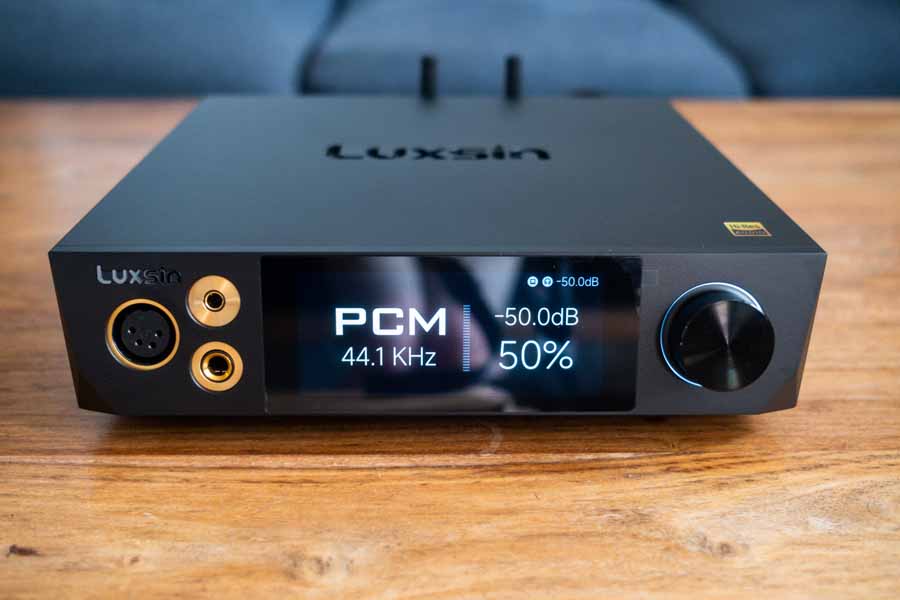
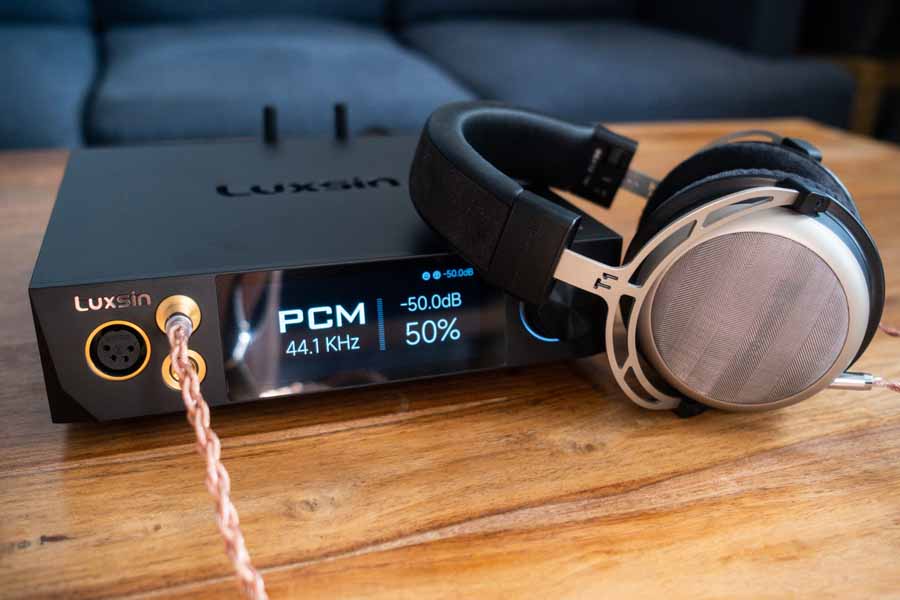
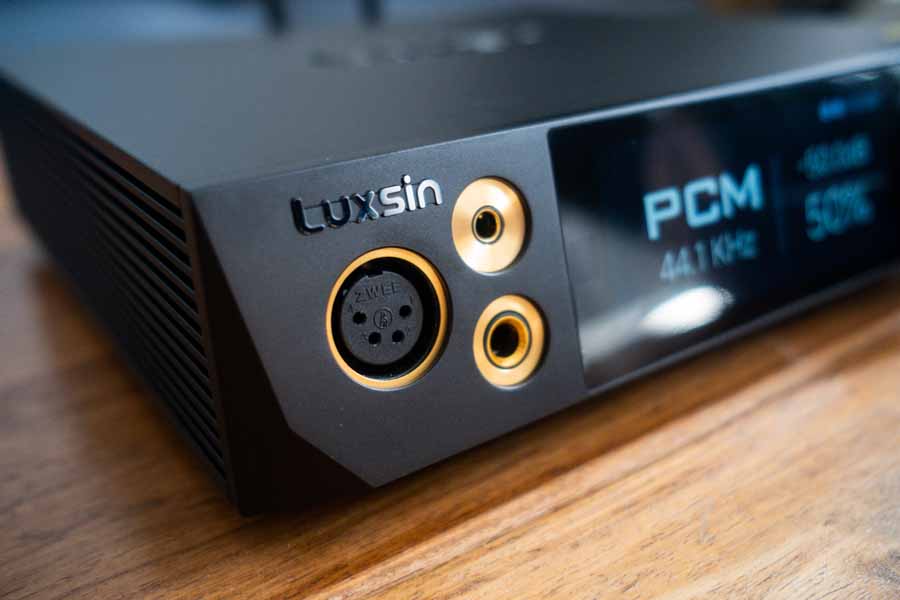
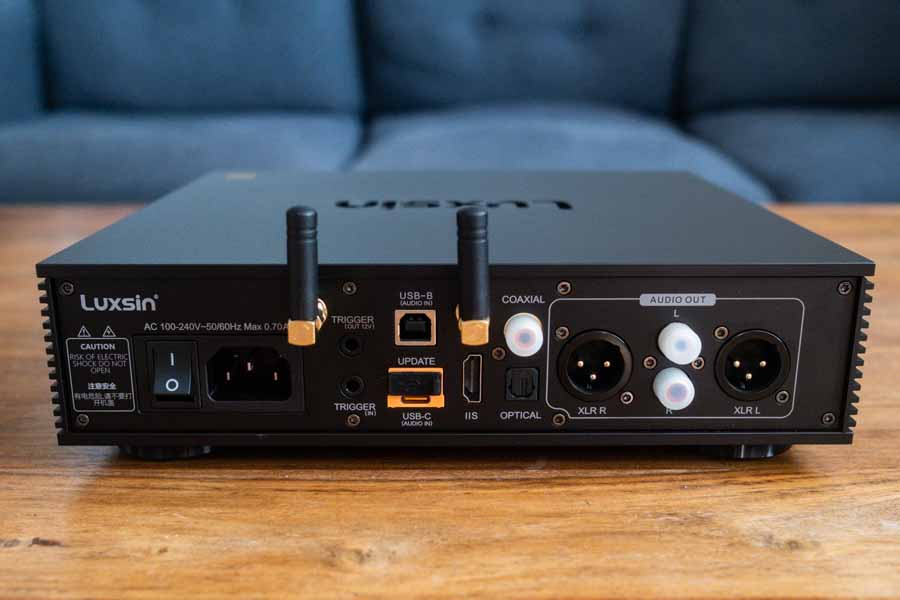
As this is the sister company of Eversolo, it’s safe to assume this is a well-built bit of kit, and it sure feels that way when you unbox the unit. The device has a machined aluminium casing along with a signature touchscreen on the front, with a 6.3mm single-ended output, alongside both 4.4mm and 4-pin XLR balanced headphone outputs. The volume knob has indentations for easy volume setting (along with a simulation relay click for audible feedback), and on the back you have the antenna for WiFi connection (not for streaming, more on this later), a Bluetooth antenna, USB-C audio in and USB-A for firmware updates, USB-B audio in, Optical input, coaxial input, IIS input, along with XLR and RCA outputs which can be set to fixed or variable output. It takes a standard IEC power cable, and also has a 12v trigger input and output.
It’s a looker in terms of design; I like the gold accents around the headphone outputs and the name on the top of the casework (that doubles up as a vent for heat dissipation), and the whole unit feels solid and planted when in use.
Inside you will find no fewer than 8 Cirrus Logic CS43198 DAC chips, configured using 4 chips in parallel per channel – Left and Right channels are fully independent in the X8. The DACs also feature dedicated shielding to reduce interference, and operate within the same reference clock domain, ensuring rock-solid synchronisation. At its core the X8 has a dual-core processor dedicated to DSP duties, allowing headroom for full PEQ adjustment, along with other tuning options including tone adjustment, loudness, crossfeed, stereo width adjustment, style, or full bypass mode (turning off all DSP settings).









The X8 has a linear power supply, and uses OPA1612 op-amps on the output circuit, and it can output up to 4800mW per channel at 16 Ohms. It supports all the high-res formats you could need, such as DSD512 (native), and 32-bit/768kHz via USB. The screen on the front of the DAC/Amp has quite a few backgrounds, from spectrum analysers to VU meters and electronic parameters of the unit. It also scans your headphones’ impedance when plugged in, and auto-adjusts the gain for them; I found this to work without issue and always had enough headroom without needing to manually adjust the gain within the app.
Now, on to one of the main features of this DAC/Amp, the app and associated EQ settings – once set up, you can connect the X8 to your local network and use the Luxsin Control app on your phone or via a Web UI to control loads of parameters of the device. You can change inputs and outputs, volume, DAC filter, headphone amp gain, volume step level, and sound effects such as channel balance, stereo width, crossfeed, tone, and loudness. You can then also access the parametric EQ, which can be daunting for first-time users; this is where the X8 is rather impressive. Eversolo have a database of over 2,500 headphone models that you can choose from. You can set a default target curve, then use an AI assistant to help tune the PEQ in real time to your preference.
So far, all my headphones have been in the list of models on the X8, which is quite something. The network connection also allows for OTA firmware updates, which makes updating the firmware a breeze; I had no issues when doing so on this unit (which arrived with slightly outdated firmware).
SETUP AND USE
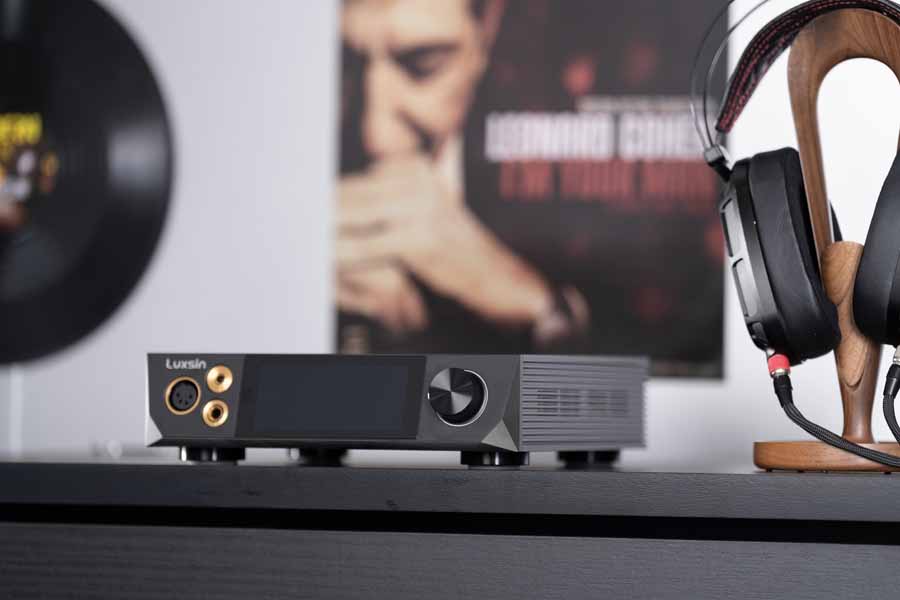
I have been using the X8 in my normal headphone desktop setup, running from my PC via USB-B into a few different headphones.
For this review, I used the ZMF Caldera Closed, HiFiMAN HE600, Meze 109 Pro, and Grado SR325i.
SOUND QUALITY
Starting off with no EQ and the ZMF Caldera Closed, the X8 had no issues driving these headphones. These are headphones that definitely sound their best with a bit of power behind them, and the X8 proves to be plenty powerful enough to bring out excellent bass response with these headphones. One For The Rocks And One For The Scary by Mayday Parade came on and showcased the X8’s ability to bring out punchy and fun bass from the Caldera Closed. This song starts off acoustic and has such wonderful tonality through this combo; then, when the band kicks in, these headphones deliver plenty of depth, body, and punch to the kick drum and bass guitar line. There are subtle little details hidden throughout layers of this track, and the Caldera Closed let you hear them all, with space and brilliant separation. I would say that the X8 errs on the more dynamic side of sound, and is not what I would class as a strictly analytical device. When the tempo shifts halfway through this track, it keeps up with ease and manages to deliver everything in the mix without sounding muddled, always remaining engaging and fun. This is a headphone where I did not want to do any EQ tweaking, and the X8 in bypass mode works wonders with them. I’m not ashamed to admit that Mayday Parade are one of my all-time favourite bands, and this combo brings out the emotion in their songs, with clear and natural vocals and guitars, well-extended treble, and an overall excellent presentation of what are, quite often, poor recordings.
Next up I used my new-to-me Grado SR325i headphones (the gold anniversary version). I mostly bought these for work calls; I know – only a headphone nerd like me would do something like that. However, they are nice and easy to drive and have quite a distinctive sound, being renowned for being a little bright and rather aggressive. This is the perfect candidate to try out the PEQ and its AI assistant. I found the SR325i in the app, applied the Harman over-ear 2018 curve and, personally, it’s not for me. So, I asked the AI assistant to create a curve that retains the original Grado sound signature, with a slight bass lift and treble attenuation – and it created a custom curve for these headphones that sounds excellent. If you use it carefully, you can really fine-tune the sound to be more to your preference, with some simple and easy prompts within the AI assistant. And these EQ curves get saved, so you can have multiple different curves for the same headphones (you can even back them up, so they don’t get lost with a factory reset). Putting this new curve to the test, I listened to Outcast by I Prevail, a slightly more aggressive metalcore track that comes across a tiny bit thin through the SR325i in their stock form. Applying the custom AI-created PEQ just tweaks them a little, bringing out a bit more oomph from the bass, and toning down the treble, making them sound a tad more engaging with this kind of music. It did not take away the speed and excellent transients you expect from a Grado; it just levelled out the sound and made it a little punchier. These are always going to be more up-front-sounding headphones, and it would be silly to try and tune that away; instead I found it very useful to make subtle adjustments that increased my listening enjoyment: the treble was no longer slightly grating and the bass was more articulate and fuller – spot on.
On to the HiFiMAN HE600 I recently reviewed, and this is another headphone that I decided to play around with the AI-assisted PEQ with. I managed to get a curve that once again kept all the charm of these headphones, along with their snappy presentation, with minor tweaks to the bass and treble to flatten them out a little. This worked a treat once again, and kept their signature clarity and speed, whilst adding a hint of body and flattening out the treble slightly. I mentioned in my review that these handle heavy music with ease, so on came Phantom Fear by Architects and what a blast it was. The X8 has a pretty clean sound overall, and with the addition of custom PEQ curves you really can get the sound you want from your headphones. This track hits with incredible energy and punch; the low end is both impactful and controlled. The midrange has excellent separation, the guitars swirling around the cathartic screamed vocals, and the snares and cymbals have great energy, snap, and extension. They will always be an energetic-sounding headphone, but the EQ just brings them under control and subtle tonal changes can really make the headphones sound like you want them to.
This is also the headphone I tested some other DSP settings with; the stereo width setting sounds a bit odd and won’t appeal to everyone – used subtly, you can push the L/R audio to be more centred or further out. Crossfeed, on the other hand, is something a lot more headphone users are starting to use, and it works to make the sound less in-your-head. It works as intended here, and whilst not something that is to my personal preference (I’ve been using headphones for so long; I enjoy their unique presentation), it can work for those who are not as accustomed to the headphone sound. Loudness seems to require a bit of fettling to get it right, and again it’s not something I would personally use; the tone controls are good, though, if you don’t want to mess about with the PEQ (even though it’s easy with the AI assistant). I found myself using the tone controls to add a bit of bass to my German Maestro GMP400s that I use when playing FPS computer games.
Lastly, I used the Meze 109 Pro and left the X8 on bypass mode, and it still delivers when in a flat setting. As mentioned previously, the X8 is fairly balanced-sounding, but does err on the more dynamic and slightly fun side of the spectrum and that comes across when listening to it with the 109 Pro. Pair these headphones with something ruthlessly neutral and they can sometimes become a little strident up top; no worries here, though – the X8 seems to handle them well without adding any excess brightness up top. Here’s To Moving On by Dashboard Confessional came on; the midrange is simply stunning here: the rasp of Chris’ vocals is easily heard, and the acoustic guitar line is natural and has natural-sounding reverberation and body. The duet in the chorus is well separated yet utterly convincing, and there are never any hard edges to the upper midrange. Honestly, this is a fantastic DAC/Amp with these headphones; they really highlight the Meze’s strengths in tonality, and the X8 manages to keep a handle on their treble response.
Due to the enjoyment of that song, I listened to another, this time Rough Around The Edges by Courtney Marie Andrews – not my usual rock music, but I saw her live years ago (when I dabbled in gig photography) and was quite captivated by her performance. The bass from the 109 Pro is full and warm, and gives the sound a great foundation that is a little forward yet never makes these sound bass-heavy. There is controlled extension, and a great sense of fullness overall, never meddling with the mids, Courtney’s vocals coming across with pitch-perfect accuracy. Once again, there is a distinct lack of hard edges from the sound, nothing that could induce listening fatigue, and this is a combo that really had me wanting to just keep listening, track after track.

QUIBBLES
This is a £699 DAC/Amp, and whilst it can’t quite do justice to the Susvara in terms of output power (something the more affordable DX5 II can; however, the X8 still sounds better overall), in terms of feature set and ease of use, there really isn’t anything to dislike.
CONCLUSION
The Luxsin X8 has really impressed me; for the price you get an extremely versatile bit of kit that will drive most headphones without any issue at all. It won’t quite handle the Susvara, yet it works extremely well with most other normal headphones out there. It’s a slightly warmer-than-neutral-sounding device with all settings turned off, yet the comprehensive library of headphone curves, PEQ, and AI-assisted PEQ truly allow you to fine-tune your headphones, and get them to sound just how you want them to.
And it’s not just some gimmick (something, I will admit, I was worried it would be); instead I found it to be a truly useful tool with some of the headphones I used in this review. I’m not usually a huge advocate of EQ, but the X8 really wants you to use it, and it makes it easy and delivers great results. I am still a “purist” in many ways, and even then, the X8 delivers in terms of sonic performance; I was extremely happy listening without any DSP when using the Meze 109 Pro and ZMF Caldera Closed.
For what you pay, the X8 is one of those bits of kit that is easily worth every penny, with the added benefit of being able to run just the DAC section into another amp of your choosing, or into a HiFi system. There is a remote coming soon that will allow you to change the volume from a distance, making it a remarkably flexible DAC/Amp and one that truly deserves the “Reviewer’s Preference” award.
AT A GLANCE

Build Quality And Features:
The X8 is a feature-rich device that’s also extremely well built
Huge DSP capabilities, and plenty of inputs and outputs
Sound Quality:
Slightly full-sounding without DSP, yet detailed and controlled
Well-implemented DSP, with an AI assistant to help you get just the right sound for your headphones of choice
Value For Money:
Extremely good value when you consider what it does for the price tag – I would say it’s a bit of a bargain
We Loved:
Its versatility, ease of use, and great sound quality for the money
The AI-assisted PEQ works; it’s not just a gimmick
We Didn’t Love So Much:
The only thing not in its favour is the fact it can’t “quite” drive incredibly insensitive headphones such as the Susvara – hardly an issue for the price and other things this does so well
Elevator Pitch Review: The Luxsin X8 is the first DAC/Amp to feature a dedicated AI-assisted PEQ function, allowing you to use prompts to finely tune the curve to suit your preference in sound signature. As someone who doesn’t usually use EQ, I actually found this setup to be incredibly intuitive, and it allowed me to retain the core charm of the headphones whilst finely tuning the response more in line with a sound that I personally enjoy. On top of that, the X8 is pretty powerful and can drive most headphones with relative ease, as well as featuring a brilliant internal DAC section that can be run into external components. It’s a bit of a bargain, and something I have really enjoyed listening to.
Price: £699

Oscar Stewart
SUPPLIED SPECIFICATIONS
Basic Parameters
- Dimensions (LxWxH) 236mm x 236.8mm x 64mm
- Weight 2750g
- Input Power AC 100-120V/220-240V~50/60Hz
- Display 4″ LCD (480*960) Touchscreen
- DAC Cirrus Logic CS43198 x8
- Power Supply Ultra-low-noise, voltage-adjustable Linear Power Supply
- WiFi Wi-Fi 2.4GHz / 5GHz
- Bluetooth Qualcomm SXW5125 (BT 5.1)
- Control Method Touchscreen, Mobile APP (Android/iOS), Web Browser, IR Remote(Optional)
- Rated Power 25W
- Packing List Power Cable x1, USB-B cable x1, 3.5mm to 6.35mm adapter x1
Input / Output
- USB-A Input For Local Upgrade
- USB-B/C Input Support PCM 768kHz/32bit; DSD512 (Native)
- IIS Input Support PCM 768kHz/32bit; DSD512(Native)
- Coaxial / Optical Input Support PCM 192kHz/24bit
- Trigger In / Out Standard 3.5mm Connector
- Analogue Output RCA
- Digital Output XLR
- Headphone Output 6.35mm (Unbalanced), 4.4mm (Balanced), 4-pin XLR (Balanced)
XLR Output Audio Characteristics
- SNR ≥129.5dB
- THD+N <-121.8dB @unweighted
- Crosstalk ≥133dB (1kHz@200kΩ)
- Noise Floor <1.1uVrms
- Output Level 4.2Vrms (1kHz@200kΩ)
RCA Output Audio Characteristics
- SNR ≥124.5dB
- THD+N <-120dB @unweighted
- Crosstalk ≥125dB (1kHz@100kΩ)
- Noise Floor <1.3uVrms
- Output Level 2.1Vrms (1kHz@100kΩ)
Performance and Parameters of Balanced Headphone Output(4.4mm/XLR4)
- High Gain L+R ≥4840mW+4840mW(16Ω,THD+N<1%)
- Output Impedance <1Ω
- THD+N <-117dB(1kHz/0dB@32Ω)
- SNR ≥123dB
- Crosstalk ≥119dB (1kHz@32Ω)
Performance and Parameters of Unbalanced Headphone Output(6.35mm)
- High Gain L+R ≥2900mW+2900mW(16Ω,THD+N<1%)
- Output Impedance <1Ω
- THD+N <-115dB(1kHz/0dB@32Ω)
- SNR ≥121dB