

Reel to Reel Review – Rafał Jackiewicz Quartet, Sea Poetry, 2 Track 15ips Tape
Alan McIntosh takes a listen to Rafał Jackiewicz Quartet, Sea Poetry, on 2-track 15ips Reel-to-reel tape.
Life has been, well… “life-ing” hard of late. Due to some recent family commitments, my time with music has been shorter and more distracted than usual – far more than ever before. Where normally music has been a place I go for fun, inspiration, delight, solace, relaxation or just sheer escapism, it’s very much been relegated to the background. Not, I hasten to add, by choice, but by happenstance. Between work, hospital visits and well… just life… time with music has been snatched, distracted moments and often “something I’ll get round to.” This has been strange to say the least.
Then a new Tape arrived.










The players involved in this new arrival are the Rafał Jackiewicz Quartet out of Poland, led by Rafał on Alto sax, with a trio of grand piano, double bass and drums. I had, of course, noticed the release on social media (any new 15ips tape release is exciting!) and it was on my ever-growing “must-listen” list, so I was delighted when Rafal connected to HiFi PiG to offer a copy for review.
Do listeners get a “listener’s block”? It felt like I had. Would Sea Poetry unlock it and get me back in the chair and in front of the speakers?
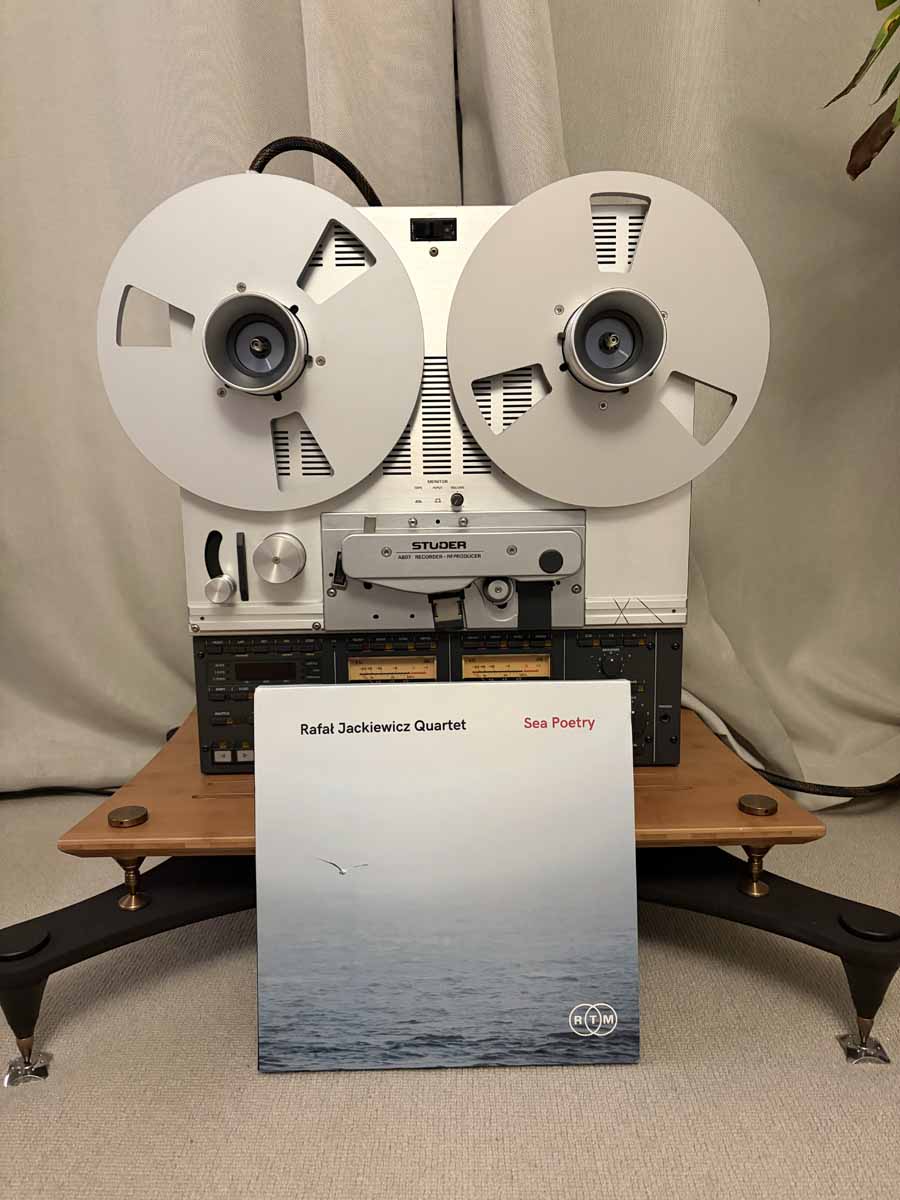
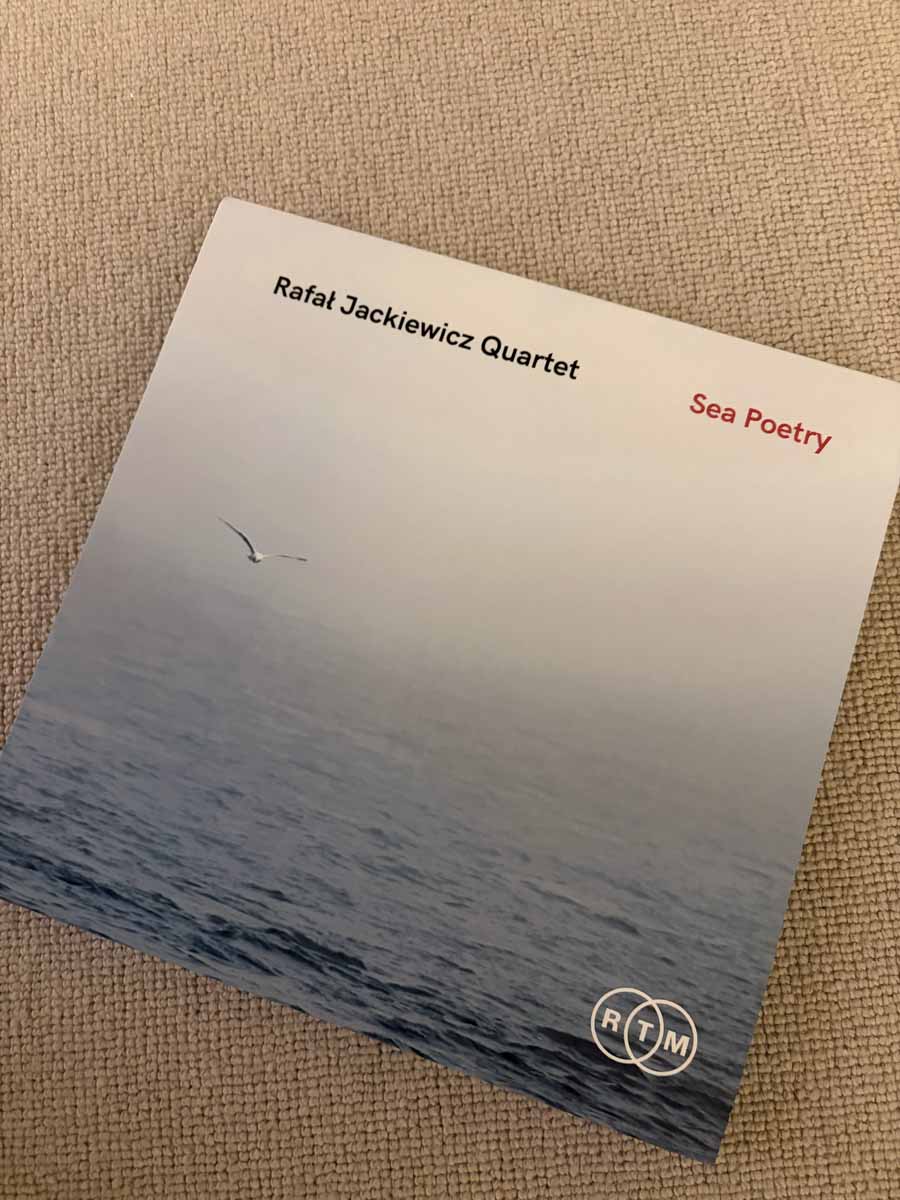
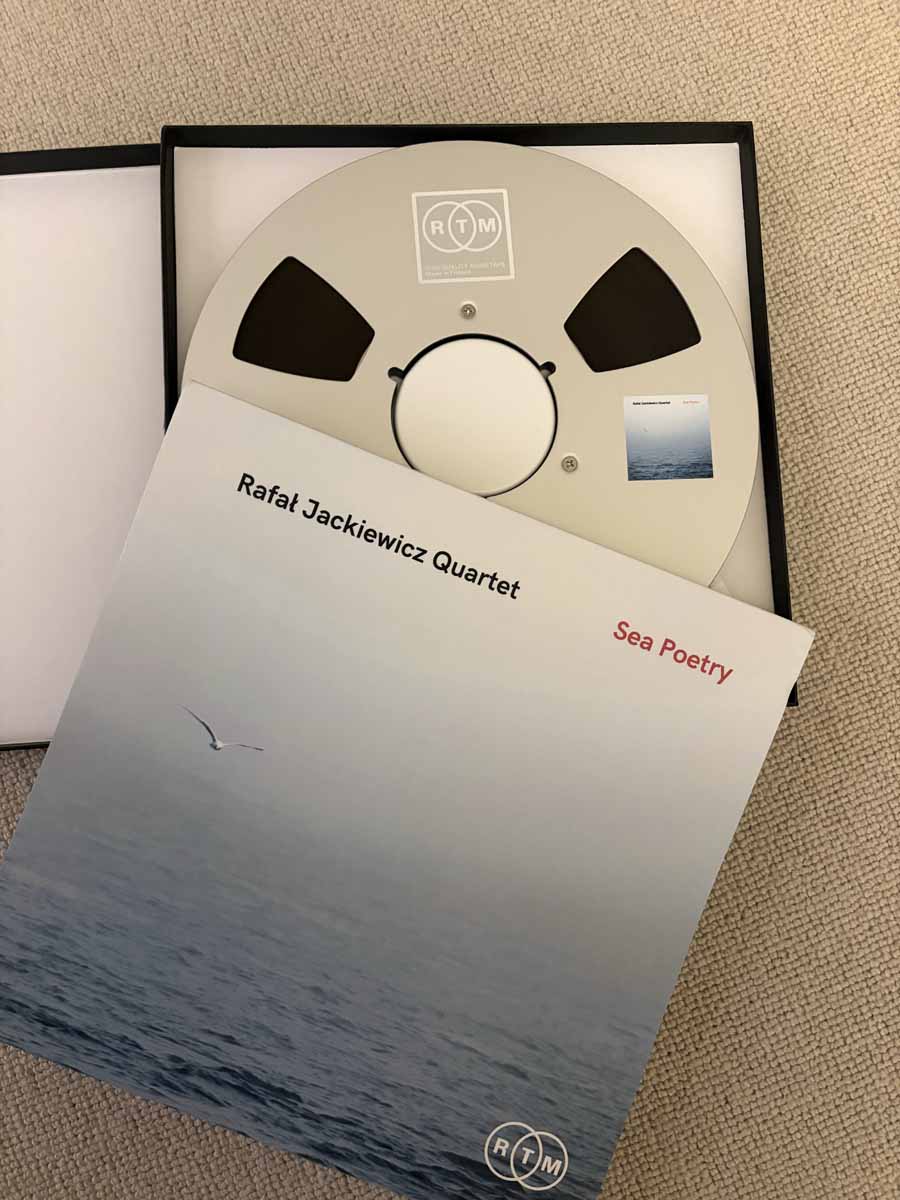
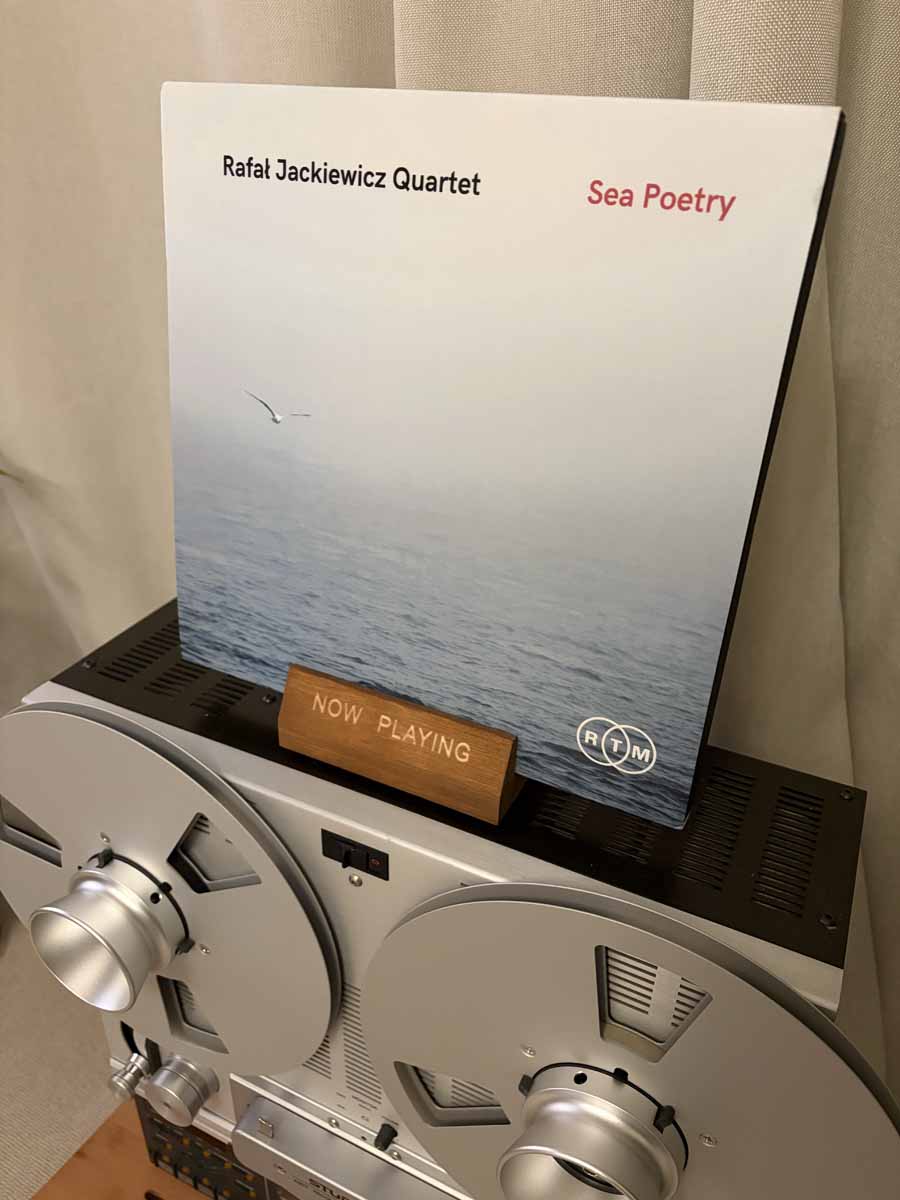
Arriving in a single tape box on RTM stock and with a simple yet beautiful cover sleeve with photography of a seagull over grey, open water, it’s clear the music will do the talking here, not over gilded packaging. This streamlined packaging approach, of course, helps to keep the costs, and therefore price to the listener, lower. Some recent master tape releases offer wonderful cases, immersive booklets, fancy certificates and artwork as well as plastic double cases – all wonderful – but it all adds to costs and then to the hit on our pockets, so it’s both refreshing and welcome to see high quality releases such as this keeping it simpler – more akin to the music itself in fact.








Sea Poetry is the second release from this Polish Quartet, following their highly acclaimed debut album Sometimes in 2021. I was eager to learn more about them as players and the journey they are taking, so I reached out to Rafal. He was kind enough to chat over email to help me get under the surface of this album, and here’s our conversation.
Tell me about Sea Poetry — where did the concept & music come from?
The concept grew out of my long-standing interest in the relationship between music and space — both physical and emotional. The sea became a central metaphor: something fluid, elusive and constantly changing, but also calm and open. I wanted the music to breathe, leaving room for silence, reflection and natural interaction between the musicians. This idea shaped not only the compositions but also the way we listen and play together. We see music primarily as exploration rather than performance. Sea Poetry is about presence, attentive listening and emotional landscapes created through sound. For us, jazz is a conversation, and each concert is an opportunity for an honest meeting with the audience.
How did you meet, and form the group? Any career highlights so far?
The quartet has existed for five years. It consists of me on saxophone, Piotr Dziadkowiec on piano, Maciej Kitajewski on double bass and Przemysław Borowiecki on drums. Over time, we’ve developed a shared musical language based on listening and dialogue. Highlights include the release of our debut album Sometimes, followed by Sea Poetry, as well as live performances where our musical communication continues to deepen.
Where was the album recorded and how did it come about?
The album was recorded in Poland, in Gdańsk, at Custom34 Studio. We recorded entirely in analogue, on tape, with Piotr Łukaszewski as the recording engineer. The goal was to capture a warm, natural sound with as little studio intervention as possible. Mixing and mastering were also done in analogue, which helped preserve depth, space and a sense of immediacy.
Why is releasing on tape important for you?
Releasing it on tape was a conscious artistic choice. Analogue recording gives the music warmth and space that fit the introspective, contemplative character of Sea Poetry. It feels closer to a live musical encounter than to a polished studio product. (Reviewer’s note: on this, I can’t agree more!)
What’s coming next for you and the band?
We’re planning a series of concerts presenting the album in Poland and selected venues in Europe. I’m also working on new compositions and projects.
Thanks to Rafal for sharing these insights!
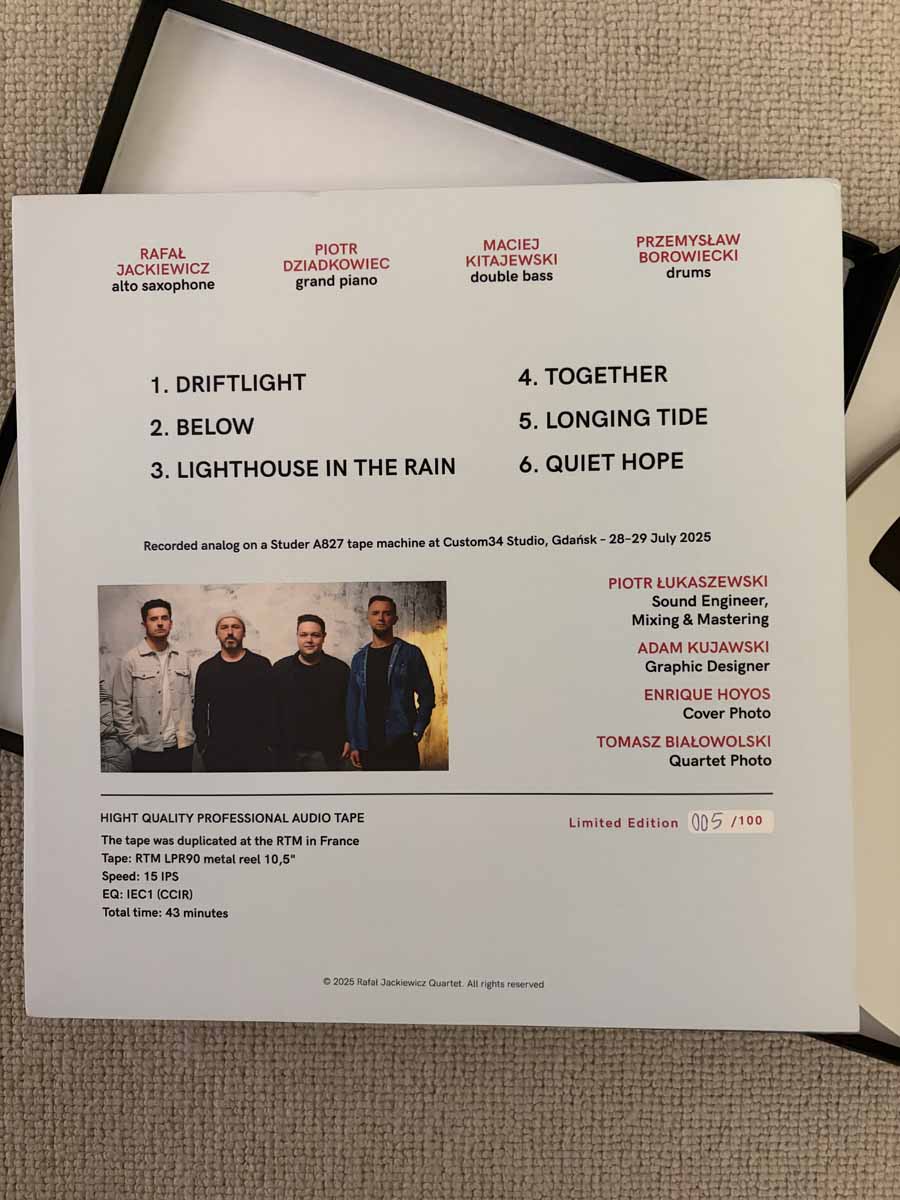
Band leader Rafal Jackiewicz is a multifaceted musician active in Polish jazz, classical, and theatrical music scenes. Beyond the Quartet, Jackiewicz has established himself as a composer for film scores and theatre productions, bringing cinematic sensibility to his jazz work. The other band members similarly have a strong pedigree in the Polish scene and beyond. Piotr Dziadkowiec, who is on Grand Piano, is an accomplished pianist in the Polish jazz scene with a reputation for harmonic sophistication and melodic invention. A graduate of prestigious music conservatory programs, he features on both Rafał Jackiewicz Quartet albums as well as being an active sideman in various Polish jazz ensembles, alongside his solo and other trio performances throughout Europe, including collaborations with contemporary classical ensembles
Next, on Double Bass is Maciej Kitajewski, whose style combines a solid rhythmic foundation with melodic bass lines. Recognised for playing with a rich tone, precise intonation, and ability to shift seamlessly between supportive and soloistic roles, he’s a graduate of the Karol Szymanowski Academy of Music in Katowice and has emerged as one of Poland’s most promising young bassists in the early 2020s. Finally, completing the Quartet is drummer Przemysław Borowiecki. Borowiecki is well known for his session work, live recordings and performance as well as his activity in the more experimental and avant-garde music scene, where he often collaborates with other ensembles. His versatility as a drummer emphasises colour and texture over pure timekeeping. Using brushes, mallets, and extended techniques to create atmospheric soundscapes (his influences apparently include the iconic Paul Motian). His playing enhances the Quartet’s cinematic quality through nuanced dynamics and spatial awareness.
With that knowledge and content under our belts, what about the music? Spanning 6 tracks running to close to 43 minutes, Sea Poetry is a simply wonderful, multi-textured and intricate album. At times soulful, melancholic, ambient and even cinematic, it’s simply a delight to listen to. For ECM and Nordic Jazz fans, there is a real familiarity here. Evocative soundscapes of jazz and percussion, with real emotional depth and reflective rather than dramatic moments, is often the mood, like a meditation on the sea. And one I have dived into now multiple times!
The musical voyage begins with Driftlight, a track that immediately sets a tranquil yet complex scene. A breathy alto saxophone introduces the melody, weaving its sound through the delicate texture of brushwork on the drums and a free-flowing, expressive piano line. This opening establishes a mood that is very much down-tempo, a relaxed pace that nonetheless contains moments of playful interaction between the instruments. The double bass acts as the foundational current, providing a deep, steady compass, while the piano grounds the harmonic phrasing. The saxophone, with its soaring, unhurried trajectory, evokes the image of a gull effortlessly gliding above the water, searching for the safety of a harbour. The percussion, subtle yet evocative, suggests the rhythmic wash of the surf, gradually building in intensity to a powerful crescendo before dissolving, mimicking a wave breaking on the shore. Following this percussive climax, the piano takes centre stage, its notes now bright and articulate, painting a vivid picture of sunlight scattering and dancing across the water’s surface.
The album then transitions into Below, which initiates a deeper, more introspective dialogue. The bass line begins a conversation with a distinctive rhythm, to which the piano immediately and thoughtfully responds. The alto saxophone eventually joins this exchange, rising above the interplay to execute a smooth, continuous glide. The emotional landscape of this piece is distinctly more brooding and introspective, suggesting a deliberate descent into the more mysterious and darker realms of the ocean – an exploration of the abyss. It is a journey characterised by its languid pace, yet it remains intensely intriguing. The piano intermittently injects a necessary lift of energy into the track, while the background percussion forgoes a defined beat in favour of creating rich texture and sonic layers. Subtle flashes of cymbals and sharp rim hits are strategically placed, enhancing the watery, atmospheric imagery. The piano momentarily steps forward with a flurry of swift, nimble notes before gracefully receding, allowing the alto saxophone to assume the lead role in an almost vocal, improvisational discussion.
A dramatic shift in energy marks the arrival of Lighthouse in the Rain. We are propelled instantly by a driving, rolling bass line that rapidly builds a vivid and powerful sonic environment. All the musicians accelerate their playing, suggesting the urgent, focused beam of a light cutting decisively through a storm’s darkness. The piece is energetic and introduces a more dramatic feel; the rhythmic complexity of the drums actively invites movement, while the piano plays with a swift, masterful dexterity, creating the sensation of a vessel confidently speeding through tumultuous waves, entirely reassured by the steady presence of the beacon. In this piece, the musicians function as a unified, tightly knit ensemble, collectively driving the listener forward with immense momentum. A soft, intricate drum solo rolls gently, providing a brief moment of reflection before the bass provides the final, energetic uplift that concludes the piece before we head into the next track.
Together launches on a gentler note, initiated by the measured interplay of cymbals, piano, and bass, setting a warm, inviting foundation. The controlled alto saxophone joins the conversation, engaging the piano in a slow, profoundly felt dialogue. The music hints strongly at optimism, suggesting the promise of a bright future and long, sun-drenched summer days spent at sea. At various points, the prevailing feeling is one of free and unburdened drifting, simply savouring the open ocean. The visual effect of sunlight glinting off the waves is captured aurally by the precise taps of drumsticks and the delicate texture of brushwork. The bass maintains a steady sense of time, while the piano is given the freedom to explore and soar melodically resulting in a track that is cheerful, bright, and utterly engaging.
Then we are into Longing Tide, which opens with an assertive, powerful crash, immediately followed by an evocative, almost mystical call from the alto saxophone, setting a dramatic tone before the full ensemble joins the melodic and rhythmic structure before the album gracefully concludes with Quiet Hope, a soft, reflective ballad that delivers a deeply emotional journey, primarily guided by the expressive voice of the piano. The gentle, restrained alto saxophone enters the composition to complement and build upon the nuanced, back-and-forth melodic discussion that defines the work. It is a piece that is simply beautiful in its restraint and serves as a perfect, poignant closing statement for this wonderful album.
So, I hear you ask – did Sea Poetry get me back in the chair and over my listener’s block? Simple answer? Yes! And boy am I glad about it.
As you’d expect, the production on tape is superb. There is a real power and depth to the music. A lovely organic bass tone and there is superb detail and texture to the instruments. I’d hazard a guess the players were quite closely mic’d as none drop into the background, instead at times there is a strong warmth, not quite saturation but you will not suffer any over-brightness or coldness in this recording. Play it loud and you’re in the front row of power and jazz “oomph” . If you are a fan of Nordic, classical edged Jazz, or just great music and live playing and want to hear it reproduced to a high standard, I’d jump on this release!
Sea Poetry, is available in a premium 15ipss 2-Track format with IEC/CCIR equalization and can be purchased directly from the Rafał Jackiewicz Quartet website for a price of €290 plus shipping and any applicable local taxes. For broader accessibility, the release is also available for streaming on digital platforms such as Qobuz.

Alan McIntosh
Track listings & timing
Driftlight 8:31
Below 7:46
Lighthouse in the Rain 6:50
Together 6:56
Longing Tide 5:58
Quiet Hope 6:41
Total run time 43 minutes
Compositions by Rafał Jackiewicz
Musicians:
RAFAŁ JACKIEWICZ alto saxophone
PIOTR DZIADKOWIEC grand piano
MACIEJ KITAJEWSKI double bass
PRZEMYSŁAW BOROWIECKI drums
PIOTR ŁUKASZEWSKI Sound Engineer, Mixing & Mastering
Associated review equipment: Studer A807, Lab12 Integre MkII Toroid Edition Amplifier, Blumenhofer Tempesta Big Fun 20 speakers, Chord Epic XLR Interconnects, Tellurium Q Black II speaker cabling. Power conditioning by Puritan Audio. Quadraspire X Reference & SVT Racks.