
Reel-to-Reel Review – Beethoven 9th Syphony – Chasing The Dragon
BEETHOVEN 9th SYMPHONY – CHASING THE DRAGON REEL-TO-REEL
Janine Elliot takes a listen to the latest reel-to-reel release from Chasing The Dragon.
“Nothing is more intolerable than to have to admit to yourself your own errors” is a reflection Beethoven wrote about his own fight to achieve perfection in life. Not only did he battle to create the very best music in the world, but he also had to reflect on his own battle with deafness in later years and controlling his own emotions, including inner conflict on relationships; he never married, though he had a few love affairs. He didn’t like it when he got things wrong. His heroic middle period of writing, which included celebrating war victories, such as in his ‘Wellington’s Victory’ (op. 91), was replaced toward the end of his life with a more reflective focus, including his brilliant and reconciliatory final 9th symphony. He was a perfectionist, and for me, this final symphony is the closest he got to that perfection.
Mike Valentine, from Chasing the Dragon, similarly sets high goals when he creates a new recording. Being of elder BBC stock like me, he knows that only the very best should and will suffice, and after watching him at work in several recordings at the London Air Studios over the years, I always expect him to aim for that perfection. To bring out a new version of the 9th symphony is a risk, though; there is an endless supply of the work, and Furtwängler’s 1950s recordings, or Karajan’s 1961 version, rest high in my own collection. I even have a DG recording of Karajan in rehearsal of the 4th movement, celebrating Deutsche Grammophon’s 70th year, my copy costing 13 shillings and 11 pennies in old money (70p)! Luckily, the album cover has a translation of the German.

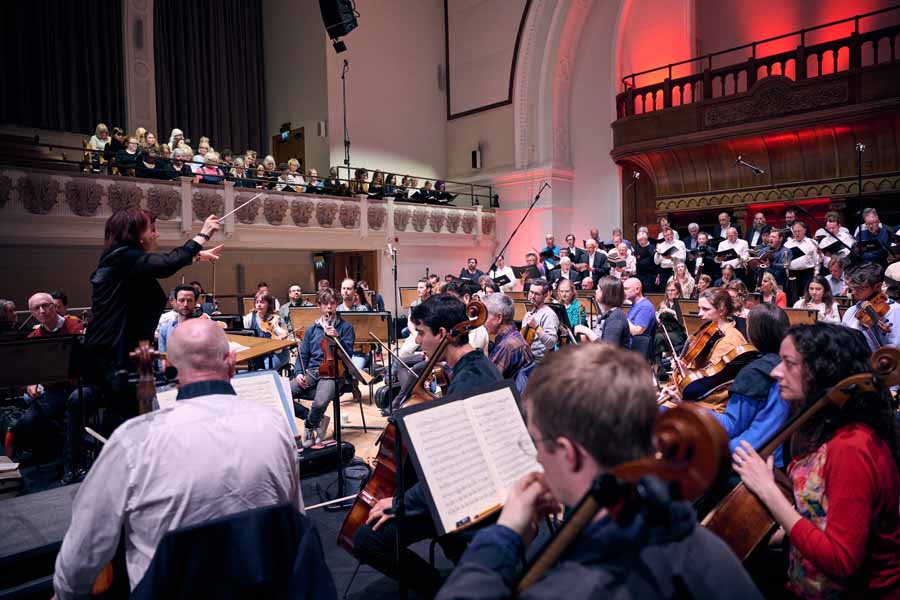
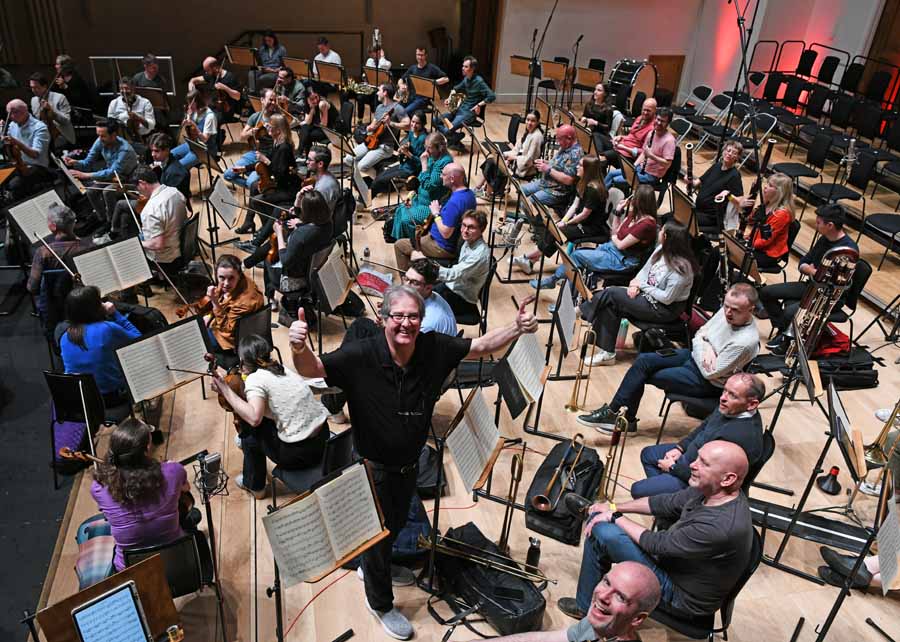
So, why would Mike wish to bring out yet another version of this iconic work? Well, the work was first performed on the 9th May 1824, and Mike found out that the National Symphony Orchestra and Brighton Festival Chorus were going to give a concert exactly to that day on the 200th anniversary of the first performance, and being a good friend of the orchestra’s General Manager and Artistic Director, Justin Pearson, Mike asked if they could record the live concert. I had hoped to be at that event but couldn’t get there in time, so now I had an opportunity to experience it on 15ips 10½” reel-to-reel tape. Reel-to-reel is for me the very best recorded platform for any musical performance, other than actually being there. With today’s excellent quality ¼” tapes, the dynamic range is some 9dB greater than in my childhood. This double tape album weighs in at £850, though it is also available on other platforms. On the ninth of May 2024, Mike and his team of engineers set up the equipment in the morning (ensuring it was hidden and safely laid out, so as not to spoil the impact of the historic event), rehearsed the levels in the afternoon rehearsals, and then recorded the event live in the evening. Mike has previously recorded Beethoven’s 5th Symphony and the Egmont Overture.
Beethoven
Born in Bonn, Germany, in 1770, Ludwig van Beethoven was commissioned by the Philharmonic Society of London in 1817 for £50 to write a symphony for them, though it was actually mostly composed much later between 1822 and 1824. The first performance on 7th May actually happened in Vienna. Having only 2 rehearsals, Beethoven conducted the performance, but as he was by now totally deaf (how could he have written such an amazing work?), he didn’t actually hear the applause at the end and just continued conducting; their resident conductor, Michael Umlauf, had, in any case, told the orchestra to just ignore his baton-waving. The work was an amazing success with 5 standing ovations at the end. Why was it such a radical work? Well, the fact that this 4-movement symphony had a massive choir and 4 vocal soloists to add to the large orchestra was such a radical idea for the time, yet so necessary to put across the wonder of this work. Featuring in the last movement is Friedrich Schiller’s famous poem “Ode to Joy”, and Beethoven’s vocal adaptation is one of the most famous tunes of all-time, and one often used by pianists and soloists when they are learning to play. Such a simple tune made mostly out of adjacent notes (like the BBC EastEnders theme tune), it is the sort of music today’s advertising jingle writers would have tried to create had it not already been done.
Cadogan Hall
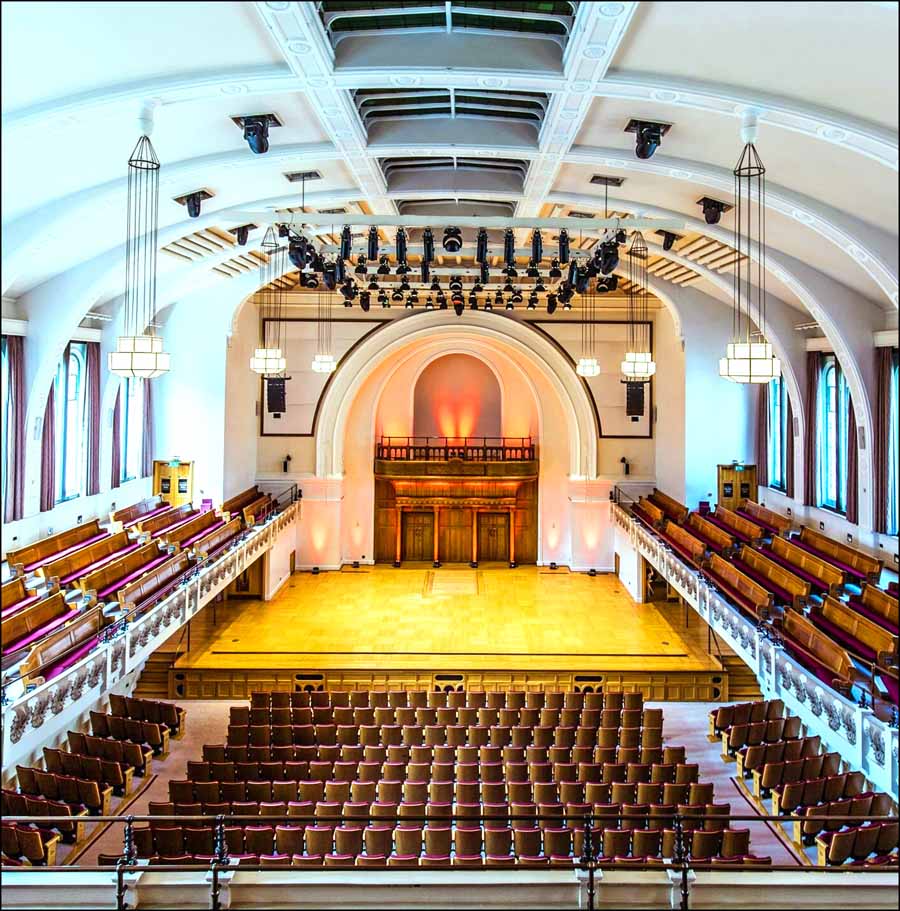
This 200th anniversary concert was set in the large Cadogan Hall in Chelsea, London, a 950-seat music hall with great acoustics and great views for the audience to see all the performers. This is the Royal Philharmonic Orchestra’s rehearsal venue, and up until 2021 was used by the BBC for the Proms chamber concerts. The building, designed by Robert Fellowes, was opened in 1907 as a Christian Science Church, but the Cadogan Estate bought the property and restored it in 2000.

The Soloists
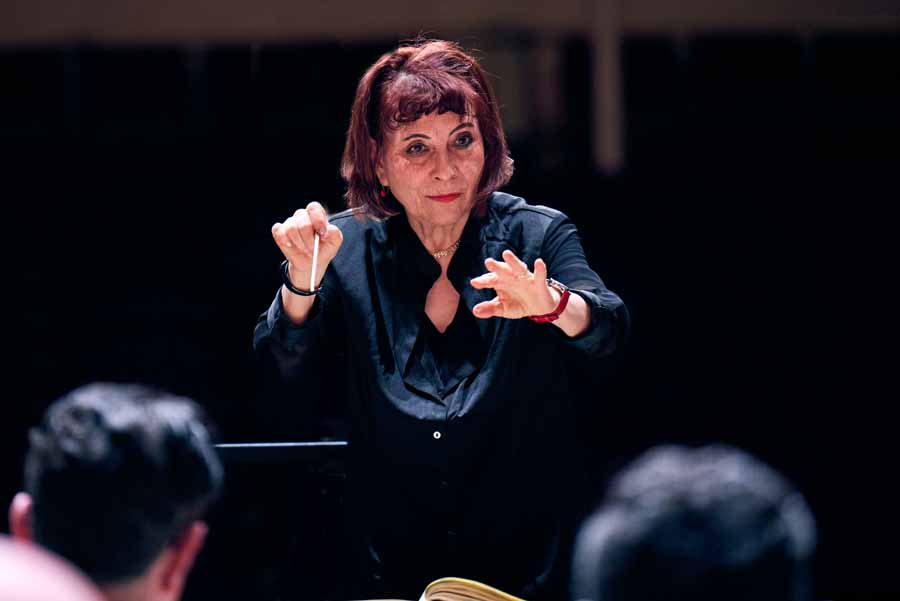
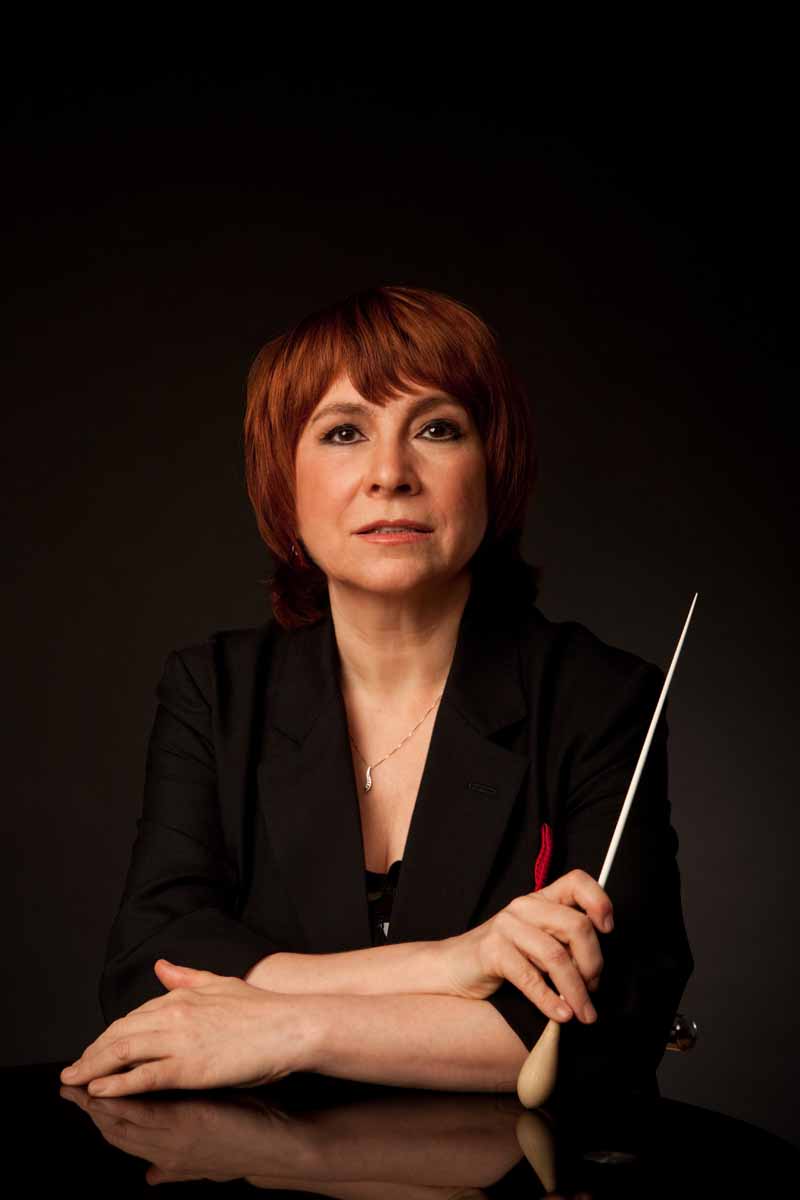
Reading like a “four people go into a pub” joke, the vocal soloists include an Irish soprano Jennifer Davis, an English mezzo soprano Bethany Horak-Hallett, a Welsh tenor Sam Furness, and the German bass Stephan Loges. To conduct is violinist Rimma Sushanskaya, a pupil of the great violinist and conductor David Oistrakh. Rimma has waved her baton in many countries including Russia, China and the UK, plus was a teacher at the Birmingham Conservatoire.
The Recording
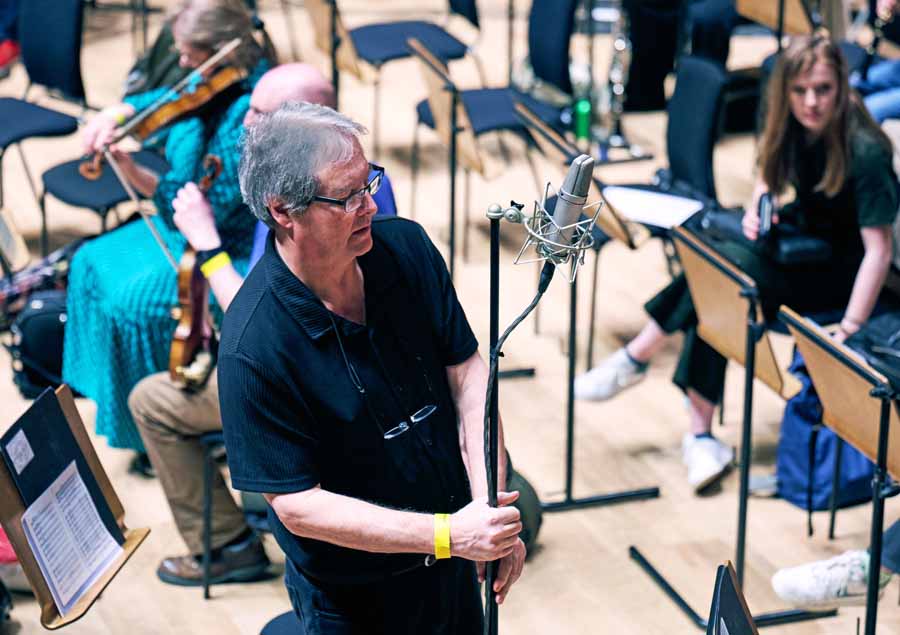
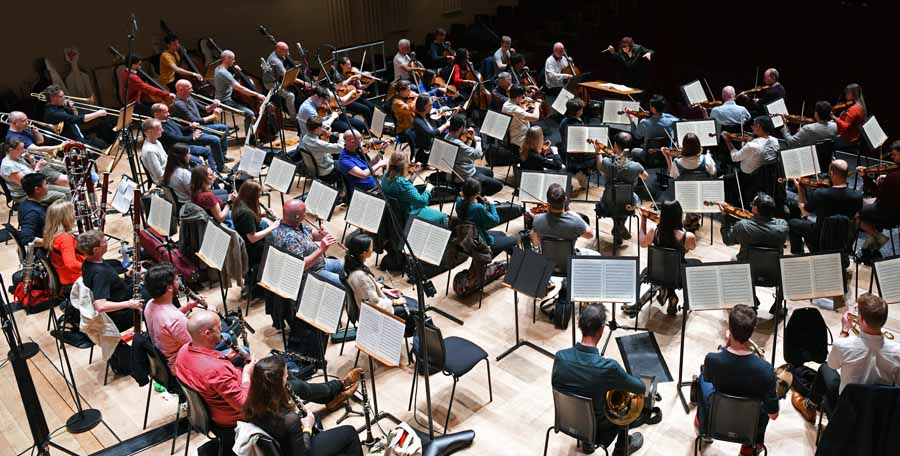
I always like to give detail as to the microphones used in a recording, as it helps to explain how Mike was able to achieve the end result. Just as Beethoven’s works expressed deep emotional complexity, Mike set up the microphones with an appropriate complexity to get all the emotions from the notes, placing microphones strategically to bring out the best from the musicians. With 70 instrumentalists, 4 soloists and 123 chorus vocalists, this was not an average recording session. Much as I just like to use a stereo pair, with the massive orchestration of Beethoven’s 9th, that will never be possible.
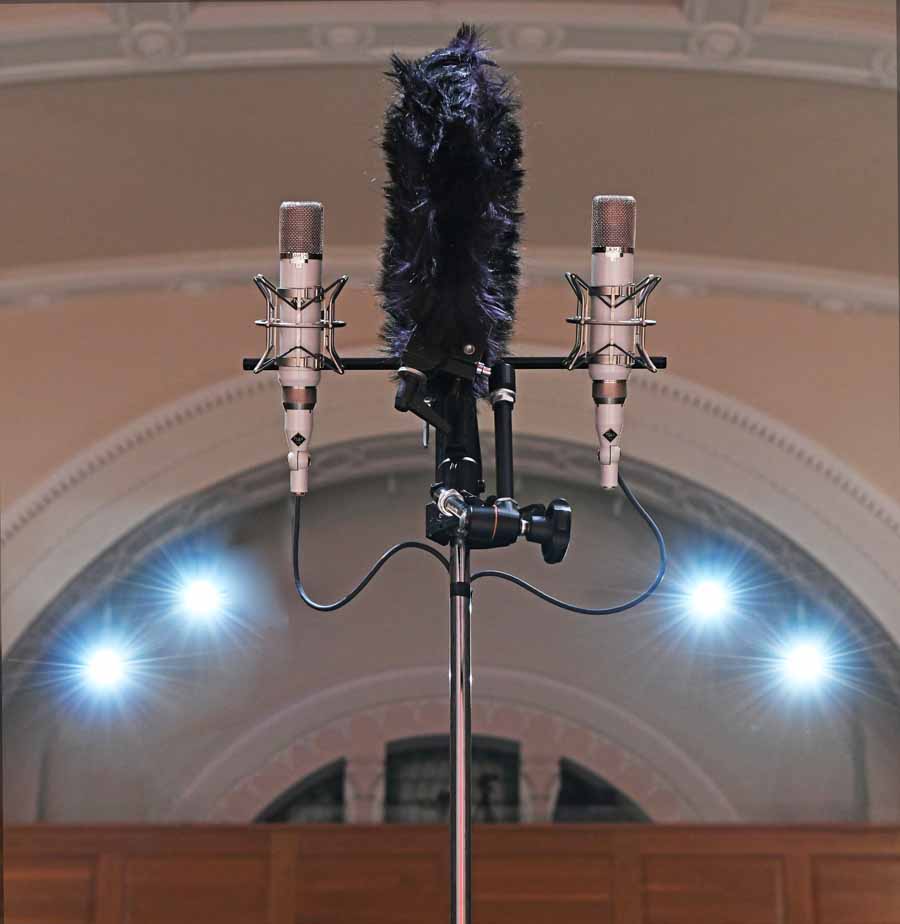
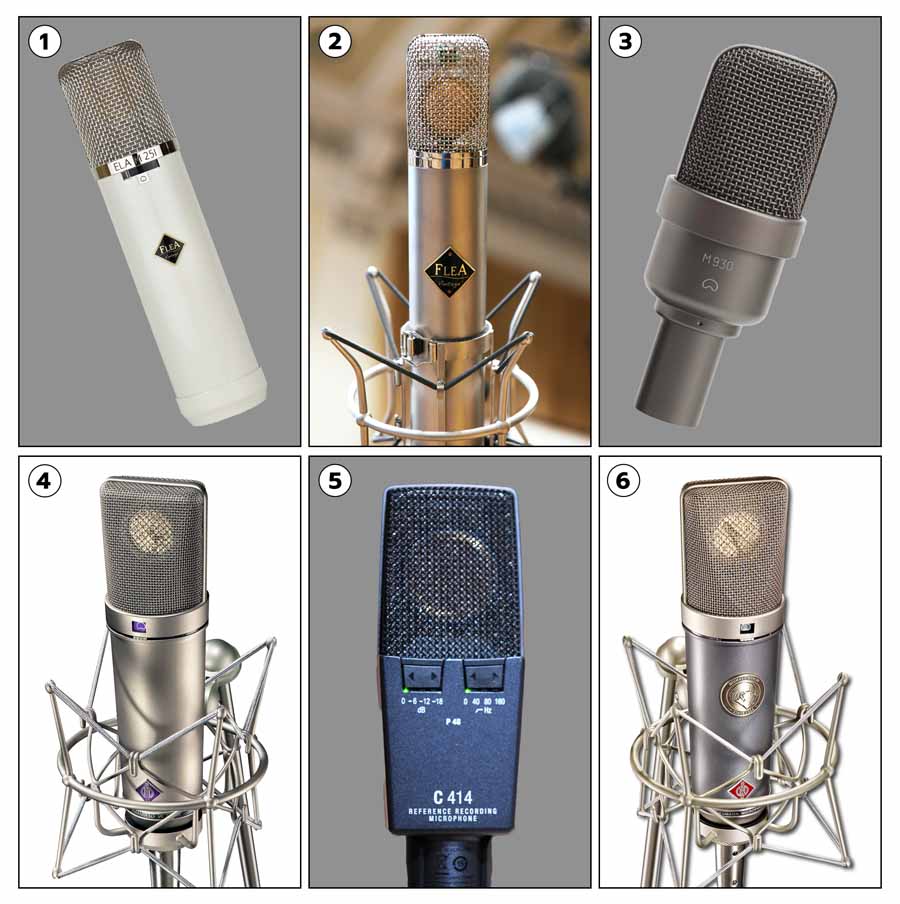
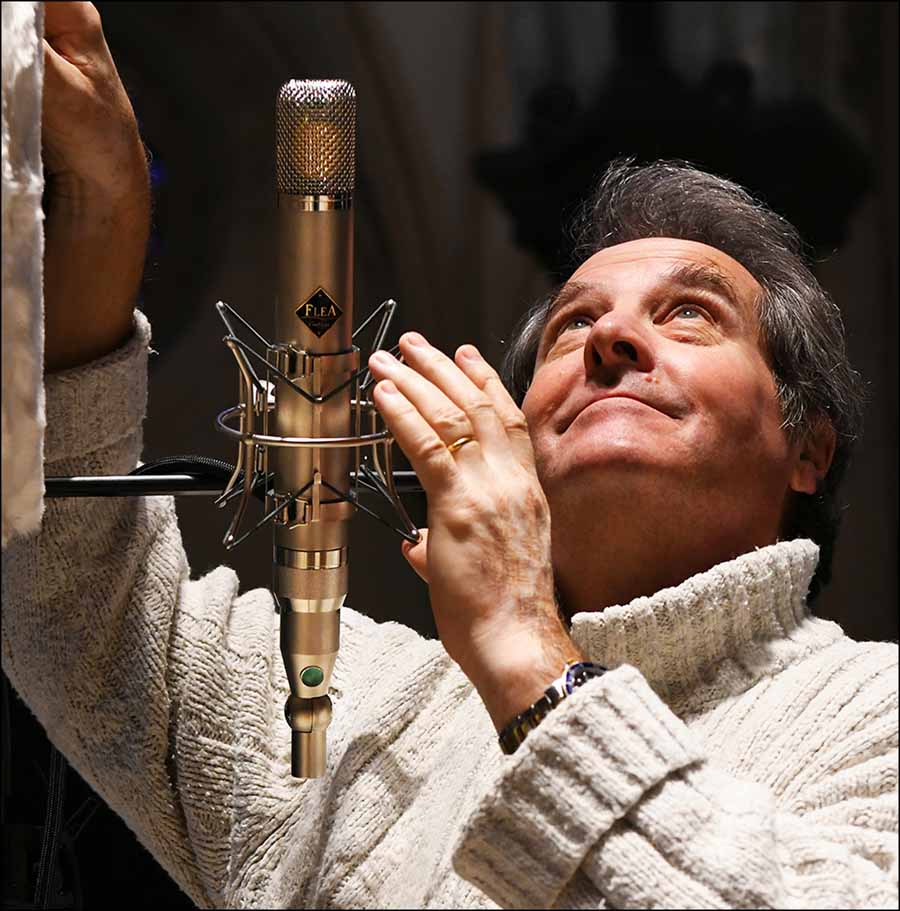
The main spaced stereo pair was a Telefunken ELAM 251 valve microphone, using the excellent Telefunken 6072A tubes. These are separated with a black lamb’s wool Jecklin disc (it was black so that it was less conspicuous to the audience). 6 Microtech Gefell M930’s are added for the choir and wind sections. Gefell was founded in 1943 by the great Georg Neumann. These large diaphragm phantom-powered cardioid condenser microphones are great for classical music. 2 Neumann TLM67’s are used for the bass and the timpani as they are great for low frequencies, deploying the same diaphragm as the elder U67. 2 Neumann U89’s (an upgraded U87) are placed for the perky horns and brass section, and their excellent playing is particularly heard in the 4th movement. 2 AKG C414’s are deployed for percussion and its brilliant aged grandfather valve C12 microphone (designed by AKG but now made by Flea) used as outriggers either side of the stage plus two for the soloists. Where most studios make-do with basic wiring, Mike is a perfectionist and keen audiophile, so cabling is metres and metres of quality Nordost Odin 2, Siltech and Vovox. All audio cables go through extensive burn-in before any recording session, and top-quality Odin 2 mains cables are also deployed.
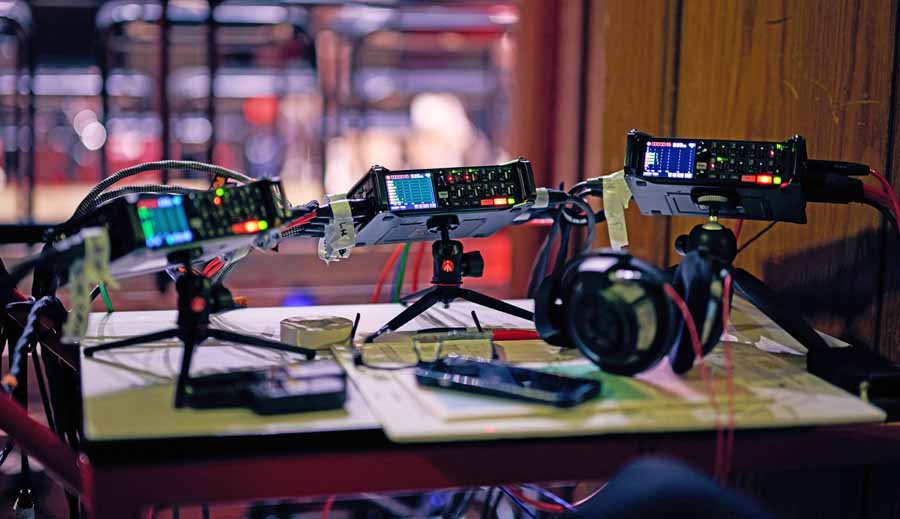
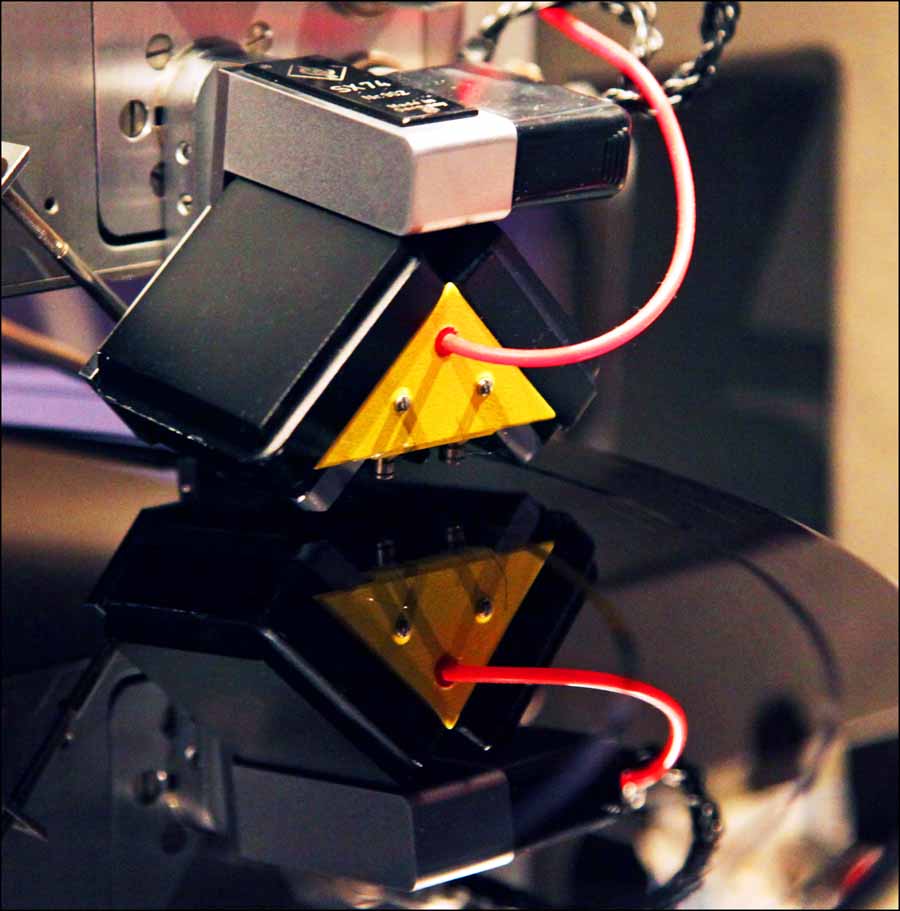
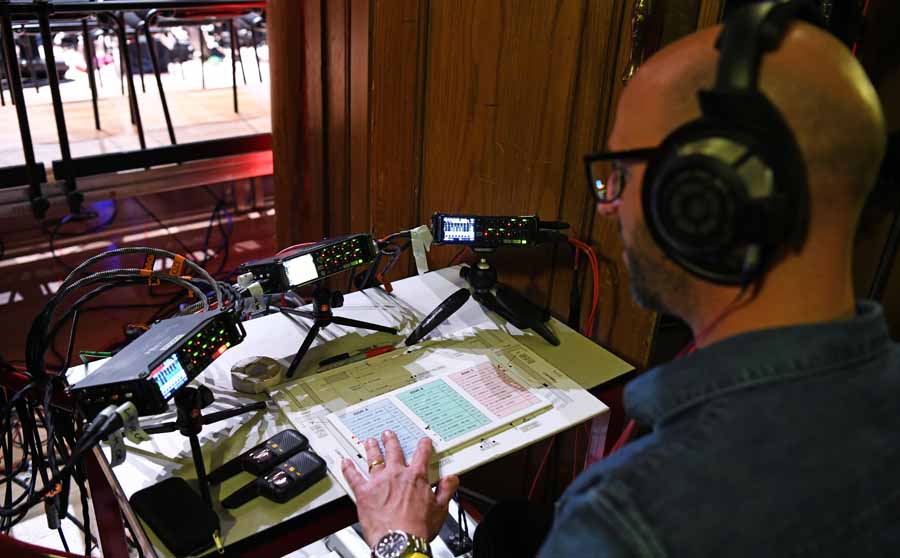
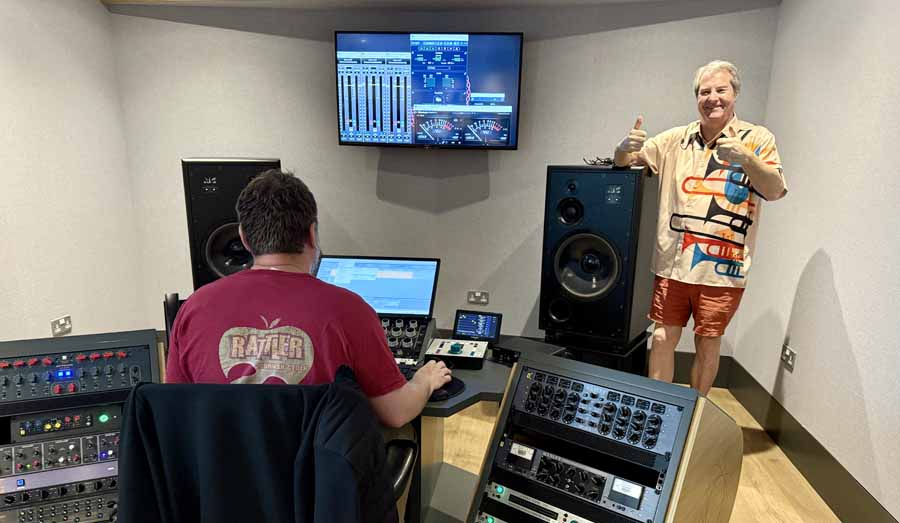
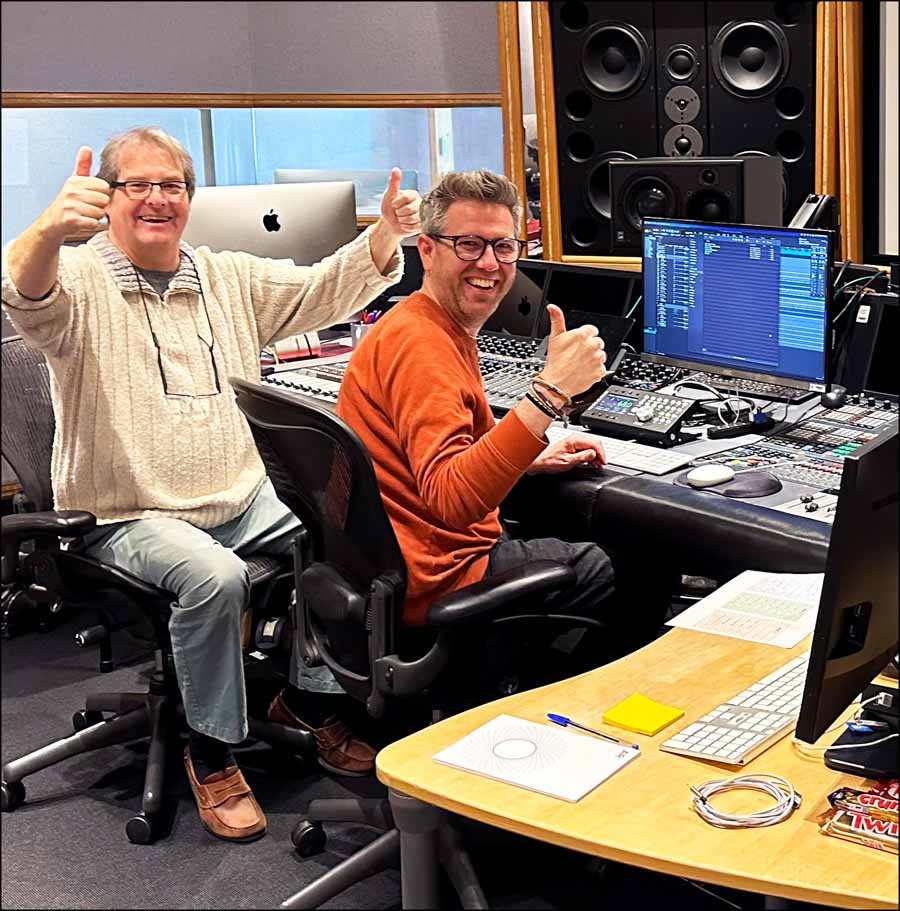
As this is a live recording with almost 200 musicians and singers, all 18 microphones needed to be positioned precisely and hidden as best as possible, of course, adhering to health and safety requirements. To enable the best mixdown, each microphone was recorded onto a separate channel on 3 synced Zoom 32-bit wav 8-track digital recorders, so that it could all be mixed down to stereo in relative comfort and a relaxed state of mind at Air Studios in north-west London. Two additional channels are taken up with a Neumann dummy-head, so that a Binaural version of the concert could also be produced. With their regular excellent balance engineer, Jake Jackson, on a Rupert Neve-modified Neve analogue mixing desk to create a mixdown of the concert, various versions have been produced. This includes the reel-to-reel master on a ½” Studer A820, various digital versions, plus half-speed direct-to-disc vinyl discs cut two floors higher on a Neumann VMS80 lathe by John Webber (carefully recorded at 16 2/3 rpm with adapted RIAA curve so that it’ll sound correct played at 33 1/3 rpm). In Jake’s own Dolby Atmos facility, a surround sound version including added height information is also available for digital download. For this review, though, the 10½” 15ips reel-to-reel tapes for sale from Chasing the Dragon’s website are always a direct copy of the master copy on RTM LPR90 long-play tape with CCIR equalisation at 250 nWb/m. The metal spools are really high-quality, with five screws to hold the two thick aluminium pancakes together, rather than the customary three. The tape arrives in a plastic box made by competing tape manufacturer ATR-Magnetics, which did confuse me at first, but their boxes are chosen as they are very professional and secure.
The Music
When I first heard the 4th movement of this recording at the Audio Show Deluxe at Whittlebury, I was quite emotionally captivated, not only by the grandeur and emotions of the music itself (especially just before the start of the “Ode to Joy” section), but also to the excellence of performance and the detail and clarity of the recording; this is not the sort of work you give a Studio Manager to engineer unless they have already become part of the company’s furniture. Not only do you need to consider exact microphone positions, but you need to know the music inside out so that the recording is as “alive” as the performance itself. What Mike and his team have done is produce a really excellent production, and on high-speed reel-to-reel tape, you really can’t get any closer to meeting musical magic. Featuring on two tapes with two movements on each, you would find it very hard to realise that this was recorded in front of a large audience, apart from noises between movements and the rapturous applause that fades out at the end (Even I was applauding in my music room, and probably Beethoven, too, if he wasn’t still deaf).
Each movement is performed with great emotion and clarity; the excellent bursts of brass, shimmering strings, warm woodwind and pucka percussion are all captured with great detail, fluidity and musicality. Hard to believe that the choir are an amateur group, and the conductor, Rimma, is very petite and was aged 82 when she waved the baton in front of the 70-piece orchestra. It is easy to hear that the performers were enjoying the performance, too.
Mike’s life experience with different types and makes of microphones enabled him to capture the very best from the musicians. Indeed, he didn’t even need to play with EQ, and in the making of the recording, there were no “suck-outs” when microphone channels were raised or lowered at different places in the music (something that always annoys me when I hear sudden added hiss, phase issues or a change in the soundstage in several famous recordings). Indeed, there was very little of anything needed to be done to produce this marvel of a work.
The third movement begins with detailed violin and viola melodies, and very clear and detailed plucked double bass, extending my speakers to the very lowest frequencies. All instruments are positioned in my living room with pin-sharp accuracy: for example, the pizzicato from the 1st violins to the left and the woodwind melody centre and right. The loud brass bursts are clearly placed behind the speakers to the rear of the soundstage. All this whilst maintaining full control of the full and extended dynamic range that the RTM tape will allow, and at no time is there any distortion or breaking up of sounds. It is the last movement, though, that really gets my musical juices going. The lower string melodic line that starts the movement, complementing the orchestral stabs, lets you know that you are in for something quite amazing over the next 28 minutes. Despite being deaf, he knew very well how all the different lines of instrumental playing, plus the opera-like solo vocal projections and then large choral lines would all integrate to make an astounding and momentous piece of music. Funnily enough, the second ever performance of the symphony 200 years ago wasn’t successful financially. Mike and his team luckily have good ears and were able to knit the work together brilliantly, whether on tape, direct-to-vinyl or Dolby Atmos digits. Like Beethoven, Mike is a perfectionist: “I work up to a standard, not down to a price”. This final movement of the symphony is an astounding work and brilliantly put together in this recording. You really do need some excellent kit to make the best of it, though, so my Graham LS5/9’s plus Townshend Supertweeters and WB Torus subsonic generator were needed to get anywhere near how it could sound. The different textures, timbres and dynamics really needed to be appreciated, and my modified Ferrograph Logic 7 is the perfect source.
Having spent a whole life composing and performing music, his deafness now wouldn’t really be an issue for him; he knew in his head how it should all sound. Such a shame his ears couldn’t allow him to actually appreciate it in real life. This movement is full of emotion, anger, love and hope, and the performance and engineering are excellent. Only in a few bars before the long-awaited solo vocal entry did the timing get slightly loose, but as soon as the male and then female tunes begin, I was whisked high into the clouds with Beethoven. The soloist’s miking is just superb, with all four vocalists, choir and instruments exquisitely positioned both left to right and front to rear. The middle section of this movement, an army marching perhaps, always reminds me of the film “A Clockwork Orange”, taking the mood of the music to another place in time, and the recording is brilliantly clear and tight, and perfectly timed. The beating cymbals are just right, too – not too loud or too distant – and the later horn melodies are not only performed really well (I always find horns the weakest link in orchestras I have played in!) but also really lifelike; As a child I used to prefer copying live Radio 3 concerts onto cassette as opposed to studio recordings as the music sounded so much more alive, and the solo vocal lines in this recording do sound like they are set live in a great concert hall.
Epilogue
This is a great achievement for Chasing the Dragon, and not a surprise for me. With the excellent sound engineering and brilliant playing and conducting it is, for me, probably the best and most lifelike recording of this great symphony. And whilst I wonder just what Beethoven could have achieved if someone had offered him another £50 to write a tenth symphony, I wonder what musical marvel Mike might have up his sleeve for his next endeavour. Maybe I should offer him £50, too.
Price: £850 for two reels 15ips, ¼”, ½ track recordings on RTM LPR90, complete with 32 page “behind the scenes” booklet download

Janine Elliot
SUPPLIED BY: CHASING THE DRAGON
Reel 1:
1st Movement: Allegro ma non troppo, un poco maestoso – 16’26”
2nd Movement: Scherzo. Molto vivace – Presto – 14’51”
Reel 2:
3rd Movement: Adagio molto e cantabile – 15’48”
4th Movement: Finale. Presto – 27’52”