

Radiant Acoustics Clarity 66 Loudspeakers
RADIANT ACOUSTICS CLARITY 66 FLOOR STANDING LOUDSPEAKER REVIEW
The Clarity 66 is the first floor-standing speaker that Radiant Acoustics have released. Purifi are well known for its Class D amplification technology, and maybe slightly less well known for its transducer design and manufacture. Radiant Acoustics’ first models were the Clarity 4.2 and 6.2 standmounts, both of which use passive side radiators to fit more driver surface area into a compact form, in portless boxes (strictly not a sealed box). The 66, as well as differing by being a floorstander, also drops the side-radiator arrangement, and goes for a more traditional structure of front-firing drivers and a (large) bass port at the rear.
Jon Lumb takes a look at this loudspeaker costing £6,998

I’ll be honest, the name Radiant Acoustics didn’t mean a great deal to me until relatively recently, but the names behind it most certainly did. So a spot of background is in order, because the family tree here explains an awful lot about what the Clarity 66 is trying to do.
At the centre of it all is Peter Lyngdorf, who by his own count has been in the audio industry for the best part of 50 years. If you’ve not come across the name, you’ve almost certainly come across his work. He’s behind the Scandinavian retail chain HiFi Klubben and the loudspeaker manufacturer DALI; he’s owned NAD and Snell Acoustics in his time, and there’s also TacT, Lyngdorf Audio and its RoomPerfect room correction, and Steinway Lyngdorf. It’s quite the CV.
He’s also one of the co-founders of Purifi, alongside Bruno Putzeys (whose name will be familiar to anyone who’s followed Hypex, Kii Audio or Mola Mola) and Lars Risbo (previously of Toccata Technology and Texas Instruments). Purifi spent a few years in stealth mode in Roskilde, Denmark, before making its public debut at the Munich High End show in 2019. Most folks know them for the Eigentakt Class D amplifier modules, which have turned up inside a lot of amplifiers over the past few years. What’s less widely appreciated is that the transducer side of the business has been there from the start. According to Radiant, the research behind the USHINDI drivers began back in 2015, with the 6.5″ woofer launching in 2020 and the aluminium-cone versions following in 2022. A lot of high-end speaker manufacturers, and a fair chunk of the DIY speaker-building world, already use these drivers in their own designs.

Radiant Acoustics is what you get when you put three of Lyngdorf’s companies in a room together: Purifi brings the drivers and the engineering (Lars Risbo is very much the technical lead here), Nordic Hi-Fi brings its value-driven business model, and HiFi Klubben brings the retail infrastructure. The fourth sibling, DALI, makes the AMT tweeter. The stated mission is to put high-end performance within reach of people who can’t, or won’t, spend high-end money, and the idea is that keeping it all in the family cuts out a fair bit of the margin stacking that normally happens between a driver factory and your living room.
The first two models, the Clarity 4.2 and 6.2 standmounts, picked up a fair bit of attention, not least because “Purifi drivers at that price” was quite a headline. The 66 is the first floorstander, and in Radiant’s words it’s “the ultimate expression of the Clarity philosophy.” Lars Risbo’s stated goal for it was a speaker that could reproduce “the most complex sounds at realistic sound pressure levels without intermodulation distortion”, with “the composure and headroom of a much larger speaker combined with the timing accuracy of a smaller two-way speaker.” No small ambition then, so let’s see how they’ve gone about it.
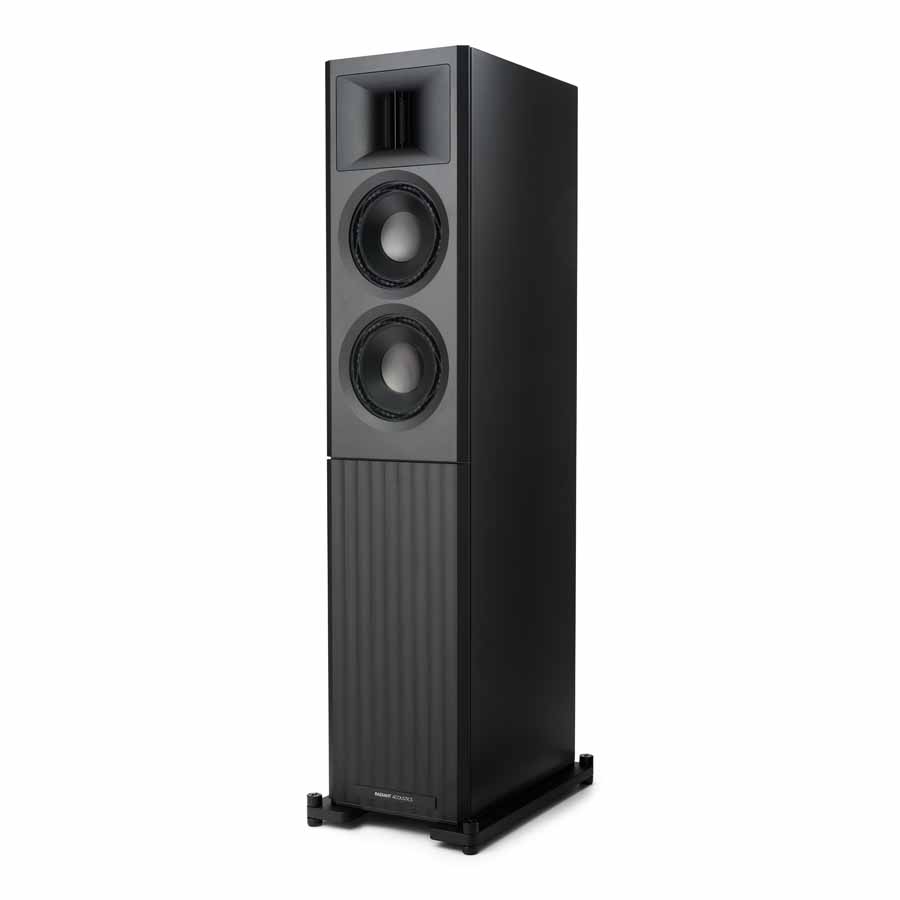
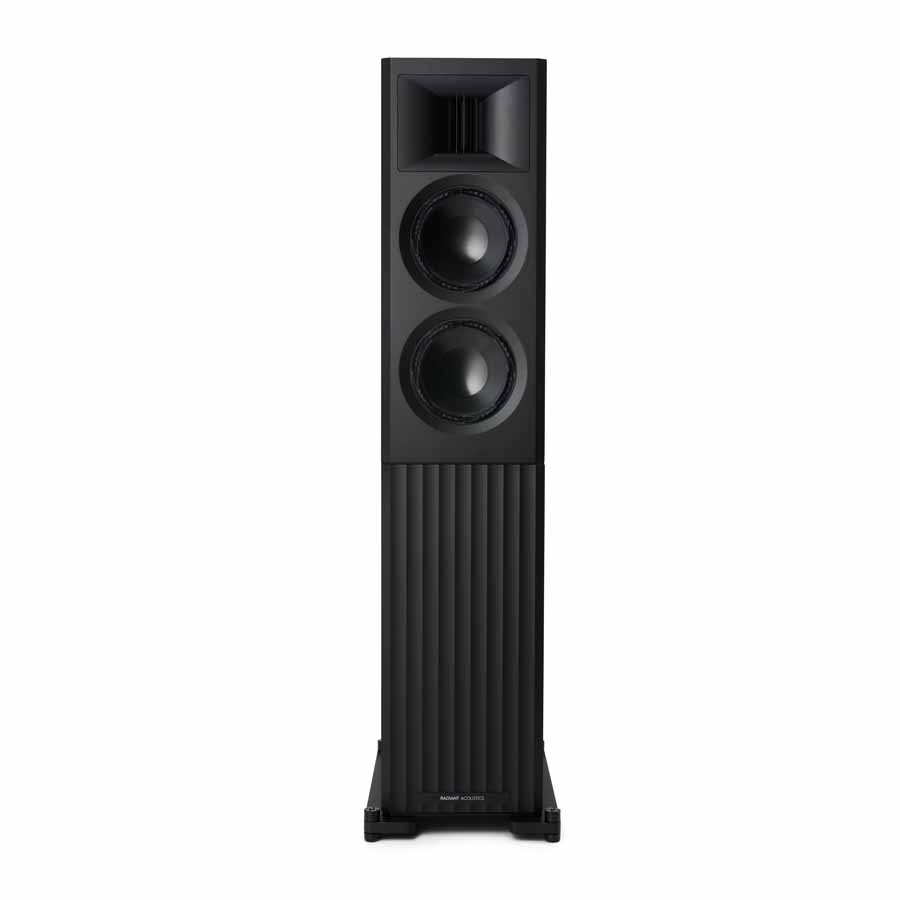
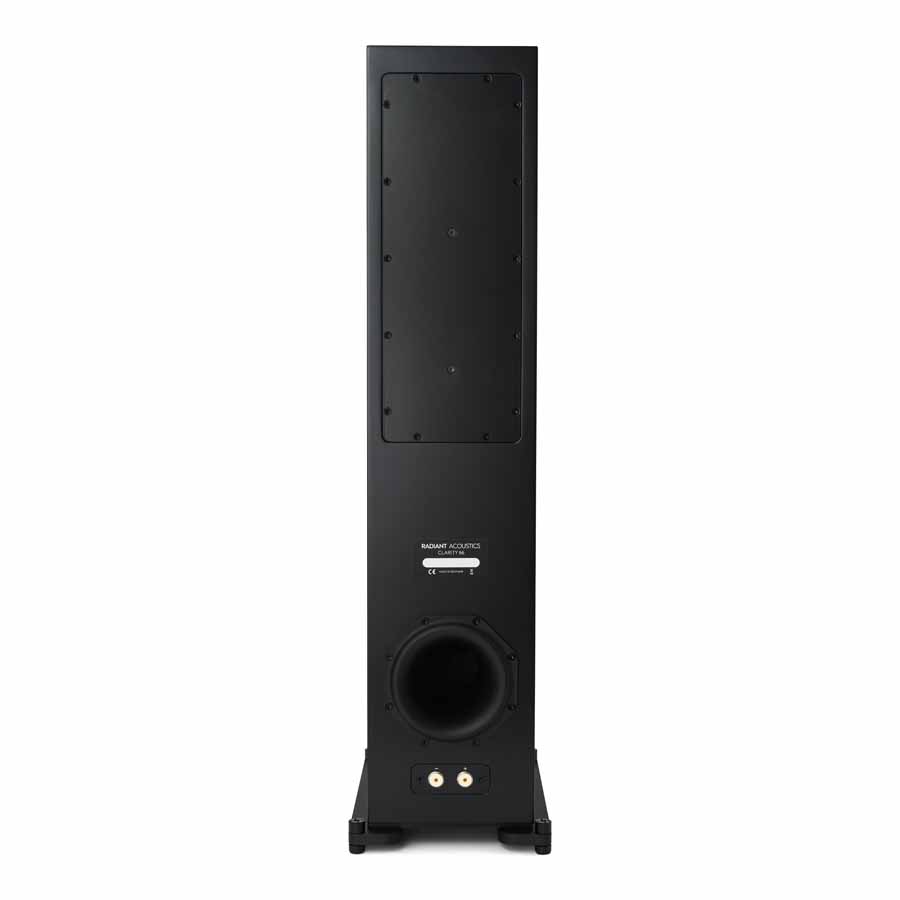
BUILD AND FEATURES OF THE RADIANT ACOUSTICS CLARITY 66
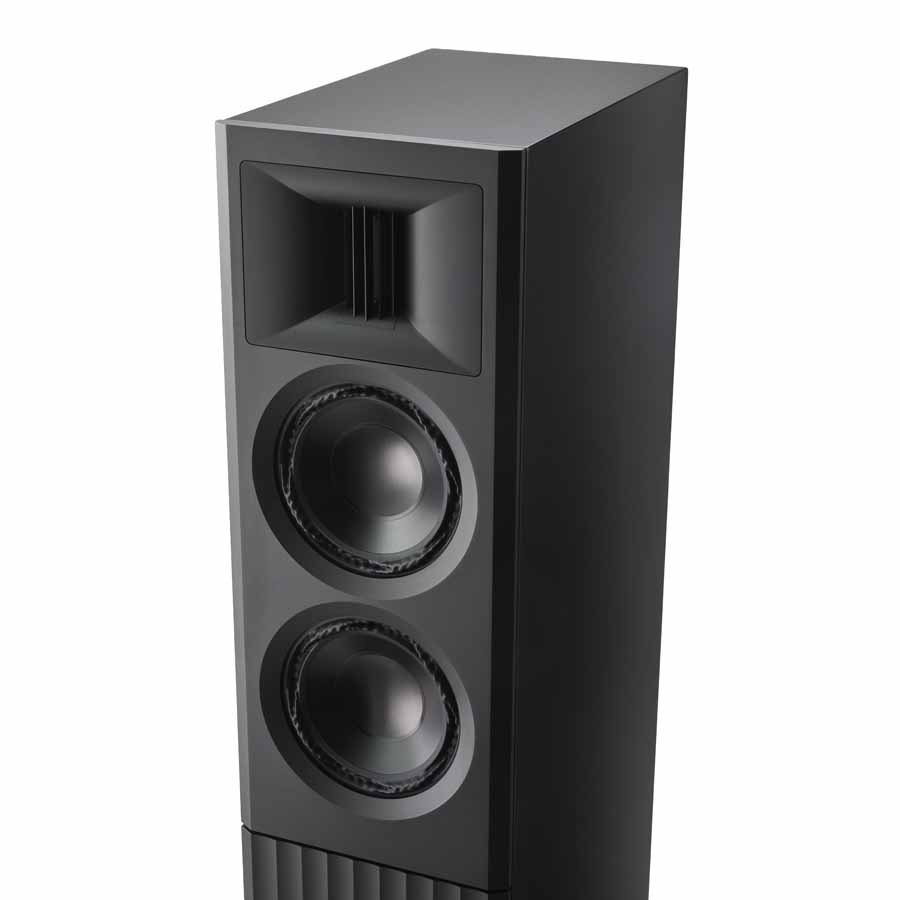
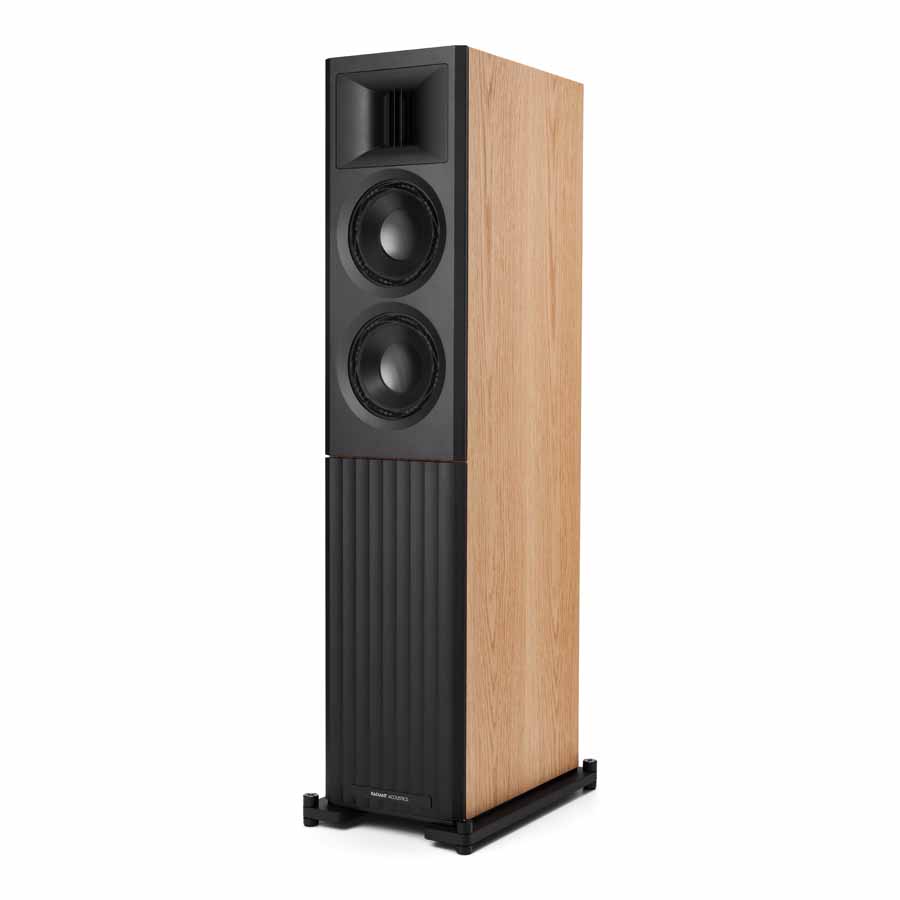
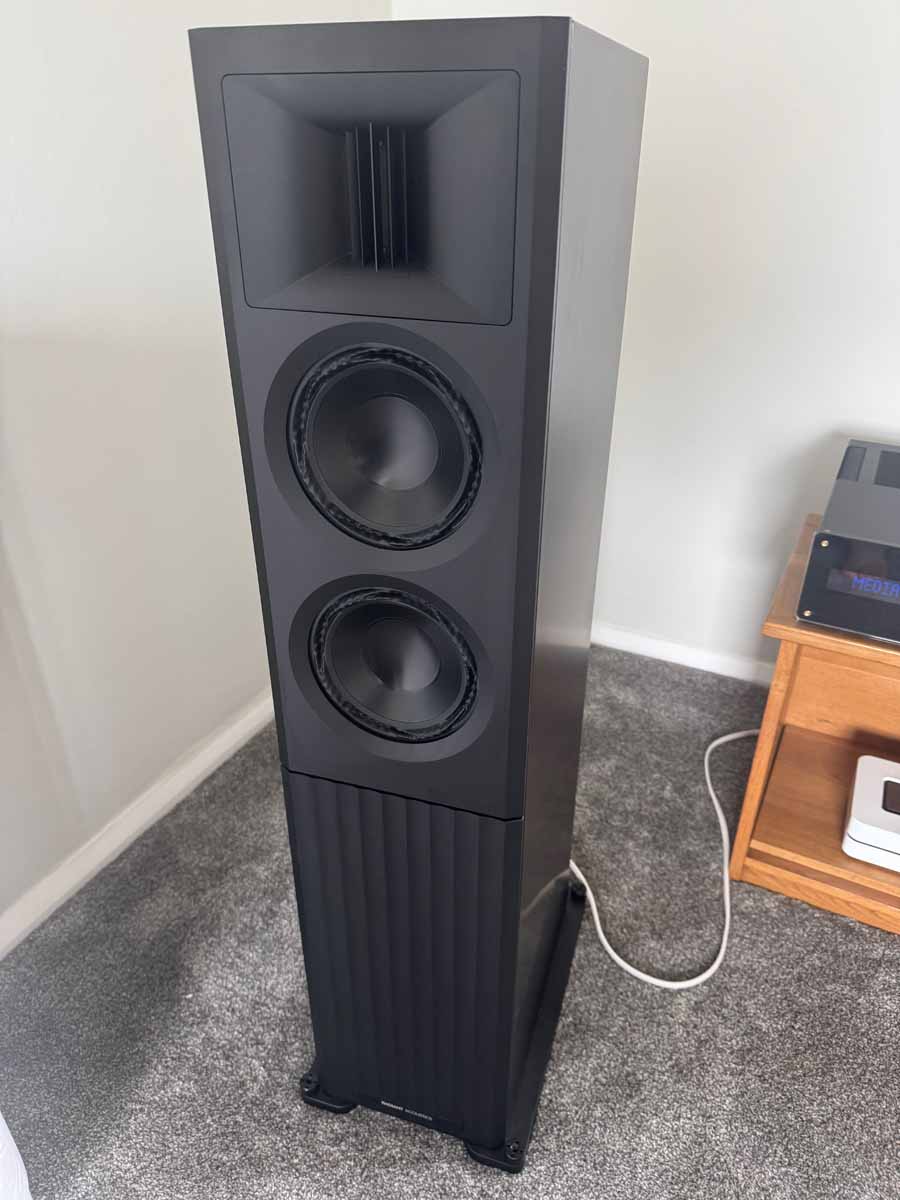
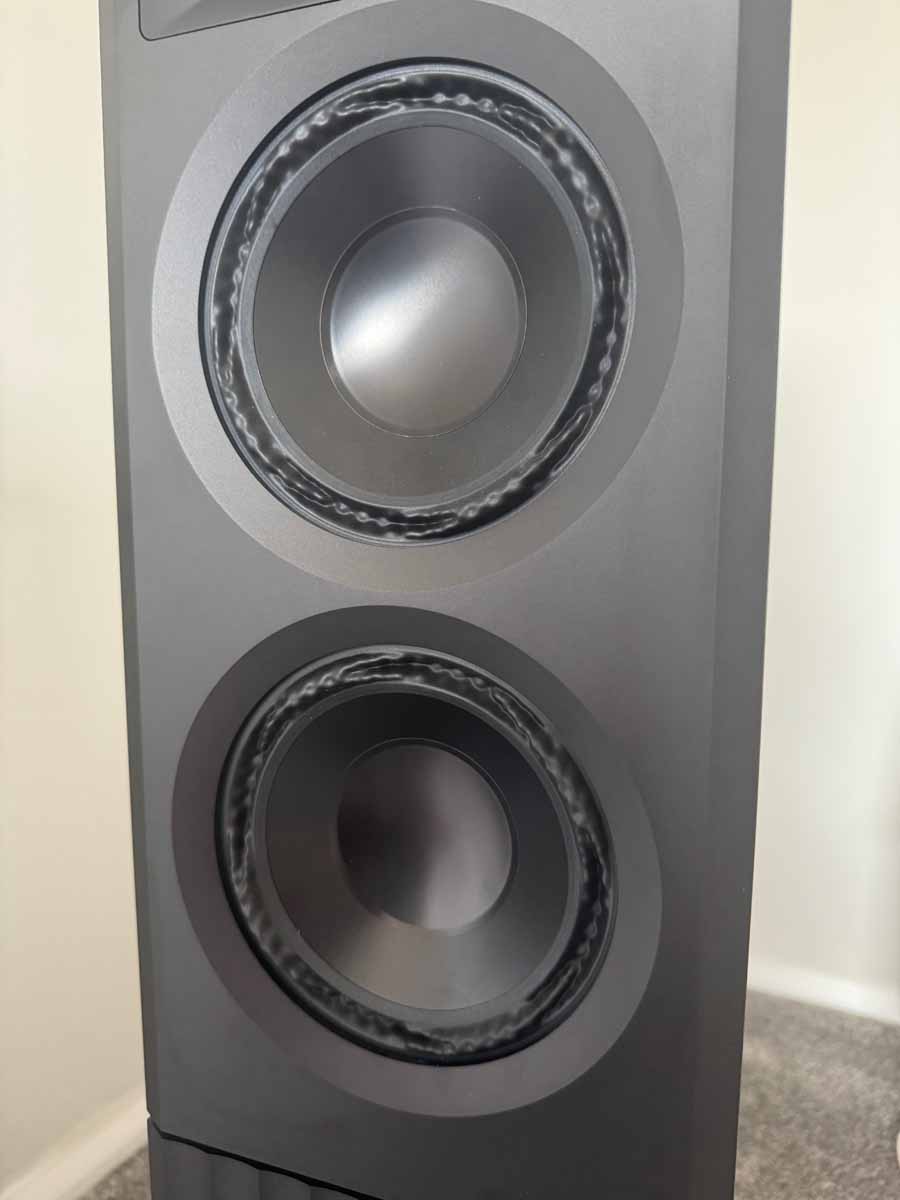
The first thing to get your head around is the driver layout. Look at the 66 and you see two 6.5″ woofers and a tweeter, and the natural assumption is that it’s a 2.5-way or a 3-way. It isn’t. It’s a true 2-way, with both woofers running in parallel, covering everything from the very bottom up to the 2.4kHz crossover point, where the tweeter takes over. Most floorstanders at this sort of size go the 2.5-way or 3-way route, so this is a deliberate departure from convention.
Radiant’s reasoning goes like this. A 3-way puts an extra crossover right in the middle of the frequency range where voices and acoustic instruments live, which is exactly where you least want to be messing with phase and timing. A 2.5-way avoids some of that but needs extra low-frequency filtering, which adds its own timing delay (group delay, if you want the technical term). Running two identical woofers in parallel means the pair effectively behave like a single 10″ midrange in terms of cone area, sharing the workload so each one moves less for a given volume, and therefore distorts less. Stacking them vertically also nudges the speaker towards behaving a little like a line source, which narrows the vertical dispersion and reduces the amount of sound bouncing off your floor and ceiling (the same principle I mentioned in my Piega review, with the tall stacks of speakers at concerts).
The woofers themselves are the aluminium-cone versions of Purifi’s 6.5″ USHINDI driver, where the standmount models use paper cones. Radiant say the slightly heavier aluminium diaphragm helps lower the bass extension and reduces distortion further. Aluminium has its own bad habits, namely a tendency to ring when it breaks up at higher frequencies, but there’s a notch in the crossover specifically to deal with that.
So what makes these drivers special? The whole Purifi approach is about attacking distortion at its sources, with a particular emphasis on intermodulation distortion (IMD). This is the one that occurs when you’re playing two quite different frequencies at the same time, say a bass guitar and a female vocal, and the big, slow movements needed for the bass end up modulating the much smaller, faster movements of the vocal. The result is a smearing and blurring of the detail, and it gets worse the busier the music gets. Purifi tackle this on a few fronts. The NeutralSurround (the rubber suspension around the edge of the cone) has a symmetrical “mountain” profile designed so that the effective radiating area of the cone stays constant even at large excursions. A conventional half-roll surround changes the effective area as the cone moves, which turns out to be a substantial source of IMD. In the motor, a variable-pitch voice coil keeps the force driving the cone constant across its travel, and big copper shorting rings stop the inductance from changing as the coil moves. The pole core is one huge slab of neodymium magnet rather than iron, and the remaining iron is shielded by copper, all of which is aimed at reducing magnetic hysteresis distortion. Radiant claim this gives a cleaner, more “grain-free” top end to what the woofer is producing.
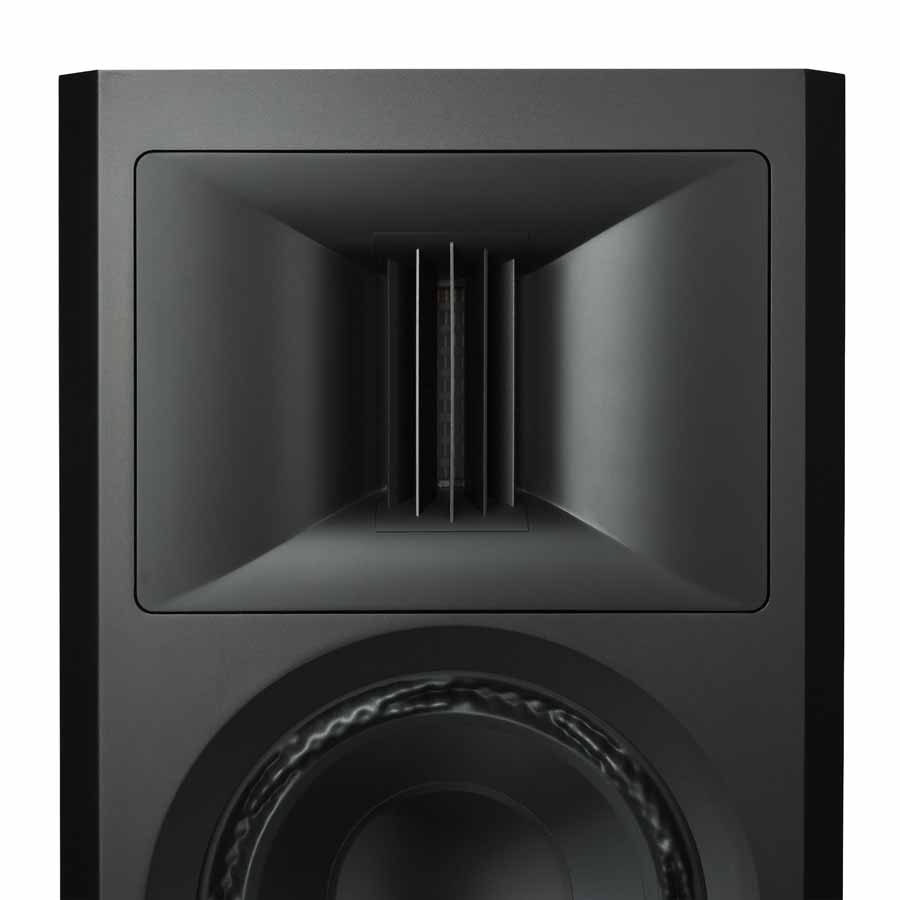
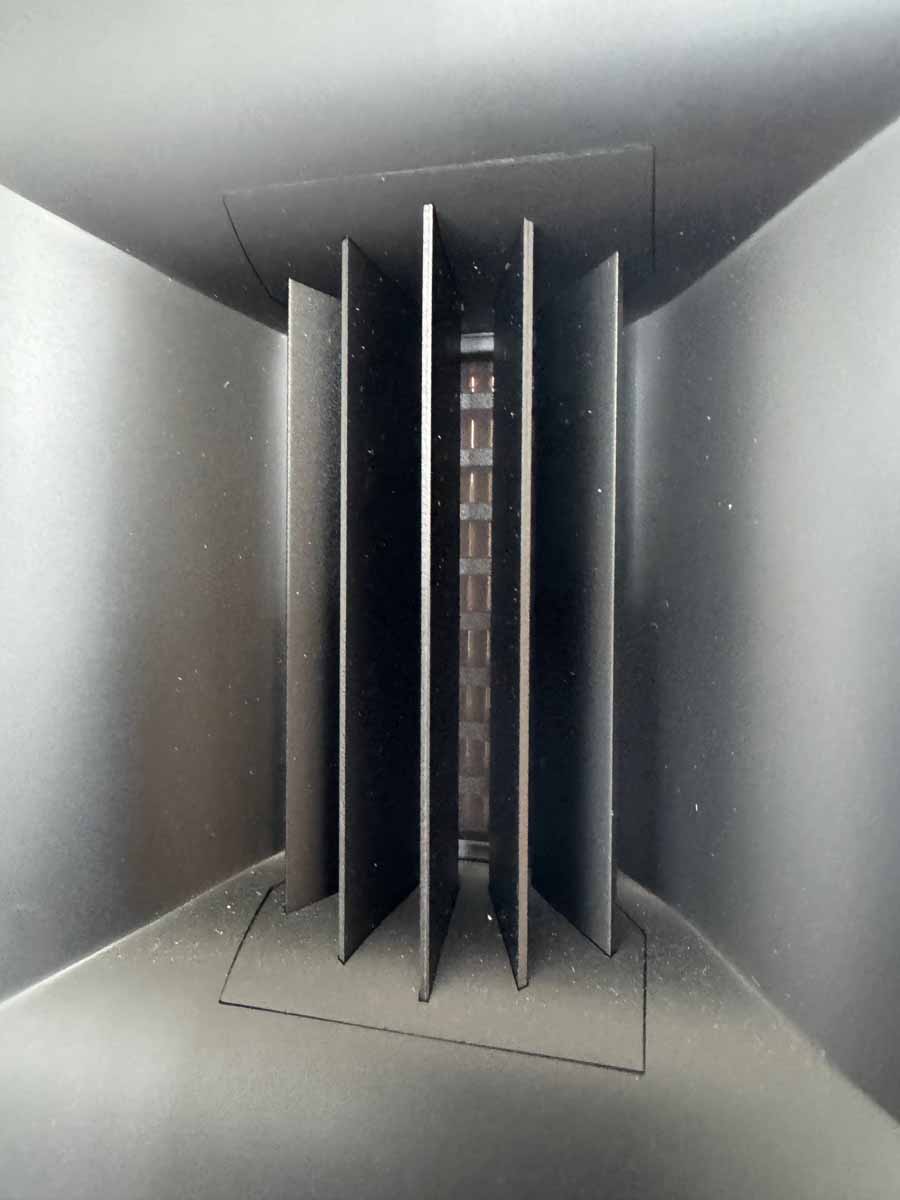
The tweeter is a large Air Motion Transformer, made for Radiant by sister company DALI. Rather than a dome pushing air backwards and forwards, an AMT uses a pleated diaphragm that squeezes air out of its folds, a bit like an accordion. Radiant claim this one is up to four times more efficient than a typical dome tweeter, and it uses a symmetrical dual-magnet arrangement for tighter control of the diaphragm. In front of it sits one of the more distinctive visual features of the Clarity range, a Purifi-designed waveguide with five aluminium fins (which Radiant call “coherers”). It does two jobs. At the bottom of the tweeter’s range, around the crossover, it narrows the AMT’s naturally wide dispersion to match the woofers, which are getting quite directional (or “beamy”) at those frequencies, so that the hand-over between the two is seamless. At the top of the range, the fins do the opposite and widen the dispersion, the idea being that you still get the fine treble detail when you’re not sat bang in the sweet spot.
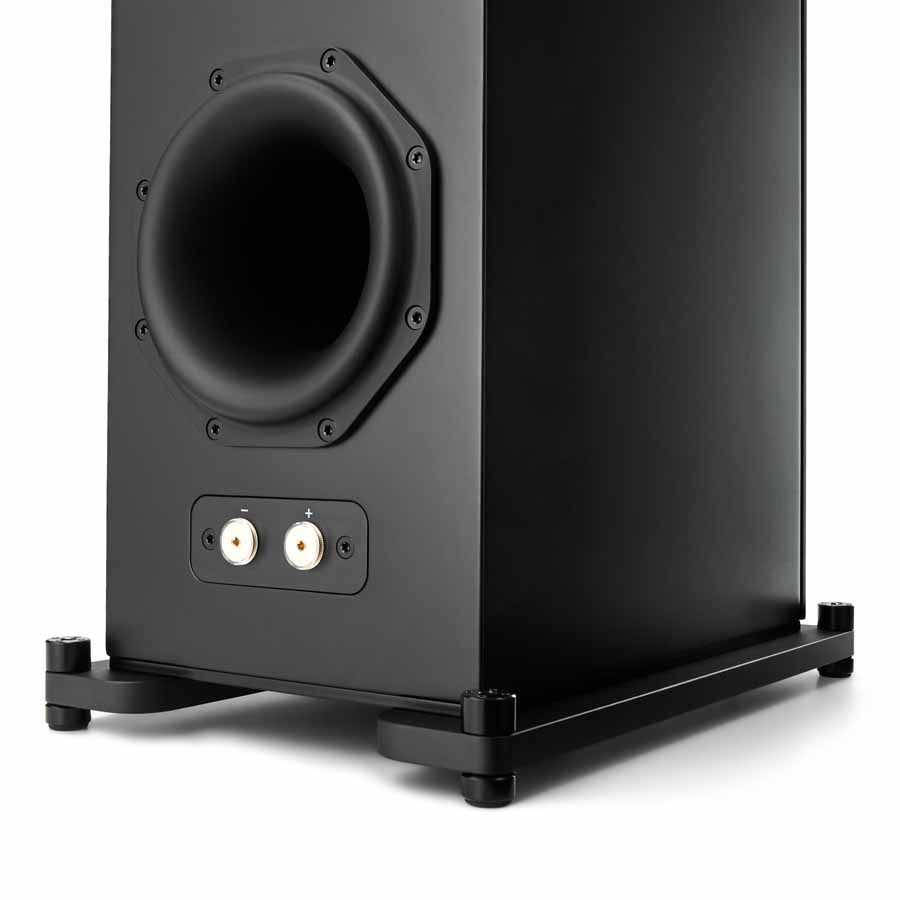
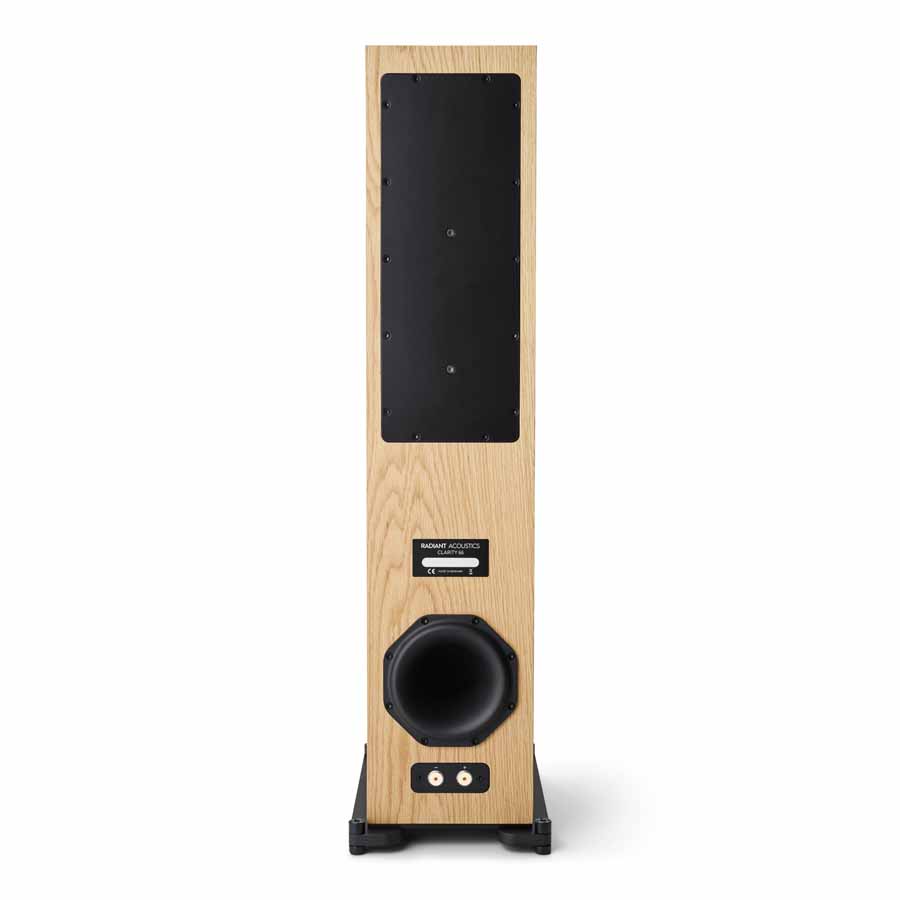
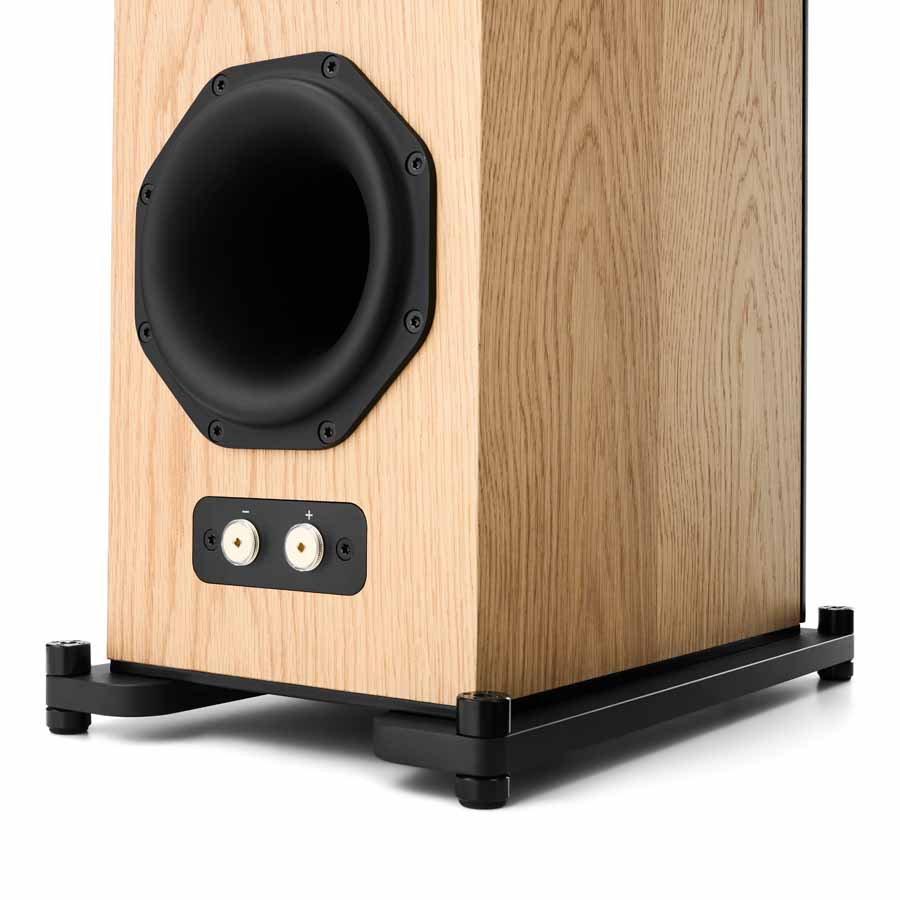
Round the back, near the floor, is the bass port, which is where the 66 really departs from its standmount siblings. The 4.2 and 6.2 both use pairs of passive radiators, but with a lot more cabinet volume to play with (around 27 litres per woofer, compared to around 12 litres in the 6.2), Radiant have gone for a port. Ports can give you deeper extension and a more gradual roll-off than passive radiators, but they’re also notorious for chuffing and compressing when they’re pushed hard. Radiant’s answer is the Superflare port, developed by Purifi and Lars Risbo using computer modelling of the airflow. It’s flared at both ends, inside and out (Radiant point out that this makes it look rather like a jet engine air intake, and they’re not wrong), and the shape is designed to slow the air down and spread it out as smoothly as possible to avoid the turbulence that causes port noise. The air is dispersed through 180 degrees around the port mouth rather than being fired straight out the back, which Radiant say means you can get the 66 closer to a rear wall than you might expect for a rear-ported speaker. The port is tuned to 30.5Hz, and the quoted figures are -3dB at 31.7Hz and -10dB at 24.2Hz, which is very healthy for a speaker of this size.
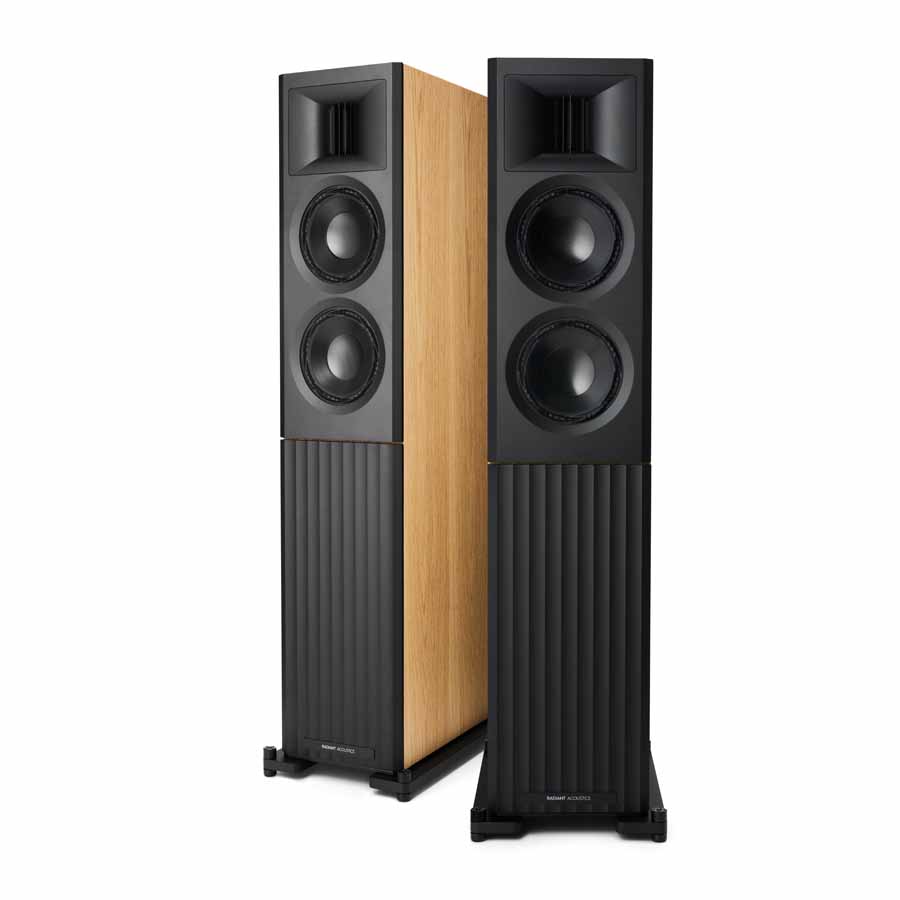
In terms of finishes, the 66 comes in black lacquer, or walnut or oak veneer (the white option offered on the standmounts doesn’t extend to the 66). There are no grilles, so those fins and the AMT are always on show. The review pair submitted are also not from a full production run, so there may be some subtle changes in the appearance/finish in the release unit.
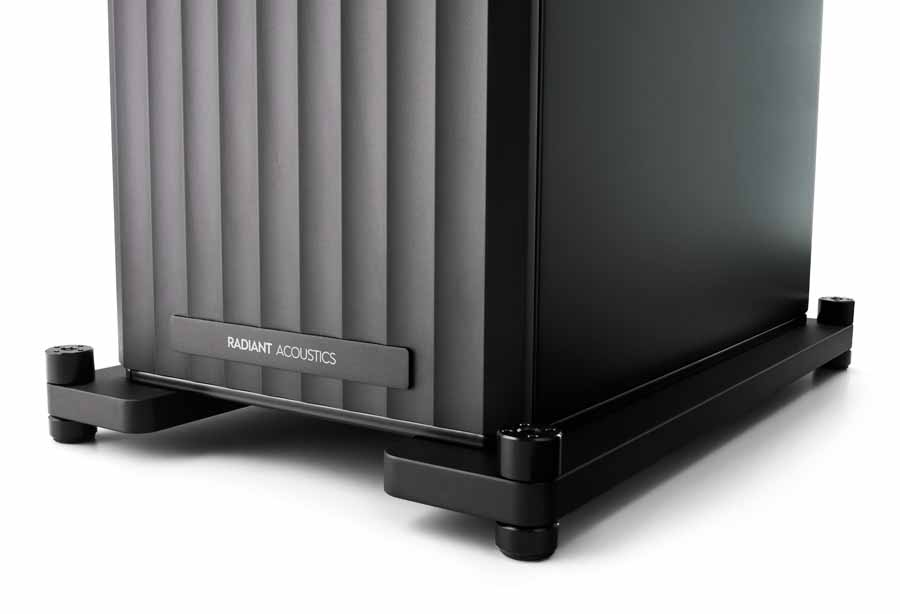
SET UP
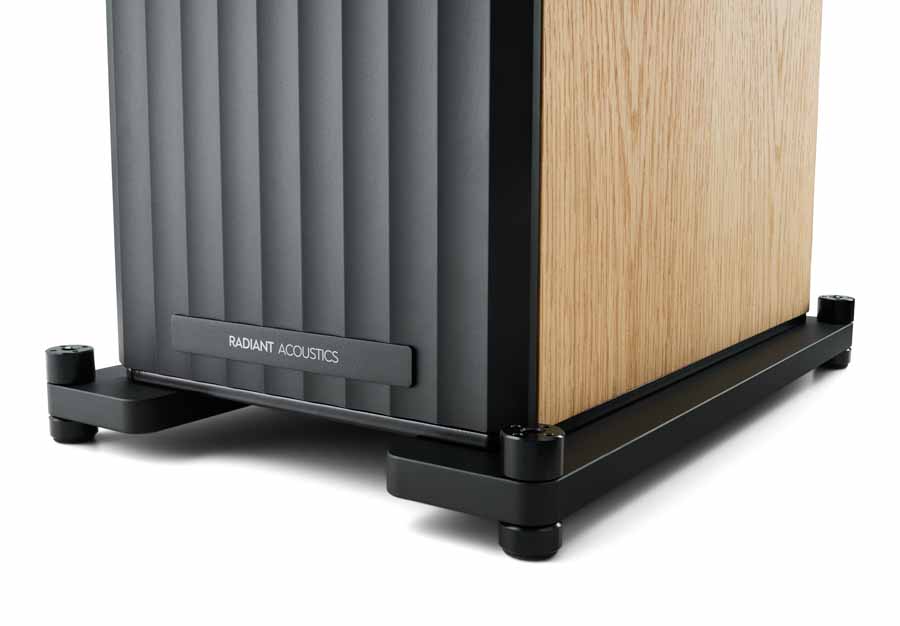
At 40kg each (46kg boxed), these are not something you’ll want to be shuffling around the room on your own too often, so it’s worth giving some thought to roughly where they’re going before you start. There’s a bit of assembly required with the feet, but it’s a fairly simple case of screwing on the foot plates and then adding spikes in much the same way you would with almost any loudspeaker.
Because the port is around the back, the usual instinct would be to give them plenty of room from the rear wall. Radiant’s claim is that the Superflare port’s wide dispersion of air means you can push them closer to the wall than a conventional rear-ported design without the bass getting boomy or the port interacting with the wall. This definitely held out, and the bass response changes remarkably little as you move them forwards and backwards.
On the amplification front, the 66 is a 4-ohm speaker with a quoted sensitivity of 86dB, and Radiant recommend a minimum of 100W. That’s not a ferociously difficult load, but it’s not one I’d be pairing with a low-powered valve amp either; you’ll want something with decent current delivery. For this review, the Electrocompaniet with its 120W rating was certainly plenty.
SOUND QUALITY
For fairly arbitrary reasons, my listening session with these started with a bit of an audiophile classic: Aja by Steely Dan. It’s often regarded as the best recorded Steely Dan album, although musically my personal preference has to go to Pretzel Logic. Much like asking a chef to cook a simple dish, using something as well recorded as Steely Dan can be incredibly informative, because it gives the components nowhere really to hide. Quite a few tracks on this album are really quite busy, with lots going on at the same time. The title track starts comparatively simply, with a particularly lovely bass tone, which really shows off the ability of these loudspeakers to present low-frequency instruments with plenty of punch and presence without it sounding forced, nor with the smearing away of detail that occurs when drivers are struggling. All the way through the track, the separation of instruments is kept really nice and distinct. When we get onto Deacon Blue, I’m drawn to that opening cymbal sound – you really feel you are getting the full extent of the decay on the rides. It gives a surprisingly good “hanging in the air” feeling, which is not something you often get so much when you’ve still got quite a bit in the mix from other instruments at the same time. Peg is also a really great demonstrator of the low end dexterity these speakers have. It’s another great, interesting bass line, coupled with a fairly punchy bass drum sound that sits at a pretty similar tone, but there’s no muddying between the two at any point.
Mezzanine by Massive Attack possesses a number of tracks to give any system a real workout. Kicking off with Angel you get some extremely low frequency bass lines underpinning in an almost soundscape style fashion. Where this can get tricky is the additional percussion elements that sit on top, which should sound crisp and clear on top of all that low end rumble. Where the Clarity 66 really excel, is that you can achieve all the heft and punch you want without hitting such a volume that you are overworking the tweeter and getting sounds that are harsh or strident. Moving on to Teardrop, and that familiar heartbeat-esque drum sound. The snare rim used throughout is clean and crisp. The acoustic guitar and that iconic female vocal remain super delicate, and the whole substance of the track would really fall apart without that coming through. Exchange starts really quite plainly, with simple strings, that slowly get augmented with drums, and then double bass kicks in. There’s significantly more texture to the double bass in particular than I’m used to here, which is always a delight.
QUIBBLES
There are no grilles. Given how much effort has gone into the waveguide and the AMT, I can understand why Radiant don’t want anything sitting in front of them, and I’d almost always listen with grilles off anyway. But if you’ve got small children, curious pets, or a Hoover-wielding member of the household, an exposed folded AMT diaphragm and a set of aluminium fins might be cause for some nervousness.
For some, the power rating may be considered a downside. That said, when you consider the main focus of this speaker is the phenomenally low distortion figures, there aren’t likely to be many people who are using things like single ended triodes lining up to buy them. The natural bedfellow will be similarly focussed class D designs, which almost all run to way more than the 100w requirement.
CONCLUSION
There’s always a risk with a speaker like this that it ends up as a technology demonstrator; something that measures wonderfully and impresses on paper, but leaves you a bit cold when you actually sit down with some music. That’s emphatically not the case with the Clarity 66. All that obsessive work on distortion translates into things you can actually hear: bass with real punch and weight that never muddies into the drums sitting alongside it, instruments that stay clearly separated even when a track gets really busy, and a top end that gives you the full decay of a ride cymbal without ever tipping over into harshness when you push the volume up.
The thing that’s stuck with me most is the composure. Plenty of speakers can do big bass, and plenty can do delicate detail, but it’s rarer to find one that can do both at the same time without one getting in the way of the other. That’s exactly the IMD problem Purifi set out to solve, and on the evidence here, they’ve made a very good fist of it.
At £6,998, these aren’t cheap, but when you look at what’s gone into them (the drivers alone are found in speakers costing a good deal more), they represent a seriously strong value proposition. If you’re shopping for floorstanders anywhere near this price, these absolutely need to be on your audition list.
AT A GLANCE

Build Quality and Features:
A thoroughly engineered speaker, with Purifi’s top-of-the-line USHINDI woofers, a DALI-made AMT tweeter, a CNC-machined aluminium baffle, steel-rod woofer bracing and a clever Superflare port. There’s very little here that’s been done the cheap way
Sound Quality:
Punchy, weighty bass that stays clean and distinct, superb separation of instruments on busy tracks, and treble with lovely detail and decay that never turns harsh, even when you turn things up
Value For Money:
Very strong. This is a lot of genuinely high-end engineering for under £7,000
We Loved:
The combination of heft and clarity in the low end, the separation and composure on complex music, and a top end that’s detailed without ever being strident
We Didn’t Love So Much:
No grilles, no white finish option for the floorstander, and you’ll want a decently powerful amplifier to get the best from them
Elevator Pitch Review: Purifi’s obsession with stamping out distortion, packaged up into an elegant floorstander that delivers the scale and weight of a much bigger speaker, with the clarity and timing of a good two-way. A genuine contender at the price, and then some.
Price:
£6,998 7,998€ $9,998

Jon Lumb
SUPPLIED BY Radiant Acoustics https://radiantacoustics.com
SUPPLIED SPECIFICATION:
Frequency range: 24 – 20,000 Hz (F3 = 31.7Hz, F10 = 24.2Hz)
Sensitivity: 86dB / 1m @ 2.83V
Impedance: 4 ohm
Tweeter: Custom AMT
Midrange/woofer: 2 x 6.5″ PURIFI USHINDI aluminium cone (PTT6.5X08-NAA-09)
Crossover frequency: 2,400Hz
Crossover components: Non-magnetic baked air coils, polypropylene film capacitors
Recommended amplifier power: Min. 100W
Power handling: 350W
Connections: Gold-plated banana connectors
Cabinet: 21mm MDF, 15mm aluminium front baffle, steel rod woofer motor clamping
Internal damping: iCell
Front grille: No
Dimensions (W x H x D): 222 x 1025 x 355mm (268 x 1048 x 401mm with feet)
Weight: 40kg each (46kg gross)
Finishes: Black, Walnut veneer, Oak veneer