
Paradigm Premier Series V2 820F Loudspeakers
PARADIGM PREMIER SERIES V2 820F LOUDSPEAKERS REVIEW
Janine Elliot takes a listen to Canadian brand Paradigm’s Premier Series V2 820F Loudspeakers for HiFi PiG.
If loudspeaker value were defined by the number and size of the drivers, the Paradigm Premier Series V2 820F would win hands down (by quite a lot). This 110cm-tall floor-standing speaker is at the top of a sextet of excellently priced speakers. Paradigm’s top loudspeakers normally demand serious prices from this excellent Canadian company, but this speaker is just £2,999, and this time it is made in Indonesia. Would that mean it wouldn’t sound like a Paradigm? Well, this series of speakers has been “tuned” for European ears, so they must be OK for me in Britain.










Coming from Mississauga, 28km southwest of Toronto, Paradigm Electronics Inc. was set up in 1982 and is part of the PML Martin Logan and Anthem trilogy of HiFi brands, and was co-founded by Jerry VanderMarel and Scott Bagby. They wanted to base designs on technology (these come with lots of synonyms) and on competitive pricing. To use their own words, they wanted to build their speaker empire on “science, not speculation”. They wanted their speakers to be sonically neutral, and in order to do this and create products that everyone could experience, they invested in university audio researchers and the National Research Council of Canada to arrive at their audio nirvana. Jerry, who deals with sales, marketing and advertising, and Scott (design and manufacturing) gathered together a team of dedicated audiophiles and audiophile engineers, and from this Paradigm was born.
Their speaker range is massive, including rock speakers for the garden; oh, and they even make amplifiers, too. Their goal is to achieve a level of performance that removes the speaker from the equation, so I wanted to find out if the 820F would similarly disappear in my living room, though at 110cm high, that would be a …tall… order.
BUILD AND FEATURES OF PARADIGM 820F LOUDSPEAKER
The Premier Series V2, first shown at AXPONA in April 2026, is more than just a next-generation release of an existing product; it is designed as an entry point into high-end audio for both 2-way and AV systems for those seeking a significant upgrade over standard systems, and in terms of sophistication, it certainly is grand.









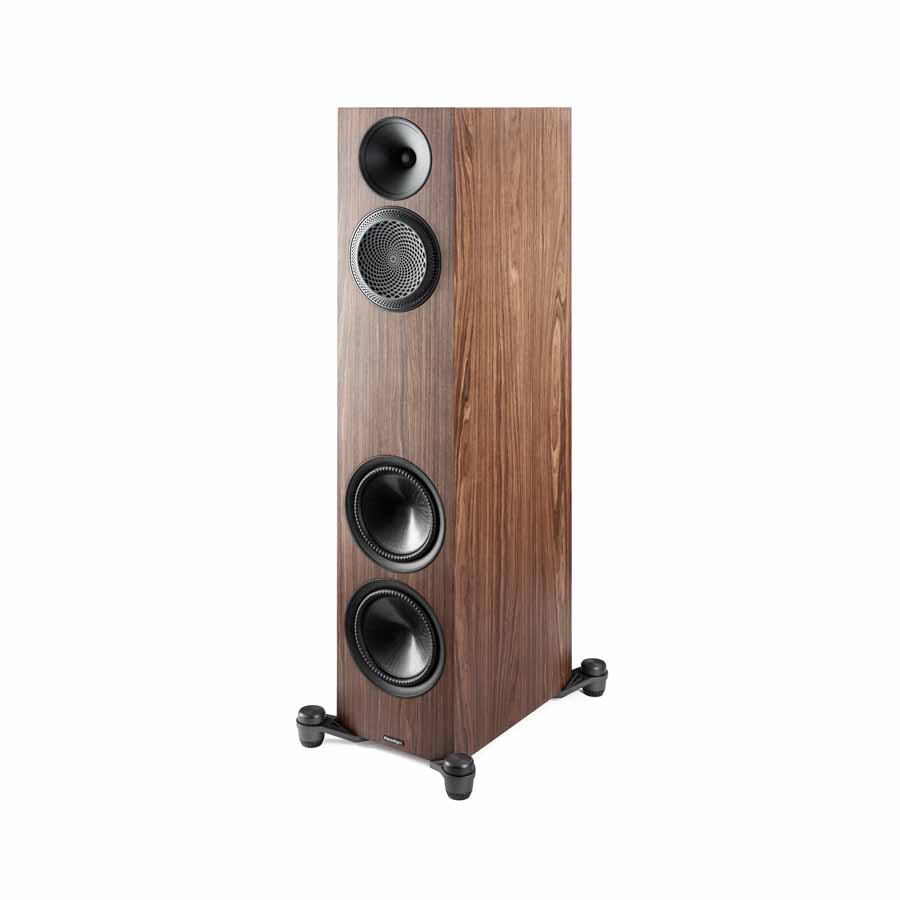
Similar to, but larger than the 720F, this is a 4-driver, 3-way rear-ported system with AL-MAC, AL-MAG, Carbon-X, OSW™, and PPA™ designs.
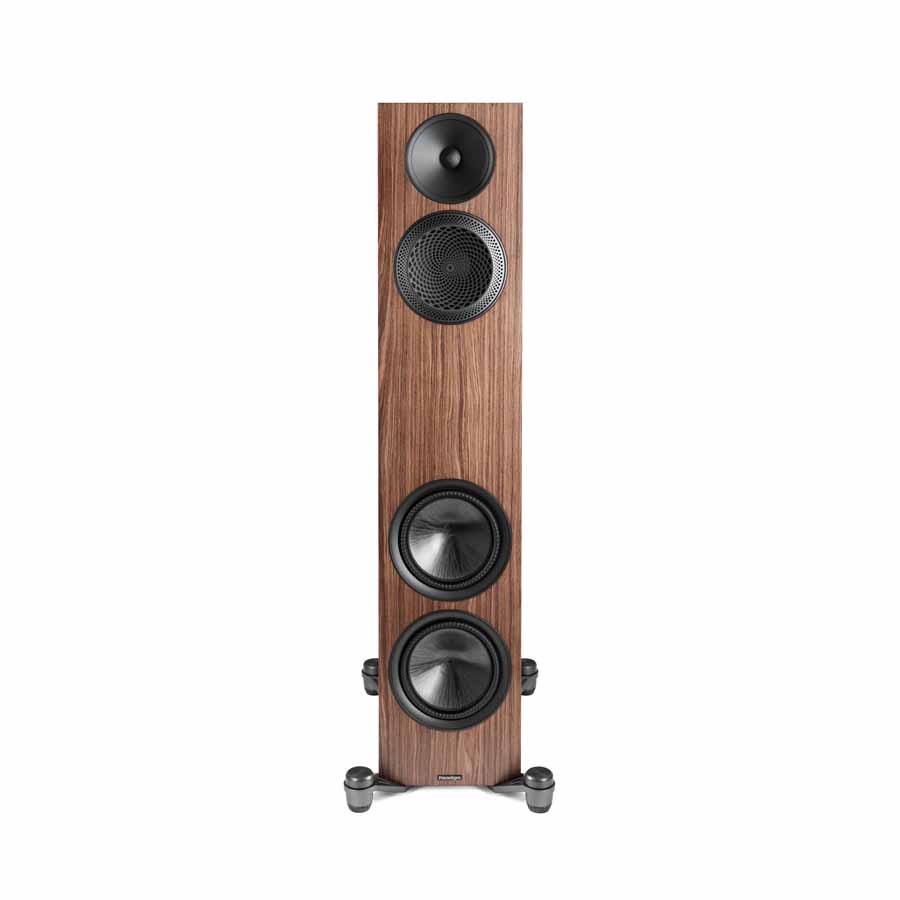
It uses trickle-down technology from its existing and more expensive loudspeakers. In simple terms, this means an on-axis 1” aluminium, magnesium and ceramic tweeter with a solid waveguide to ensure a wide “sweet spot” for the listener (the spec. says AL-MAC™ Ceramic Dome with Oblate Spheroid Waveguide (OSW™), a Perforated Phase-Aligning (PPA™) Tweeter Lens and ferro-fluid damped/cooled). The midrange is a 6” AL-MAG™ cone, again a mix of aluminium and magnesium, with a large perforated phase-aligning (PPA™) lens at the front, which is there not for looks but as a diffuser to spread the mid-frequency sound across the stage, ensure that all frequencies hit your ears at the same time, and also block out-of-phase frequencies. The manufacturer also claims a greater 3D soundstage, something I comment on later. Whilst phase-aligning on tweeters has been common for over half a century, doing so on a midrange loudspeaker is not so well known, and indeed they tried it on their previous 800F. Whilst the excursion of the driver at the centre and edge of the cone should be equal, as they are at different distances relative to the listener, there will be some phasing issues, and that distance will be different for each frequency of sound, too. Thus, getting a perfect cancellation of out-of-phase sound waves will never be perfect, though their diffuser aims to do this. The driver has a 2” high-temp multi-layered voice coil with a ventilated Apical™ former.
Both the tweeter and midrange speakers are in separate internal cabinets. Where the previous 800F had 6.5” bass units (and both higher up the front baffle), the new V2 has grown to two 7” CARBON-X™ carbon unibody cones, a single-structure design that is both strong and lightweight, with ART™ (Active Ridge Technology) and a 1” high-temp multilayered voice coil with a ventilated Apical™ former. The ART™ feature is basically an interesting-looking ridged and curved cone surround which allows greater movement of the cones and lower distortion.
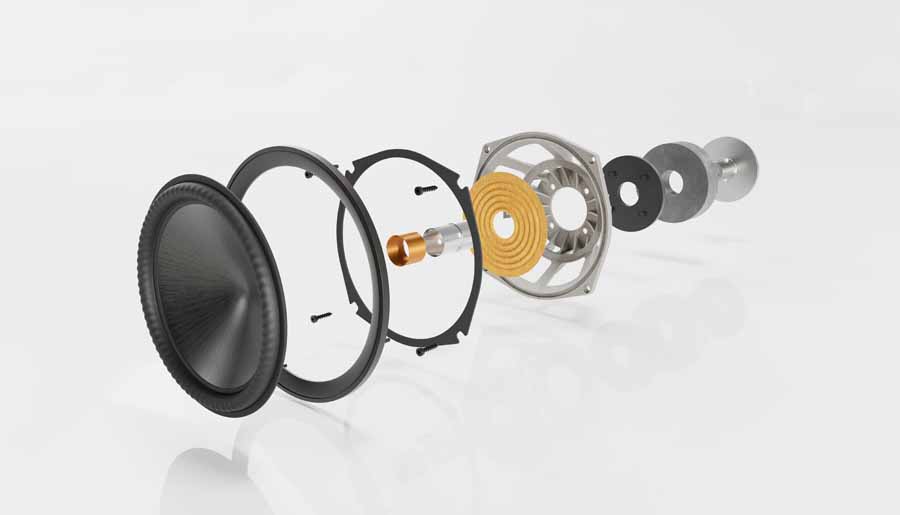
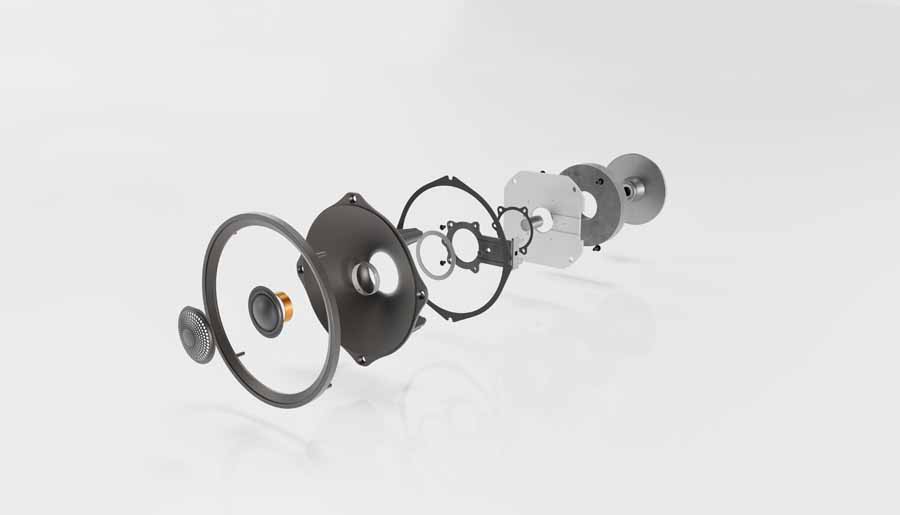
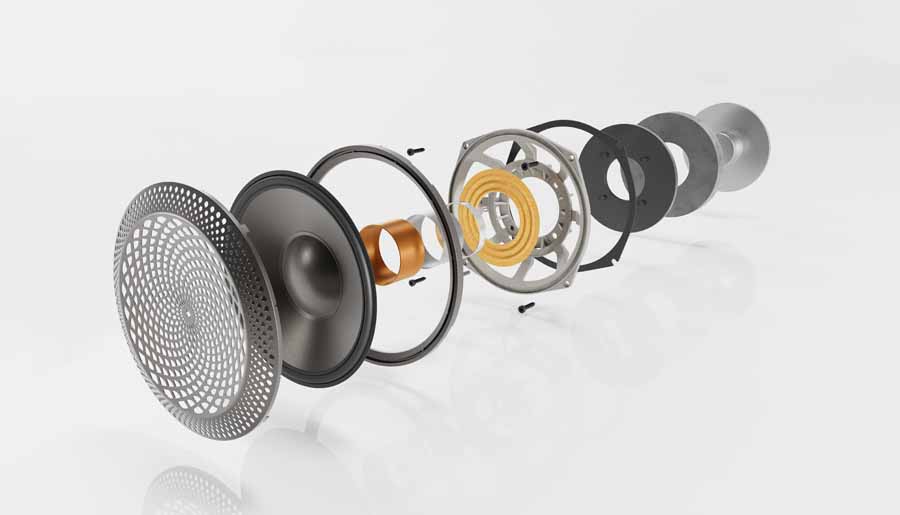
These are very efficient speakers at around 93dB/m/1W and the whole is classed as 8 ohms.
With all these exciting new acronyms, I wouldn’t be surprised if it were mixed with unicorn blood from Harry Potter, Kryptonite from Superman, and Unobtainium from wherever you can get that. Just as S/N, W/F and THD haven’t meant an awful lot to reviewers since the 1980s, it is really what it sounds like that will rock my boat.
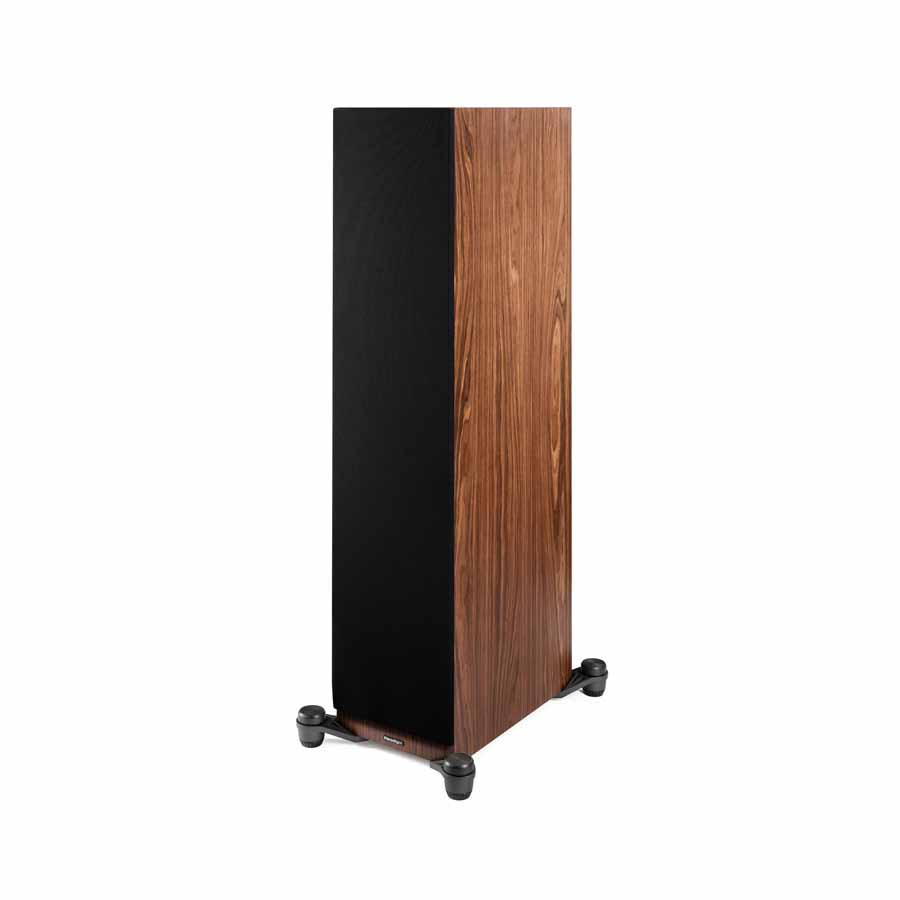
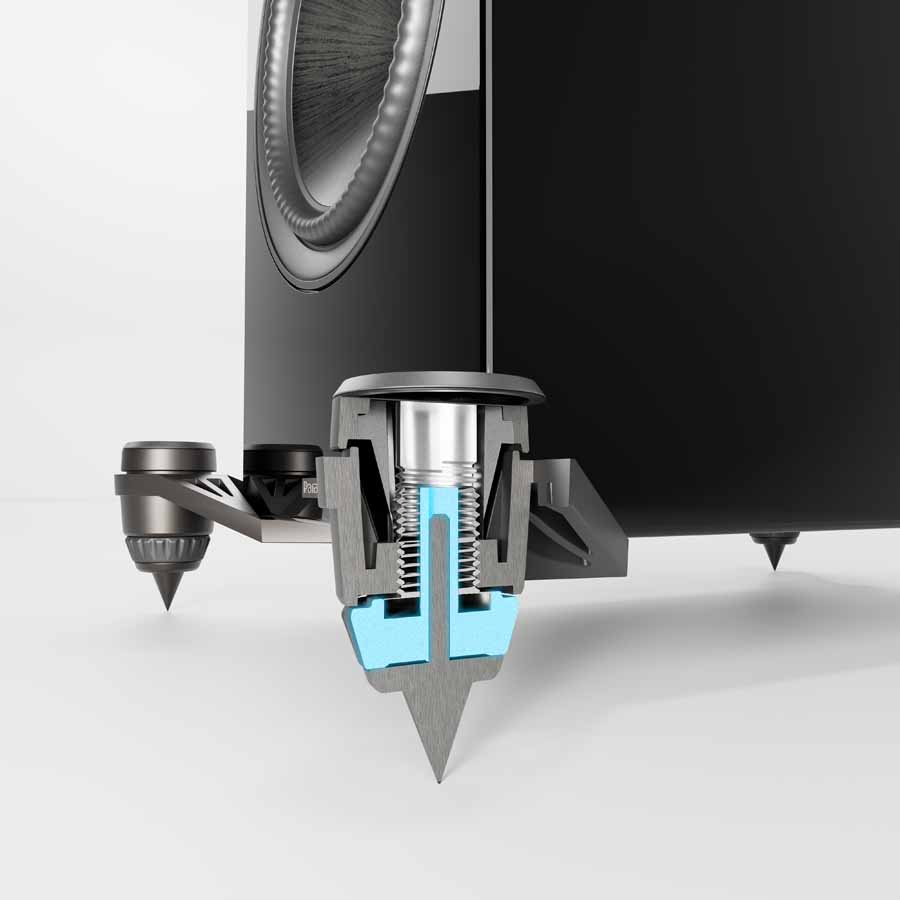
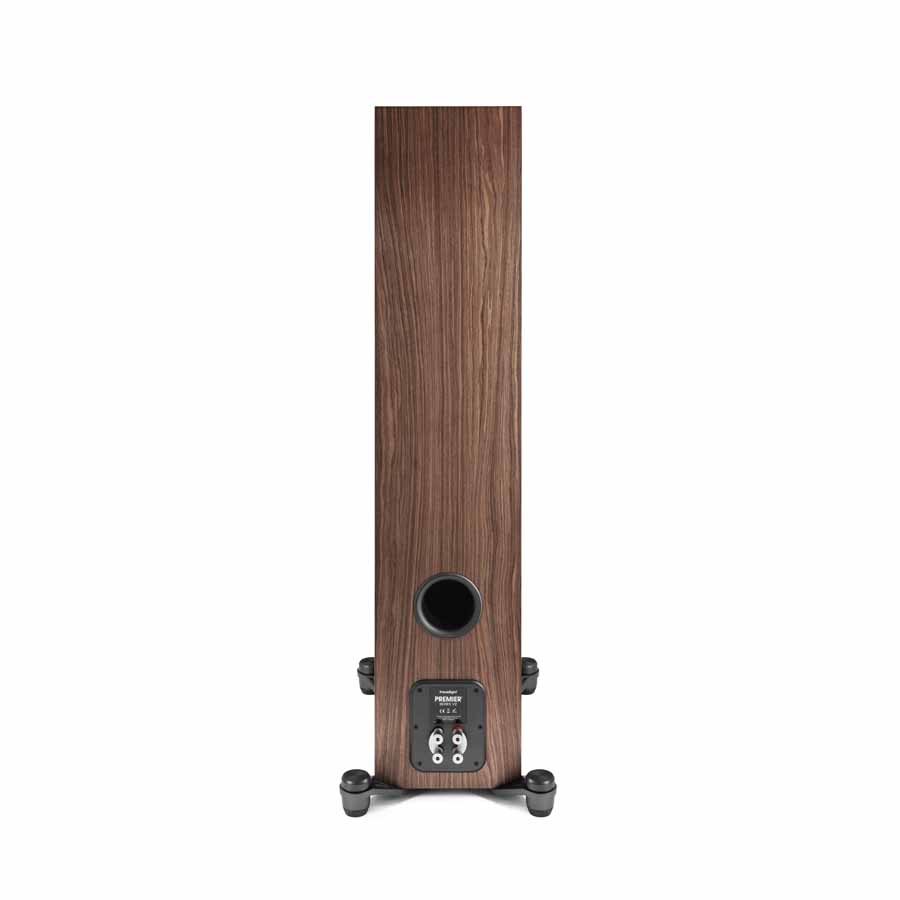
Adjustable outrigger shock-mounted isolation feet at the base of the unit give a choice of rubber (for hard floors) or spikes (for carpets), and help give the package a sophisticated look as well as isolating the speaker from the floor, which can affect the sound. These feet are really well made and solidly keep the speakers fixed in place. Each cabinet is constructed from MDF and internally braced to be acoustically inert.
There are 4 real-wood veneer finishes on their website to choose from, including glossy Piano Black, black Walnut, Walnut and Satin White. The sample for review was the basic Walnut variety, excellently veneered for the price, and had a cloth grille with very strong magnets spread over the whole surface to ensure it fitted securely over the drivers without faffing about. Grilles with pins and sockets would be far too complicated to affix.
SETUP AND USE
For review, I set up my Synthesis KT88 mono-blocks and also the Krell KAV250a SS amplifier with vinyl, streaming and CD sources. As the speakers were bi-wired, I used a single-ended TQ Ultra Silver II speaker cable connected to the tweeter terminals and linked to the bass terminals, and Townshend and Nordost interconnects between the sources. Apart from being very heavy, the speakers were easy to move to the ideal listening position, and I had them toed in so the tweeters faced my ears. Indeed, the best sound was when they were aimed towards me and the grilles were removed.
SOUND QUALITY
The first music on my Pre-Audio turntable was Goldfrapp’s 6th album, ‘Tales of Us’, a very personal music photo album of various people that took the duo 2 years to produce and release. It follows 10 specific people – from Jo, Drew and Annabel to Clay in track 10 – with themes of love, loss, madness and identity. My favourite is “Annabel”, but I did find that the excessive reverb and close-micing of her distinctive wispy voice meant that I couldn’t accurately define Alison’s position in the stereo spread, and the Paradigm’s midrange certainly doesn’t hide any defects in the recording. The midrange diffuser could be partly the issue here, and whilst it meant I could sit anywhere on my settee, I couldn’t get quite as precise positioning detail, and certainly no instrumentation wider than the position of the speakers themselves. What is noticeable, though, is the extended bass response due to two 7” drivers. The bass drum and double-bass offbeat rhythm in “Jo” was very confident, as were the tight stops and starts of sounds in “Thea”, though the bass rhythm in the latter song was perhaps just too pronounced for me. I did find that the slightly forward midrange could make this album a little more “sibilant” with her voice, though for £3k the performance was still notably good. The phasing in the track “Alvar” was particularly noticeable, and more than I expected.
What makes the 820F really fun is the clear and fast bass response; two 7” drivers, being smaller and lighter, will be faster than a heavier 12”. The double bass at the start of Patricia Barber’s “Blue Prelude” (‘Live: A Fortnight in France’ album) was really extended and fast, though the stereo definition wasn’t as good as my reference speakers. The tweeter’s fixed waveguide did help, though, to focus the top cymbals in tracks like “Witchcraft”. Indeed, with the double bass plucking at one end, piano and vocals in the mids, and cymbals at the highest frequencies, this was a very enjoyable and precise performance covering every aspect of the music. Being 110cm tall, the tweeters are perfectly positioned to give great detail to musical performances.
“Pharaoh’s Dance” from Miles Davis’s epic 1970 double LP had infinite detail. This album, recorded over 3 days, has no fewer than 12 musicians in total, and the drum kit on the left and another on the right illustrate the complexity and talent of the musicians. There’s lots of sound sculpting going on in this album, with Chick Corea on electric piano and Miles on trumpet, plus other first-rate musicians. The loudspeakers gave an excellent account of the differing rhythms and guitar distortions, with one piano on the left and another on the right. I really wanted the stereo spread to be extended beyond and behind the speakers, but their 3D emphasis made it easier to listen to music away from the sweet spot. What is clear, though, is the contrast between distorted instruments and pin-sharp purity from Miles’s trumpet.
Richard Strauss’ “Also sprach Zarathustra” was made famous by the Apollo space missions of the 1970s, and begins with a long and very low organ “C” drone. Karajan’s Berlin Phil’ version certainly gave my room plenty of atmospheric space, but it didn’t quite sound as full as perhaps a 5.1 Premier set-up would have offered.
Brian Eno’s ‘Ambient 1: Music for Airports’ has a lot of atmosphere in the construction of this ethereal/ambient minimalistic album (think Steve Reich, Terry Riley, etc), with lots of long chords and notes, and whilst it would send anyone to sleep at an airport, I was pleasantly surprised at how accurate the speakers were at picking out each musical byte, and even the space in front of and behind the speakers in track “2/1”.
“Flip” by synth-pop indie band Glass Animals (from the album ‘ZABA’) is also an ambient track that really tests the lower bass capability of any amplifier here, with an “F#” bass drone again lasting the whole track, plus plenty of voices across the soundstage and weird electro-acoustic sounds. It works well on these speakers, though I would prefer more detail of space.
Laura Marling’s “Take the Night Off” (from ‘Once I Was an Eagle’) focuses on the acoustic guitar, drums and voice, this time with a long bass “G” drone on the synth that lasts the whole track, and the constant C major-based song doesn’t need to deviate to any other key, which doesn’t affect my enjoyment of the music. Indeed, it isn’t until track 6 that she is confident enough to modulate to F and other keys. The simplicity of the album is perfectly performed on the Paradigm. Detail is clearly portrayed across the soundstage and makes listening very easy and pleasant.
Another great vocalist to show off the speaker’s midrange flair is Amy Stroup’s “In the Shadows”, though it is the forceful deep-bass 1st-beat drum kicks that come to life after the laid-back start that really get me excited. The very wide soundstage chorus section was performed well, though, again, nothing escaped beyond the edges of the speaker. The bass glissandi at 3’07” was confidently and modestly orchestrated, always my favourite part of this track!
Joe Bonamassa’s live “Stop!” has plenty of atmosphere, especially at the start, complete with a full horn section at this live Royal Albert Hall concert in 2009. “High Water Everywhere” doesn’t relent in the energy Joe’s music is renowned for, but this time it is just Joe, his acoustic guitar, and two drum kits! The speakers deliver extremely fast transients from the 2 simultaneous drum kits playing contrasting rhythms on the hard left and right, plus Joe’s pin-sharp nickel steel-strung acoustic guitar delivered from the metal tweeter’s high frequencies that would clear earwax out of anyone’s ears, contrasting with Joe’s laid-back smooth voice holding it all together in the middle. This track is an amazing and unconventional performance, brilliantly engineered, starting and ending with the drum duo. “Sloe Gin” has a very slow, repeated piano riff intro that just fills all the space, combined with a very Dire Straits guitar solo in the middle.
The 3D sound does allow for a very realistic live performance, though getting instruments positioned accurately wasn’t quite so tight, such as Mozart’s “The Magic Flute” (1964, Otto Klemperer, Philharmonia Orchestra and Chorus). This is a particularly well-liked performance of the opera, and all instrumental “sections” do get positioned well, and it does sound good off-axis, too, with the soloists given their positions on stage, but the performance didn’t quite get me as excited as I had hoped, though these speakers are very easy to drive with any amplifier. The speakers did, however, recreate the ambience of any live album I played with great fullness of sound. They gave a very listenable and enjoyable performance of my music, rather than being ultra-detailed and clinical.
QUIBBLES
Whilst its looks are basic to keep costs down, I guess, it gives a great performance with all types of music, though I am somewhat unsure about the midrange diffuser. This peculiar Paradigm feature appears on a high proportion of their speakers, and will be favoured by many who don’t want to be tied down to a sweet spot on their settee.
CONCLUSION
If you want plenty of live sound in your listening room, with extended bass and a tight top end, then this loudspeaker is well worth a listen to. It worked well with any amplifier and with any music genre, and its distinctive 3D sound shape makes it easy to listen to and enjoy, with nothing out of place, though if you want to delve really deeply into your music, then you may find it not quite so calculating. However, at such a good price for a 4-driver floor-stander, you will be hard-pushed to find anything of quite such good value. Paradigm’s motto is to make good music accessible at competitive prices, and they certainly have succeeded in doing that here.
AT A GLANCE
Build Quality and Features:
Very good construction, particularly the feet, and good veneer quality and build
Sound Quality:
Very capable at all frequencies, with plenty of bass end when you need it
Value For Money:
£2,999 is very good value for a 4-driver floor-stander of this quality
We Loved:
Bass extension
Tight initial transients
Particularly good in live performances
Excellent value
Good quality outriggers
We Didn’t Love So Much:
Soundstage detail not quite as tight as I would like
Elevator Pitch Review: If you really are concerned about the number of drivers for the least amount of money, then this whopper from Paradigm will surely float your boat. With two bass drivers, a midrange driver and a tweeter, this new V2 Premier 820F model from the Canadian company is not simply an updated model, but rather uses trickle-down technology from their more expensive models, part of a complex range of loudspeakers from this well-founded company. Shipped from China, these new speakers feature their distinctive mid-frequency diffuser technology and are designed for European ears. They certainly gave a full onboard sound when I put them through their paces, but would the diffuser defuse my enjoyment of the music?
Price: £2,999 (the Premier range is only available in the UK at Richer Sounds)

Janine Elliot
SUPPLIED SPECIFICATIONS
Design: 4-driver, 3-way ported floor-standing speaker
Crossover: 2nd Order at 1.8kHz (tweeter/midrange), 2nd Order at 450Hz (midrange/woofer)
Frequency Response: ±3dB from 52Hz – 23kHz
Drivers: 1” tweeter, 6” midrange, two 7” bass units
Sensitivity: 93dB (90dB in anechoic chamber)
Suitable amplifier Power Range: 15-250W
Impedance: 8 ohms
Dimensions: 43.4” x 13.1” x 18.6” (110.2 cm x 33.3 cm x 47.2 cm)
Weight: 65 lbs (29.5 kg) each
Finishes: Black, Walnut, White