
Innuos STREAM 3 Streamer/Server and DAC
INNUOS STREAM 3 REVIEW
STREAM 3 by Innuos is an all-in-one streamer/server DAC that comes with a number of output options and a dedicated app. Stuart Smith takes a listen for HiFi PiG.
Most of this introduction has been documented in previous reviews, but I do think it’s all worth repeating, as it gives you a feel for the passion that the founders of this company have for the brand.
The Innuos story began in 2009 in London, when Nuno Vitorino and Amelia Santos founded the company after initially pursuing corporate careers, while Nuno explored high-fidelity audio as a hobby. The company, originally named LIV Technologies Concepts, was born from Nuno’s experiments assembling streaming devices on the couple’s dining table to store and play digital music without having to use a standard computer. This story really resonates with me, as when streaming of music first became a thing, it was having to use a computer, which really turned me off. At the time, I wrote several articles, moaning about how much I disliked the whole process.










A successful eBay trial of the LIV TC units, which saw 200 units sold in just six months, proved a significant market gap for dedicated digital audio components existed and prompted the founders to commit to the venture full-time. In 2013, the founders relocated to the Algarve region of Portugal, establishing a base that eventually grew into their current global headquarters in Faro.
The name Innuos itself serves as an acronym for “Innovation through Open Systems,” reflecting a core philosophy of building open platforms that enable integration with a range of HiFi products and provide clear upgrade paths for consumers.
Today, Innuos is an internationally recognised brand available in 50 countries, supported by a team of nearly 50 people. The company’s operations are centralised in a state-of-the-art facility inaugurated in 2023, which houses a fully-controlled ESD electronics laboratory to ensure equipment longevity and a specialised sound room with optimised acoustic ratios for product testing. Every product is handcrafted in Faro with (as we saw when we visited) meticulous attention to detail, including the use of specialised cotton and carbon conductive gloves during assembly to prevent electrostatic discharge.








Beyond technical excellence, the brand is committed to sustainability and social impact, shown by their SEED (Sustainable Empowered Education Development) program, which supports education for children from underprivileged backgrounds.
By maintaining full control over both hardware and software development, Innuos says they can ensure a perfect synergy designed to “unleash the magic in music”.
I really love that Innuos is more than just a HiFi brand and that they take corporate social responsibility very seriously. They also take their users very seriously, as I’ll mention more later, and I’ve heard more than one user story of where Nuno has personally contacted them and remotely fixed an issue.
You can read more about the company and their HQ in this article, where Lin and I visited.
BUILD AND FEATURES OF THE INNUOS STREAM 3
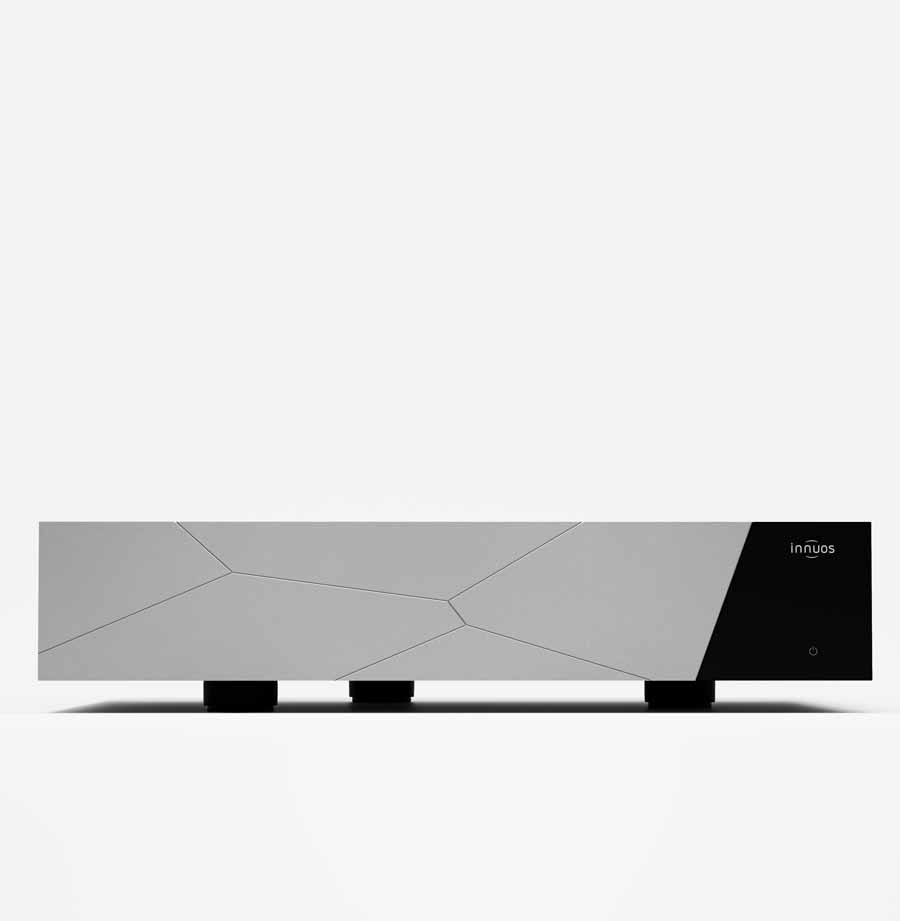
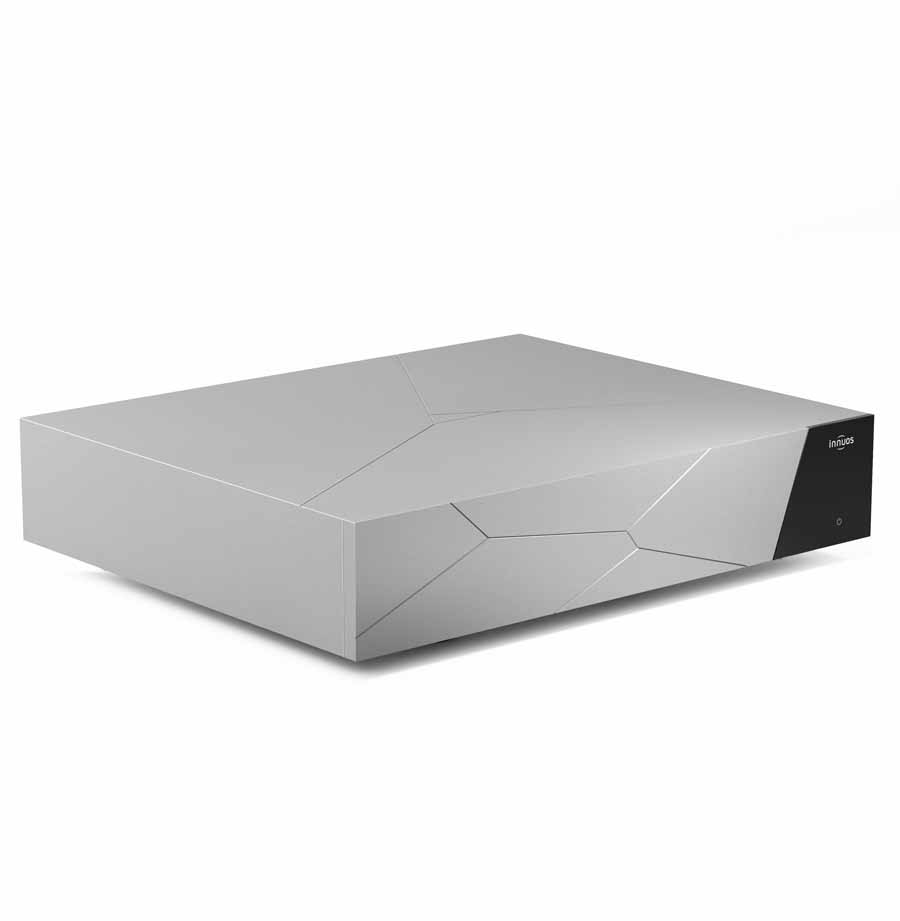
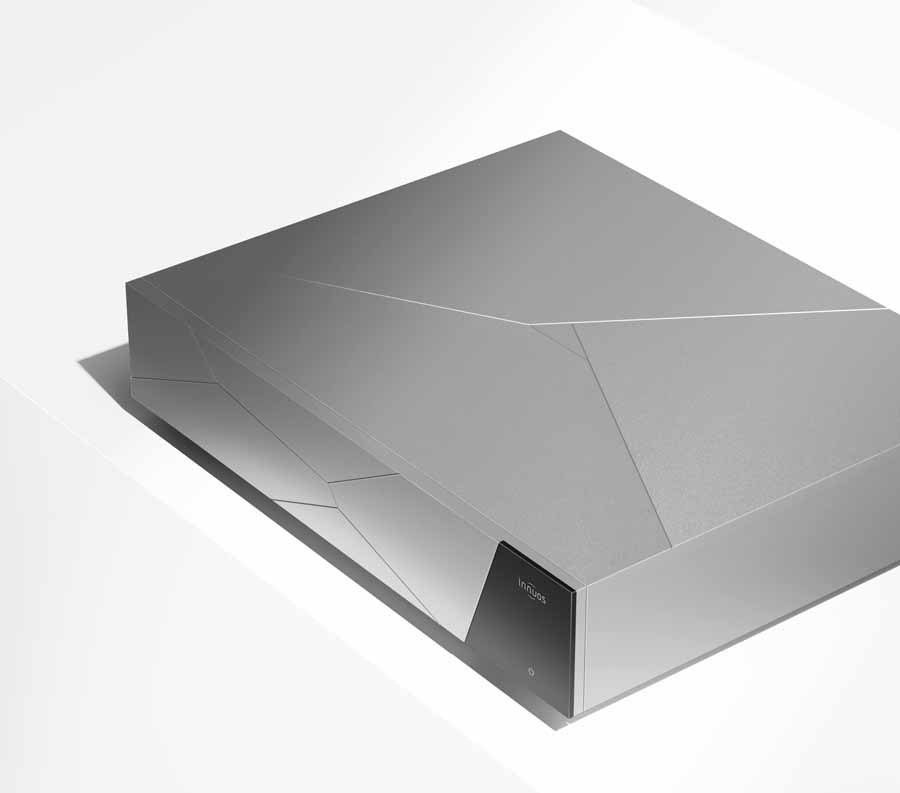
The STREAM 3 is positioned as Innuos’ top-performing music streamer and server with built-in DAC, (higher performing streamer/servers are avaialble from Innuos in the shape of ZEN Next-Gen series and the flagship NAZARÉ) engineered to act as a “reference-grade foundation for any high-end audio system”. Its physical build is defined by a 10mm thick, CNC-machined aluminium chassis that provides vibration dampening and shielding, further enhanced by a 4mm grounding port for additional noise reduction. I’m sure there are some who might see grounding as a bit of foo, but from experience, a grounded system is a quieter system electrically.
The internal architecture represents a significant leap in performance from past models, utilising 13th Gen Intel Quad-Core processing paired with 8GB of industrial-grade DDR5 RAM, resulting in a platform that is over 200% faster than its predecessor. To ensure sonic purity, the system runs on a Real-Time Kernel – tech trickled down from the flagship ZEN Next-Gen series – housed on a dedicated, power-loss protected TLC SSD to minimise latency and background noise.
Power delivery is handled by the integrated ARC6-CX linear power supply module, developed in collaboration with Dr. Sean Jacobs. This module combines a 300VA toroidal transformer with 132,000uF of Mundorf capacitance and medical-grade AC filtering to provide “ultra-clean power” with significantly reduced impedance. The STREAM 3 is designed to be versatile due to its modular design, featuring an expansion bay for M2 NVMe SSD storage (up to 8TB – the model I was sent had a 2TB drive installed) and a dedicated Digital Output Module Bay.
Users can customise their unit with various boards, such as the PhoenixDAC (which this one came with), which features dual-mono AKM chips and OCXO clocking for high-end analogue output, or the PhoenixUSB board for a regenerated and reclocked digital signal. Additional options include an SPDIF board for coaxial and AES outputs and a PhoenixI2S board that supports resolutions up to DSD1024 via a direct HDMI connection. Connectivity is further modernised with dual 2.5 GB bridged Ethernet ports and USB-C for high-speed drives or charging devices, while CD ripping remains available through an external USB optical (CD) drive.
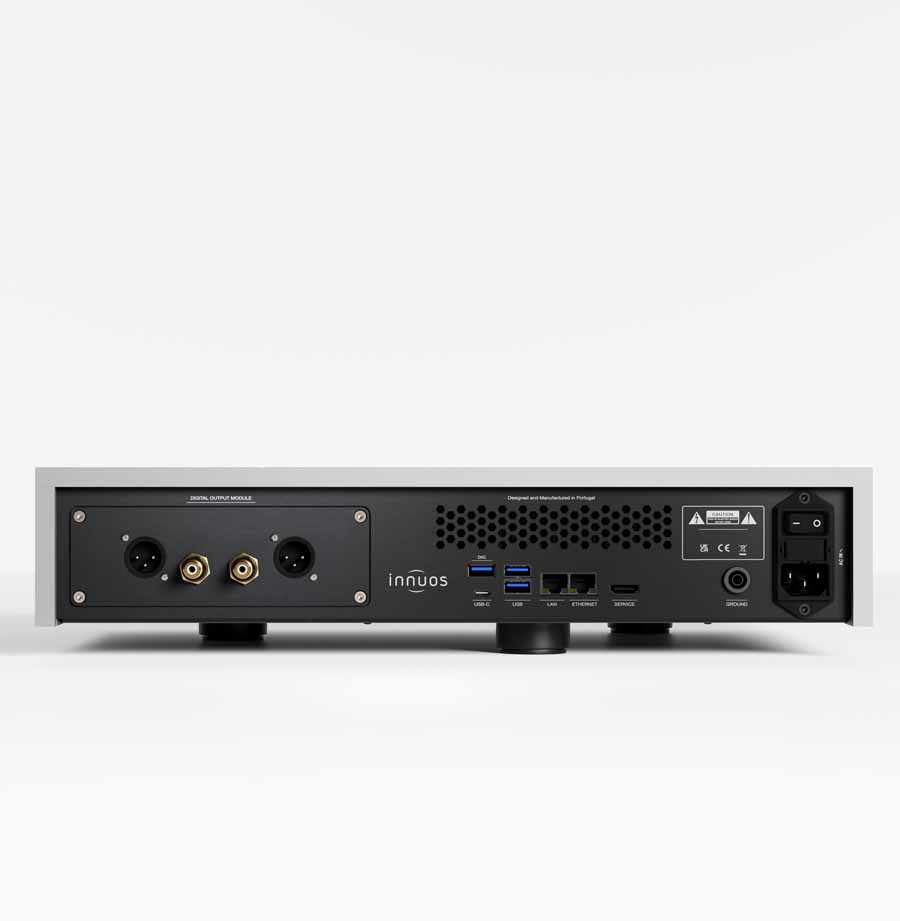
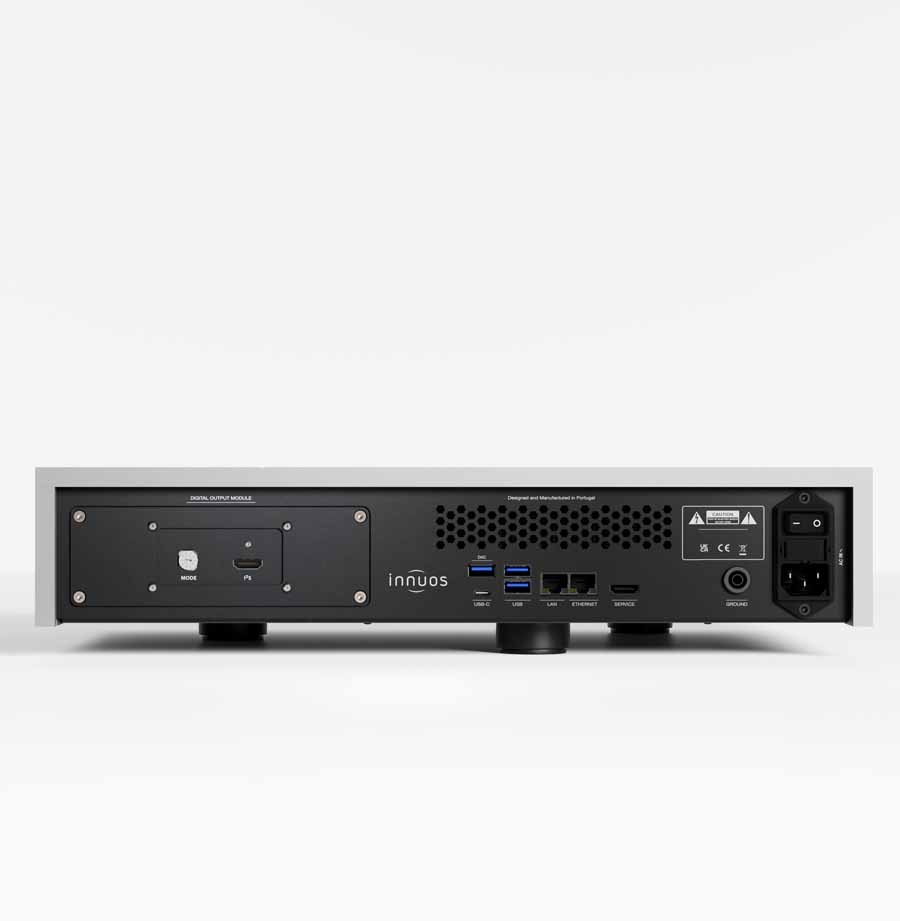
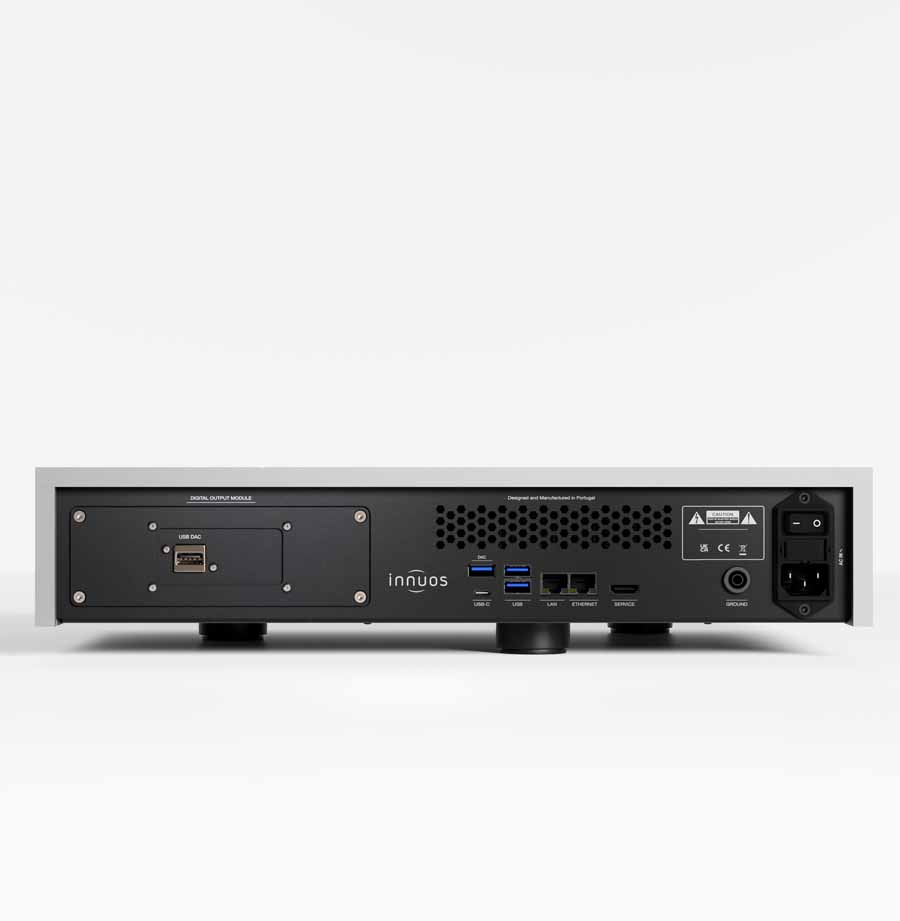
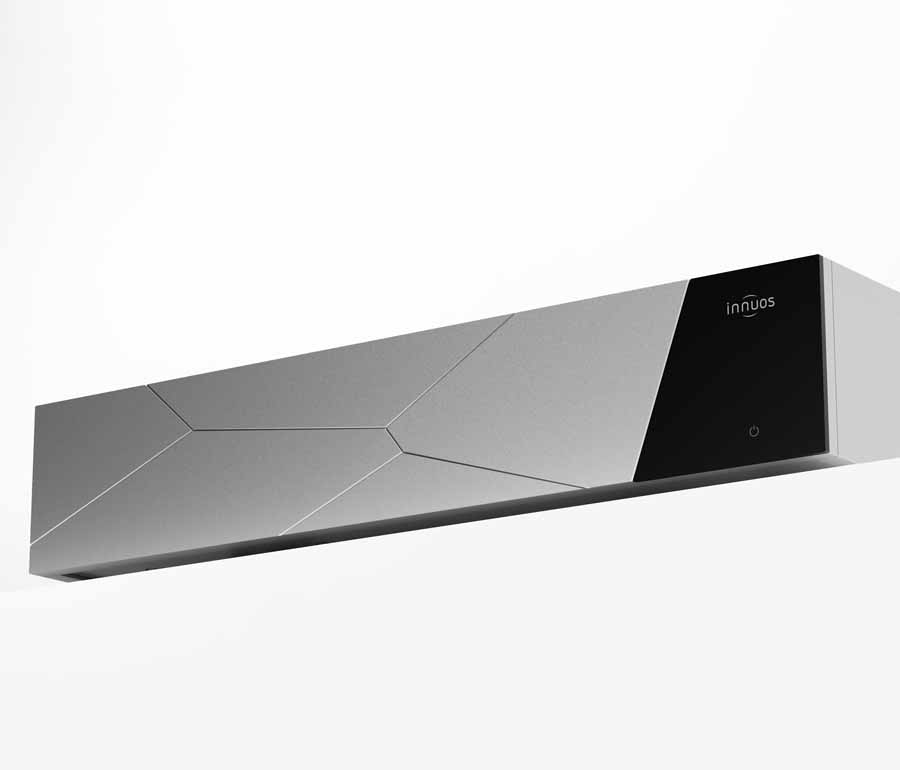
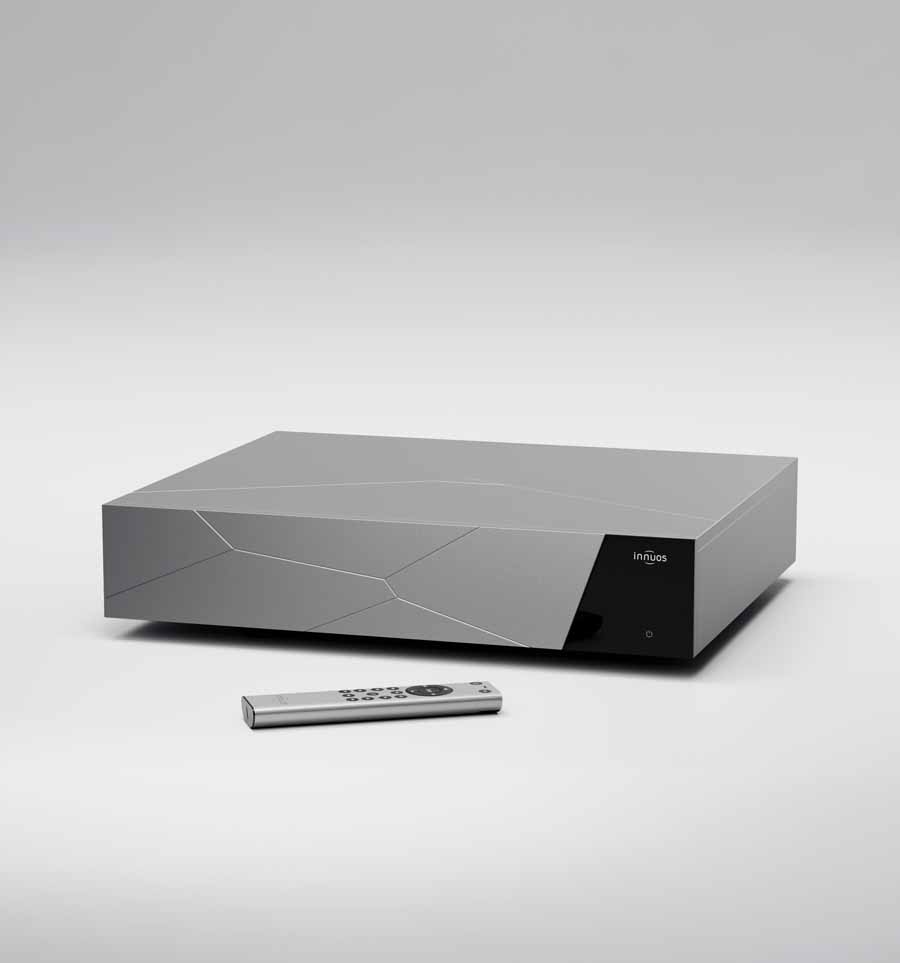
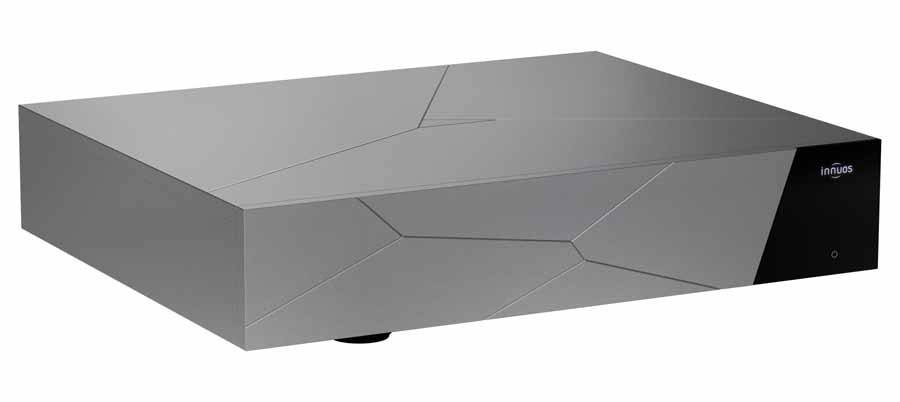
Everything on the STREAM 3 is well laid out, and the unit is exceptionally well put together. It also looks rather fetching. Our model came in silver, but you can get the unit in black, too.
Essentially, what we have here is an all-in-one server and streaming DAC. Now, I do really like the whole idea of a one-box does most things approach to HiFi, and this idea is clearly gaining ground. As I’ve said countless times, audiophiles are a bit of a special breed who are (mostly) more than happy to have a hotchpotch of boxes strewn across a dedicated rack that labours under the weight of all said kit. However, the “normal’ music lover is not of the same mindset and with space allowable for HiFi in the home becoming more and more restricted, the introduction of one box that fulfils more roles is becoming much more prevalent. As someone who is looking to downsize our living space in the coming years, the prospect of countless boxes is becoming less attractive. Of course, the speakers and the power amps will stay, but the rest is likely to be much more streamlined than the system we currently have. With this in mind, the STREAM 3 does have personal appeal – if it all sounds tickety-boo.
I thought this comment from Nuno kind of sums up the philosophy behind STREAM 3: “People use streamers in very different ways, so we wanted to move away from locking everything into fixed boxes. The whole point of STREAM was to build something that can adapt—whether you want a simple all-in-one or a more serious separates system.”
SENSE – THE APP THAT MAKES SENSE OF IT ALL
The Innuos Sense app is a bespoke operating system and control interface designed to create a seamless link between the user and their music. It serves as a unified manager that intelligently blends local files, NAS-stored music, and streaming services like Qobuz, TIDAL, Deezer, HighResAudio, and IDAGIO into a single, intuitive library. The app is built for high-performance playback, featuring a heavily customised player engine with a unique ultra-low-latency design that supports Native DSD and PCM up to 32-bit/768kHz. Beyond standard navigation, Sense provides integration with TIDAL Connect (including MAX resolution), Qobuz Connect, and Spotify Connect, allowing users to stream directly from their preferred apps while still benefiting from Innuos’ optimised hardware.
Innuos say that user experience is a primary focus, with Sense offering a highly customizable home screen featuring widgets for recently played tracks, new additions, and favourite playlists. The app includes a powerful smart search engine that scans across all sources, metadata editing tools, and the ability to create multi-source playlists that can even be exported to USB drives for use elsewhere.
For home integration, the software supports multiroom grouping and the SenseUPnP feature, which allows streaming to existing UPnP devices or using the Innuos server as a library for other systems like Sonos.
A unique visual feature is “Now Playing” TV casting, which allows the interface to be displayed on Chromecast-enabled devices or Android TVs. I didn’t try this but think it’s a very cool feature.
As well as being able to use the SENSE app, STREAM 3 comes with a physical remote control that provides instant, tactile access to favourite music via presets pre-configured within the app.
Innuos also has a strong community forum where users can suggest and vote on new features, ensuring the software continues to evolve based on real-world feedback. I’ve seen this in action whilst visiting the factory, and the team really do take all suggestions very seriously. This end-user focus is both very useful and very clever – Innuos users feel part of a community with real input into future developments. In turn, this leads to users buying into the company’s ethos and makes them more likely to remain loyal to the brand. I know a few users of Innuos products who have really bought into the brand. As Nuno said about this product, “A lot of the design comes from collaboration. I might start with a vision, but the final product is shaped by engineers, partners, and users—it’s very much a shared effort.”
Packaging is good and solid. The unit arrived in a black cloth bag and was double boxed with good protection.
SET UP
Setting up anything network-related fills me with horror, much arching back to when I first tried to use streaming on a computer all those years ago. However, the STREAM 3 was pretty straightforward. Plug the unit into the mains. Wire it to your preamplifier. Wire your LAN cable (the unit comes with a 2m LAN cable, but to keep consistency, I used my own from Anzus) from your router or switch (I kept the system as much as per the reference as I could, and so used the D3 Anzus switch). Turning the unit from standby to on causes a 30 or so second delay before the flashing light on the STREAM 3 stops flashing and becomes permanently lit. Open the SENSE app (installation was as simple as downloading any app from the App Store), have it find the unit, and that’s it.
The app is the main control unit, and I used it on my iPhone and iPad. A few tracks showed up, and I guess these were on the internal drive. Press play. Music!
In the app settings, you can use the STREAM 3 as a ROON core or ROON bridge. When used in ROON core mode, the STREAM3 can be a self-sustained Roon Core without the need for an external Nucleus or other device running the core software. This will be important for users, as ROON has become a bit of a standard for many, myself included. However, for this review, I think it’s more useful to use the SENSE app, given that Innuos are all about integration and getting the best out of their systems. I’ll assume that ROON works as it should, as everything else promised by Innuos has come to pass without any issues.
I use QOBUZ a lot of the time, and getting SENSE and QOBUZ to play nicely was a doddle. Press QOBUZ on the app, enter your username and password. Done.
Internet radio was equally simple to set up on the app. Press Internet Radio, search for the station you want (BBC Radio 6 Music), and hit play. Done.
The SENSE app has a system section where you can check if there are any updates to the STREAM 3 available (there were), and to install, you press the virtual button in the app. The screen asks you not to turn the system off (always a bit of a worry, given we occasionally have power cuts), and a few minutes later, the song you were playing resumes, and whatever updates the latest firmware contains are implemented on the machine. Very painless!
You can wire the STREAM 3 directly to your amp(s) and use the volume control in the app; however, to keep the system as close to our reference as possible, I wired it into our Music First Preamplifier. The rest of the system was a pair of Electrocompaniet AW300 M amps and a pair of Ø Audio Icon 12 speakers. Now, if you do choose to wire the STREAM 3 up to your power amps directly, this would make for a really compact front end.
SOUND QUALITY
As instructed, I let the STREAM 3 play for a couple of days before doing any serious listening – basically, I set Qobuz to play randomly. On the occasions that I did listen to the STREAM 3 unit during this “burn-in” period, it was at low levels and without taking much notice of what was going on. However, the times I did bend and ear towards the STREAM 3 during this time, the amount of detail coming through at very low levels was worth making note of.
Listening to Neil Young’s Old Man (Live at Massey Hall 1971), that detail in the recording shone through. The introduction has Young fumbling about with his guitar, and the detail is such that you can visualise him shuffling on his stool. His voice is fragile and yet so pure in its tone, and the STREAM 3 really does allow you to hear this without having to try too hard. And I guess that’s what you want in a bit of kit – that ability to feel close to the recording without going into reviewing/critical-listening mode. I actually found this quite refreshing, and I found myself really getting into the recording, aware of spatial cues and small details, but without feeling the need to sit and concentrate. Believe it or not, this is quite a rare occurrence for me when reviewing new gear.
Kneecap’s new album “Fenian” (and particularly the title track) has been getting a lot of play on BBC6 Music, to the point I can sing along to parts of it… Hearing it on the STREAM 3 brought it to life with that bouncy bassline underpinning it all. A lot is going on in the track, and the STREAM 3 manages to allow you to hear everything in detail, but without everything becoming lineated to the point of sounding artificial or boosted. The TB 303 sound on Big Bad Mo sounds as it should, with it being easy to hear the resonance knob being twiddled to bring out that distinctive sound. The STREAM 3 doesn’t miss a trick here, and whilst this is hardly an audiophile-level recording, I got totally drawn into the tunes and into their sound structure.
Continuing the 303-vibe, I put on Octo Octa’s new Sigils For Survival album and was again taken aback at just how much detail and nuance the STREAM 3 brings to the table. I was able to sit and see into the mix and hear the different layers of the recording, much as I expect Maya did when she was sitting at the desk. The bass kick remains steadfastly centrestage whilst the tune builds around that. Everything in the mix sits in its own place in space, which makes for an all-enveloping listen. There’s a point on the bassline where the machine has a kind of clipped sound when the 303 jumps from one note to the next, and the STREAM 3 brings this out wonderfully. Likewise, when the resonance knob is turned up, you can hear the sound that this instrument/machine is famous for – difficult to put into words, but you know when you hear it. Ellis Drew’s Reactiv-8 comes on, and what I’m drawn to is how cleanly the STREAM 3 presents this track. And I guess that’s what I’m trying to express in the above handful of paragraphs when trying to describe my overall impressions of the STREAM 3: it’s got an ability to just get out of the way and present the music files as they were recorded. Even small details in a recording don’t get lost in the mix, and that heightens the sense that I’m not really having to try to listen critically to the product I’m listening to; it just plays the tunes, and I listen and get into them. Flick the mental switch into review mode, and I can look into the records I’m listening to and into the mix, but the same desire to just sit and listen to tunes is still there – and I think that’s a good sign of any bit of kit. DJ Laxxiste A’s Sounboi comes on, and the room is filled with sounds that really do envelop me. This is a big-sounding streamer/DAC that kind of belies its relatively modest asking price – I was a bit taken aback when I found out the price.
Changing the mood a little, I put on Pink Floyd’s The Wall, and once again, I’m taken aback at the detail and nuance this unassuming box of tricks brings to the table. I had the volume turned up a little bit, but not what I would consider to be loud, and I felt no compulsion or need to turn it up to high levels to appreciate the record. This is unusual, I feel, and it was excellent to sense that I was getting the full impact of the record (clout, slam, nuance, etc) but without needing to crank the volume knob. This may seem like something and nothing, but to have a bit of gear be able to produce the full gamut of frequencies and impact at low volume is not that common. I am guessing here, as I’m not a technically-minded person, but I’d suggest that the noise-floor on this streamer/DAC is exceptionally low, and that is why I’m hearing nuance and detail at low volumes. When I do turn the volume up a bit, it’s just more of the same effect.
CONCLUSION
The STREAM 3 from INNUOS really surprised me. I’ve always been one for espousing the virtues of separate boxes for streamers and DACs, but the STREAM 3 kind of changed my thinking on that. Would I be happy to get rid of my separate streamer and DAC? Well, at the moment it’s a must that I have separate boxes for different tasks so that I can slot review kit into the chain whilst keeping the rest of the reference system constant, but were I to stop reviewing tomorrow and look to slim the system down to fewer boxes, then the STREAM 3 would definitely be on my radar.
It looks good, just works as it should, and it sounds hugely detailed and engaging, but without coming across as being contrived or overly etched. Its ability to pull detail from a file is superb for the asking price, and I’d suggest that many DACs at this asking price would struggle to perform as well…but then you get a streamer built into this, too.
Products like this have to perform well sonically (that’s a given), but they also live and die by the success of their associated app. I’m very happy to say that even to this technophobe, the app and its UI is easy to use and performs without any issues.
Set up is a doddle, and again this is very important.
Long story short, I absolutely loved my time with the STREAM 3, and when it comes time to hang up my review hat and have a system that is somewhat more streamlined, the STREAM 3, or whatever it is that will replace it in a few years, will be very high on my list of potential replacements for a separate streamer and DAC. Think I’d go black, mind – there’s got to be a commitment to black boxes!
The award I’m giving to the STREAM 3 reflects its relatively low asking price and the performance you get for that money.
AT A GLANCE

Build Quality and Features:
Excellent build
Great Looks
Flexibility of onboard features
Very usable app
Sound Quality:
Clear and detailed without being etched
Very musical in the sense that STREAM 3 allow you to relax into the music without felling the need to listen critically
Value For Money:
This is still a chunk of money, but in the grand scheme of things, I think the STREAM 3 offers excellent value for money when compared to other products out there
We Loved:
The app and its ease of use
The easy setup procedure
The relaxed but detailed nature of the sound
We Didn’t Love So Much:
I’m genuinely struggling to find any fault with this product at this price
Price:
As tested with Phoenix DAC 9,100 Euros.
STREAM3: 5,800
PerformanceDAC Board: 1,150
PhoenixDAC Board: 3,300
SPDIF Board: 650
PhoenixUSB: 1,200
PhoenixI2S: 1,700
Elevator Pitch Review: STREAM 3 from Portuguese-based brand Innuos is an all-in-one streamer/server and DAC. A host of different levels of performance and output modules can be specified when ordering. Sonically, STREAM 3 offers a clean and detailed sound that is eminently easy to listen to without experiencing the oft-encountered lughole fatigue.

Stuart Smith
SUPPLIED SPECIFICATIONS
PhoenixDAC Board
- Dual Mono AKM DAC Chips with OCXO Clock plus FemtoClocks for Audio
- Support PCM up to 32bit/768KHz and Native DSD
- Independent Power Supply for Digital and Analogue Stages
- High-Quality Gold-plated RCA and XLR Connectors
For further specifications, see the INNUOS website