
Battle Of The Dongles – DD HiFi TC44Grip, Fiio QX13, and Campfire Audio Relay
BATTLE OF THE DONGLES REVIEW
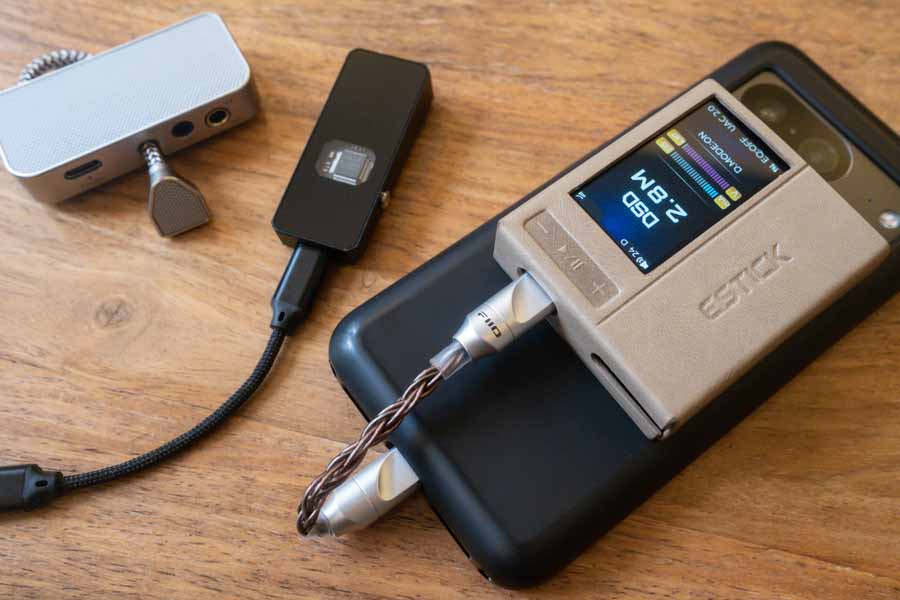
This review is going to be a little different; Oscar will be looking at 3 slightly different USB-C dongle DAC/Amps for portable use. In this review, he will go over the features and audio quality of the DD HiFi TC44Grip, Fiio QX13 and Campfire Audio Relay.
USB-C dongle DAC/Amps have become very popular in recent years, and are often the first step into the greater Head-Fi world. They also offer a level of convenience for those not wanting to carry a separate dedicated DAP.
BUILD AND FEATURES OF THE DONGLES
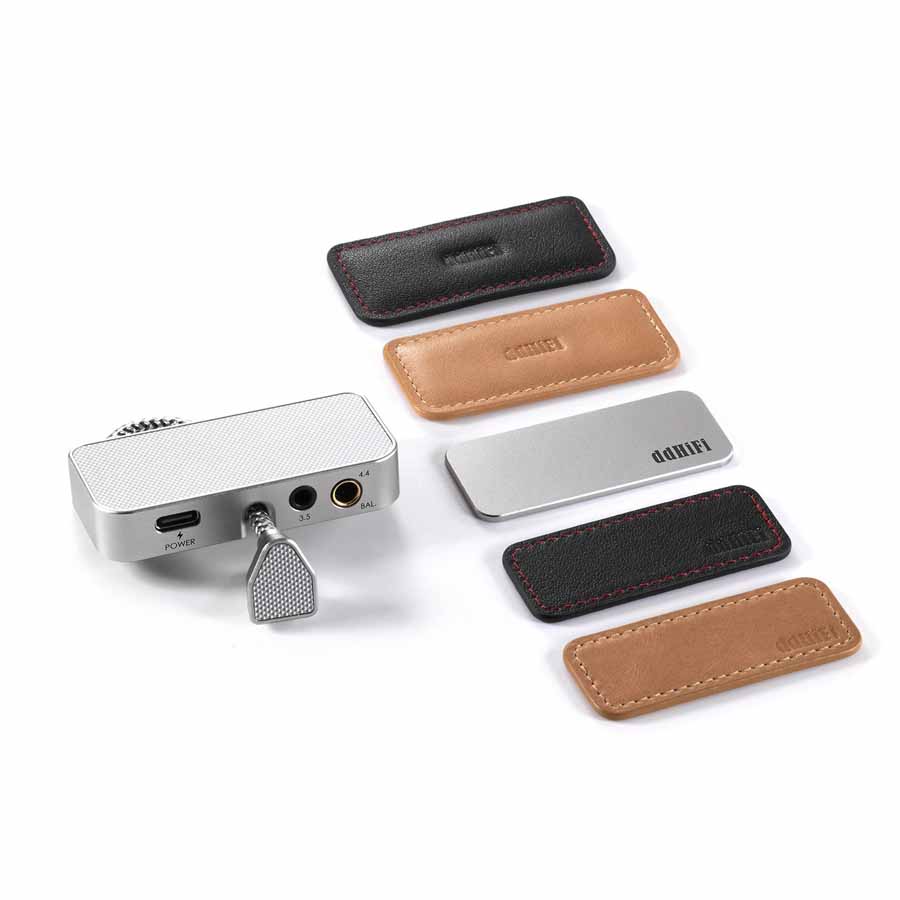
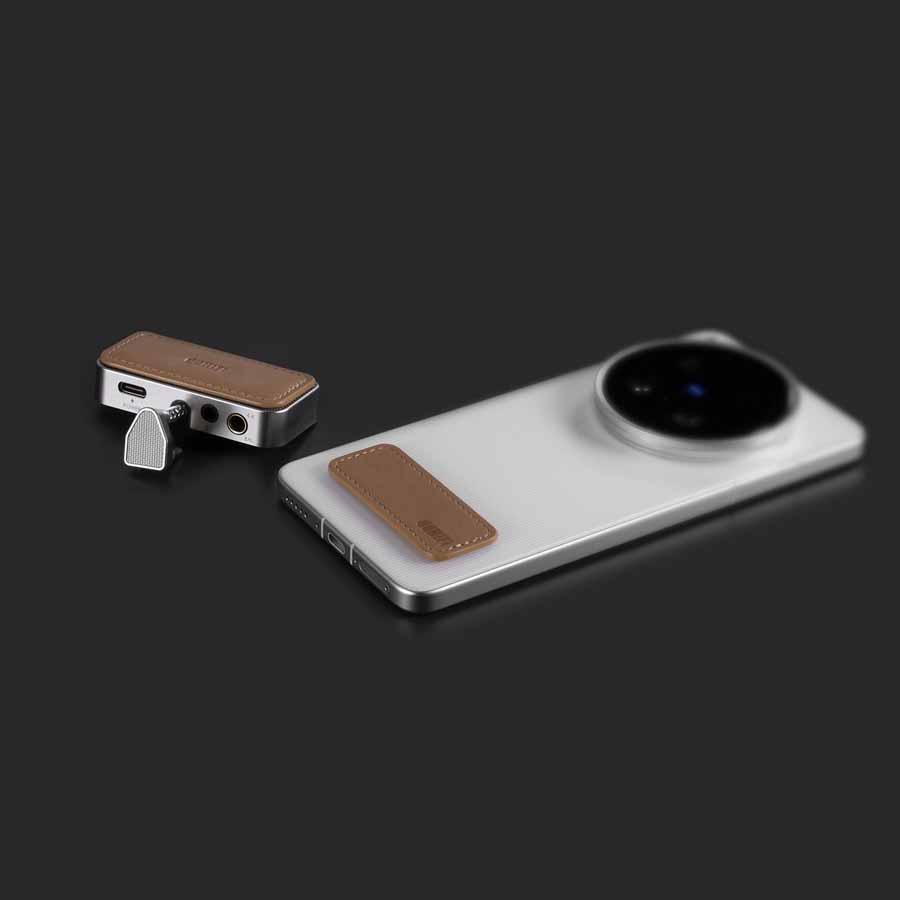
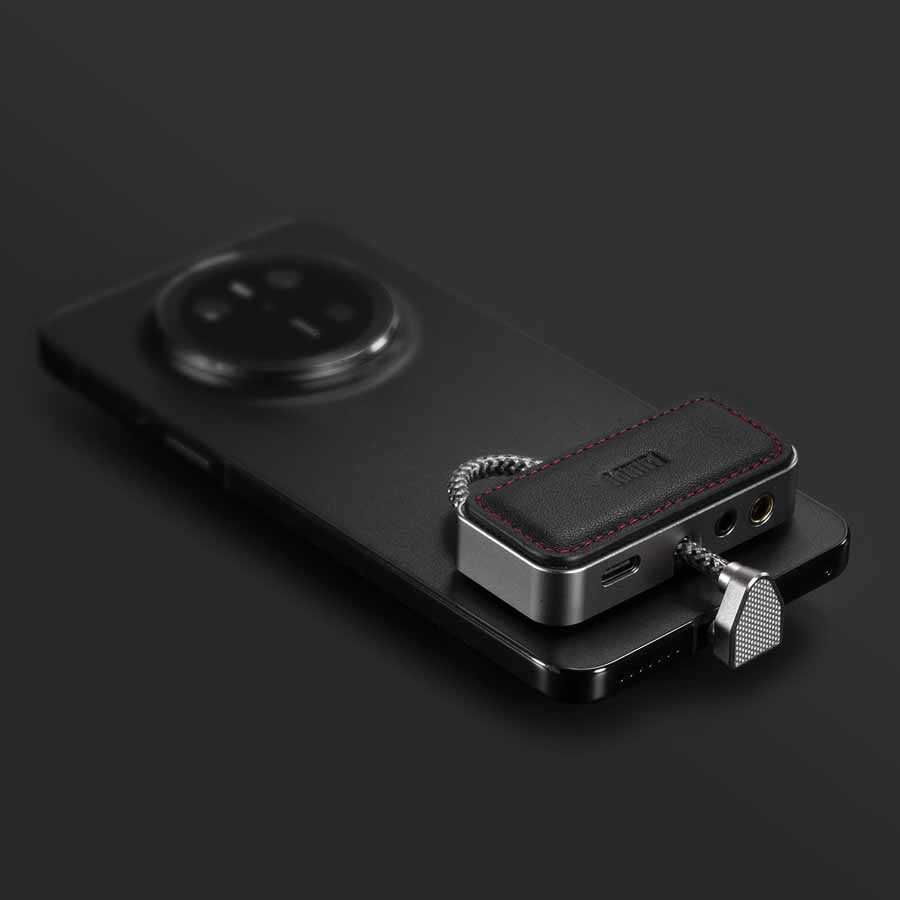
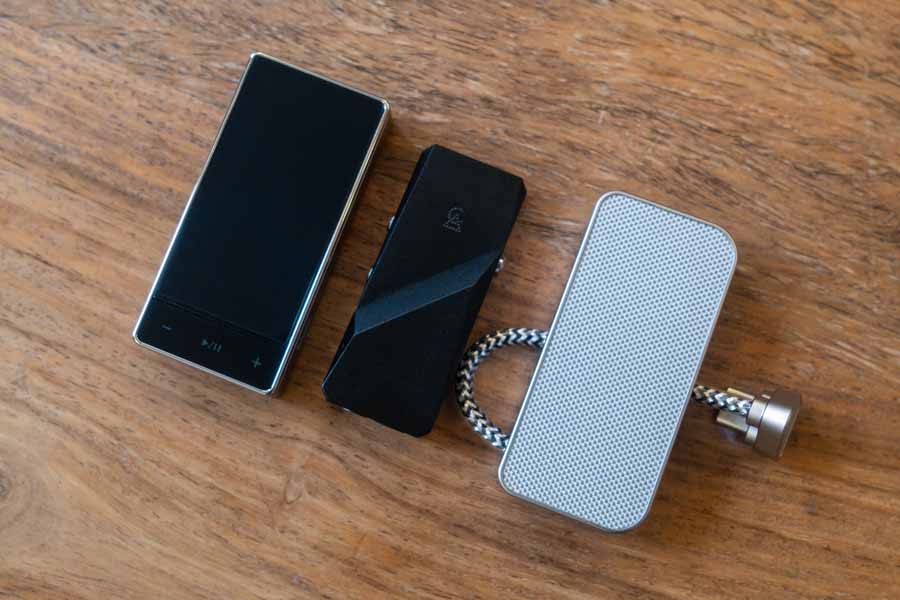
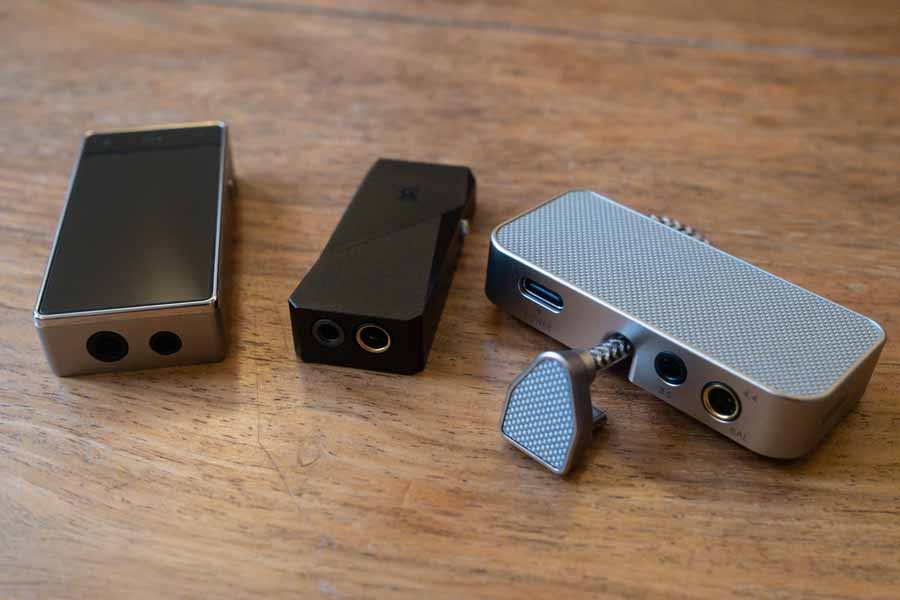
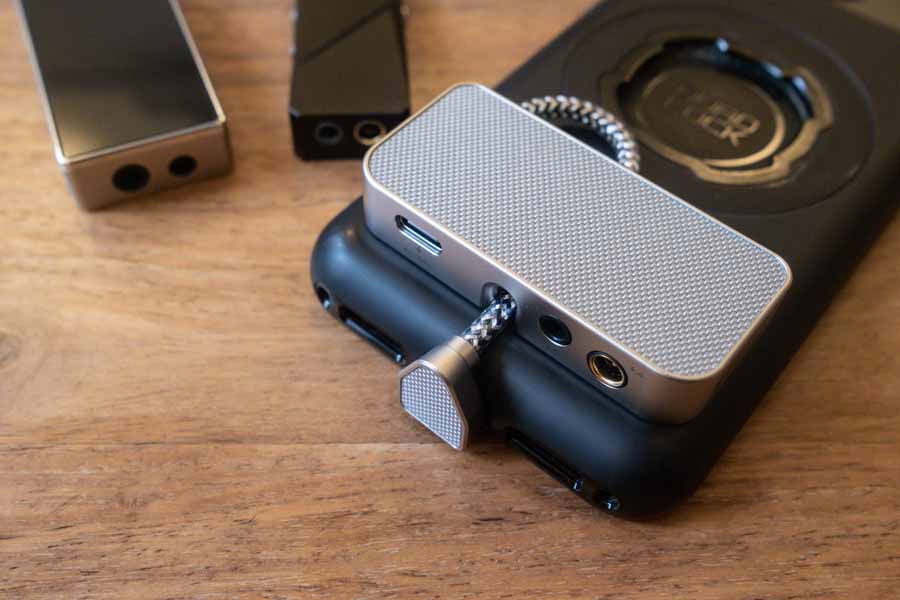
Starting with the most affordable at around £130, the DD HiFi TC44Grip. It’s a well-engineered bit of kit with a metal plate that sticks to the back of your phone, allowing you to then magnetically attach the DAC/amp to it. It’s a sleek design and the cable neatly routes through a cutout on the back, making it one of the slimmer and more discreet DAC/amps out there. The USB-C cable is angled and fixed to the main DAC/amp; DD HiFi do assure us that it has been tested for longevity, so that shouldn’t be too much of a concern here. There is a USB-C port on the unit too, which allows you to charge your phone (up to 60W fast charge) with the DAC/amp still attached, which is great (often with these, you cannot listen and charge your phone at the same time without a splitter cable). Headphone output-wise, you get a 3.5mm and 4.4mm jack socket – this is the same between all 3 models being tested in this review. It uses dual CS43198 DAC chips internally, supports up to DSD256 natively and outputs around 80mw into 32Ohms single ended, or 330mw into 32Ohms in balanced mode. The TC44Grip feels solid and is housed in a slimmer, more discreet housing that is perfectly suited for daily use out and about.










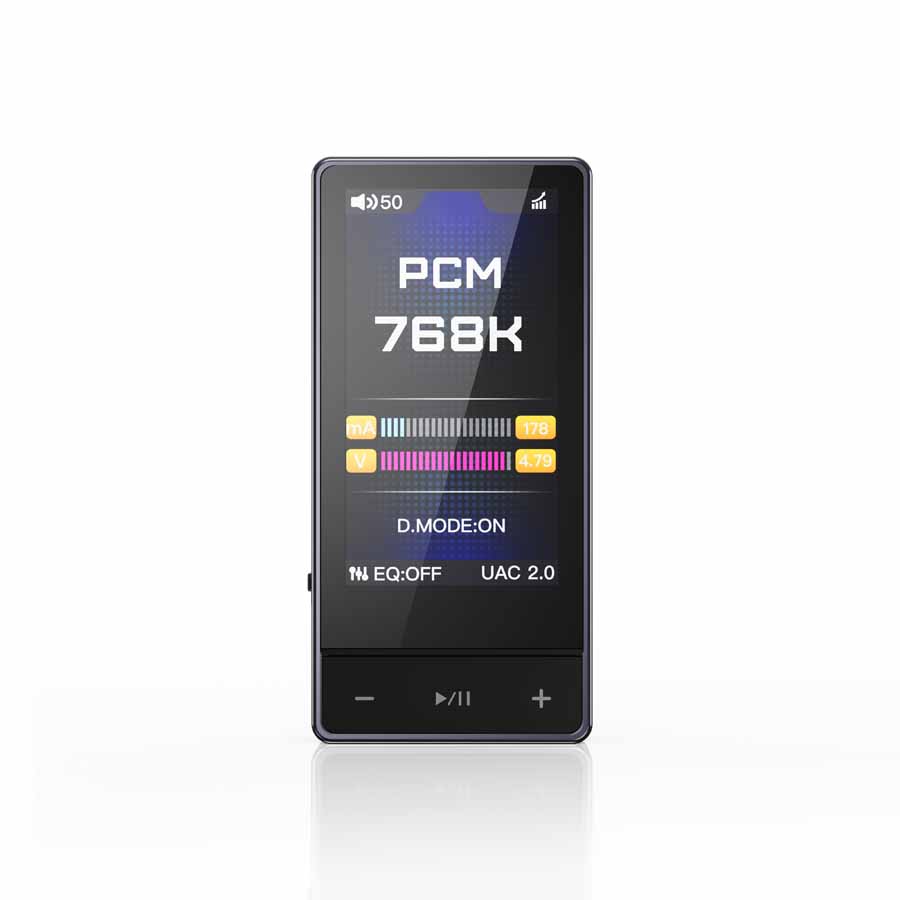
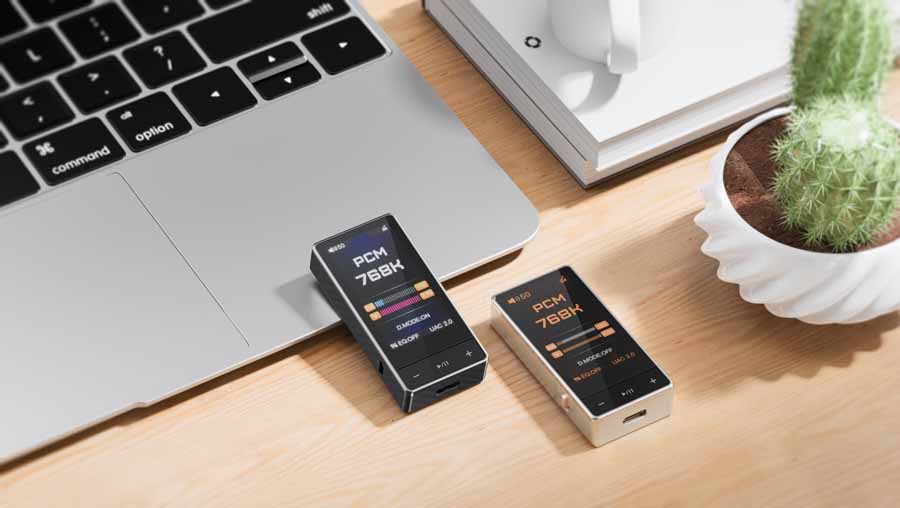
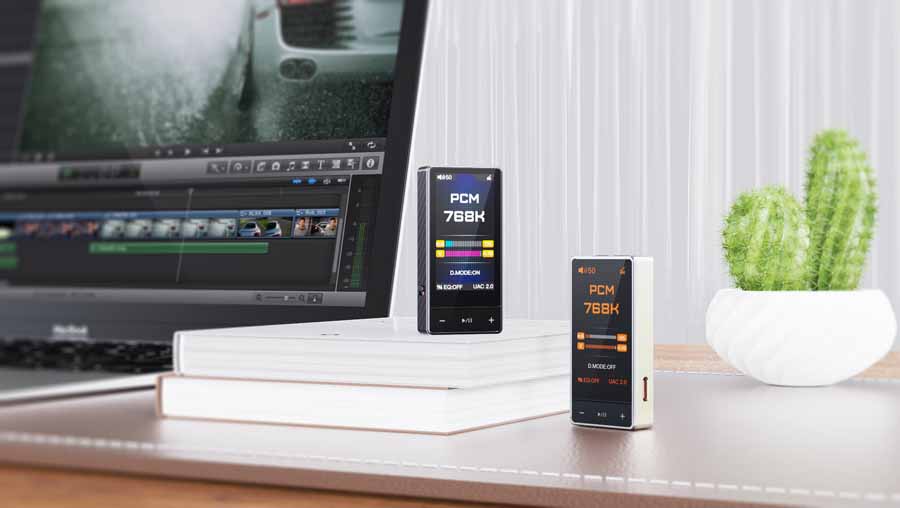
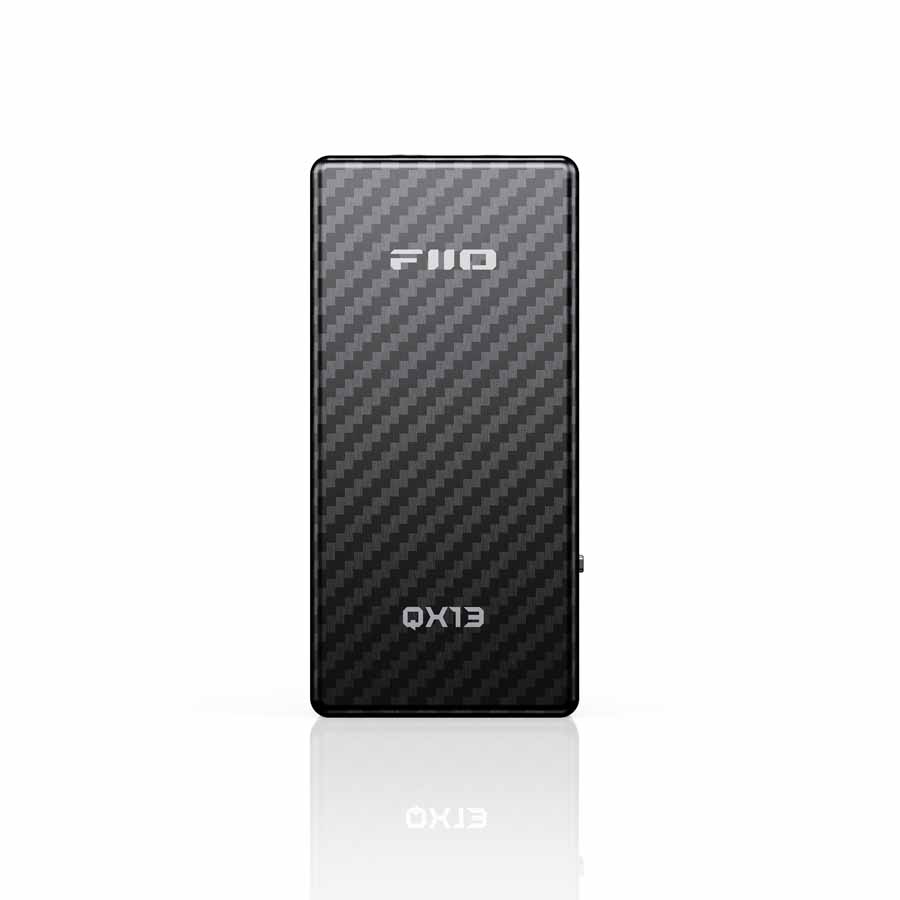
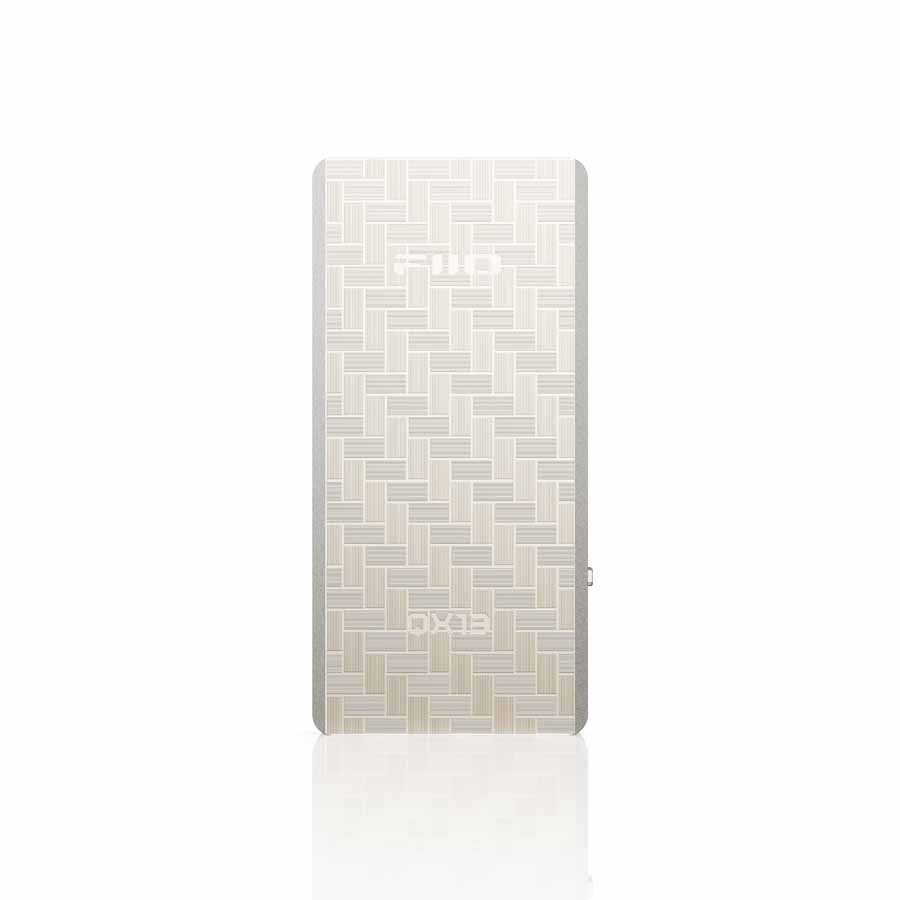
Next up, we have the Fiio QX13, sitting in the middle price-wise at £199. This is a more conventionally sized DAC/Amp, yet it is still slim and easily portable. It comes with a sleek leather case that has built-in magnets that work well with MagSafe or QuadLock Mag phone cases (I have a QuadLock Mag case, and it fits straight to it). Internally, it features a desktop-grade DAC in the form of an ES9027SPRO, and features 3.5mm and 4.4mm outputs. A unique feature on this model, though, is the inclusion of Fiio’s “desktop mode”, which relies on an external power supply being fed to a side-mounted USB-C port. In this mode, the QX13 can rival quite a few desktop headphone amps in terms of output power, offering up to 900mw into 32Ohms in balanced mode using the desktop mode. When using it out of a normal phone without an external power supply, it still offers up to 605mw into 32Ohms. However, running it at high output like this would, of course, drain your phone battery quicker. There is an optional battery pack and case for the QX13, allowing you to run it off that battery without affecting your phone’s battery life, and this setup doesn’t add a lot of bulk either. Other notable features are the ability to control it via an app on your phone, which gives you a fully featured PEQ. There are 2 gain stages; you can change the DAC filter, swap between 2 different volume step scales, and it even supports S/PDIF output via the 3.5mm port to an external DAC of your choice. Overall, the QX13 is the most powerful of the bunch and has the most features. However, this may come at the cost of power draw. The build quality is excellent, and the carbon fibre body sets it apart in my opinion (yes, I’m a sucker for carbon fibre).
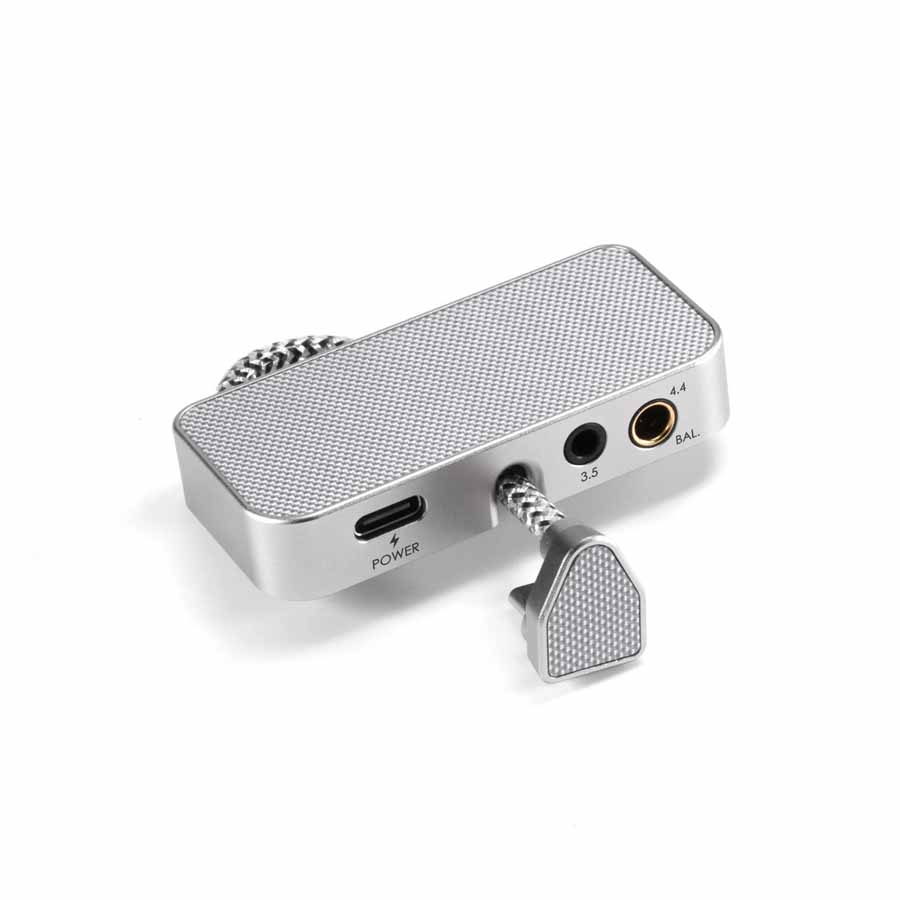
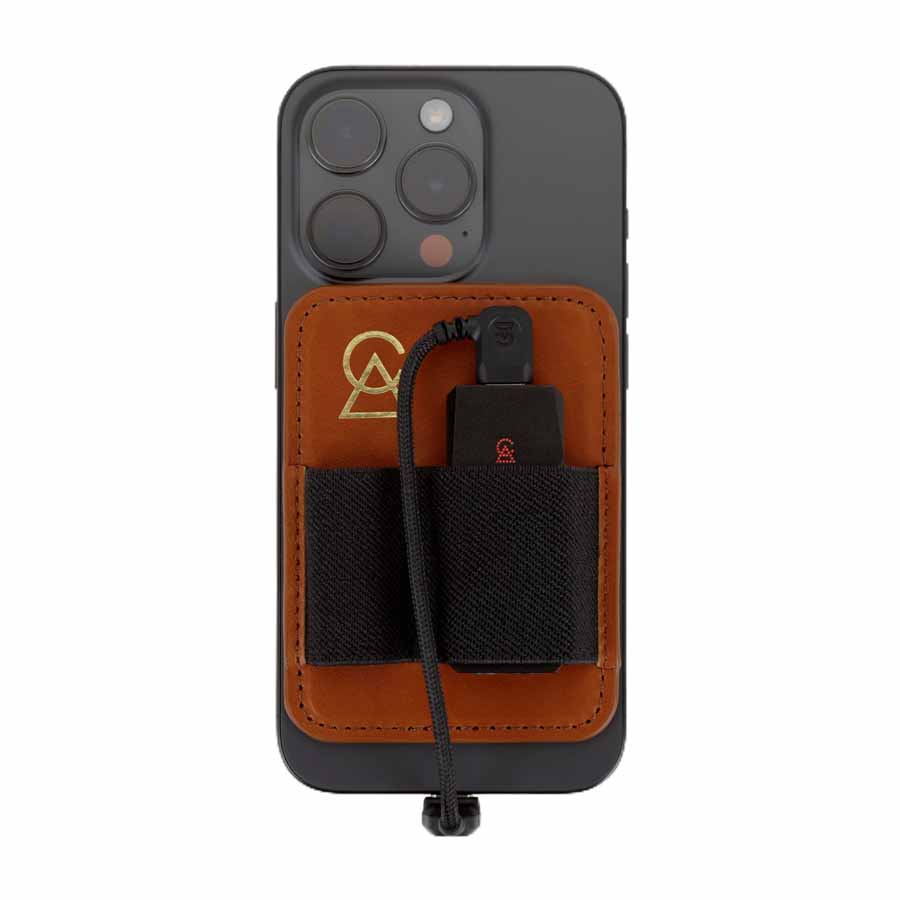
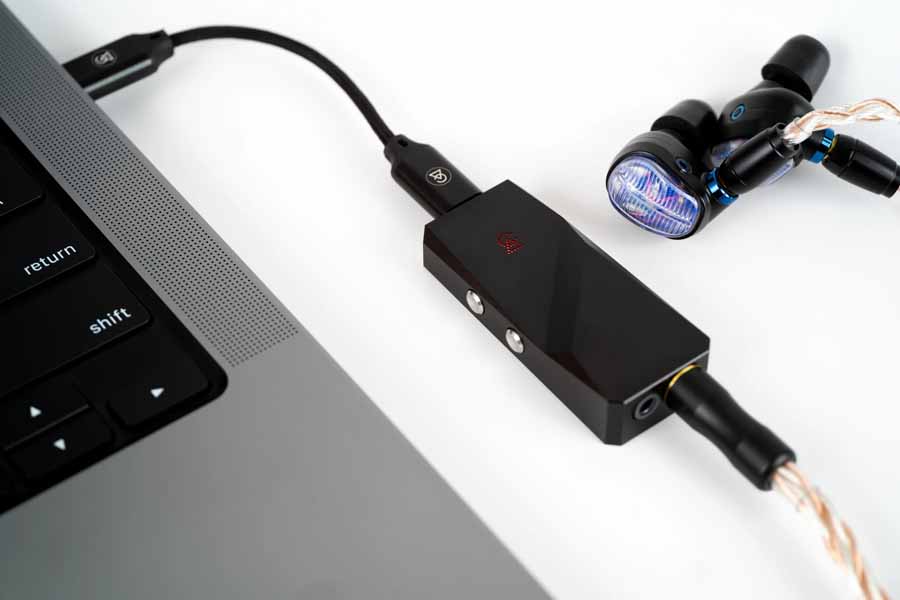
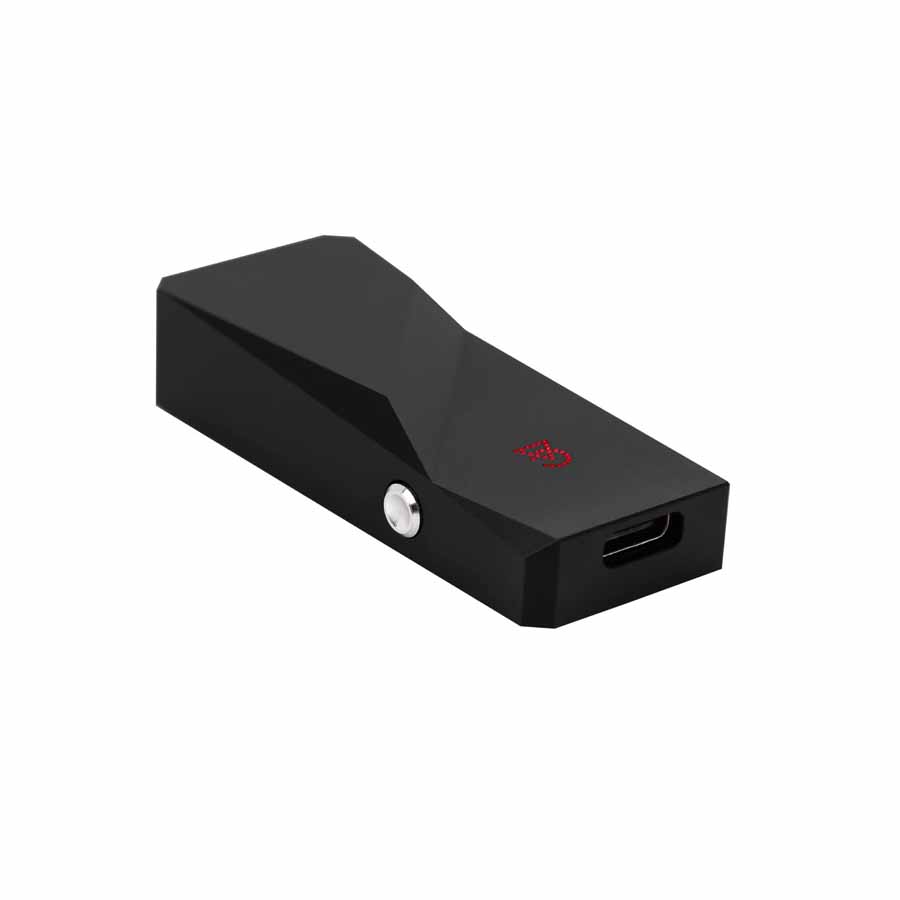
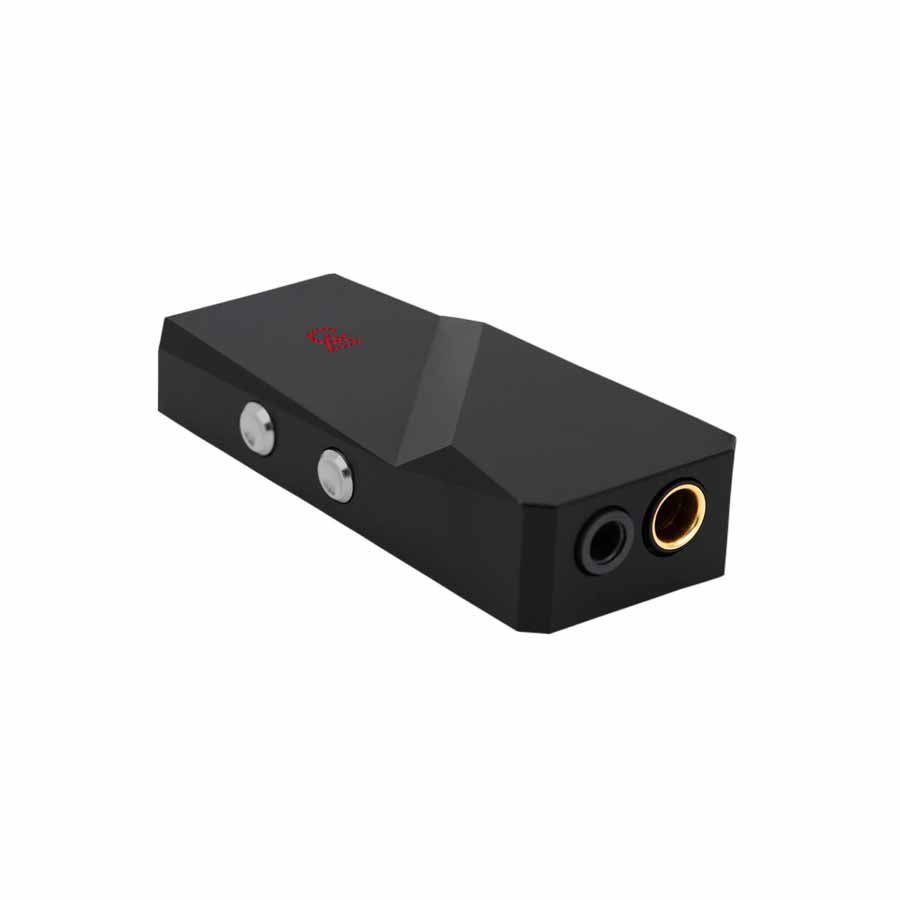
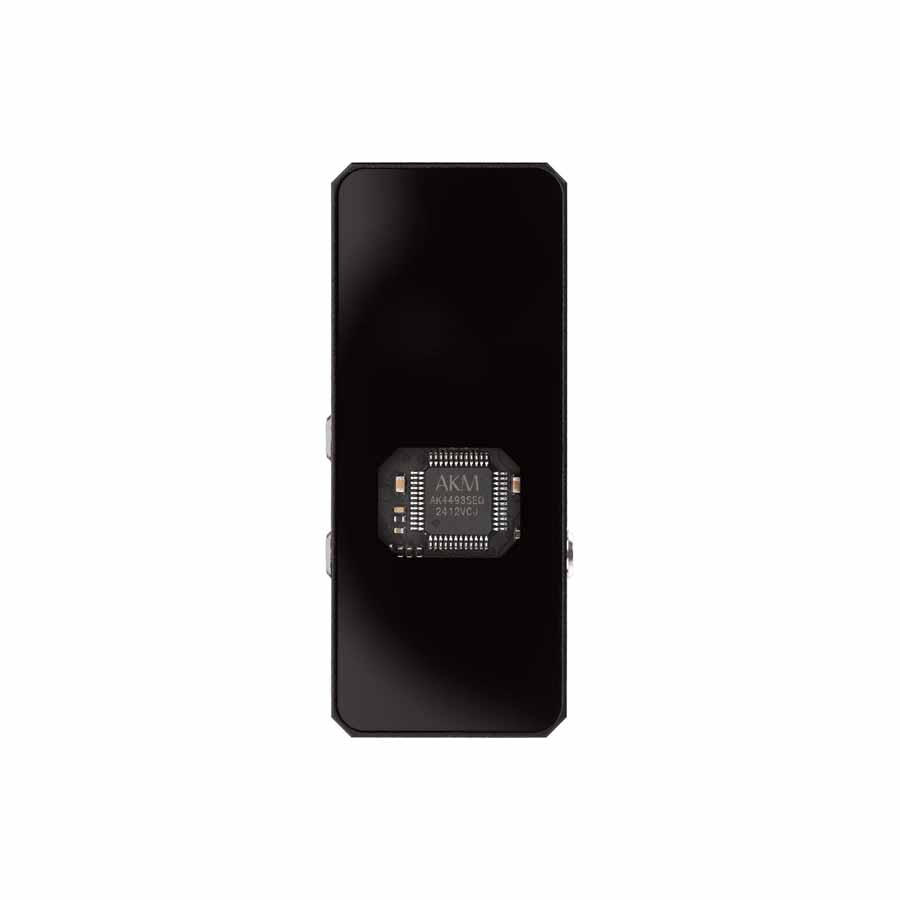
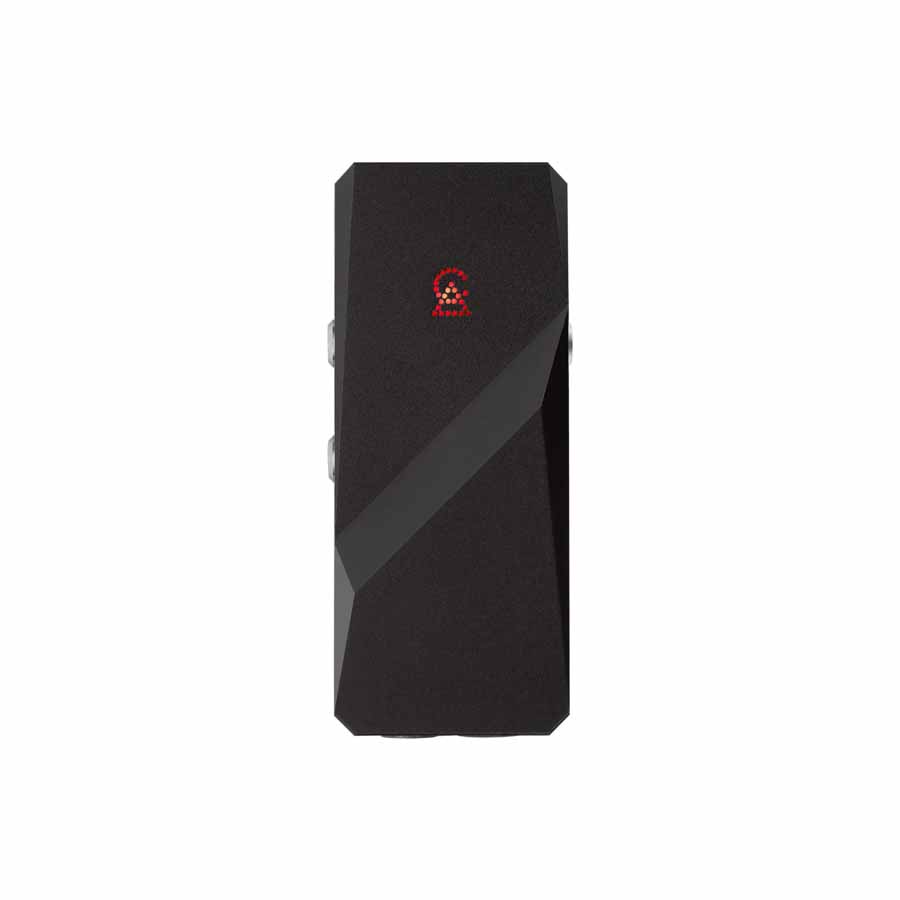
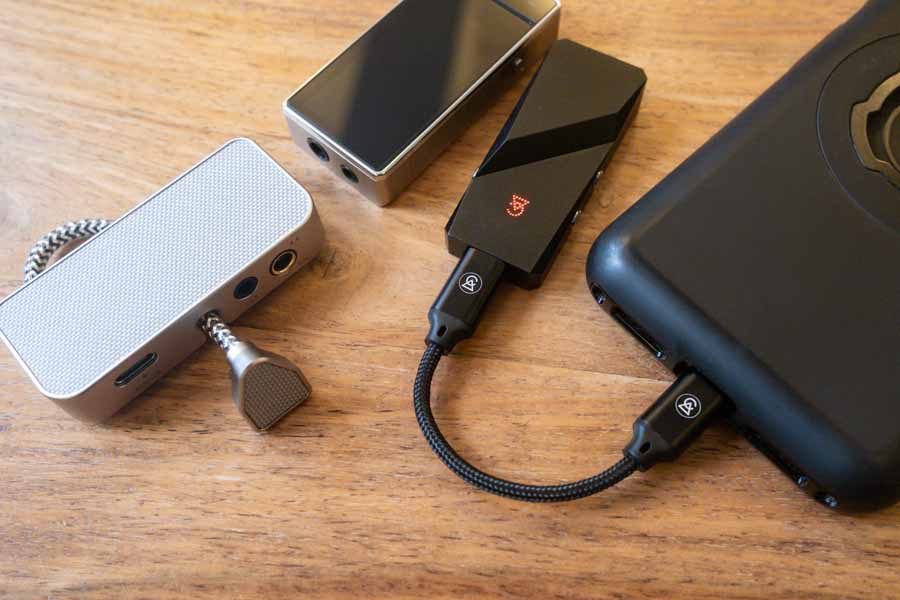
Lastly, we have the Campfire Audio Relay, which comes in at £229. This is a solid yet lightweight aluminium-bodied DAC/Amp with USB-C input, alongside 3.5mm and 4.4mm outputs. It has volume controls on the side and has selectable high/low gain modes, six DAC filters, and allows full playback control. This DAC/Amp also uses a desktop-grade DAC, in the form of the AKM 4493SEQ, and features a 60-step volume control to easily find that perfect listening volume. Output power-wise, you get around 500mw into 32Ohms in balanced mode (in high gain mode). Notably, the Relay doesn’t come with an easy way to attach it to your phone, unlike the other two models. Out of the three, I would say this one feels the most solid in the hand and feels like it would survive the most abuse; however, the others have ways to attach to a phone, which decreases the likelihood of dropping them. The logo is an LED indicator, handy for choosing between the DAC filters, Gain modes, and audio resolution. Campfire Audio do make a mag wallet for the Relay, at an additional £59, which increases the appeal, but also the cost.
SETUP AND USE
All three models were plug-and-play with my Android phone (Pixel 8). I used Roon, running a mix of CD rips and Qobuz streaming when listening to these dongles. I used my Meze 109 Pro headphones for the core of this review, as they are relatively easy to drive, whilst being revealing enough to highlight the differences between the models. I used the 4.4mm balanced output on all three dongles.








The DD HiFi is controlled by your phones volume, the Fiio and Campfire both have their own volume control so you can set your phone to max and control it off the dongle for the best sound quality.
Power wise, I measured the following using a USB-C power meter, at a normal listening level with the same song (not SPL matched).
DD HiFi – 0.21a / 1.02w
Fiio (screen off) – 0.19a / 0.94w
Campfire – 0.16a / 0.81w
So, the Campfire is the most efficient power wise and will last the longest when running off the phone’s battery.
SOUND QUALITY
I’ll start off with Paramore – When It Rains:
The DD HiFi TC44Grip has quite a soft, smooth sound, with slightly rounded edges to the notes and a fuller presentation. Drums have good impact and body. Hayley’s vocals cut through, but lack a little bite; the guitars are perhaps a little sedate, and cymbals are clear, yet not overly defined. This is a DAC/Amp that adds a little warmth and is anything but fatiguing – perfect for longer listening sessions where an overly detailed sound may become tiring.
Moving to the Fiio QX13 you get a more engaging and punchy sound signature. Snares are snappier, and everything has a little more air around it. This is a more linear-sounding DAC/Amp that doesn’t put any emphasis on any frequency range. Nothing stands out, and it doesn’t seem to want to impart any real colouration. Luckily, those who want colouration can play around with the DAC filters and PEQ built into this little device.
The Campfire Audio Relay follows a similar signature to the Fiio, in that it is more neutral and linear. There is, however, a touch more impact to drums, and it sounds ever so slightly more refined. The Fiio has a touch more energy; the Relay, on the other hand, sounds a little more natural, especially in the treble, where cymbals have a more natural tonality and decay. On this track, the Relay had the edge with these headphones.
Moving on to Trapped by The Devil Wears Prada:
The DD HiFi once again comes across full-bodied and smooth; the opening bass line has huge presence and excellent articulation. It’s not lacking detail, and it manages to do a great job at separating this slightly denser mix; everything is well placed, yet the soundstage isn’t quite as expansive as the other two. The DD HiFi has a very enjoyable sound, which is a little fuller, yet still does a great job with finer detail retrieval.
On to the Fiio, and the soundstage is immediately widened, whilst the midrange cuts through with a bit more authority. Kicks still have plenty of energy and punch; they are just a little more precise here, with less bloom. When the dense chorus kicks in, the QX13 does a better job at separating the instruments, albeit with a slightly leaner presentation. That articulate bassline is still fantastic through this DAC/Amp, and drums have a snappier, crisper edge to the hits.
The Campfire Audio Relay soundstage doesn’t sound quite as wide as the Fiio, yet it still sounds expansive and realistic. Vocals have a little more oomph to them, sounding more tonally accurate in my opinion. I think that’s the main difference between this and the Fiio; the Fiio is ultimately a little cleaner, yet the Relay just sounds more natural. Both have similar levels of detail retrieval and energy; there’s just a slightly more natural tonality to the Relay compared to the QX13. It’s not night and day, but it is noticeable through the Meze 109 Pro.
Now, to put these through their paces I did decide to try all three with the Beyerdynamic T1 2nd Gen – a high impedance, but medium sensitivity headphone. I used the track My House by PVRIS for this test.
The DD HiFi didn’t like these headphones, and for a device that is designed for portable use, I cannot really fault that. The sound lacks body and comes across a bit harsh when used with such headphones. Stick to easier-to-drive models, and there won’t be any issues.
This is where the Fiio, with its little battery pack (or external power source), shines, with a bit more power on tap to drive headphones like this. There is a bit more body here, and it does a good job at driving these headphones – still, it doesn’t quite match a desktop amp here. The sound is, once again, quite clean and linear, and these headphones benefit from a little warmth at times; still, they didn’t come across as too bright or harsh here. The extra power when running this in desktop mode does make the QX13 quite a versatile little DAC/Amp for quite a wide range of headphones.
Even without the benefit of an external battery and more output power, the Campfire Audio Relay just about holds its own against the QX13 with these headphones. I have a feeling the QX13 just wins this one, with that extra power giving these headphones a little more substance, yet vocals are still a highlight here, and that natural tonality is still noticeable.
Whilst none of these are an ideal match for a headphone that thrives when fed lots of voltage, it was still an interesting test in my opinion.
QUIBBLES
No real quibbles for any of these, I would liked to have had a neat attachment accessory for the Relay though – especially for the price.
CONCLUSION
I came into this review without any real knowledge on any of these dongles, and based my review on sound alone. The Campfire Audio Relay to me sounds the best, it is also the most expensive, and doesn’t come with a whole lot in the box.
As an overall package, both the Fiio and DD HiFi models do better, with the Fiio magnetically attaching to a compatible phone case with ease, and the DD HiFi going one step further and including the mounting accessories in the box. The DD HiFi probably has the sleekest fitting mechanism and is one of the slimmer models for ease-of-use, day to day. The Fiio has a lot of tricks up its sleeve, with PEQ built in, DAC filters, Gain and Desktop mode, making it perfect for those wanting to use it out and about, as well as at home.
It has been interesting pitching these different dongles, at different price points, against each other. They all have strengths and weaknesses. If I were to choose on sound alone, the Campfire Relay wins, with its detailed yet natural sound, whereas the Fiio nearly sounds as good yet has a lot more features built in. The DD HiFi is a little different; it’s the most portable (yet also the most power hungry), and has a sound that is anything but fatiguing, and would work very well for standard day-to-day listening.
As always, try and demo some models yourself, as we all have different preferences at the end of the day.
AT A GLANCE
Build Quality And Features:
All three are well built, the Fiio has the most features, and DD HiFi the least – whilst the Campfire Audio sits in the middle
Sound Quality:
The Campfire Audio Relay wins in sound alone, with a natural, yet engaging sound
The Fiio is more neutral tuned, with an expansive soundstage, and excellent detail
The DD HiFi is smooth, slightly full, and easy to listen to
Value For Money:
I’d say the Fiio gives you the most for your money, with the DD HiFi coming second, and Campfire Audio last
Still, all three are good value and it will depend on your use case as to which is most suitable
We Loved:
Ease of use, and great sound quality from such small devices
We Didn’t Love So Much:
Lack of accessories with the Campfire Audio Relay
Elevator Pitch Review: DAC/Amp dongles are a great way to improve your head-fi setup and greatly enhance sound quality when listening on the go. Wired is still king for sound quality, and some of these can rival a dedicated DAP without the need to carry an extra device. I would of course recommend taking a listen to some yourself, to find the best synergy between your headphones of choice, and the DAC/Amp. All three of these suits slightly different listeners and use cases, and all three have both pros and cons – ultimately, though, they all enhance your listening experience, and that is what counts.
Price: DD HiFi £130 / Fiio £199 / Campfire Audio £229

Oscar Stewart
SUPPLIED BY: DD HiFi / Fiio (Advancedmp3) / HEA Distribution
SUPPLIED SPECIFICATIONS
DD HiFi TC44Grip
- DAC Chips: Cirrus Logic CS43198 × 2
- Op-Amp Chips: SGM8262-2 × 2
- SNR:≥125dB
- Dynamic range:≥125dB
- THD+N: ≤ 0.0004%
- PCM Decoding: Support: Up to 32bit/768kHz
- Native DSD Decoding: DSD64 / DSD128 / DSD256
- 3.5mm Single-Ended (32Ω load)
- Output Power: ≥80mW
- Output Voltage: 1.7Vrms
- Max Mic Input: 60mW
- 4.4mm Balanced (32Ω load)
- Output Power: ≥330mW
- Output Voltage: 3.3Vrms
- Output: 4.4mm Balanced + 3.5mm Single-Ended
- Connection: Bendable USB Cable
- USB-C Charging Input: Supports up to PD 60W
- Indicator Light: Blue: PCM Decoding≤48kHz<br>Green: PCM Decoding≥88.2kHz<br>White: Native DSD decoding
Fiio QX13
- 900mW+900mW desktop-level power
- ESS 8-channel DAC ES9027PRO
- 6 TI high-precision op-amps
- XMOS 16-core XU316
- 10-band high-precision PEQ
- Fully carbon fibre body
- 1.99-inch colour display
- Included magnetic protective leather case
- PCM Support – Up to 768Khz/32bit
- DSD Support – DSD512 native decoding
- Crystal Oscillators – Dual ultra-low phase noise, low temperature drift femtosecond crystal oscillators
- Equalizer – 10-band lossless PEQ (tunable via Android FiiO Control app or web)
- Audio Processing Stages – LPF voltage amplification, BUF current boosting, parallel-enhanced current expansion
Campfire Audio Relay
- USB 2.0 Type-C
- Low Gain -1.35 Vrms (Single-ended) 2.7 Vrms (Balanced)
- High Gain – 2 Vrms (Single-ended) 4 Vrms (Balanced)
- PCM and DSD Playback: Windows 7*/8*/10/11, Mac OS, Android, iOS *Windows 7/8 require ASIO driver. 16/24/32Bit, 44.1/48/88.2/96/176.4/192/352.8/384/705.6/768kHz
- Product Dimensions: Approx 57mm x 23mm x 10mm