
AVID HIFI Ingenium SE Turntable
AVID INGENIUM SE TURNTABLE REVIEW
Janine Elliot takes a listen to the new AVID HIFI Ingenium SE Turntable, which costs from £2,595.00.
I have been following AVID for many years; a proud British company that started by producing turntables and then extended the portfolio to amplifiers, speakers, cartridges, arms, phonostages, and metalwork for the motoring and other industries. Now they even design and make the box packaging they supply the goods in. When the original Ingenium turntable came out in 2013, it was designed as an entry into the world of AVID, and CEO Conrad Mas was avid that even those without the means to buy their top-end turntables could at least begin that journey at under £1,500. Now, with models such as the Relveo (£6,900) or Acutus Reference Mono (£37,500) turntable within two of their three ranges of turntables, the Ingenium SE, replacing that original entry-point 2013 model, now fits into that lower series of the triplet. I have always enjoyed listening to AVID turntables over the years, but would the replacement Ingenium, now starting at £2,600, still get my interest?
Conrad Mas has had an active interest in HiFi since a child of 16, unsatisfied with the quality of his own Sugden Connoisseur BD1 turntable and Acos Lustre arm – at the time, entry points into vinyl audiophilia. Noticing the errors in its design, his inquisitive mind led him into designing his own HiFi and other products from 1995. Based in Kimbolton near Huntington, Cambridge – the capital of famous British HiFi names from the past and present, plus a few other great inventions (like DNA) and a few embarrassments (Sinclair C5) – he now runs his empire through two large buildings, even having designed metalwork for the auto, motor sport and military, medical industries, and for other audio companies. With AVID HiFi, the first thing you notice is the emphasis on metalwork; whether the speakers, amplifiers or turntables, it all makes a statement. Indeed, this emphasis led from him working in a foundry to understand casting some years back. It is perhaps interesting, however, that his past employment has included insurance and glazing. Ai will never replicate the knowledge of turntables and arms that is stored in his own mind, and I always find I come away with new understandings of the technology each time we chat. When I review, I always sense his emphasis on suspension and his clever systems of transferring all motor and other noises away from the record and arm down the spindle; an acoustic earthing-point. Even the Ingenium SE does its bit to keep that philosophy alive.
As mentioned, there are three ranges of models to choose from: the (cheaper) Ingenium, (mid) Relveo (including Dark Iron) and (top end) Acutus. Now with a total of 6 spinners, the Acutus T turntable was Conrad’s first from 1995, and the technology and design have continually morphed over the past 31 years, though the Iconic looks of his products have been retained as much as possible. So, if the original Ingenium worked so well, why did he need to improve it? Well, as well as listening to the turntables, he also listened to his customers, hearing their views and wishes – and even any complaints – on the original, and invested in improving an already good turntable design. The Latin word “Ingenium” means talent, natural disposition or genius, so I hoped the SE would indeed be a talented design and produce a natural performance from the record grooves.

BUILD AND FEATURES OF THE AVID INGENIUM SE
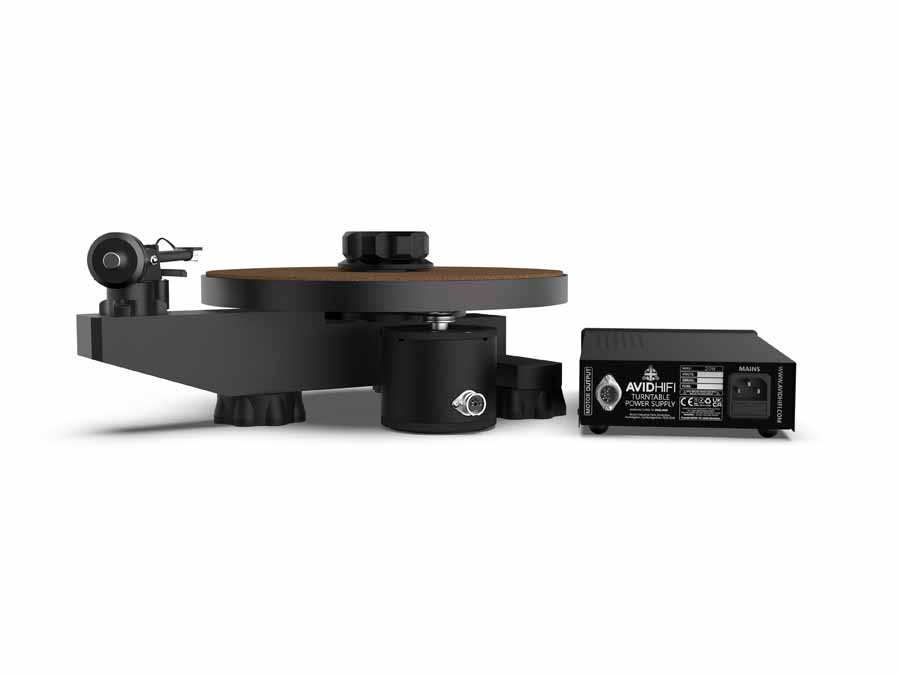
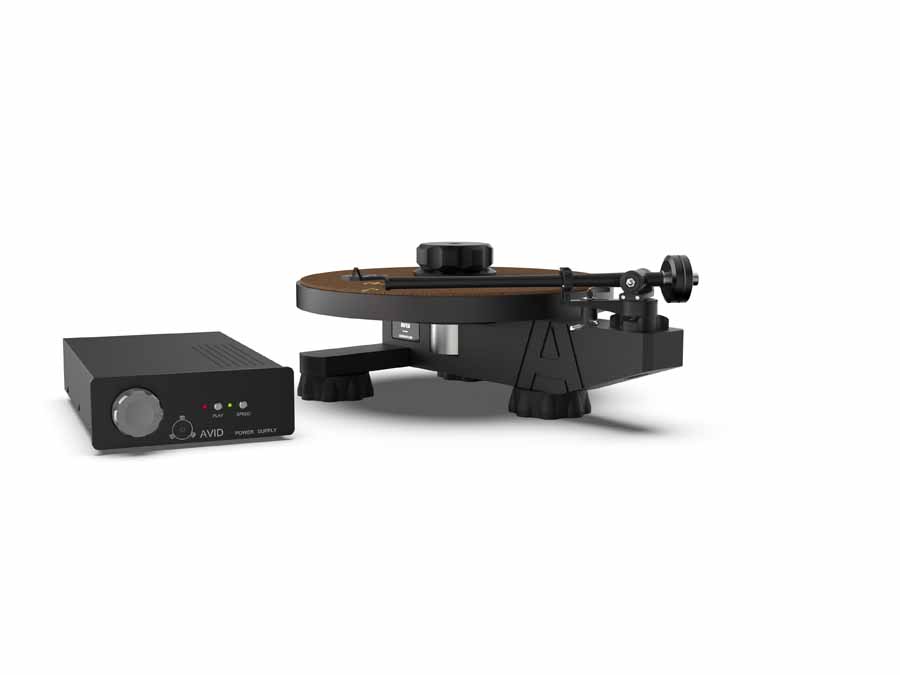
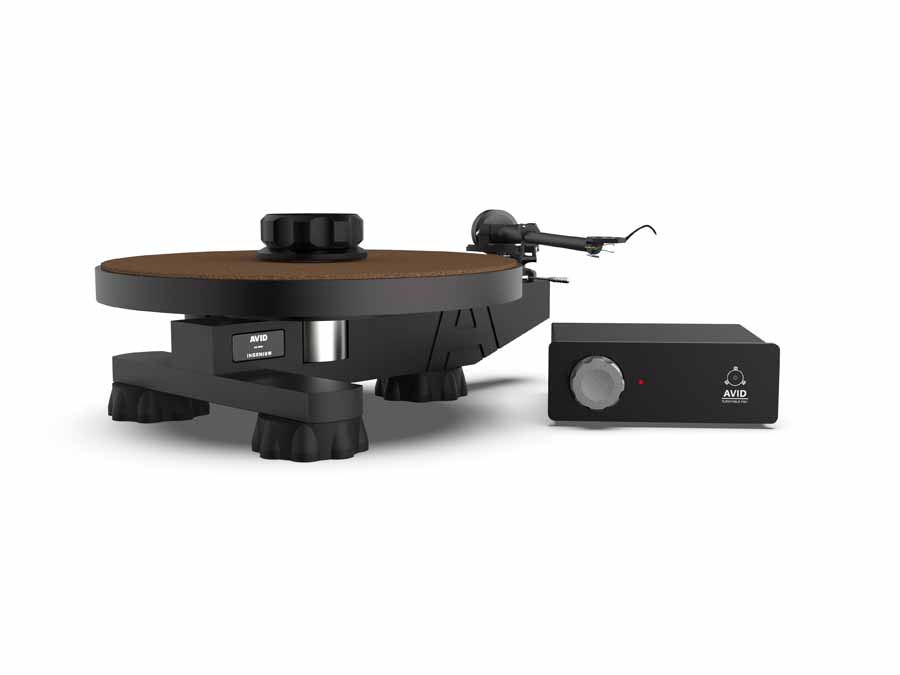
While the original Ingenium was modified in 2018 to become the Plug & Play version with a fitted arm and cartridge that resulted in an easier set-up time in under ten minutes, feedback from customers has now led to a new version, the SE, for 2026. Interestingly, customers wanted improvements even if this might actually increase the price. Where the original had an off/on switch in the cable, which, like on those heated under-blankets, wasn’t so easy to operate, the v3 model now has a separate toroidal mains power supply unit and uses the same motor designed for the more expensive Relveo. Originally, AVID used Crouzet motors, but having moved their construction to Morocco, Conrad felt the quality wasn’t quite so good. So he decided to work in conjunction with Rota Link (who also supply for Rega and Linn) to design their own better motor, which increased the quality. The result was reduced noise, enhanced speed stability and more detail from the grooves of your precious records.
The Tonearm
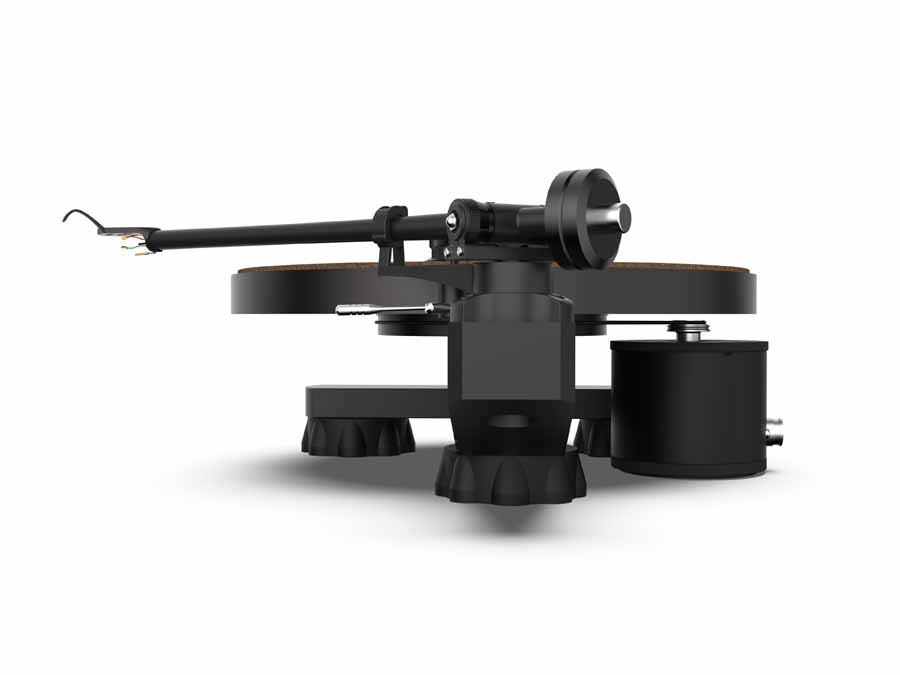
The TA-3 tonearm is basically the Rega RB330, just as their lower-entry arm, the TA-1, was the RB110. The RB330 offers increased structural rigidity with reduced resonance, has adjustable bias, and also has improved cabling. All you need to do is add the cartridge of your choice. Many manufacturers have used a standard Rega arm as the starting point for their own product, and well they might. Regas are good British designs. Companies such as Moth, AudioNote, Michell and Origin Live arms have all had their starting point as an RB. The TA-3 is a definite improvement on the TA-1, now a one-piece arm-tube (unlike the RB110 as in the Ingenium Plug-and-Play) and employs the excellent bearing system that makes Rega the choice for so many. The Ingenium SE deploys the Rega 3-point mounting system, in case you wish to change to other suitable arms at a later date.
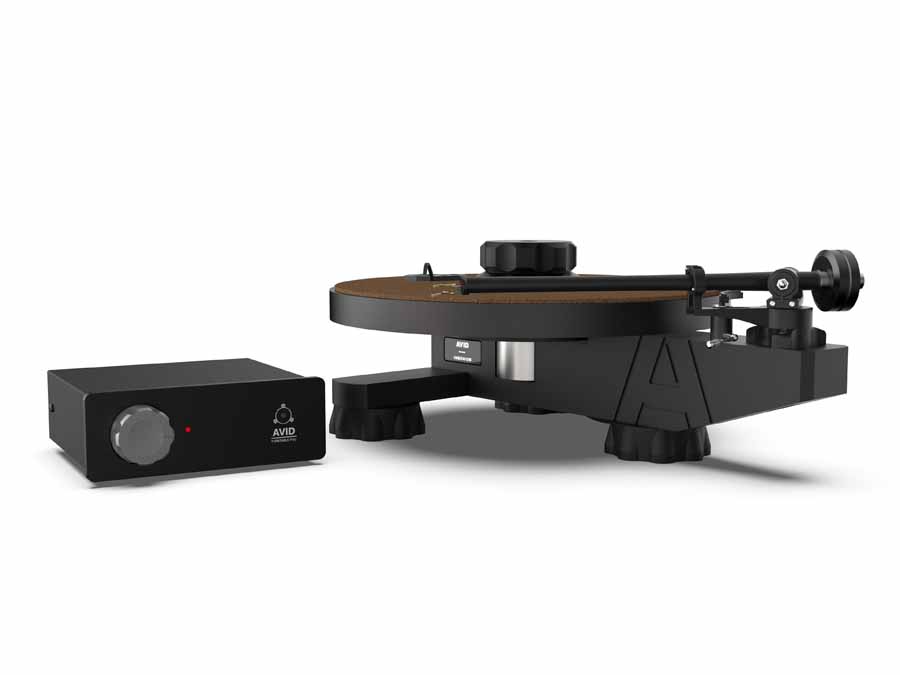
Power Supply, Motor and Upgrade Options
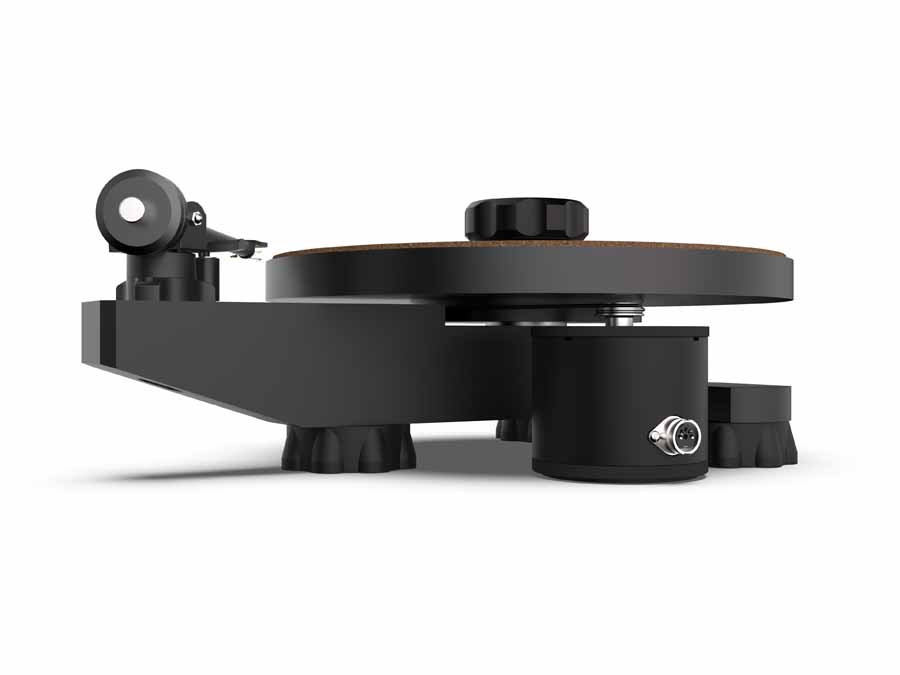
The basic SE at £2,595 has an external motor that is connected to the PSU via a screw-lock DIN plug. With red LED, the PSU deploys the recognisable AVID rotary switch to turn on and off the motor. The basic unit doesn’t allow finite speed adjustments like on the upgrade or on other AVID models, and changing speed is simply achieved by changing the belt between the two diameter pulley wheels, just as with my Rock 7. The upgraded PSU delivers further gains in sound quality, as well as fine speed adjustment and convenient electronic speed change at the touch of a button.










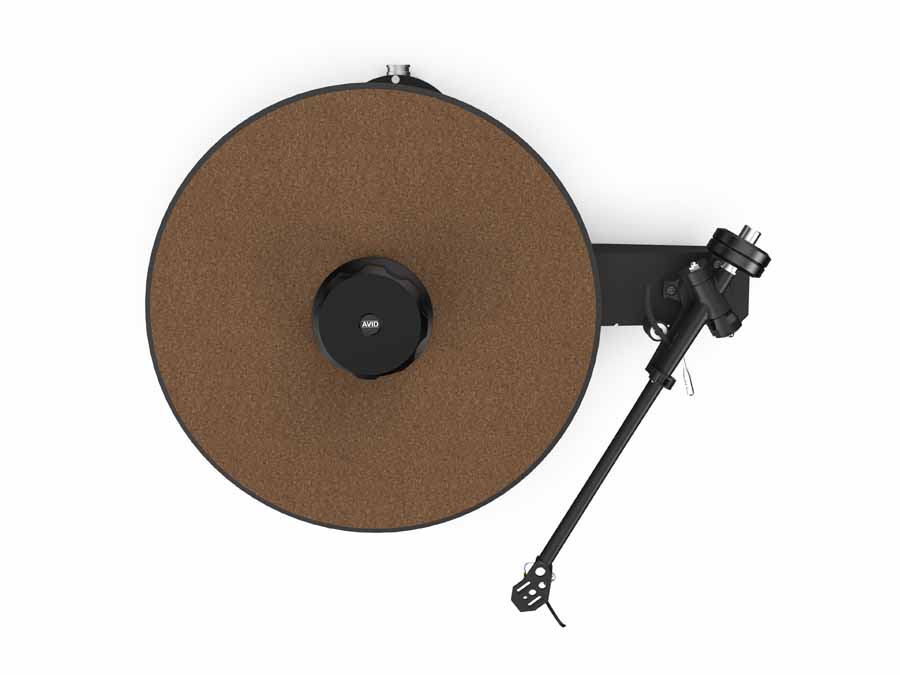
There are several options for taking the SE to even greater heights. Where the standard platter is made from MDF with a cork mat, OPTION 1 improves the SE with the aluminium Platter Upgrade to give greater speed stability and sound due to the extra weight, plus OPTION 2 which additionally supplies the DSP Power Supply mentioned above. OPTION 2 also comes with an improved drive pulley for better traction so you can fit 2 belts on it as the speed change is done from the PSU (and having 2 belts, just as in cars 4-wheel drive is better than 2).
SETUP AND USE
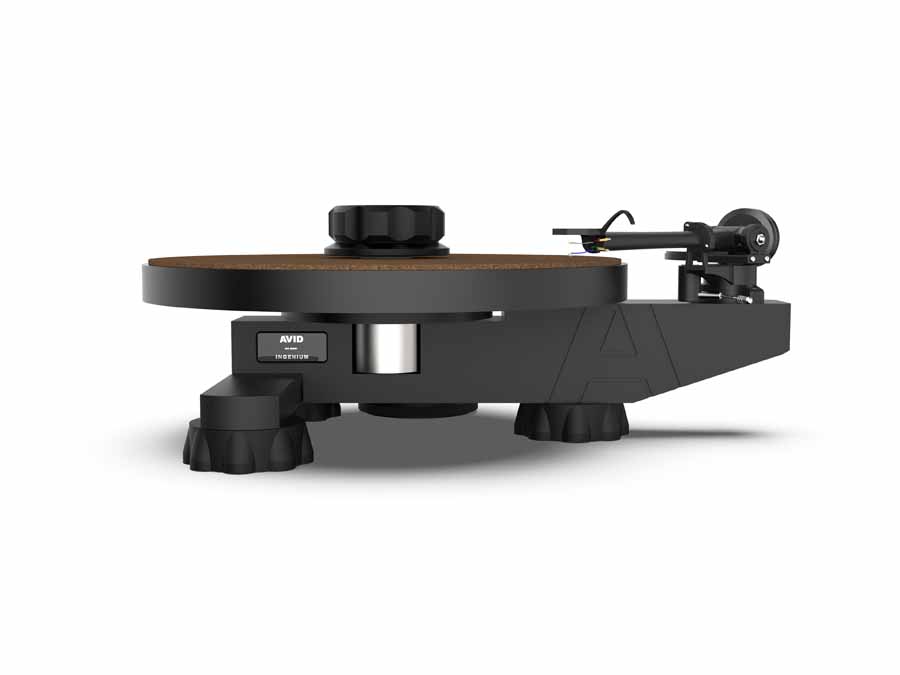
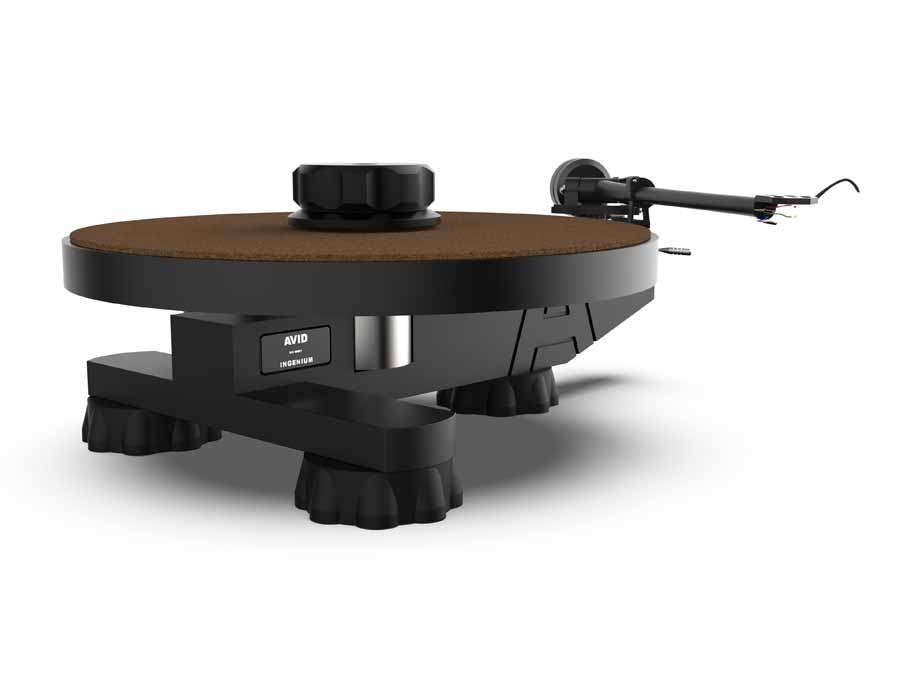
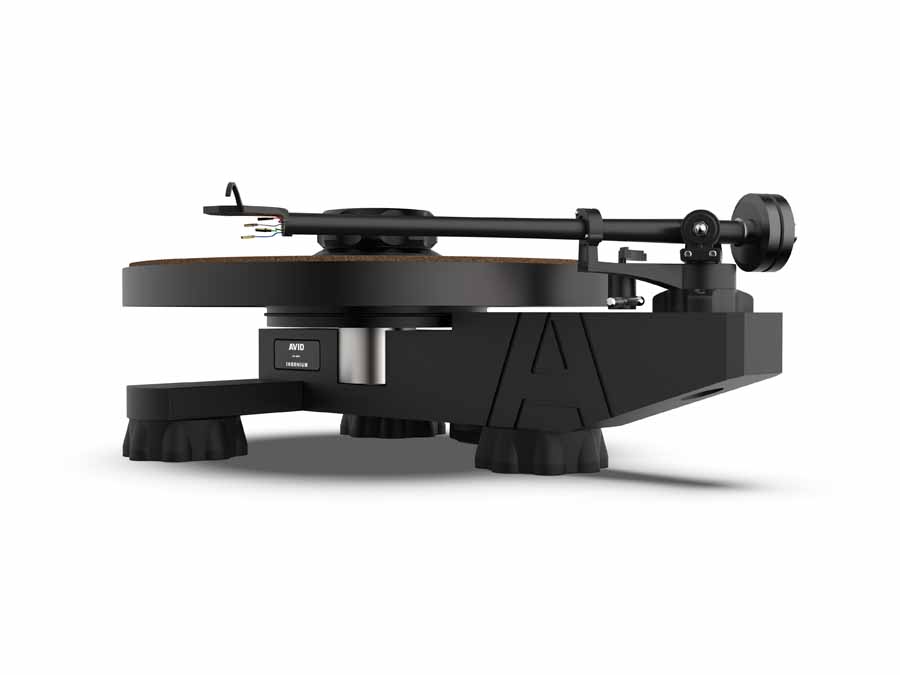
Set up was exceptionally easy, taking less than 20 minutes from unpacking from the brilliantly designed carton to sitting and playing the fully set-up turntable. I know the excellent £1050 Hana ML MC cartridge was already installed on the review sample, but I still needed to check its VTA and angle to the groove, as well as set up the weight and bias on the arm. Even the packaging allows for the larger upgraded power supply should you take that option. Like my Townshend Rock 7 (also with Rega RB300 arm), this is a skeletal turntable design with a solid and heavy chassis with the tonearm already installed. At the centre is the shaft onto which the hub and bearing assembly (sub platter) carefully fits, having first placed the tungsten carbide ball-bearing into the central recess of the shaft. Even at this price, AVID retains the same tungsten carbide and sapphire bearing combination used throughout its more expensive turntables, meaning there is no need for lubrication since the two compounds are self-lubricating. After placing the belt around the sub-platter and onto the motor (ensuring reasonable tightness to reduce wow and flutter, but not too tight!), the MDF platter is then placed over the central shaft. It doesn’t have a conical hole as in the more expensive turntables, and if you have the heavier metal platter there are 4 additional studs on the underside to line up to the holes on the sub-platter/drive hub. This is particularly useful for when you unscrew the clamp after playing a record, as it stops the platter from moving on the sub-platter. Though the arm is installed, you still need to add the weight and to balance it. I set the Hana up at 2.05g and with 100-ohm loading. The turntable comes with the famous AVID record clamp, which not only minimises record warps, but also helps send vibrations within the records back to ground via the slightly raised brass area surrounding the spindle. The clamp screws into the spindle, so be careful not to cross-thread it. This is much like the clamp for my Rock 7, but I much prefer just a weight that tightly slides over the spindle. Less dangerous! However, there is a very good reason for the AVID design, as it allows vibrations to be transferred much more effectively from the platter back down to “earth”, something I noticed later when listening to music.
Typical of AVID, the instruction manual for the turntable is brilliantly written and illustrated (as is the one for the arm), so that anyone should be able to set up the Ingenium SE without a hitch. A video will appear on their site soon, even showing how to put it all back in its box if you should move house. There is no means of adjusting the three feet, but they are of substantial Sorbothane rubber with a felt base, so vibrations from your fridge freezer should also be minimal! This turntable is designed for simplicity in set-up and execution, and was a pleasure to use.
SOUND QUALITY
Don’t expect Relveo performance on the cheap; whilst it uses many of the technologies that make AVID turntables so good, it does cut back on some of the luxuries. However, I did find much of the exuberance of those higher-echelon products in evidence here; things like the controlled and extended bass-end and exceptionally stable speed, making the music very authoritative when it should be.
Chasing The Dragon records always offer excellence in both engineering and performance to test any turntable, whatever the price. The “Eine Kleine Nachtmusik” (‘Mozart by Candlelight’ album) might be a binaural album best heard on headphones, but once your ears adapt, it actually sounds promising through speakers, if you slightly adjust your listening position! On my Stax EarSpeakers, the music not only was positioned perfectly in my internal world, but the noise floor, more easily discernible on cans, was surprisingly quiet. The technology to remove noise from the record back to earth – a mechanical diode – was actually really heard by accident. Putting on my excellent Bach D minor Toccata and Fugue BWV565 (Helmut Walcha, Archiv 2565002), I was somewhat startled at the noise from the grooves and mechanics until I discovered I hadn’t actually put on the record clamp. Once I did that, suddenly the noise was gone, and I could hear more of the music, especially those bottom D’s on the pedal keyboard, with a much better controlled bass-end. Even the top end and spatial definition were improved, plus an improved dynamic range, and motor noises from the organ itself were more noticeable. Conrad has always focused on the noise of a vinyl record, and as a child noticed just how turntables with the very same specification always seemed to sound different. As he told me, “The interaction of a record onto what it’s sitting is like a cymbal vibrating”. Using laser spectrograms later at Hatfield Polytechnic (now the University of Hertfordshire and on the site where de Havilland designed the famous Comet jet aeroplane), he could hear just how much a vinyl disc vibrates even when not spinning or a stylus is touching it. Just as aeroplanes mustn’t vibrate, he could see that he needed to get any vibrations away from the cartridge, by mechanically grounding any noise as far away as possible. All AVID turntables use this philosophy. Indeed, the 2” thick plywood I used for my Garrard 301 turntable plinth design as a child came from that very airport! The final very long chord of the Bach also showed me just how low the wow was. The motor has very high torque, not only getting the record up to speed quickly, but also maintaining accuracy, whether a lightweight MDF or heavy aluminium platter.
The detail of space and extension of reverb were similarly quite excellent for such a cheap turntable. Jethro Tull’s ‘Zealot Gene’ is Ian Anderson’s first album for 2 decades, and whilst being brilliant music, the LP does show mistakes in the recording process, which I hope to be able to hear when testing good HiFi; things like reverbs in the wrong stage positions and certain frequencies appearing “separate” from where the music itself is. Micro-details, I know, but I instinctively hear where they are. A good turntable will show them, and the Ingenium SE did its best to indicate them to me, but it was only when I placed the metal platter on that things really did start to open up. Any “smears” in the recording just disappeared; this was particularly noticeable in the Bach Toccata at the end of the first section, a long, thick chord that with the MDF platter just didn’t separate the notes as well as the metal platter allowed. Now the individual notes were more defined, and consequently gave more meaning to them. Similarly, the aluminium/cork platter provided a more open sound and greater dynamic range; having not touched the volume control, the MDF platter made the sound appear louder because its dynamic range wasn’t as great as with the heavier metal alternative. The Jethro Tull record similarly gave extra dynamic contrast in the music with the new platter, sounding less “squashed” and more life-like. As I experienced with a Russ Andrews review that I did a while back, the difference was more noticeable when I went in reverse from “with” to “without”, or here from “metal” to “MDF”. I suddenly wasn’t quite so interested in, or interacting with, the music. Remember, these are micro details, so the bog-standard SE is still actually really, really good, but these options allow you to improve things even further. Much further. I similarly found the upgraded aluminium platter in the original Plug & Play version ensured that the treble was not only tighter but more prominent and that the bass end was extended.
Back to the basic SE. I did sometimes feel that the stereo definition wasn’t as grand as my own reference turntable; I have never been impressed with albums from the rock band Genesis. They seem rather unadventurous in staging terms, unlike David Bowie, for example. Their ‘3 Sides Live’ is a case in point. Much of it sounds like mono, as if you are listening from the very back row of the audience. Only audience noises reminded me this is stereo. However, the rhythmic drive from the SE was excellent. Tony Banks’ stereo synth did bring stereo back to perspective, luckily, in the “In the Cage” medley, especially in his middle instrumental section, and Phil Collins’ brilliantly energetic drumming was so precise. Hana cartridges really are good if you set them up with a good adjustable phono-stage, such as my Manley Steelhead. In terms of detail, my Chinese ‘31st Shanghai International AV Show’ LP really does test how good a cartridge is, with extreme frequencies from the percussion and OTT artificial reverbs from the female vocalists. “Jiu’er” (meaning “ninth child”) from Yao Yingge has exceptional detail, and came across surprisingly tight and clear with a solid punch from the bass drum and a very humanistic sound from the flute, though the violins really needed to be Stradivari. The whole album had clear and extended bass, something I always expect and get from an AVID turntable, whatever the price.
QUIBBLES
At such a good price, there is very little to quibble about. Just wish perhaps the three feet were adjustable in case my house is on a hill. No, just make sure your HiFi stand is level!
CONCLUSION
For an entry into the vinyl world of AVID, the new Ingenium SE takes you even further than the original model did 13 years earlier. For tight control over the music (particularly the bass frequencies), excellent speed stability, good musical detail, plus no need to worry about setting up an arm, this is the perfect entry point into vinyl audiophilia.
AT A GLANCE

Build Quality and Features:
Typically AVID at its best
For the company that once built metalwork for Aston Martin, it must be good
Excellent packaging and idiot-proof instruction booklet
Sound Quality:
Controlled bass and detail at all frequencies, plus an exceptionally low noise floor for the price
Value For Money:
Worth the extra over the original Ingenium
Adding the metal platter is advisable, though, just as I thought in the original Ingenium Plug & Play
We Loved:
Bass detail and control
Delving deep into the music
Good looks and simplicity of setting up
We Didn’t Love So Much:
Not sure about an MDF platter, but it keeps the price lower, and also the weight!
Elevator Pitch Review: I really didn’t know what to expect from a new entry-point Ingenium turntable from AVID. I had been very impressed with the original Plug-and-Play version, but could this be any better? Well, after feedback from customers and retailers over the product’s lifetime, Conrad decided to listen to them as well as the music and make the new SE version even better, even if it made it more expensive. Would this extra outlay make the Ingenium even more ingenious? You bet.
Price:
INGENIUM SE OPTION 1 £2,595.00 / €3,595.00 / $3,995.00
(Turntable – Standard PSU – MDF Platter)
INGENIUM SE OPTION 2 £2,995.00 / €3,995.00 / $4,995.00
(Turntable – Standard PSU – Metal Platter Upgrade)
INGENIUM SE OPTION 3 £4,295.00 / €5,995.00 / $6,995.00
(Turntable- Upgrade PSU- Metal Platter Upgrade)
(METAL PLATTER UPGRADE £500.00 / €600.00 / $700.00)
(UPGRADE POWER SUPPLY £1500.00 / €2000.00 / $2500.00)

Janine Elliot
SUPPLIED SPECIFICATIONS
DRIVE: BELT DRIVE
SPEEDS: 33.3 & 45.0 RPM
PLATTER MASS: 2.5KG (Metal Upgrade 5.5KG)
BEARING: INVERTED STAINLESS STEEL
THRUST POINT: TUNGSTEN CARBIDE/SAPPHIRE
SUSPENSION: ELASTOMER
TONEARM: AVID TA-3
MOTOR: 24V 12mNm AC synchronous
POWER SUPPLY: STD + UPGRADE OPTION
VOLTAGE INPUT: 100-240VAC 50/60Hz 4 Watts Max.
DIMENSIONS: TURNTABLE: 370 x 305 x 130mm (WxDxH overall)
STD PSU: 160 x 160 x 60mm
UPGRADE PSU: 160 x 290 x 60mm
NET WEIGHT: TURNTABLE: 5.9KG (13LB)
STD PSU: 1.5KG (3LB)
UPGRADE PSU: 2.3KG (5LB)