
Russ Andrews Accessories At 40: A Lifetime Of Questioning HiFi Convention
As Russ Andrews Accessories celebrates its 40th anniversary, we talk to the man whose fascination with HiFi began at the age of 14, when a friend’s father played him a record through a homemade valve amplifier. That spine-tingling moment sparked a career spanning retail, product development and a determination to question received wisdom about what makes a system sound good.
From his Edinburgh shop and early friendships with Linn’s Ivor Tiefenbrun and Naim’s Julian Vereker to his longstanding partnership with Ray Kimber, Russ reflects on the people and experiences that shaped the business. We discuss his focus on mains supplies, cables and system infrastructure, the scepticism his ideas have attracted, and why listening at home remains central to his approach. Forty years on, he also explains why retirement holds rather less appeal than finding another way to improve his system.
Before Russ Andrews Accessories existed, what had drawn Russ into HiFi, and what experiences or frustrations led him to believe there was room for a different kind of HiFi company?










Russ Andrews Accessories was incorporated in 1986, so the present company is forty years old this year. However, I have been working in HiFi since the 1960s – first as a retailer and then as an R&D consultant – so by the time Russ Andrews Accessories came into existence, I’d already had years of experience in many aspects of HiFi.
I was switched on to HiFi from the age of 14. A friend’s father had built his own valve amp and speaker, as was very common in the 1960s. When he played a record, the sound instantly made my spine tingle; I just knew it was something I had to have. Following that first taste of high fidelity, I built my own valve amp and put together a system that sounded far better than the commercially-available transistor amps.
When I left school, I spent some time working as a TV service and repair engineer, before moving to Edinburgh to study chiropody. Fortuitously, I took a part-time job repairing HiFi equipment at a shop in the city called Audio Aids. The following year, I made the decision to quit chiropody and became a partner in the shop.







In 1971, I established my own shop in Edinburgh – HiFi Corner, which later became Russ Andrews High Fidelity. It was here that I first met Ivor Tiefenbrun of Linn Products; I’d already heard his new LP12 turntable, and knew how exceptionally musical it sounded, and that connection blossomed into a friendship that continues to this day. Ivor introduced me to Julian Vereker of Naim Audio who was, at that time, manufacturing his high-end NAP160 and NAP200 power amps for the pro-audio sector and I became the first HiFi retailer to stock them, promoting them and the LP12 enthusiastically to my customers!
Even back then, I’d never been one to simply accept the conventional wisdom, something which has driven my entire career. For example, I noticed how much better equipment sounded when played in a room on its own and built a dedicated demonstration room in the shop – unheard of at the time, but something which has since become the norm.
Take us back to the beginnings of the business. What did Russ Andrews look like in those earliest days, what were you selling, and what ambitions did you have for the company at the time?
I questioned everything and from the early 1970s I discovered how influential the mains quality was on the sound of a HiFi system. It made me a very controversial figure – I remember getting letters when I dared to suggest in HiFi Answers magazine that the mains might not be the clean supply it had been thought to be!
I left retailing in the late 1970s and set up as an R&D consultant, working with the likes of Meridian, Nytech, ARC loudspeakers and QED, where I developed their Incon range of cables.
This background gave me a breadth of knowledge in all aspects of HiFi that was to prove invaluable when I set up the business. This came about when Ivor presented an opportunity to take over the distribution of Grace tonearms and Supex cartridges from Linn, so I set up – as a sole-trader – RATA (Russ Andrews Turntable Accessories – the precursor to today’s company) to sell them.
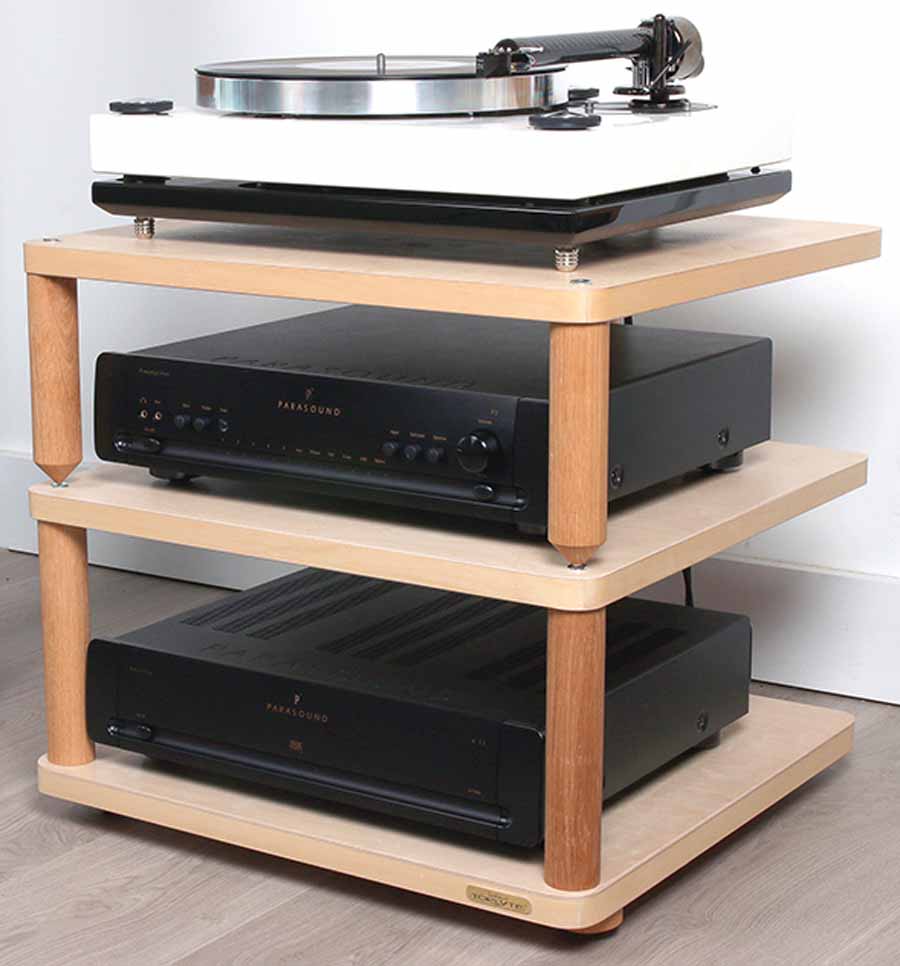
I’d later developed the Torlyte equipment support platform (marketed through QED) and developed my range of RATA RP cartridges (manufactured to my specification by Goldring). These were also joined by my first mains products – Clamp 1 and Clamp 2 spike and surge protecting components. Remember – I’d been researching the mains since the 1970s. I’d been coming to the realisation that the ‘infrastructure’ – the mains, connecting cables, supports and even the room itself – had such a significant effect on the performance of a HiFi system that it was capable of delivering huge improvements in the sound. No-one had really appreciated this before and I could see the company as a way to get this message across, and deliver the products to enable it.
Russ had met Ray Kimber in 1985, beginning an association with Kimber Kable that continues today. How did that first meeting come about, what did Russ recognise in Ray’s approach to cable design, and how has the relationship between the two companies developed over the past 40 years?
In 1985, I exhibited Torlyte – as RATA – at the Chicago Consumer Electronics Show (CES), along with my Canadian distributor. By chance, we happened to be in the room opposite Ray Kimber and his company Kimber Kable, and I spent most of the show talking to Ray and learning about his cable designs. Kimber’s cables all had a very distinctive, woven construction, which I learned was very effective at reducing the effects of Radio Frequency Interference (RFI) which is very destructive of musicality. I was captivated by the performance of them, and quite simply they were the best I had heard.
Following this first meeting I became the UK distributor, and RATA formally became incorporated in 1986.
When we started selling Kimber Kable, Kimber only really offered speaker cables: 4PR, 4TC and 8TC, along with some internal wire they made specifically for speaker manufacturer PSB. I experimented using this internal wire as an interconnect cable, and the results were so good that I encouraged Ray to launch their first interconnect. That interconnect became Kimber PBJ – a cable that’s still in the range to this day.
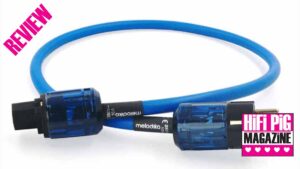
I’d also been experimenting with using Kimber’s braided wire as mains cables, as I suspected the design would prove extremely beneficial at reducing noise on the mains supply. Ray generously made wire for me in the correct colours for mains wiring and we launched the PowerKord in 1987. To say they were a success would be an understatement – to date, we’ve sold over 75,000; they were the first commercially-available audio-grade mains cables offered in the UK.
How did Russ Andrews grow from that relatively small operation into the company it is today, and which moments or decisions proved to be particularly important in shaping that growth?
We started out selling through a dealer network, but, after about ten years or so, I realised that my message about the infrastructure was a difficult sell. It was at a time when many people were still saying that interconnects and speaker cables didn’t make any difference, let alone the mains!
And yet, there I was trying to suggest that the infrastructure was every bit as important as the hardware it was connecting and supporting; you can imagine the challenge.
So, in 1997 we decided to concentrate solely on selling direct to customers as a mail order company and not through a dealer network. Since we were selling direct and didn’t need to build in a dealer margin, we were able to keep our prices as low as possible, and the extra money we saved enabled us to produce an in-depth catalogue to properly explain the features of our product range and, crucially, the benefits of upgrading your infrastructure. We also published a series of information booklets, covering the mains, cables, supports, and your listening room. To this day, we publish a customer magazine – Connected to Music and Movies – which we post out free of charge to thousands of customers every quarter, continuing the message.
Once we started selling direct, we experienced remarkable growth; I think the turnover doubled every year for the first five years… clearly the message was getting across. The frustrating thing was that we’d always had the products, but until we started selling direct, we hadn’t been able to communicate the benefits of those products well enough.
Looking back across the complete history of the company, which products do you consider to have been genuinely pivotal, either because they changed the direction of the business or because they changed how customers thought about improving their HiFi systems?
Right from the days when I was a HiFi dealer, I’d realised the importance of the mains supply. I remember once when I was repairing a power amp, I’d had it on the scope and someone in the room next door started playing music for a dem. I saw that the distortion residual trace on the scope was moving in time with the music: the power supply of the amplifier being demonstrated was modulating the mains and those modulations were being picked up by the amplifier I was repairing in the room next door!
That set me off on a period of research into the mains which continues to this day. We’re best known for our mains products; some of the first were our PowerKord mains cables which in their current iteration remain best sellers. Audiophile mains cables were unheard of when we launched the PowerKords – now almost every cable manufacturer offers a mains cable – so these are probably the product that has changed our business and the industry the most.
Russ Andrews has explored areas such as cables, equipment supports, mains treatment, grounding and noise reduction, often before these were widely discussed within HiFi. What has driven that willingness to investigate aspects of system performance that others might overlook?
I was always very keen to keep an open mind about what might be causing a problem, and finding the root cause, rather than treating a symptom. An example from the past: back when I was a dealer, I had a customer with an LP12 and a Pioneer receiver. He wanted to hear a Naim pre-power combination which I took round to demonstrate to him. It sounded terrible in comparison to the Pioneer which puzzled me, as the Naim should have sounded clearly better. An investigation showed that the LP12 was mis-tracking, something that was masked by the Pioneer but very audible on the Naim. A quick adjustment to correct the mis-tracking, and the Naim sounded far better.
If we hadn’t checked the cartridge, the Naim would have been rejected and the root cause of the symptom (the poor sound) might never have been discovered.
When I’m trying to improve the sound of any system, I first try and work out what the cause of the problem is. As the owner of the LP12 discovered, a better product can highlight a symptom. It’s all too easy to treat the symptom (in this example, by using a receiver that masked the issue) rather than finding the root cause of the problem, curing that and enjoying better sound overall.
Over the years, I have researched and discovered the things that cause bad sound, and the products we have developed solve those problems rather than simply masking the symptoms. Kimber’s cables, for example, are very effective at reducing Radio Frequency Interference which is one cause of poor sound and very destructive of musicality. They cure the problem at source by reducing the RFI, so your sound is clearer, more musical and more enjoyable to listen to.
What has been the underlying philosophy of Russ Andrews over the past 40 years, and how has the balance between listening, measurement, experimentation and practical experience influenced the products you have developed and chosen to sell?
I’m a music enthusiast at heart and firmly believe that any HiFi system should serve as a means to an end; a system should “get out of the way” to such an extent that music is experienced in the same, direct way as a live performance.
Key to this process is placing musicality at the centre. Musicality – the rhythm and timing that puts emotional meaning into the music – is, for me, what it’s all about. HiFi systems can easily destroy the rhythm and timing in the music; a system that preserves the musicality is what I’m interested in. If you follow the music, rather than the sound, the chances are that you are on the right track.
It’s the inherent musical qualities of any product that we use to assess and judge everything, whether it’s a pair of loudspeakers or an amplifier, or a cable, support or accessory. When developing a product, of course we measure and experiment, but the ultimate test is whether the finished product preserves and enhances the musicality. In fact, it’s the easiest way to judge any component.
Some of the subjects with which Russ Andrews is most closely associated, particularly cables and mains treatment, have occasionally attracted scepticism and lively debate. How have you approached that scepticism, and has it affected the way you develop, demonstrate or explain your products?
It hasn’t affected the way we develop products, but it did shape the business. We realised early on that the very best way to judge any upgrade is in your own system at home. This led to the introduction of our money-back guarantee; we allow a two-month audition of almost all of our cables and accessories for a customer to assess for themselves whether the upgrade is worth it.
Times have changed in the last forty years, and while cables and mains upgrades are far more mainstream than they were back then, we appreciate that expecting someone to take our descriptions of the benefits of our products at face value is still a big ask. No manufacturer can state exactly how a cable or accessory – or indeed any piece of HiFi equipment – will perform in every system, so auditioning a component in your own home is the only way. The money-back guarantee takes the risk out of that: if it doesn’t work for you in your own system, send it back for a full refund.
The company has always had a particularly direct relationship with its customers, through its catalogues, advice, home trials, warranties and upgrade schemes. How important has that relationship been to the success and character of the business, and what have you learned from customers over the years?
Fostering a relationship with our customers has been an aim of mine from the earliest days. We still have customers who call to place an order and say to us “I first became a customer of yours in Edinburgh in the 1970s!”. Everyone working on the team are enthusiasts themselves and understand how to go about upgrading their systems – after all, they’ve done it themselves at home. So, if you call us, you will speak to a knowledgeable enthusiast – just like yourself.
The reason we went solely mail order was because it enabled us to talk directly to our customers, and one of the ways we do that is through our Connected magazine. The magazine isn’t a catalogue per se (although each issue does have our products in it); it’s far more like a HiFi magazine, with features, customer letters and opinion pieces. We try to engender a ‘club’ atmosphere with the magazine, and that’s always apparent at HiFi Shows where customers are only too ready to introduce themselves to us.
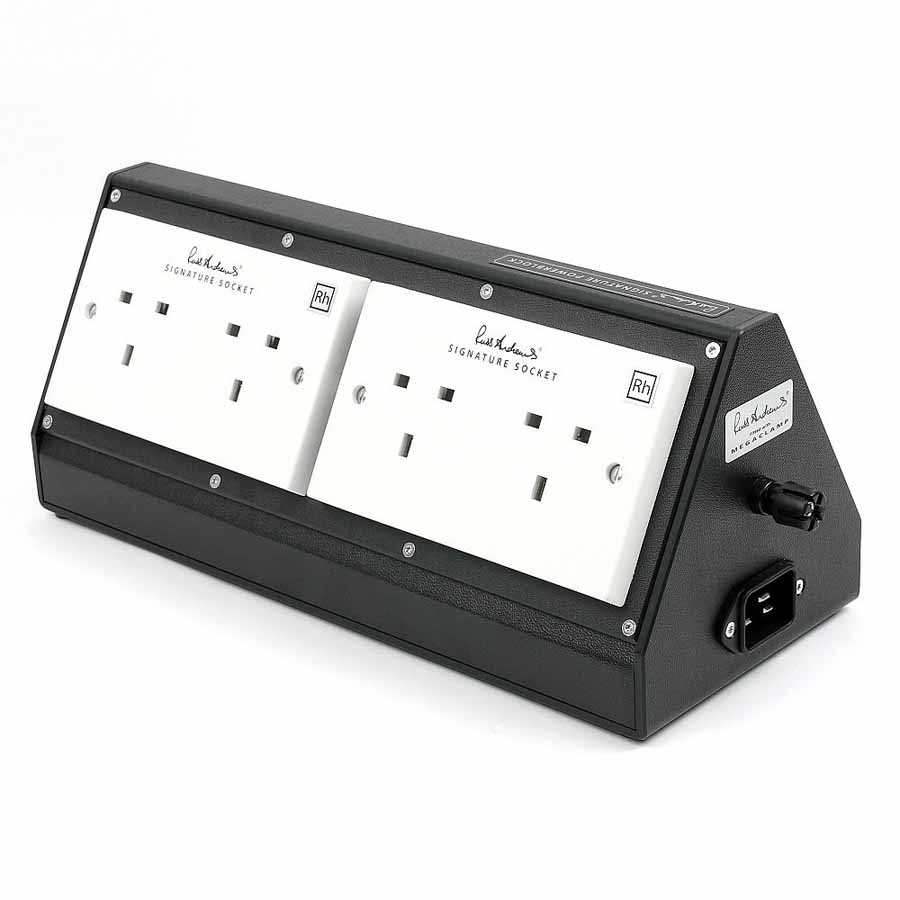
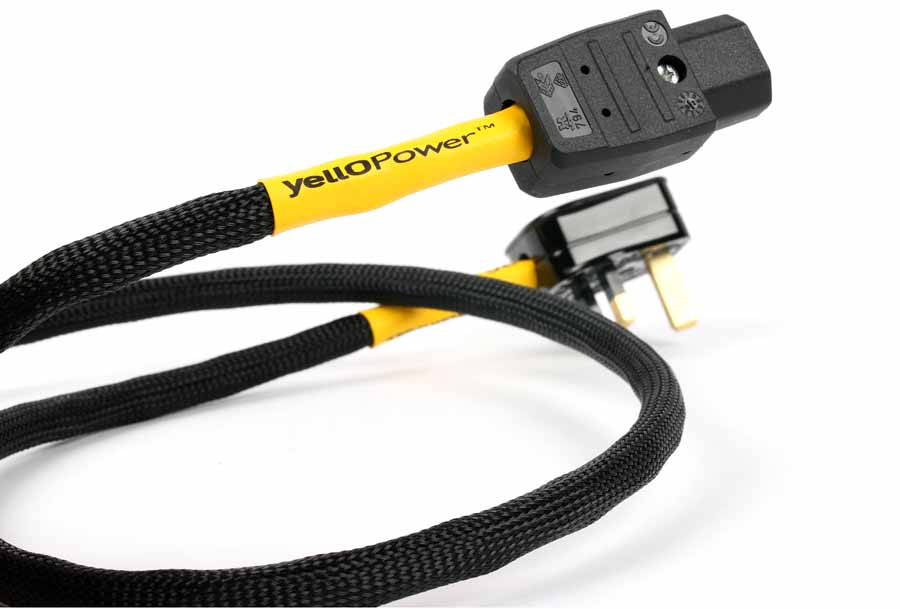
Making ourselves available like this means that this communication isn’t only one way. Many products have started out as customer suggestions or ideas; the most recent being our new DeltaBlock mains extension which was developed in response to the need for a more compact, high-end mains block. And our Upgrade Scheme (where we buy back a product previously purchased from us when upgrading to a model higher in the range) means that there’s a way to work up to one of the high-end models. Few customers start out by buying an £800+ Evolution-500 PowerKord, but many start with our £89 YellO Power and use the Upgrade Scheme to get there… so, the relationship with many of our customers lasts over several decades.
It’s not unusual for us to have customers upgrading their systems for a few years in their early twenties; they might go quiet for a while, but then we hear from them again in 15 years or so when their own children have grown up and they’ve more time again to turn their attention back to their HiFi systems.
Forty years is long enough to have witnessed enormous changes in HiFi, music formats and the way people discover and listen to music. Looking back, what are you proudest of, what have been the most important lessons, and, with John Armer now taking over as Managing Director, what direction does he intend to take Russ Andrews in for the years ahead?
As you will have seen, I’ve been professionally involved in HiFi for a lot longer than 40 years! I think the thing I’ve been most proud of is that the company has been able to get across the message that the key to reproducing great music isn’t solely about the hardware – it’s also how you sort out the infrastructure, which is just as important. Think of it like a sports car: if you have a high-performance engine and gearbox, your money’s going to waste if you don’t have a comparable chassis to support it – or the right fuel to feed it.
We have customers with a whole spread of systems – from modest to ultra high-end – but whatever system you have, it’s possible to get a truly enjoyable, musical sound from any level, provided that you spend a little time and money optimising the mains, connecting cables and supports.
John became managing director in 2011 when I became Chairman, so he, along with the rest of the team, have managed the day-to-day running since then. In fact, the whole team have been working together to continue the message. We see no reason why that shouldn’t continue for long into the future.
Russ remains very much involved in the business he founded 40 years ago. How does he see his role developing alongside John Armer, and does he envisage ever stepping away completely to enjoy a well-earned retirement?
I think as long as I can, I will be involved in improving my system and using what I learn to help introduce new products. For years now, the New Product Team in the business has researched and developed new products, and I’m one part of that. I see no reason why that can’t continue… as long as I can!