
Quad CDT CD Transport
QUAD CDT CD TRANSPORT REVIEW
The QUAD CDT CD transport is a standalone CD transport that must be connected to an external DAC (or amp with onboard DAC) to make sense of its output and convert the zeros and ones to musical information. It costs £1690.
Just as vinyl, reel-to-reels and even cassette tapes have had a second renaissance (in different degrees, of course), it seems CDs, too, are becoming popular again. As well as a few cute lo-fi walkman-style CD players, several top-end manufacturers have started to design and extend the boundaries of this great 1980’s format. I would actually rather listen to 16-bit CDs on my Krell monster KPS20i CD player than any similarly priced 24-bit source. On a properly constructed player, the CD can sound extremely musical, and CD Transports such as Audiolab’s 7000CDT and the Cyrus CD40 are making their mark in the significant “transport” revival. After all, if your new amplifier has a digital coax or optical input, you only need to add the CD transport.
After the release of their Platina Integrated and Streamer, the QUAD CD Transport completes the holy trinity. This player simply connects to the Platina’s digital input of the amplifier so its 1’s and 0’s can be converted back to analogue via the onboard ESS Sabre ES9038PRO – based DAC, or of course, on any other DAC or amplifier’s digital input. For me, it also gave me a chance to connect to a DAC I created many years ago based on Texas Instruments chips. I got it out recently for a review and was quite surprised by just how musical it was, proving that the latest gizmo isn’t always the best. I still think the very first Philips CD player, Meridian’s version, and of course my own Krell KPS20i set boundaries on sound quality in the history of the silver disc. No surprise, then, that the DAC stage of the Krell was also used in this review.

You might assume that reviewing a CD transport will be easy; after all, the conversion to analogue is out of the equation. However, to get to hear the CD, you need to extract all that information accurately and correctly; things like music detail, mechanical prowess, and whether or not it prefers to run consistently rather than skipping and jumping.
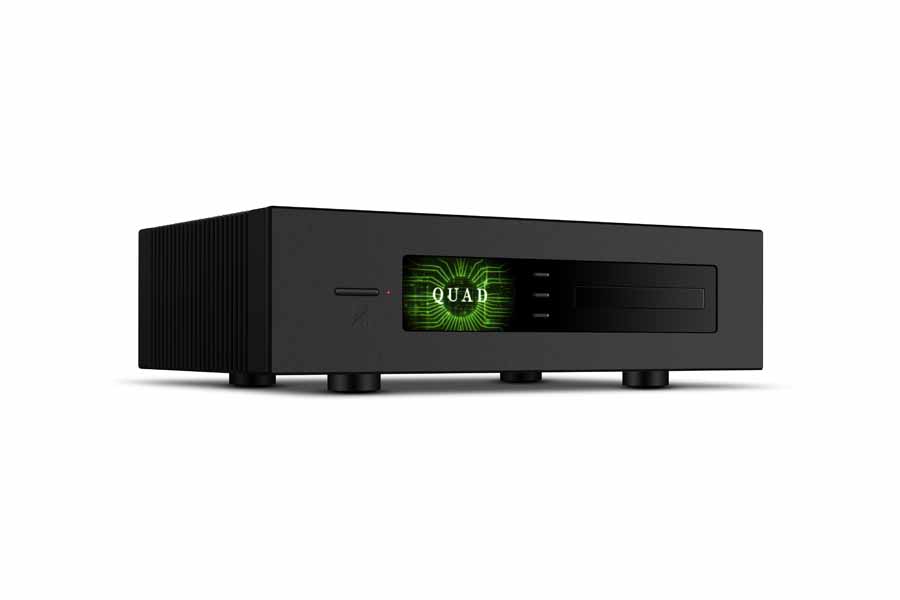
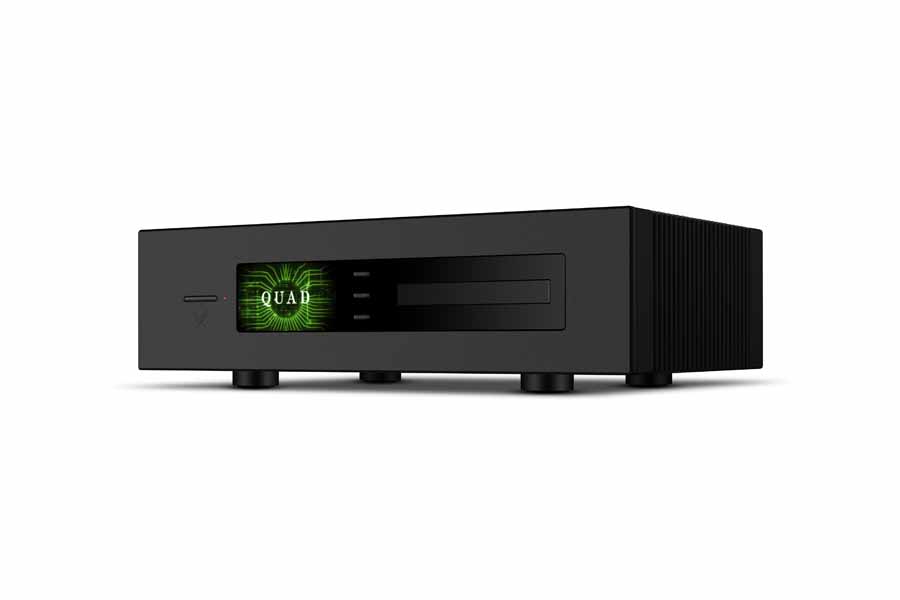
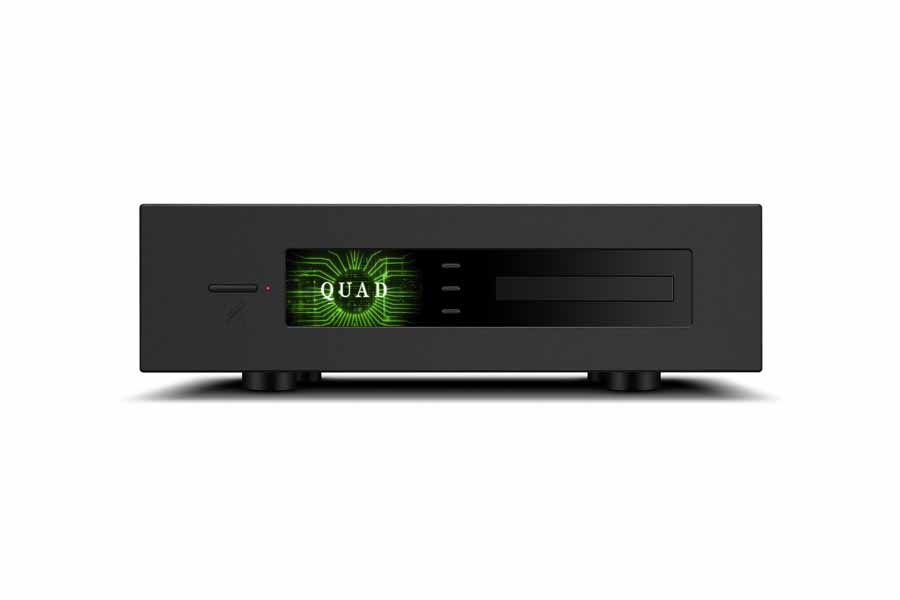
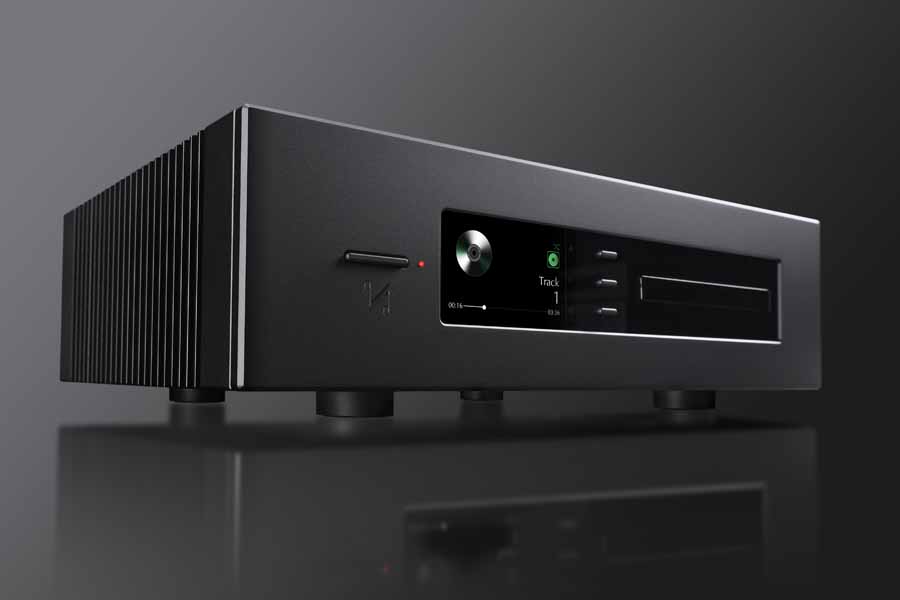
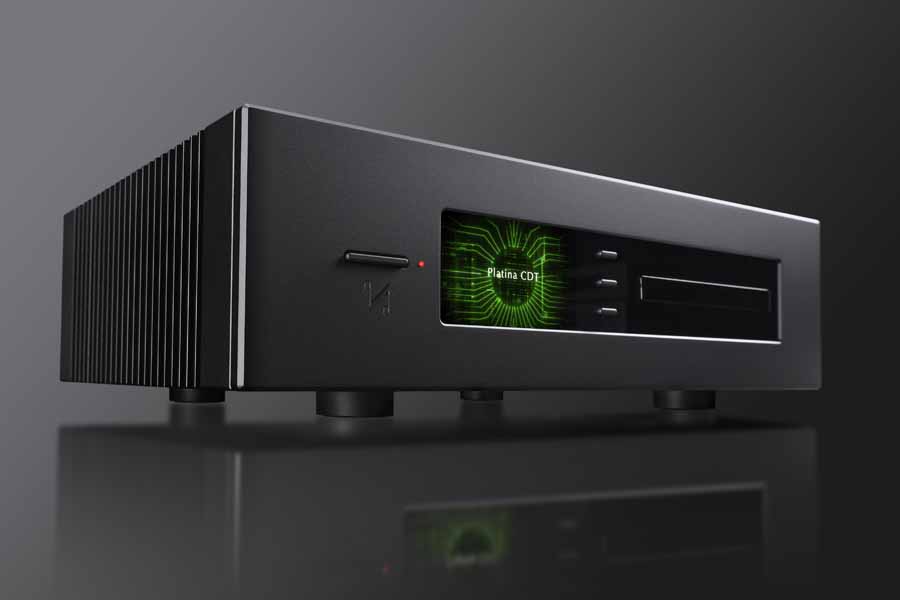
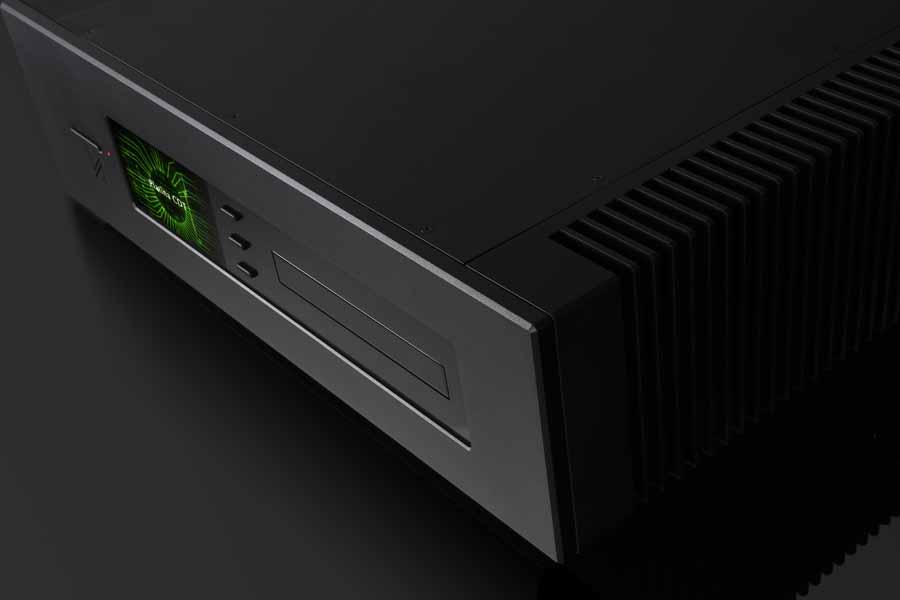
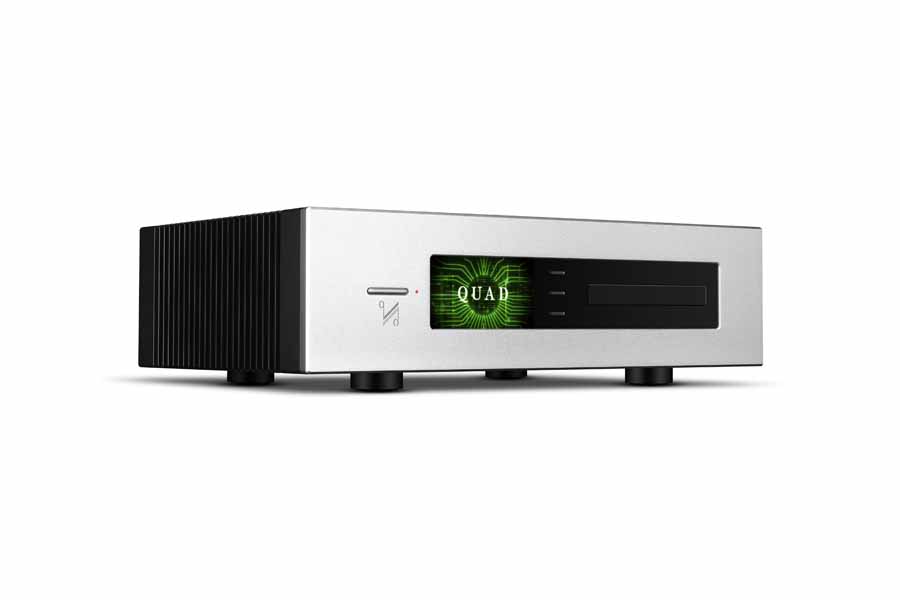
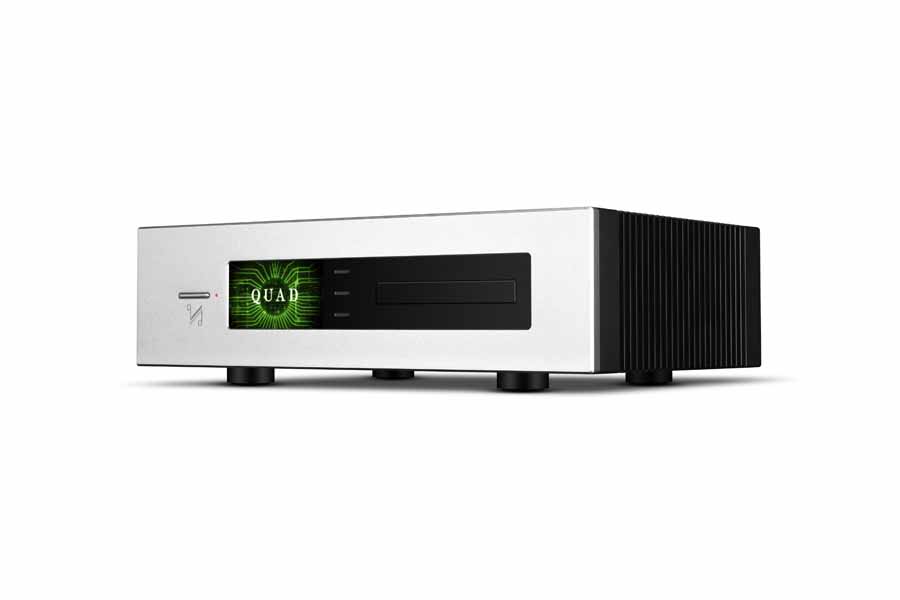
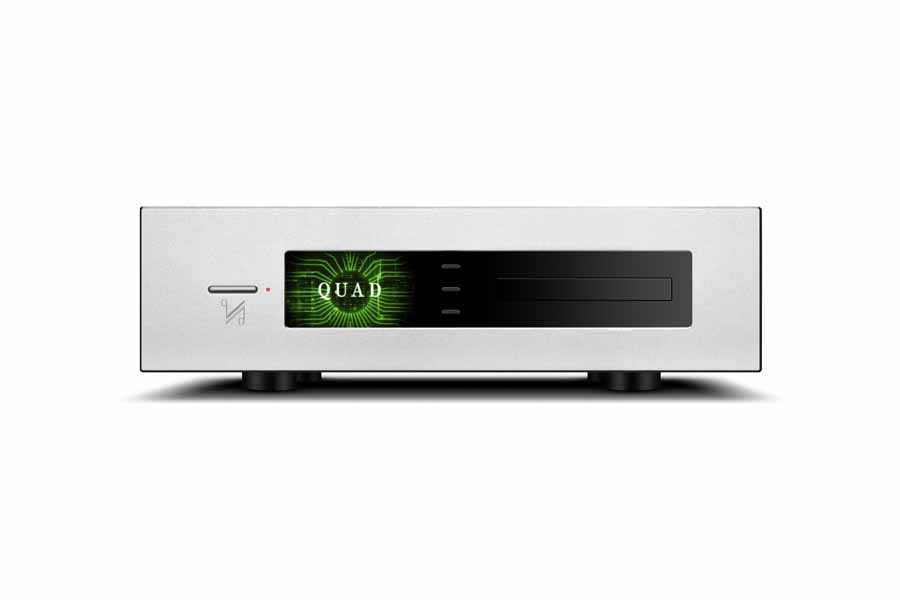
At £1499, this unit visually matches perfectly with the other two Platina models; keeping those cooling fins at the side, not that this unit, unlike my own Krell, needs much heat dissipation, plus the same 4.3” colour IPS screen to indicate track and album details if you don’t have the disc’s jewel case to hand.
Now owned by IAG and celebrating 90 years in industrial and domestic homes, QUAD began life as The Acoustical Manufacturing Company (also as S.P. Fidelity Sound System) in London, making public address equipment in 1936. CEO Peter Walker relocated to Huntingdon near Cambridge after his premises were destroyed by WW2 bombing in 1941, and after the war, decided to venture into high-fidelity equipment. To distinguish his HiFi products, he used the acronym “QUAD” (Quality Unit Amplifier Domestic), and as that name was easier to say and became more popular, Peter finally officially changed the company name to QUAD in 1983. Their products have always been synonymous with quality, and a number of CD players (such as the 66, 67, 99, Artera, and now the QUAD 3CDT) have been introduced over the years, though have never been as significant as their amplifiers and electrostatic speakers. With their 3CDT coming in at £599, the Platina CDT is by no means a rebadged and re-packaged version of this. No, the CD transport itself is totally different and took the engineers considerable time sourcing and re-designing. This new model has a lot more technology inside its more sedate-looking box, and a worthy addition to the company’s top-end series of components, the Platina.









BUILD AND FEATURES OF THE QUAD PLATINA CDT
The design of the mechanics on a CD player is as important as any sound-conversion, and QUAD have gone to great lengths to create a solid performer in the CDT. At the heart of it is a custom-developed transport mechanism. In the great days of CDs – and cassette tape recorders, too – there were numerous manufacturers creating bespoke designs, some excellent and others not so. My Krell CD player contains the swing-function Philips CDM-9 Pro transport, arguably the best ever, and CD transports in the 21st century have largely been based around PC and laptop CD mechanisms, and all linear drive. For the QUAD, a modified mechanism has been engineered with a custom-designed servo control system to offer the essential mix of both smooth and stable tracking, plus consistent error correction; the latter is particularly important, especially when the transport and DAC are not actually in the same box. A temperature-compensated crystal oscillator (TCXO) governs the system clock, as conventional oscillators can vary speed depending on how hot they get, which will significantly change the musicality of the source; high jitter is not pleasant, affecting detail, and adding distortion and harshness to the sound. The 3-beam QUAD CDT has very low jitter. Whilst having the DAC in a separate box might be attractive if you wish to update just that section at a later date, and it certainly aids against any electrical interference between components, having S/PDIF or particularly long Toslink interfaces between the two boxes can significantly increase that jitter. Connecting the QUAD to my own set-up, I am pleased to report that I found absolutely no such issues. The CD transport is also constructed around an anti-resonance chassis to stand it firm against any physical mechanical jitter.
Another very important part of the architecture is the power supply, and like my expensive Krell, which has no less than 11 separate regulation stages to independently control different parts of the player, the Platina similarly has 11 separate voltage rails (the 3CDT has 3) to supply juice to motor, laser servo-circuitry, USB and S/PDIF, processor, display and standby circuitry, all provided by a Noratel toroidal transformer. Led by Jan Ertner, the design team for the Platina CDT has left no stone unturned to turn digits into great audio.
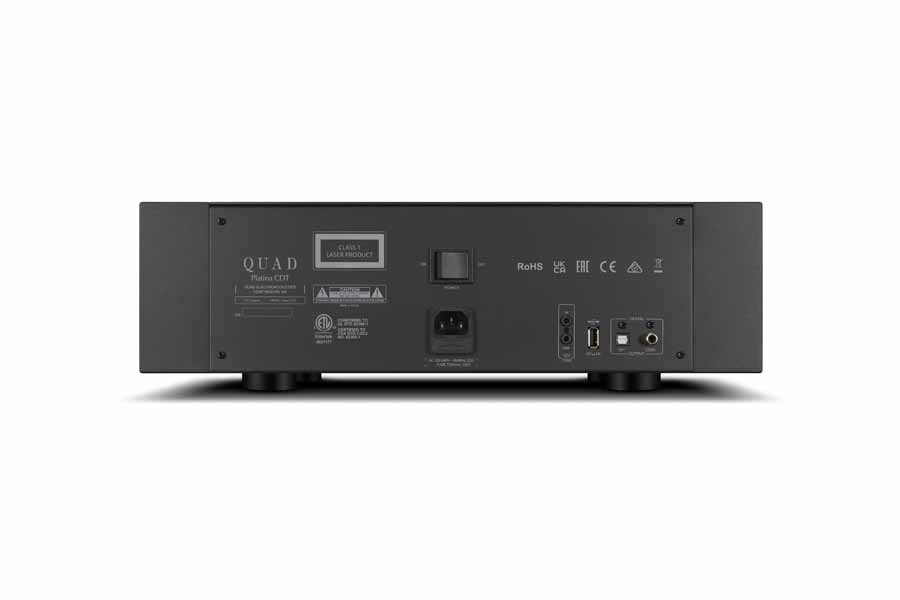
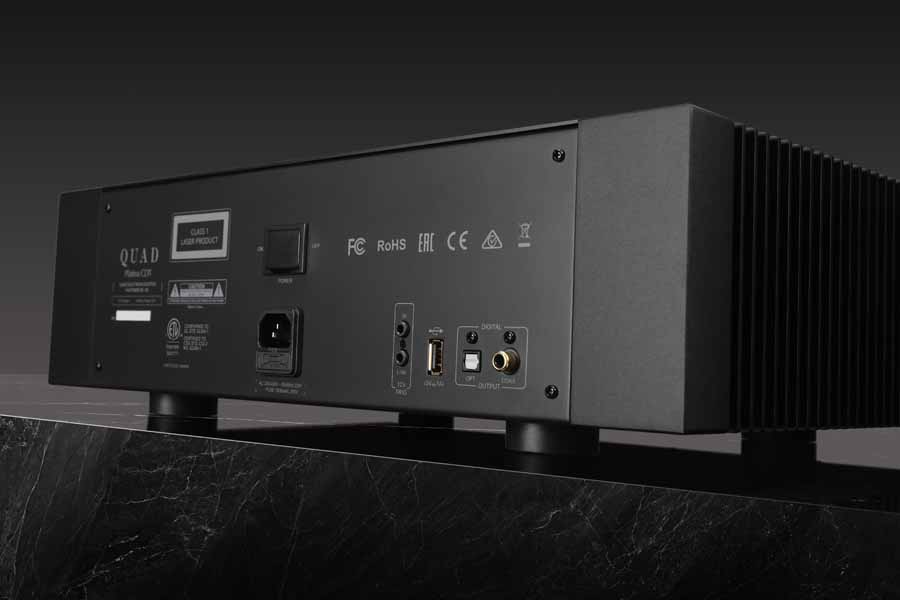
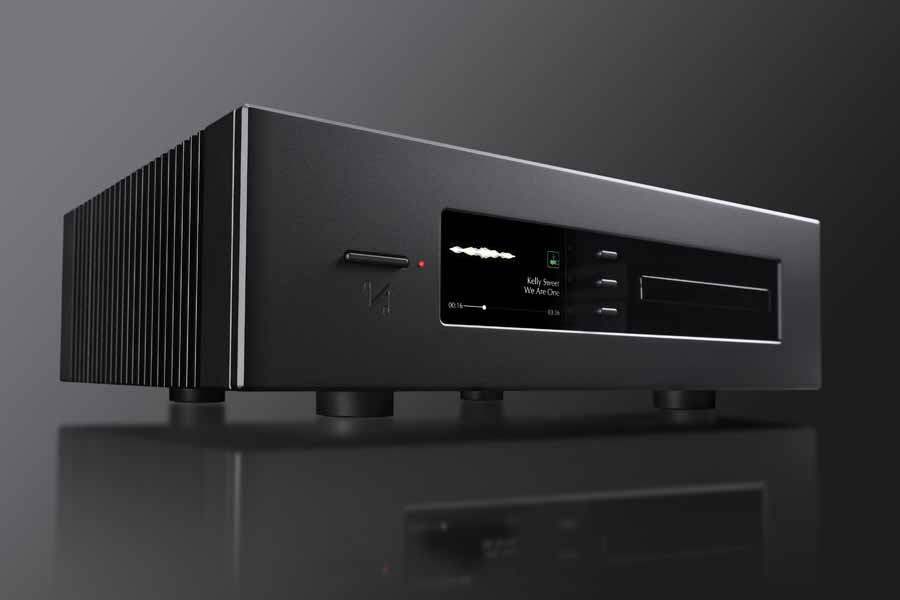
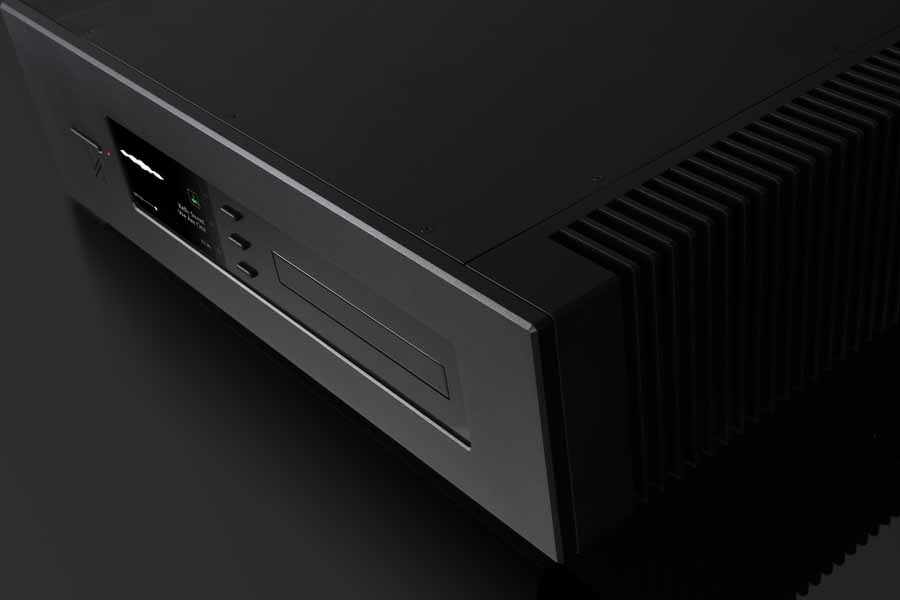
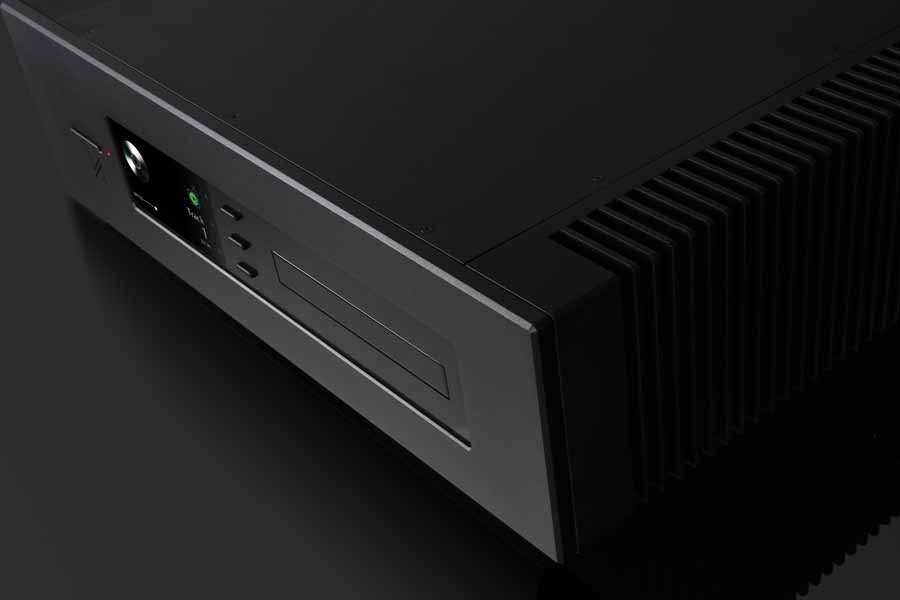
Where the Platina CDT differs significantly from the QUAD 3CDT is that it can also play audio files from an attached USB drive. The USB-A port at the back permits FLAC, WAV, WMA, AAC, MP3 and APE audio files. It can also play a variety of silver discs from the drawer-opening transport, including CD, CDR and CDR-W discs, plus data CDs (WMA, MP3, WAV, AAC). The USB socket is compatible with FAT16, FAT32 and exFAT formats. Available in black or silver, the Platina CDT front panel replicates the matching products with a long and thin standby button to the left (you can deploy the 12v trigger facility to copy operation to the other Platina’s), a 4.3” 800×480 IPS screen with three hard-to-make-out function buttons to the right, these being black switches on a black background. To the right of this is the CD drawer. At the rear is the large central rocker mains switch with an IEC socket underneath. I loved that design on the Integrated I reviewed. To the right are the two 12V trigger sockets, the USB input socket and finally the coaxial and optical digital outputs. The unit comes complete with the same universal remote control as in the Integrated and Stream. The USB socket also supports firmware updates.
Menu operations are very detailed, including display options, CD text and firmware details. On the display, details of track number and name, plus a position indicator of the track you are playing, are indicated, but there is no listing of the combined track names of the CD, in case, like me, you just want to quickly skip to a particular piece of music on the disc. Functions like random play and repeat are at your fingertips, and you can choose any of 5 display options, including the QUAD or QUAD Platina logo, track information or no display at all.
SETUP AND USE
This is a very easy CD player to use. I connected it to my own-designed DAC or the coax1 input of my Krell KPS 20i CD player/DAC. Amplification was balanced MFA passive preamp to Krell KAV250a and Graham Audio LS5/9 speakers with Townshend Supertweeter and Tellurium Q cabling.
The remote is easy to operate, though, being a universal Platina unit, you do need to select “CDT” the first time. The front-loading drawer system is quick to pull into action from the aluminium fascia when you press the top button eject button, but it does take a few seconds to read the CD, CDR or CDR-W.
SOUND QUALITY
I initially used my own DAC build for the review, finding the musicality from the CDs producing what I would expect from a £5000+ CD player. The bass weight from Kitaro’s “Live in America” concert was really empowering, as it was from the double bass in Patricia Barber’s “Live in France” CD. The Kitaro album is a very sophisticated and ambient concert performance from April 1990. Everything just sounded fast and detailed, especially from the percussion and synthetic sounds, and once I replaced my DAC with that of the Krell, even more detail was available to me to suggest that possibly there were some overdubs recorded in a studio after the concert itself. This CD transport really chiselled out every possible detail from the music for me to hear; beautiful Japanese woodwind and percussion, plus brilliant violin playing. The album begins with loud thunder and rain, which I hope wasn’t the venue. The glockenspiel was very pin-sharp and lifelike. Alas, this is a very slow and ethereal album, and as I didn’t want to fall asleep, I decided to wake myself up with Carl Orff’s Introduction “Fortune” from ‘Carmina Burana’ (Atlanta Symphony Orchestra). This is a rather “gritty” recording, particularly in the loud sections, and I felt my CDM-9 Pro transport easier to listen to, though that is because I feel it wasn’t quite so detailed.
The speed and accuracy of the QUAD transport was further evidenced in Jim Keltner’s famous percussion “Improvisation”. Each part of the drum kit was positioned accurately in the soundstage, with initial transients the tightest I have heard from my Krell’s DAC, particularly from the snare and kick drum.
Gary Karr’s “Oh Holy Night” religiously performed the cello and church organ with a precision and depth that enabled me to get closer to the music than I expected I would from my LS5/9s. The fingerwork from the cellist and the mechanics from the keyboard gave a very lifelike performance in my living room.
That exceptional bass extension continued in Marie Nakamoto’s vocal adaptation of “Georgia on My Mind”, complete with amplified acoustic guitar.
That vocal treacle entertained me in the “Una Matica de Ruda” from Esther Otarims, with its Eastern-style lilt provided by woodwind instruments. The speed, timing and detail were first rate.
I always expect great detail in Mike Valentine’s Chasing the Dragon recordings, and Bizet’s “The Gypsy Song” from their ‘Espana – A Tribute to Spain’ CD didn’t let me down. With great dynamism in the playing from the instruments and the vocals from Rosie Middleton, plus the very precise triangle strikes from the percussionist, this all gave a very telling performance. Just as analogue wow and flutter in music can spoil the listening of vinyl, inaccuracies in a digital clock on a CD player can similarly make the listening less than ideal. This CD transport allowed me to listen with total focus and resolution.
QUIBBLES
I couldn’t find faults in the design and delivery from the Platina CDT. My only wish would be for more information on the 4.3” screen, such as full track listing from the CD.
CONCLUSION
CD players are certainly in vogue at the moment, and ever more so with CD transports now that you can use the DAC in your amplifier. It has all come a long way since John Cleese’s advert for the very first Sony CD player praising “one hour of music out of a beer mat”, and the new QUAD Platina CDT not only looks very expensive, but it performs with an equal amount of professionalism, harnessing great detail, timing and musicality from all my CDs. If you still have lots of beer mats in your collection, then this would be a great addition to your HiFi setup, and like my favourite beer, it gets Five Hearts.
AT A GLANCE

Build Quality and Features:
Excellent and solid construction with well-designed remote control
Sound Quality:
Very detailed extraction of the music from your CD, with great timing
Value For Money:
It might miss out all the conversion to analogue, but this transport would not be out of place with the very highest priced and performing DACs.
QUAD have designed a very solid performer feeding your DAC with all it ever needs.
We Loved:
Fast and detailed performance
Brilliant timing
Great looks
No jitter worries
We Didn’t Love So Much:
Would like more information from the Platina Integrated’s screen.
Elevator Pitch Review: The CD player has always been a part of my musical diet, as has vinyl, and as the listening public is realising that physical media is so much more fun than downloads, the CD player is making a notable re-entry into the living room. But rather than CD players, the trend is more to CD transports that can be wired directly to the DAC in your amplifier. Audiolab, Mission, Schiit, and LEAK have some great CD Transport “add-ons” for your set-up, and QUAD’s own 3CDT is a great matching player if you have their retro QUAD 3. The Platina CDT takes things to a much higher level, though. With re-engineering transport and no less than 11 power rails, this CDT will fit perfectly with whatever amplifier you choose, despite being designed to complete the Platina holy trinity of Integrated and Stream. We tend to talk about the DAC quality in CD players, but the transport and its associated technology can really make all the difference to the music.
Price: £1499

Janine Elliot
SUPPLIED SPECIFICATIONS
Compatible with CD/CD-R/CD-RW and data CD formats
CD Text display
Gapless Playback
Playback from USB HDD devices
4.3″ 800 x 480 Large Size Full View IPS LCD
Fully functional remote control
Supported File Formats: WAV, MP3, WMA, AAC, FLAC, APE
USB Storage Device File System: FAT16/FAT32/exFAT format
Digital Output Amplitude: 500 +/-50mVpp
Output Impedance: 75 Ω
Frequency Response: -0.01 dB (20Hz-20kHz)
Sampling Rate: 44.1 kHz (CD/CD-R/CD-RW); 44.1kHz – 96kHz (Data CD); 44.1kHz – 96kHz (USB HDD)
Digital Output Connection: 1 x Coaxial, 1 x Optical
Standby Power Consumption: <0.5W
Dimensions: 445 x 135 x 310mm
Net Weight: 10.9kg
Finish: Black or Silver