
Synthesis Soprano II Tube Integrated Amplifier
SYNTHESIS SOPRANO II RETURNS WITH UPDATED DESIGN
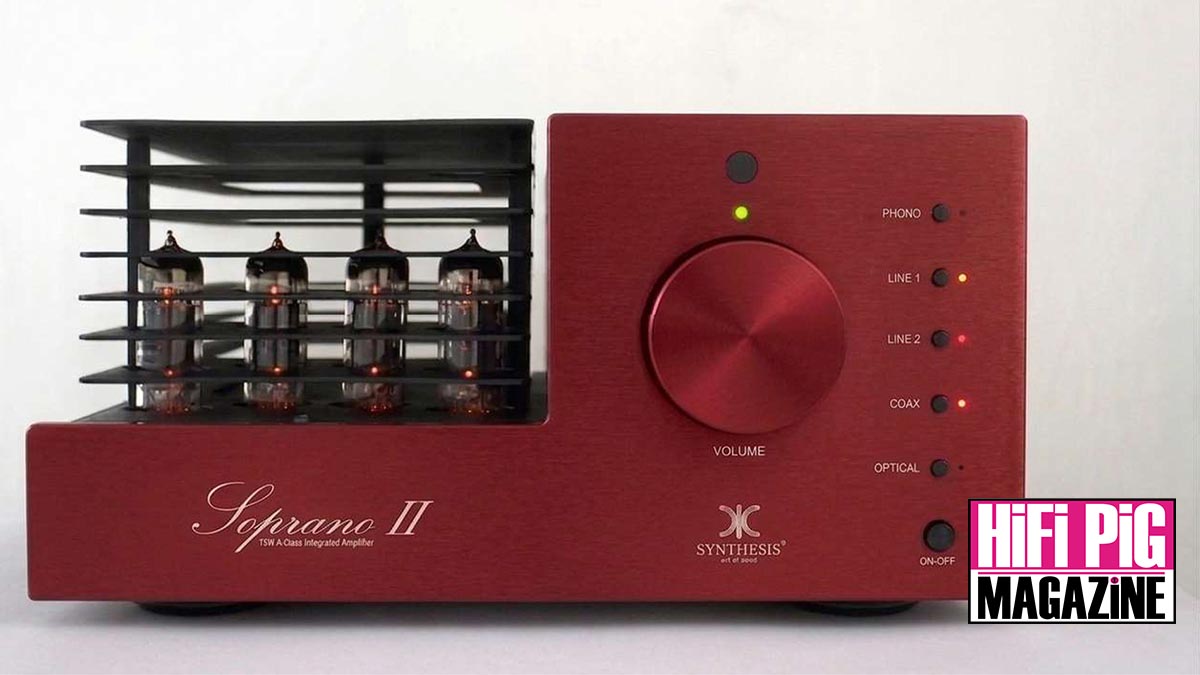
Italian HiFi brand Synthesis has announced the Synthesis Soprano II, an updated version of its Soprano tube integrated amplifier.
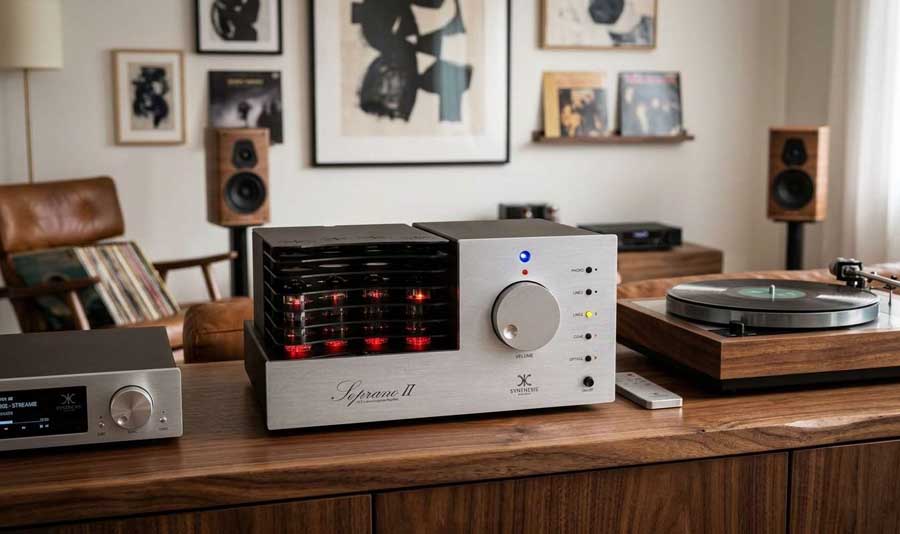
The new Synthesis Soprano II Tube Integrated Amplifier incorporates changes to its power supply, digital conversion and connectivity, following feedback from owners of the original amplifier.

SYNTHESIS SOPRANO II VALVE AMPLIFICATION
The Soprano II uses a Class A push-pull ultra-linear power stage, with two EL84/6BQ5 valves per channel, delivering 12W RMS into 6 ohms. The amplifier has a quoted frequency response of 20Hz to 20kHz (±0.5dB), with total harmonic distortion of 1% at 12W (1kHz).
The power supply has been revised with high-PSRR low-dropout voltage regulators for the DAC and operational amplifiers, alongside ultra-low ESR electrolytic capacitors. Synthesis has also updated the EI power transformer, using M6 grain-oriented construction, and fitted new output transformers with grain-oriented silicon steel laminations.










DIGITAL AND ANALOGUE CONNECTIVITY
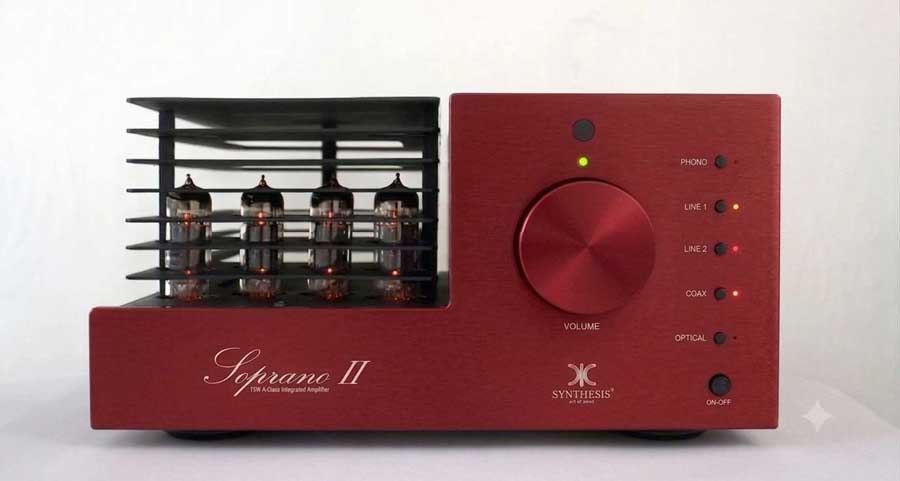
Digital conversion is handled by a 32-bit AKM DAC, with coaxial and optical S/PDIF inputs. The previous USB interface has been removed, with the Soprano II instead offering two line-level analogue inputs and one MM phono input (47k ohms) for connecting a turntable and other sources.
Speaker connections have also been upgraded, with heavier-duty terminals designed to accommodate banana plugs, spade connectors and thicker speaker cables.
The amplifier includes a remote control for volume and source selection. It measures 300 x 265 x 140mm and weighs 8kg, with a quoted power consumption of 80W.

SYNTHESIS SOPRANO II PRICE AND AVAILABILITY
The Synthesis Soprano II is scheduled to go on sale through authorised dealers and distribution partners worldwide from February 2027. Pricing is TBC.
HiFi PiG says: The Soprano II brings a number of changes to Synthesis’s compact valve amplifier, including revised transformers, an updated DAC and more analogue inputs. The retention of the EL84-based Class A design alongside the connectivity changes makes this an interesting update to the original model.