
Russ Andrews DeltaBlock
Russ Andrews is a very familiar name to audiophiles, providing a world of HiFi ancillary equipment to improve your audio. It started as a HiFi retailer in the late 1960s, but by the mid-1970s Russ had his own HiFi shop, Russ Andrews Hi-Fidelity, in Edinburgh. During this time, he came to the conclusion that not all was well in the HiFi industry, so he began investigating mains quality, cabling and bits and bobs to make your HiFi sound at its best. This culminated in the formation of an online company bearing his name in 1986, based in beautiful Kendal, Cumbria.
Since then, he has extended his portfolio into equipment and equipment modification, and has acted as a consultant with several UK manufacturers on products including cartridges and loudspeakers. He has also imported Kimber Kables into the UK since 1986, having met Ray Kimber the previous year. Having been one of the earliest aficionados to look into the effects of mains pollution in HiFi systems, he is now regarded by most as one of the top experts in this field. He is so confident about your satisfaction that his products even come with a 60-day money-back guarantee.
Having tried out and owned a number of RA products over the years, I am always confident that I will hear “changes” to my audio when deploying his mains-taming devices or cables in my own system. Some ideas from the company do not sway me so easily, such as green pens or angle-grinders for CD rims, but I am always happy to try anything.










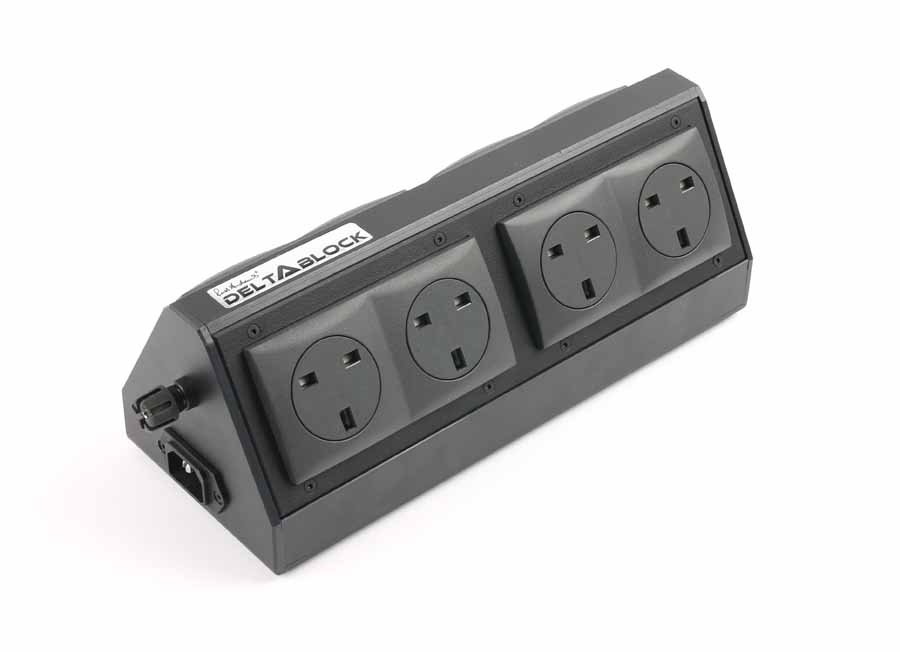
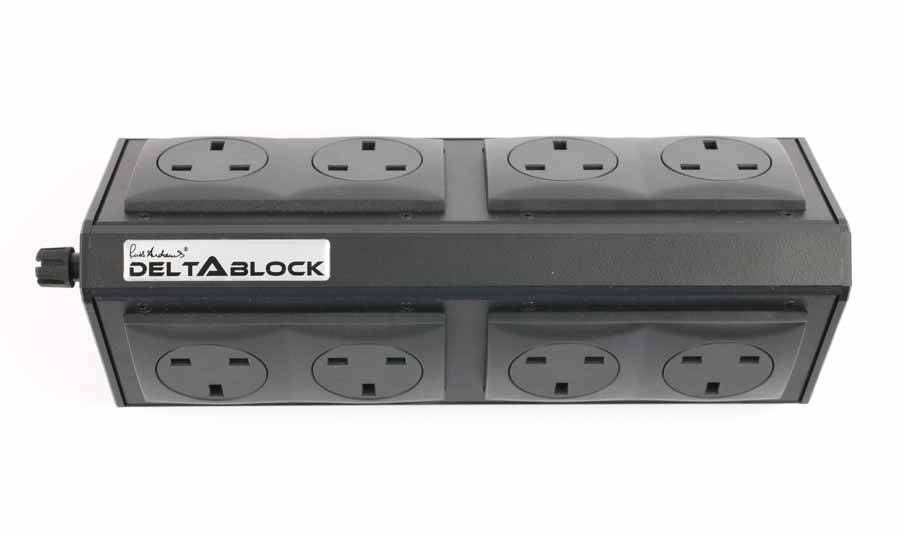
With our increasingly complicated lives—dishwashers, washing machines, fridge-freezers, central-heating thermostats, plus internet-based must-haves—the need for mains-calming is even more important in the home than it was when I was a child. The triangular DeltaBlock is an eight-way mains block, with four sockets on each of its two accessible sides. It has built-in Russ Andrews Silencer™ noise filtering (basically a passive mains conditioner), with SuperClamp™ surge protection already built in. If you add the optional MegaClamp™ surge-protection upgrade, as supplied with this review sample, the price rises from £949 in its basic form to £1,184, adding even greater protection.
One could, of course, alternatively pay just £79 for the stand-alone Silencer™ and £235 for a MegaClamp™ to connect to a cheap mains extension block of your own, but the Russ Andrews DeltaBlock offers a lot more than just eight sockets. The RA mains extension devices are always excellently engineered and use the best components, especially the sockets and wiring. It is always advisable to avoid basic, cheap mains extensions if you value your ears and music!
It is also recommended that the cheaper SuperClamp™ be replaced or renewed every five years (the components will work less efficiently over time). The MegaClamp™ in the DeltaBlock has a much longer service life. Because the cheaper clamp is in the DeltaBlock, it can be repaired or renewed by Russ Andrews for £38.








The DeltaBlock sits neatly between the mid-range XBlocks and the top-of-the-range, similarly looking Signature PowerBlock. Remember, you need to supply a 10A IEC lead, and Russ Andrews understandably favours the use of its own. This review sample was supplied with the Kimber Kable “Evolution”.
Build and Features of the Russ Andrews DeltaBlock
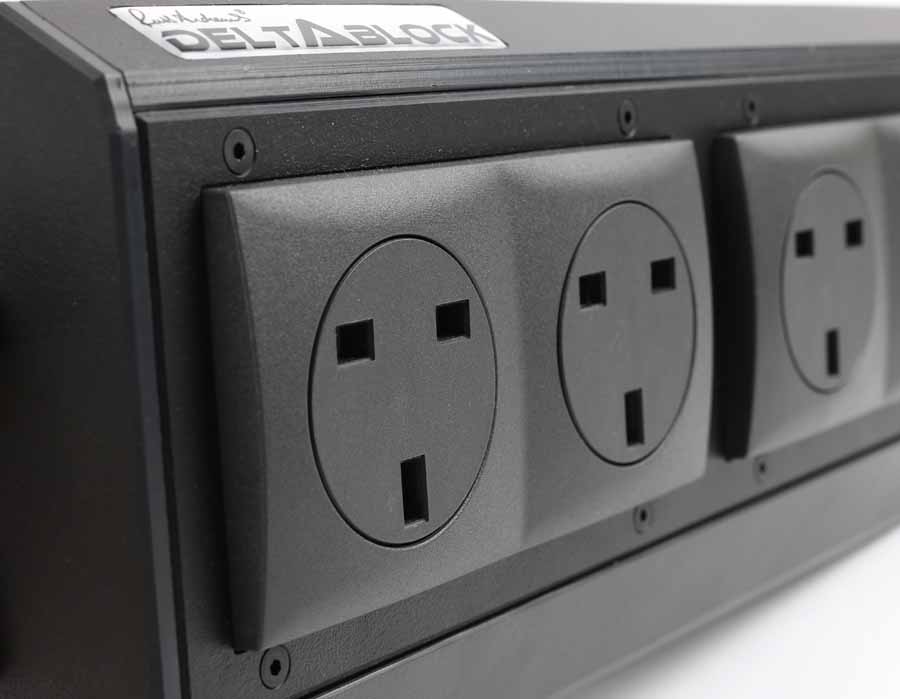
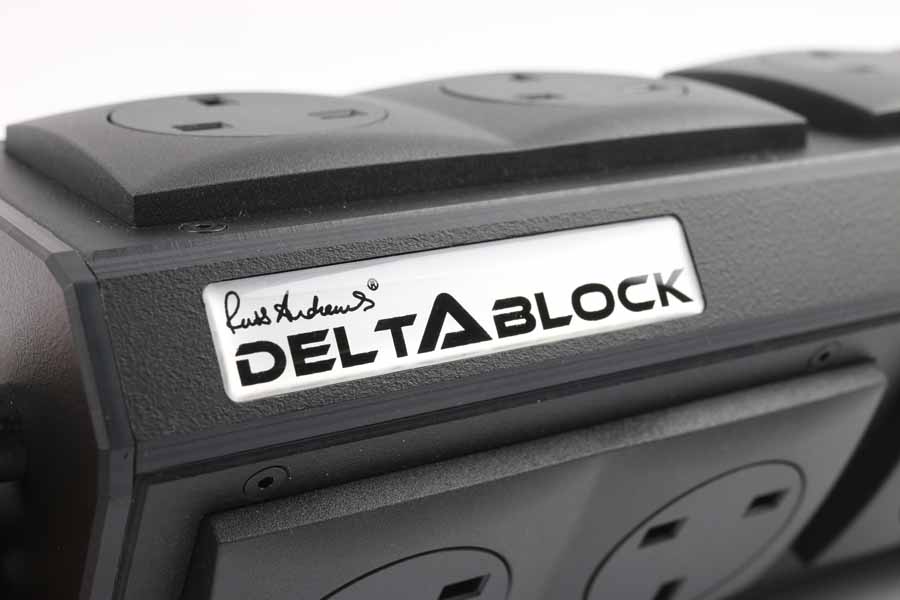
Products from Russ Andrews are always well thought out and engineered. The DeltaBlock is no exception. For a start, the eight 13A sockets (UK or Euro) sit upside down (inverted) on both sides of the Toblerone-shaped VO UL-94 fire-retardant thermoplastic enclosure. This explains the “Delta” in the name, which uses the symbol Δ, and means the wiring does not curl around on your floor before heading up to your valuable electronics on the shelf or stand.
Plastic was used after extensive research into its acoustic properties. It has also been used in some other RA products I have reviewed in the past, just as several amplifier manufacturers, especially in the 1970s, found that plastic enclosures sounded better than metal boxes, even if that meant they no longer had a Faraday cage.
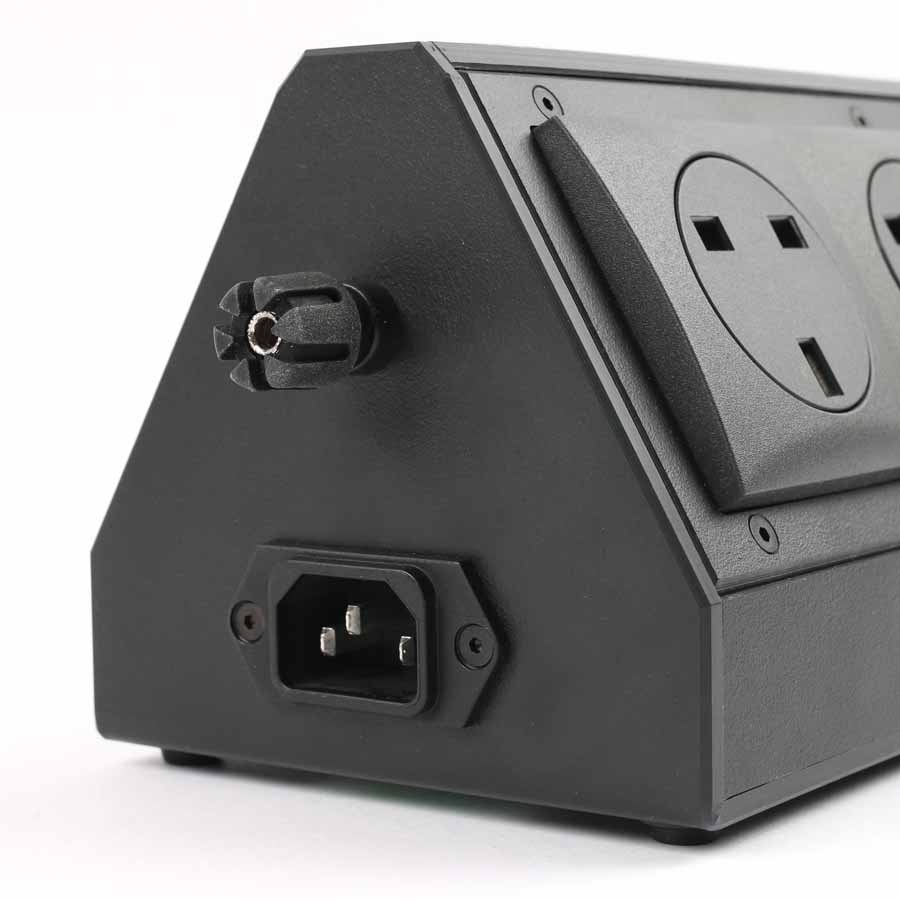
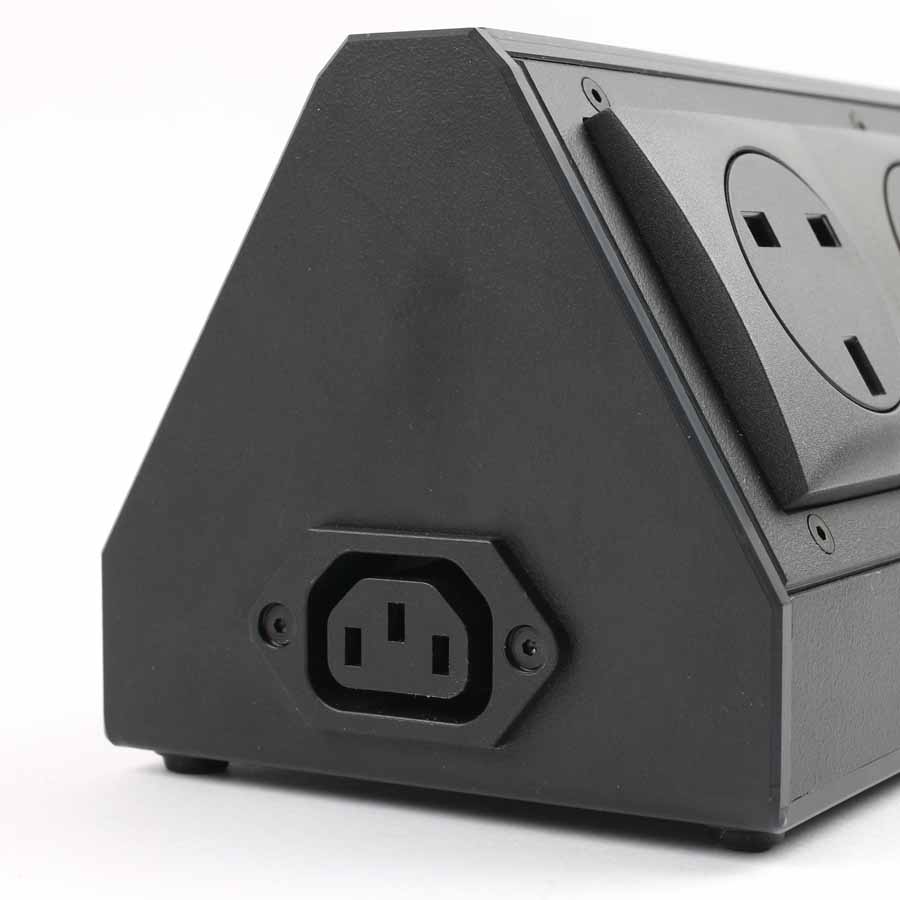
The output sockets are the excellent Russ Andrews deep-cryogenically-treated (DCT) UltraSockets™, treated with DeoxIT® contact enhancer to improve performance. At one end is the male 10A IEC input socket that feeds from your wall; the other end has an IEC socket so that you can daisy-chain to another DeltaBlock if you need more sockets. Alternatively, it can feed a further “conditioning” unit, such as a PowerPurifier™ or AbZorber™, saving you from using one of the eight 13A sockets for that purpose.
There is also a grounding connection point, ideal for connecting to your turntable or to Russ Andrews grounding systems such as the RF Router or SuperRouter. Internally, the wiring and components are arranged as efficiently as possible, with minimal wiring. RA has created a custom PCB featuring very wide, 8oz pure-copper tracks that ensure the enclosure impedance is kept as low as possible. Its two-layer design (there are tracks on the top and bottom of the PCB) ensures a solid, low-resistance connection with improved power-handling capability.
The internal wiring linking each of the sockets is Kimber Kable’s pure-copper TCX™. The circuit board not only ensures equal distribution of power to both sides of the block, but also incorporates the Silencer™ filtering and MegaClamp™ surge-protection devices. At 110 x 111 x 307mm and weighing just 1.25kg, this is a very compact unit, sitting on four thin rubber feet.
Setup and Use
I connected my various systems to the DeltaBlock so that I could assess its acoustic qualities in a selection of buildings and environments. Amplifiers included the Krell KAV250a, Slee Proprius and the surprisingly musical Lecson Quattra from the 1990s. Each setup was listened to at some point with a similarly priced, high-quality surge-protected mains block or conditioner and then with the DeltaBlock, so that I could make a fair comparison.
However, as A/B comparisons are not always a good way to evaluate a product, the majority of the listening was done solely using the DeltaBlock.
Sound Quality
As mentioned at the start of this review, I have always come away from listening to mains-taming devices having heard differences, sometimes good and sometimes bad. Having built my own and worked with companies on their own products over the last two decades, I have considerable experience in what works and what does not.
With the DeltaBlock, there was a definite change in the presentation of music. Listening to Stevie Wonder’s “We Can Work It Out”, the track has instruments and vocals in different spaces on the soundstage. Notably, the backing-vocal interjections always seem to appear further to the right than the loudspeaker itself, due to clever phasing, which means their important vocal contribution is separate from the main music. Similarly, Stevie’s vocals are centrally forward.
With the DeltaBlock, the chorus vocals moved slightly more centrally and Stevie’s voice further back. This meant that the music was more focused and musical, though slightly less extended either side of the speakers in this piece. At first, I was not sure what to think, but the more I listened to the unit, the more I could hear that the music was more focused and natural.
I presently place a Silencer™ next to my fridge-freezer, as it removes glitches in my HiFi every time it switches on. Having these in the mains block is therefore very advantageous if there are computers and phone chargers nearby. Similarly, the MegaClamp™ offers protection from spikes and surges caused by our less-than-perfect mains supply, though not against direct lightning strikes, so it is best to unplug your HiFi in that instance!
Too much mains conditioning can affect the sound for good or bad, so the DeltaBlock not only gives you a sense of safety but also aims to keep your audio as good as the equipment and music themselves. I found that having all my main HiFi components on a single mains block (yes, I need eight sockets), rather than on several mains blocks and conditioning units, enabled everything to run at its best.
Whilst Russ Andrews suggests you can daisy-chain the DeltaBlocks, I hope you will never need to. It is also interesting to note that the audio improved when the amplification was nearest the IEC input socket and the lower-powered digital and CD separates were at the other end. It is always worth audiophiles playing around with different socket combinations to get the best sound from their mains blocks.
Whilst some expensive and complicated mains conditioners can use less-than-ideal sockets and wiring, it is no surprise that Russ Andrews chose the best it felt it could for the price point, and that is certainly noticeable in the music I played.
Vusi Mahlasela and Louis Mhlanga’s “Silang Mabele” (from Live at the Bassline*) starts with some brilliant acoustic guitar sounds that seemed more personal and directed at the listener through the DeltaBlock. Vusi Mahlasela and Louis Mhlanga sing passionately in their own tongue, but even though I could not understand this African tale, I still felt very involved in the music.
The music might keep repeating the same G–B–C–D bassline, but the brilliant vocals and instrumental middle make the track so much fun. When it suddenly adds new modulation before returning back home, I feel even more part of the music. The repetition throughout this track does not take away from the enjoyment, and the more dynamic and full-bodied sound from the DeltaBlock made it even more real. The fact that there are no instruments other than the two guitars goes to show how musically coherent the performance is.
Goldfrapp’s album Tales of Us (which follows the lives of ten different people) produced a tighter and more extended bassline on my Chartwell LS3/5a’s (plus Slee amplification) than I expected to hear, with Alison’s voice grittier and more detailed than I had heard from this speaker before. Its small dimensions belied the massive sound and soundstage, and I could easily comprehend the sense of the excessive reverb and effects added to her voice in the studio.
The extreme left- and right-staggered phrases from Alison in the chorus had less phasing through the DeltaBlock, and so the soundstage narrowed slightly on my second system, similar to what I noticed at the start of my review. This slight narrowing on occasion was more than made up for by the added detail in the voice in “Annabel”, which sounded breathier and fuller. That voice even gets punchier in “Drew”, with Alison’s powerful voice almost hitting me with its power and initial transients, plus each instrument placed perfectly in its required space.
That power and exactness of space continues in Think Floyd’s version of “Wish You Were Here”. This band’s copies of the iconic Pink Floyd albums are so spot-on that even Shazam has issues trying to work out who is performing the music. Having recently seen them perform live, I was amazed at how close they were to the original, though they add things that, for me, even improve on the original at times—notably the sound quality, dynamics, effects and soundstage.
The DeltaBlock enabled me to identify these differences, particularly in the vocals. The famous acoustic-guitar riff near the start of the track comes out of the speaker with greater power and fluidity. Only the lower-mid frequencies are sometimes slightly congested. The tight cymbals on the right were clearer than I expected, not least because I had left the front grille in place (something I usually remove on all loudspeakers, but which the BBC designers of the LS3/5a said should be left on at all times).
That fluidity continued similarly in the classical music I played, with the DeltaBlock giving a clear sense of positioning and ensemble.
Quibbles
Nothing to complain about, rather a sense of confusion, as the underside of the review sample indicates that it has the SuperClamp™ and MegaClamp™. That does not indicate that it has the Silencer™, which, of course, it does, as the Silencer™ also includes a built-in SuperClamp™. I would perhaps also prefer larger rubber feet than the thin, flat rubber ones attached, especially if it is placed on carpet flooring.
Conclusion
I very rarely come away from a Russ Andrews product disappointed, though sometimes I admit to being surprised. Russ and his team’s knowledge of mains-taming is second to none, and they ensure that only the best components and technology are used.
£1,184 is not a lot to pay when you work out what is inside. If you do want added filtering or features, the 10A IEC output will enable that without using up any of the eight 13A sockets. For a really musical and integrated performance of your music, without fears of damage from spikes or RFI, or worries about colouration from badly designed mains conditioners, this is a very cost-effective route into your HiFi nirvana.
At a Glance

Build Quality and Features:
Typical Russ Andrews build-quality excellence, with good component choice
Sound Quality:
Definitely focuses the sound musically, integrating all the instruments to make a solid and realistic performance
Value for Money:
A thousand pounds for an eight-way mains- and music-focusing block is a small price to pay for securing the safety of your valuable devices
We Loved:
- The shape and size mean it takes up very little space.
- Upside-down plugs.
- Focusing the music in the soundstage.
- Room to add more RA devices.
- Grounding facility.
We Didn’t Love So Much:
Nothing at this price.
Elevator Pitch Review: Having spent many hours writing and thinking about mains conditioners and mains blocks over the years, I have quickly come to the conclusion not only that carefully designed mains conditioning and the safety of your prized audio from mains hiccups are important, but also that decent plugs, sockets and wiring can make a very noticeable change to sound quality. Plugs and wiring are, after all, components just like resistors, inductors and capacitors. They all affect the sound.
So, would an eight-way mains extension block with built-in Silencer™ filtering and the optional MegaClamp™ surge protection tame my mains enough to provide me with heavenly audio, or would it be snake oil and make no difference at all? Well, this is Russ Andrews, so you know at least something will happen.
Price: £1,184 with surge-protection upgrade (£949 for the basic model)

Janine Elliot
SUPPLIED SPECIFICATIONS
- Eight UK UltraSockets™
- 10A IEC input and output
- Custom-designed PCB featuring wide, 8oz pure-copper tracks; it is also a two-layer design
- Internal Silencer mains filter
- Grounding post allows connection to the grounding system
- Smart, compact form factor for easy installation
- Heavy-gauge KIMBER KABLE® TCX pure-copper internal wiring