
Jason Ford HiFi Consultant
ADVERTORIAL FEATURE
HiFi PiG’S JON LUMB SPENDS SOME TIME WITH JASON FORD, A UK-BASED HiFi CONSULTANT
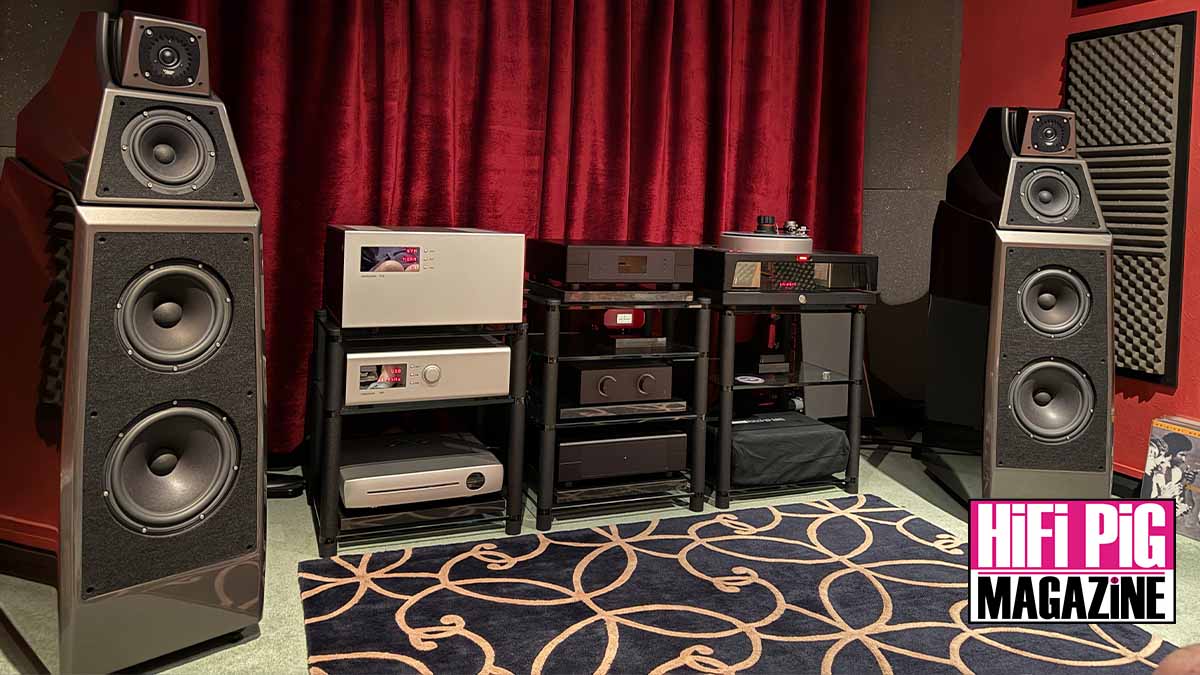
HiFi PiG’s Jon Lumb meets Jason Ford, spends a day with him, and finds out just what a HiFi Consultant is and what they do.
One fun aspect of having ADHD is that I’m instinctively curious about and drawn to anything new or different, almost regardless of the sphere it comes from. Getting to review the Piega COAX 411 a little while back was a delight. A speaker with a coaxial-ribbon tweeter-midrange driver? That’s like catnip to a man like me. So when I bumped into Jason Ford at Vienna this year, and he described himself as a “HiFi Consultant”, I was immediately fascinated. After a little back and forth with both Jason and Stu, we felt there was definitely something new and interesting here that is worth writing about.

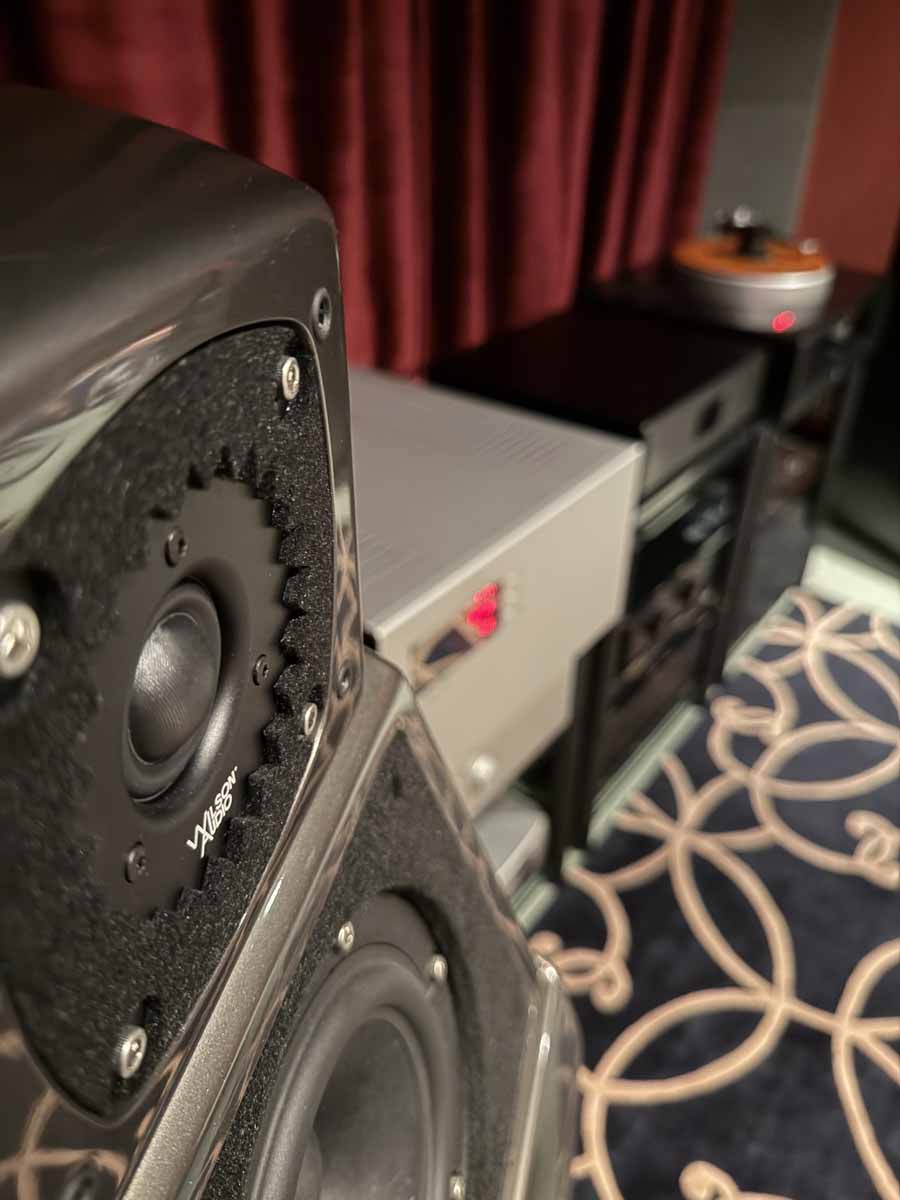
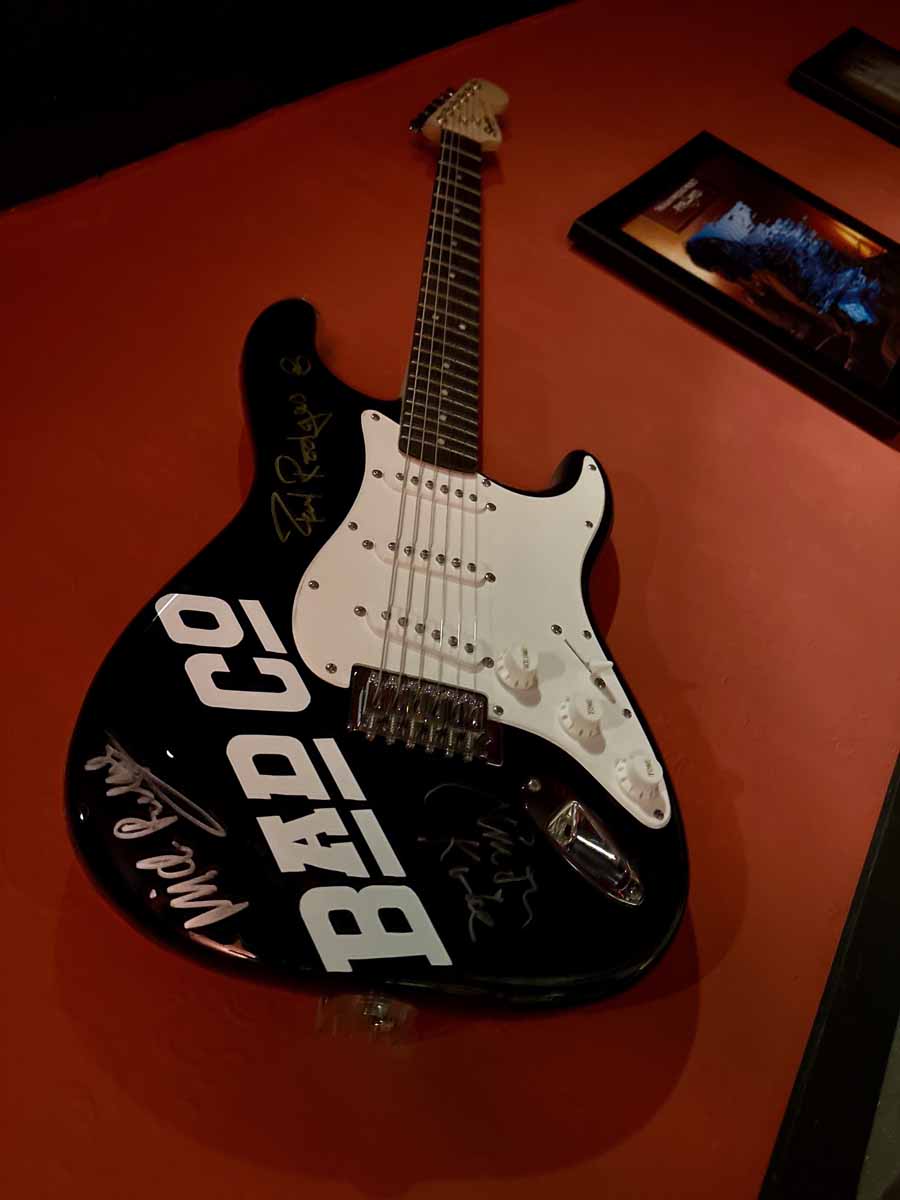
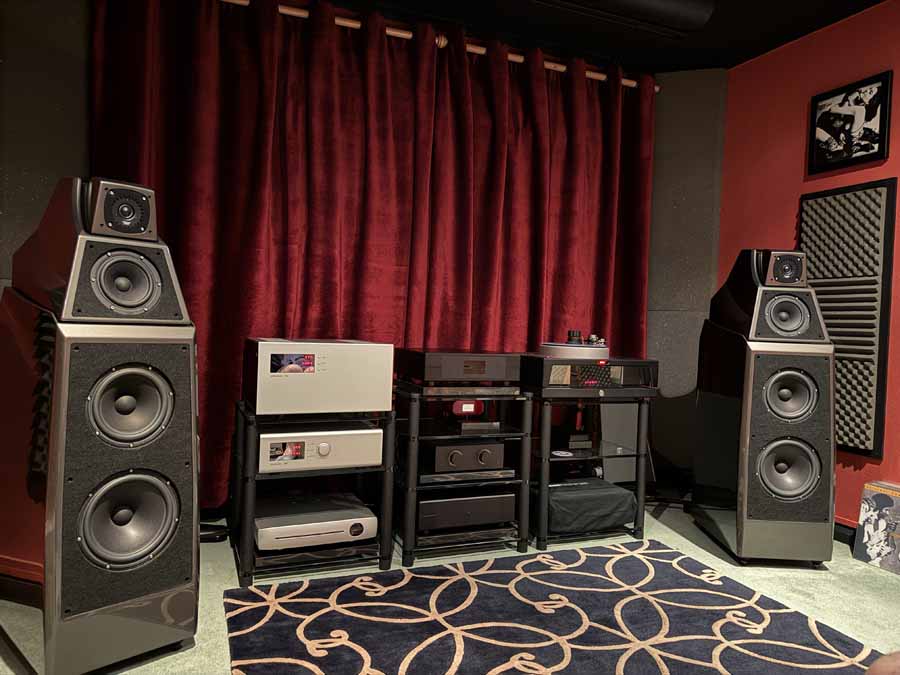
So what is a “HiFi Consultant”? If I were attempting to run a tabloid-style hit piece, a flippant answer might be to say “A HiFi dealer without premises”, but that would be such an underselling of what Jason actually does. For sure, the selling of components is, like a regular dealership, part of the service. But there’s so much more going on here. I suspect that any long-term reader of HiFi PiG will know full well that just buying a selection of well-reviewed boxes and hoping they make a coherent system is an absolute fool’s errand, and the vast majority of you will also be fully aware that how you position a system in the room (or how you treat that room) can make a significant difference to how well a system operates. What Jason has done over the years is take those fundamentals and elevate his skills and knowledge of component pairing, system setup, and system configuration to the level of an art form. The analogy that really sprang to mind here was that going to a regular HiFi dealer is likely to get you a fairly well-paired set of components, a bit like going to a Ferrari dealership will get you a well-balanced car. And if I, a driver of regular cars on regular roads, were to take a Ferrari around a race track, I’m sure I’d have a lot of fun, but I’d never get remotely close to a fast lap around anywhere. But stick Lewis Hamilton behind the wheel of that car, and he’ll take exactly the same pieces of metal and rubber, and wring every last gram of performance out of that machinery. And that’s what Jason does, with a HiFi system.
AT HOME WITH JASON FORD
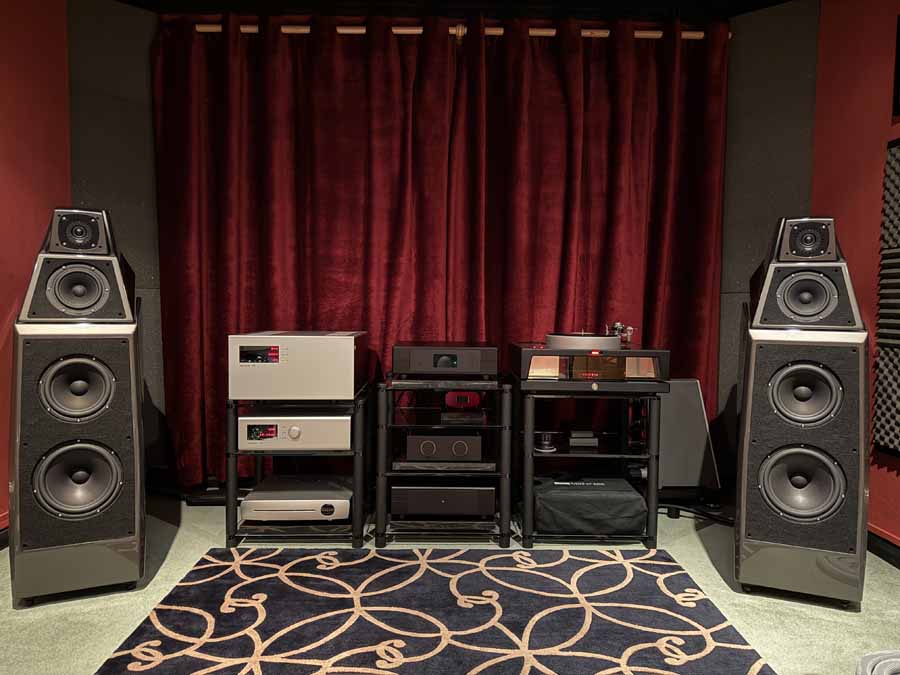
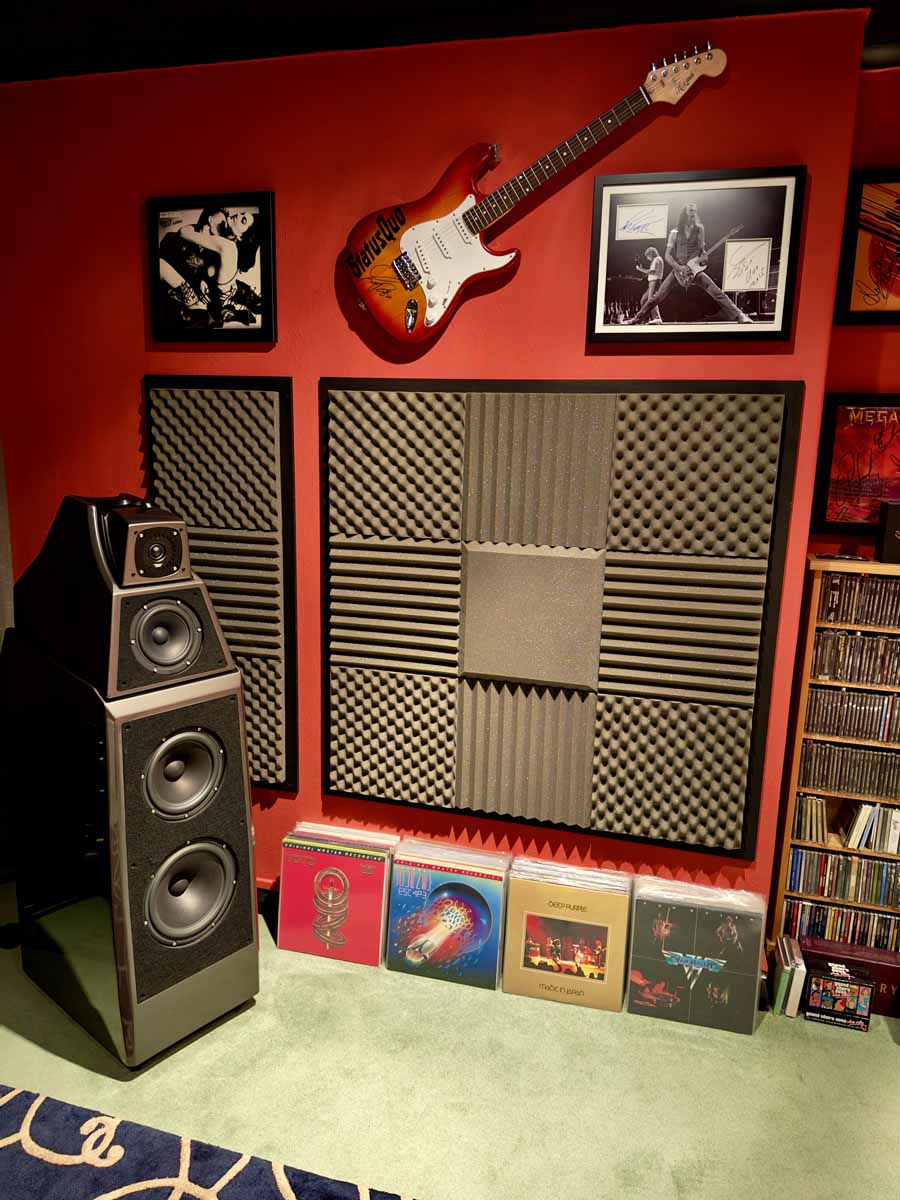
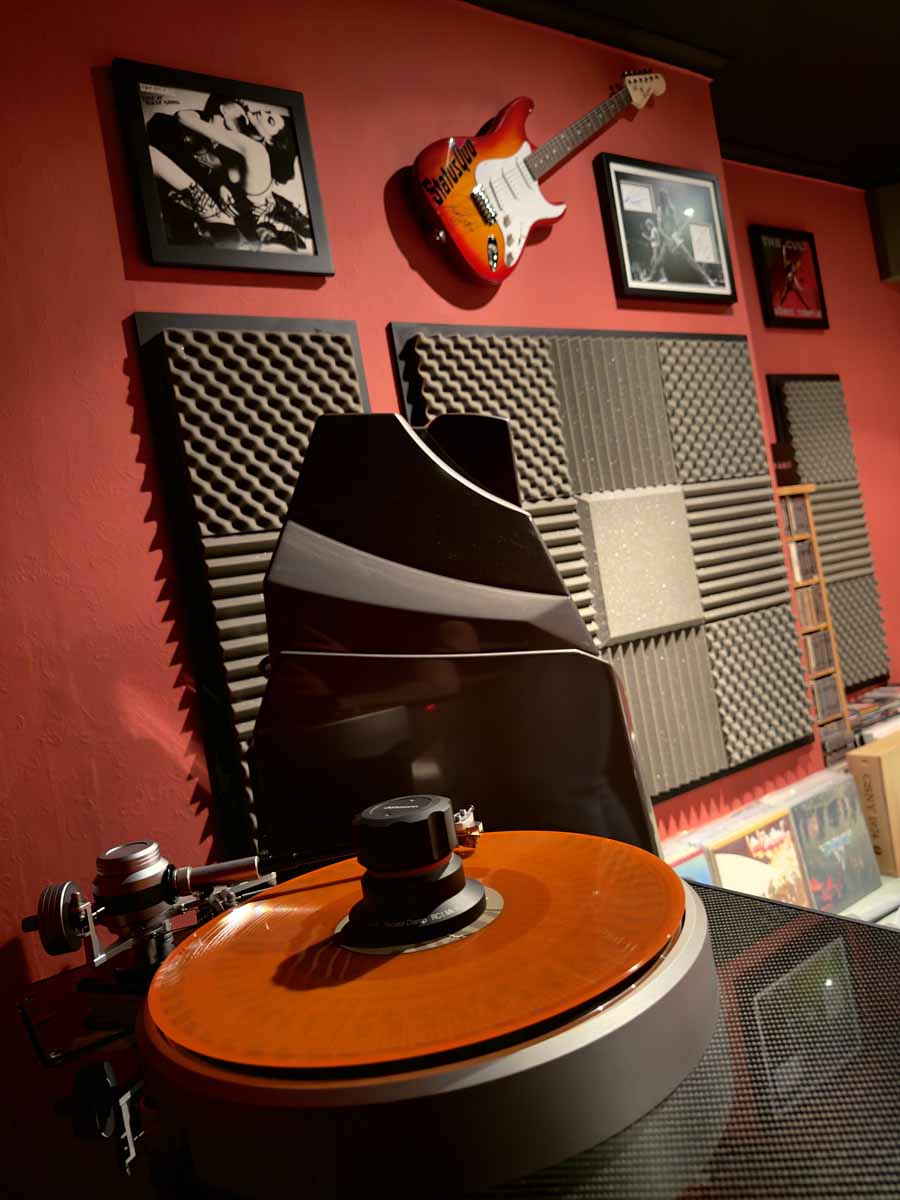
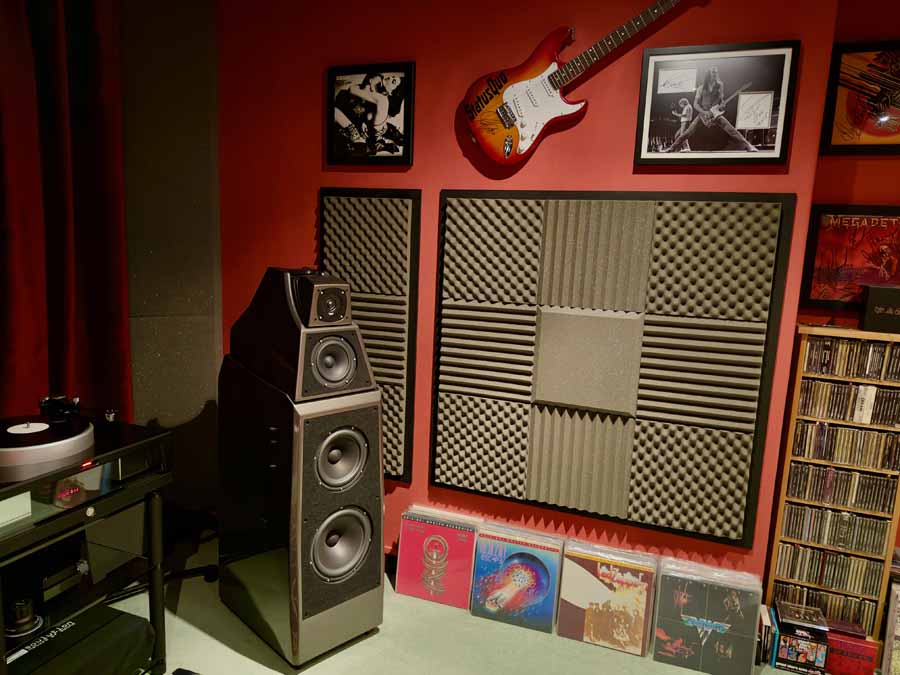
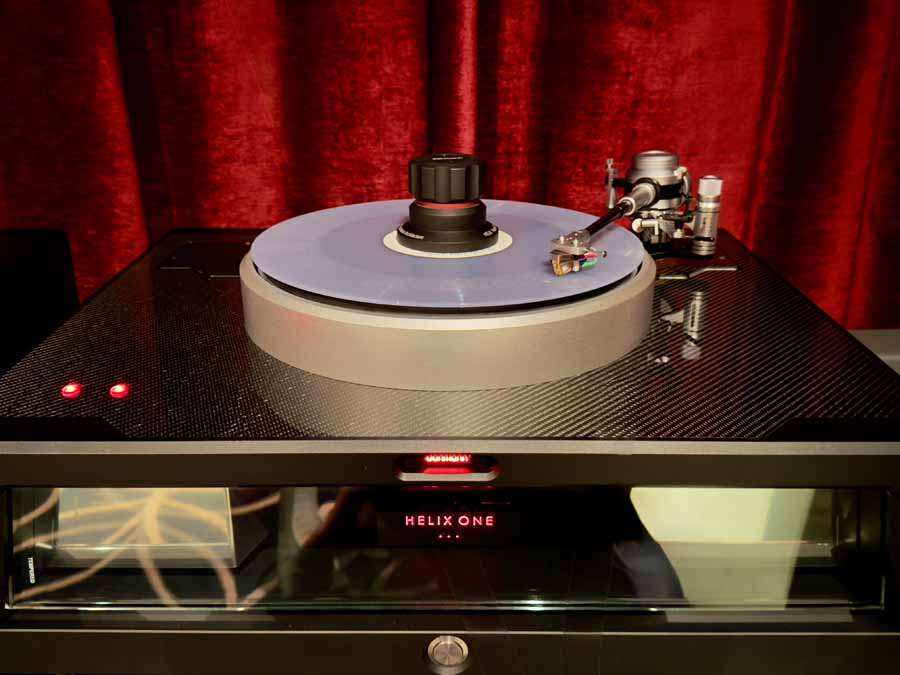
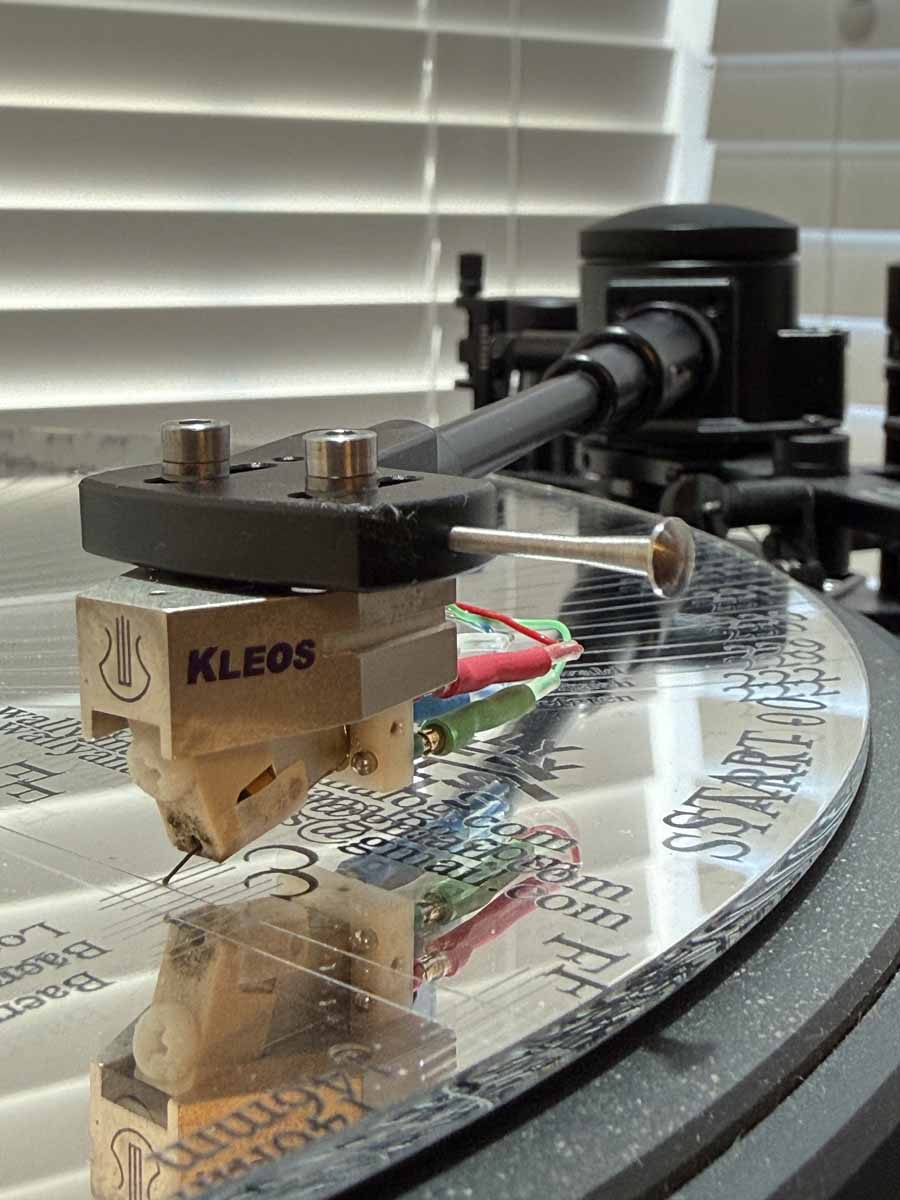
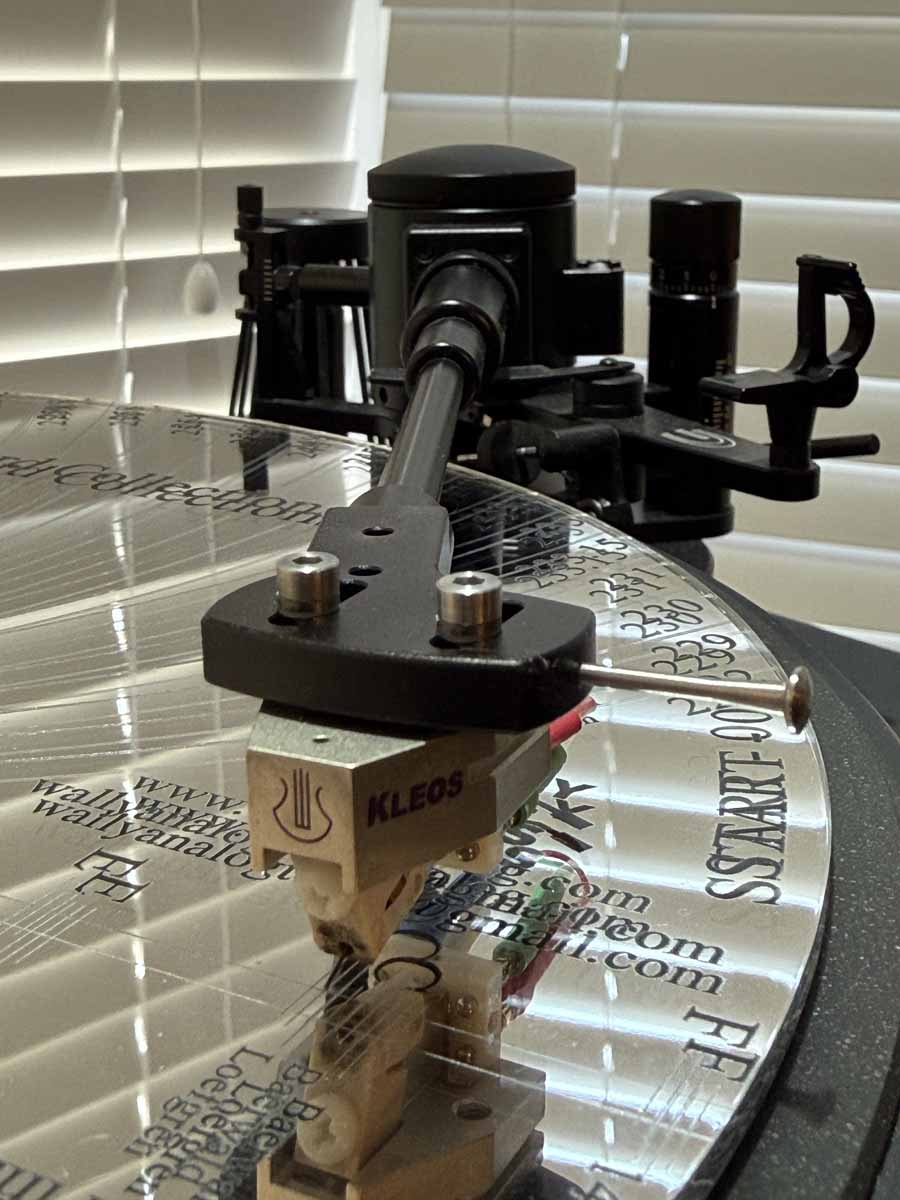
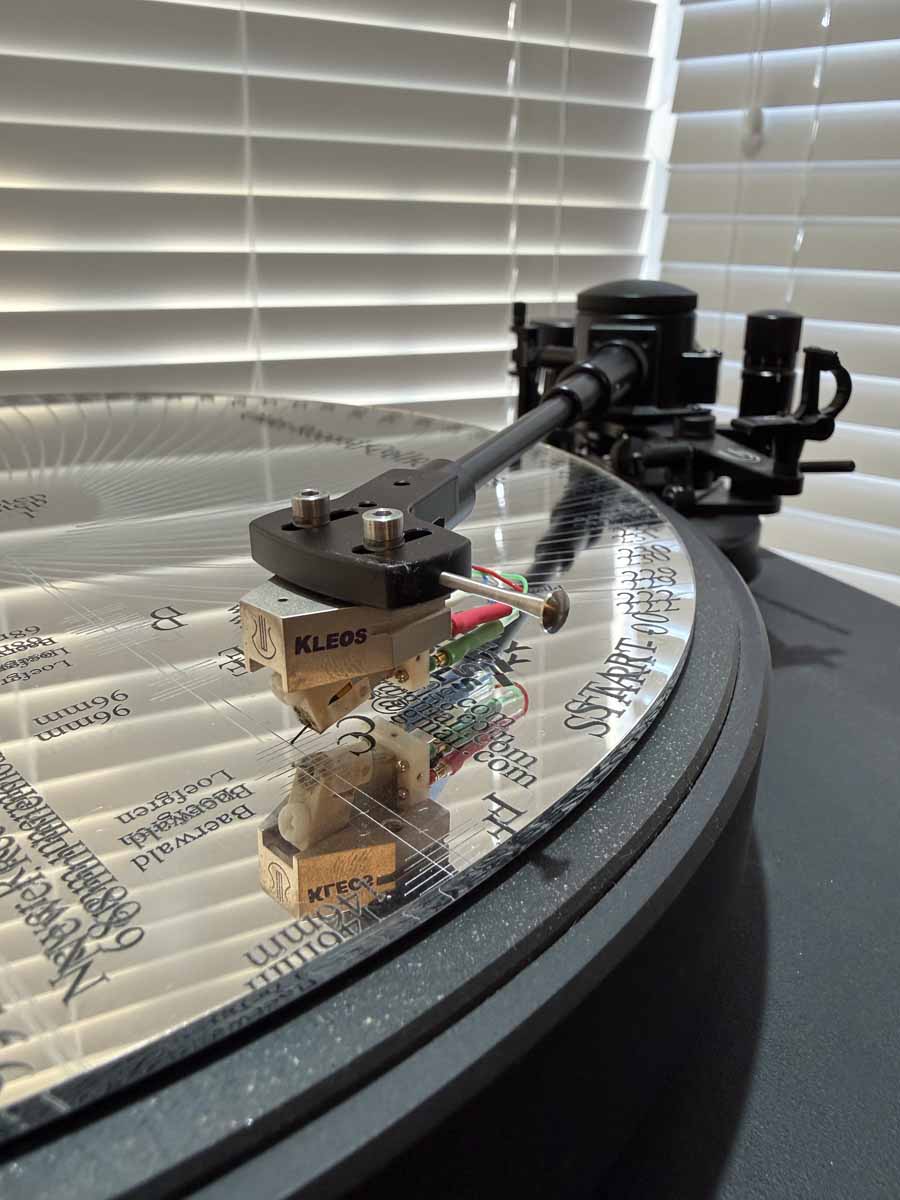
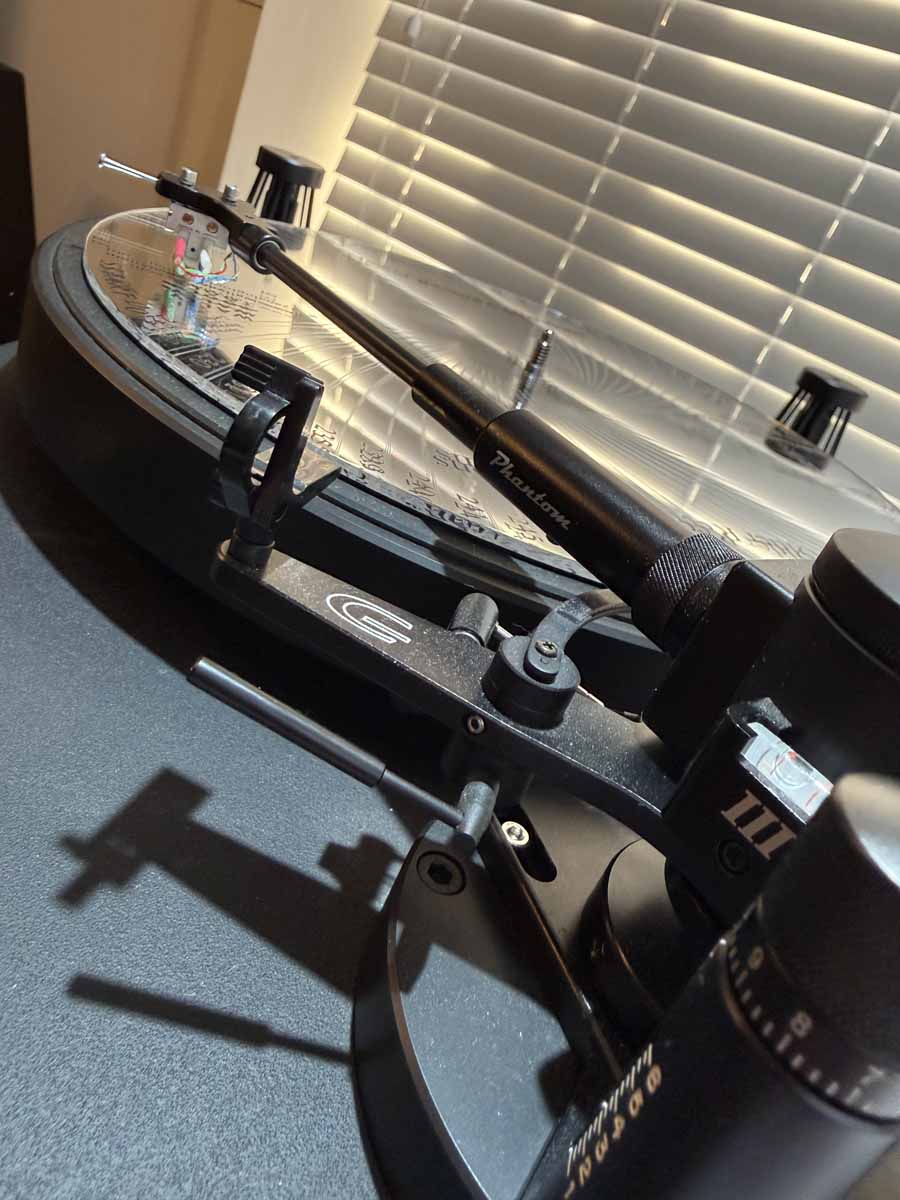
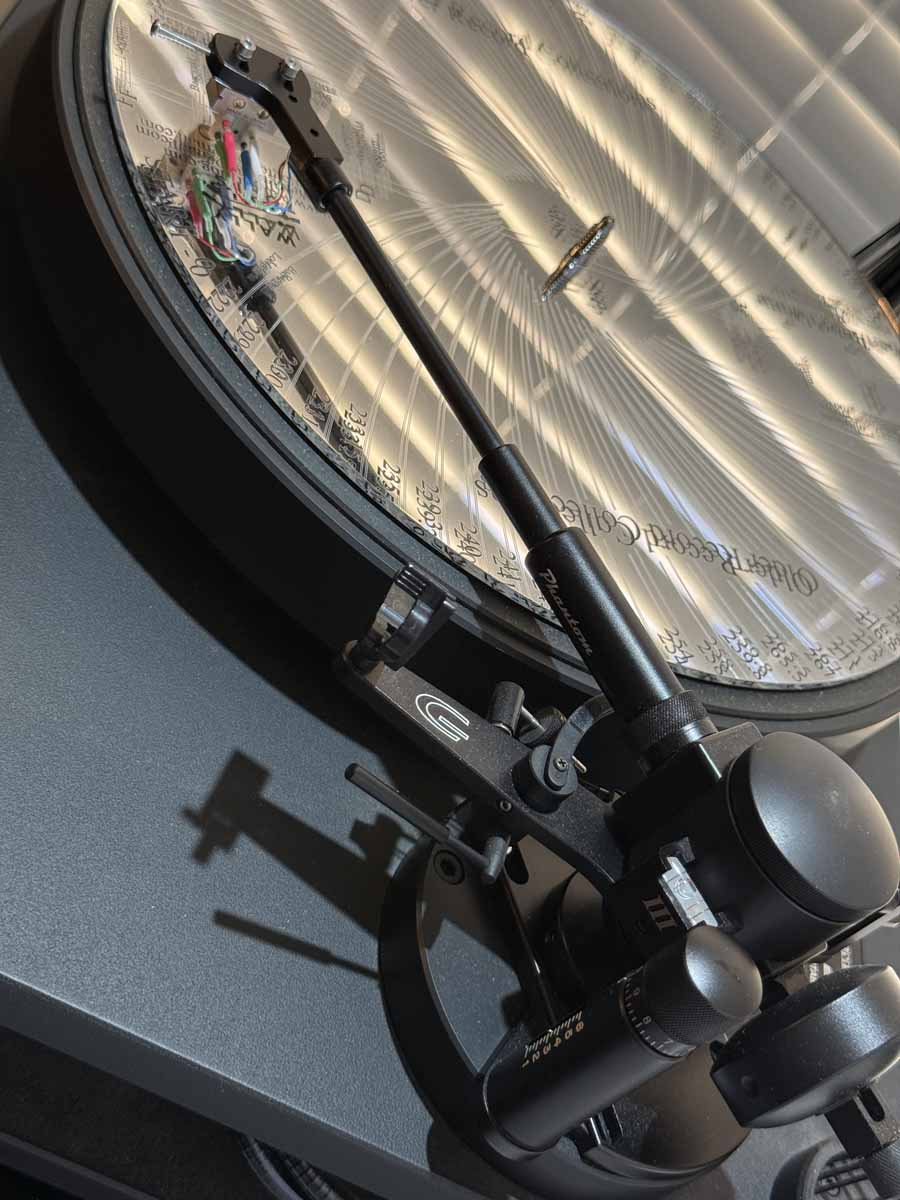
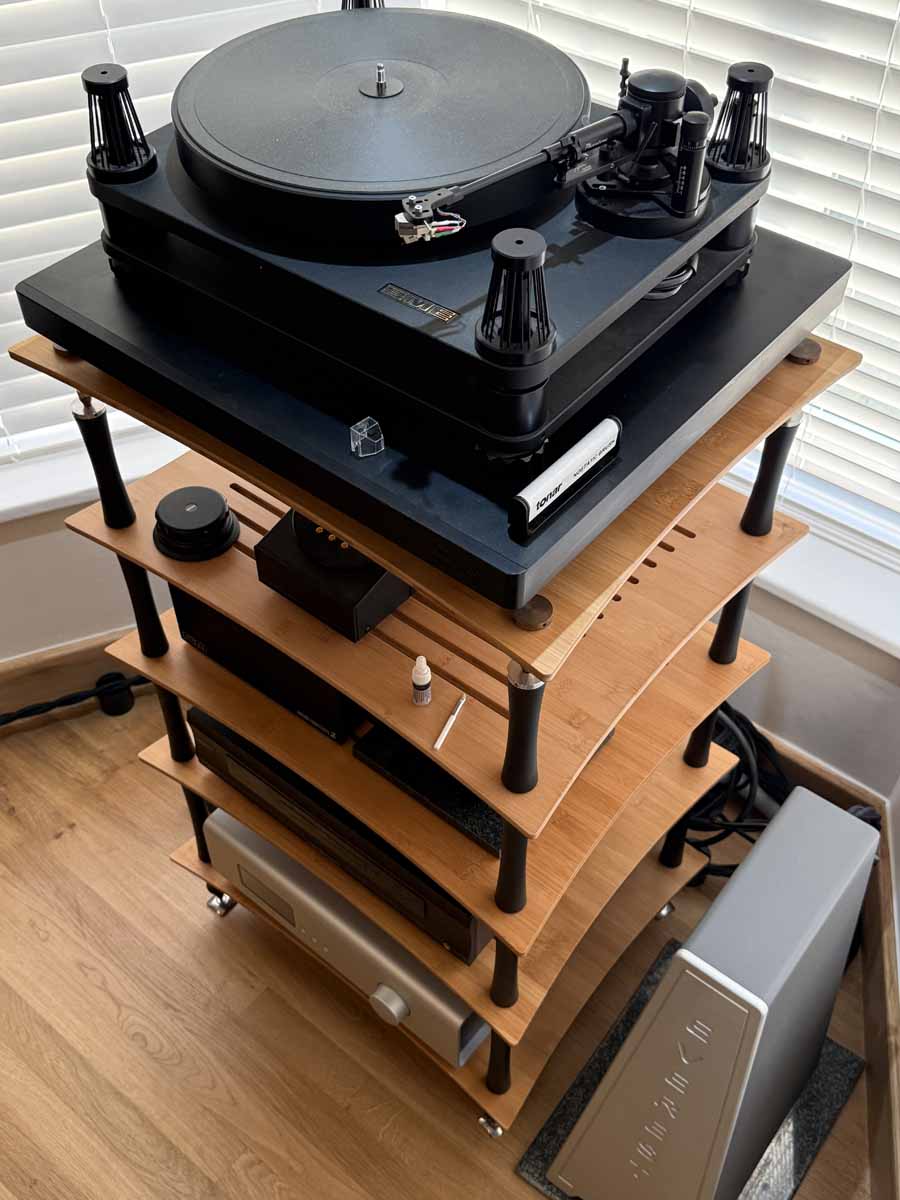
The proof of the pudding is very much in the eating, and as part of writing this piece, I spent a day down south with Jason, starting with his home system. This isn’t going to be a review piece of Jason’s system, but it does serve as a useful mechanism to illustrate some of the process and end results of Jason’s work. As well as being his own private listening room and a venue where a select array of clients can come to hear new pieces of equipment if they aren’t having a home demo, this room has also been Jason’s de facto laboratory for the last 20 years. There’s no aspect of the listening environment that hasn’t been considered and tested extensively in that time. Most people with an interest in HiFi will have done things like experimenting with speaker positioning, and will likely at least be aware of things like acoustic panels to help treat the room, even if their own circumstances don’t allow them to indulge. On the large scale, Jason has actually bricked up the one window that had been present in the room, glass being a phenomenally sub-optimal material for the listening environment. On the smaller scale, having recently taken delivery of a new Graham Engineering Phantom tonearm and gone through his regular process of configuring the setup, he’d spent a chunk of the previous day swapping various head-shell screws in and out and listening critically to the changes between each option.










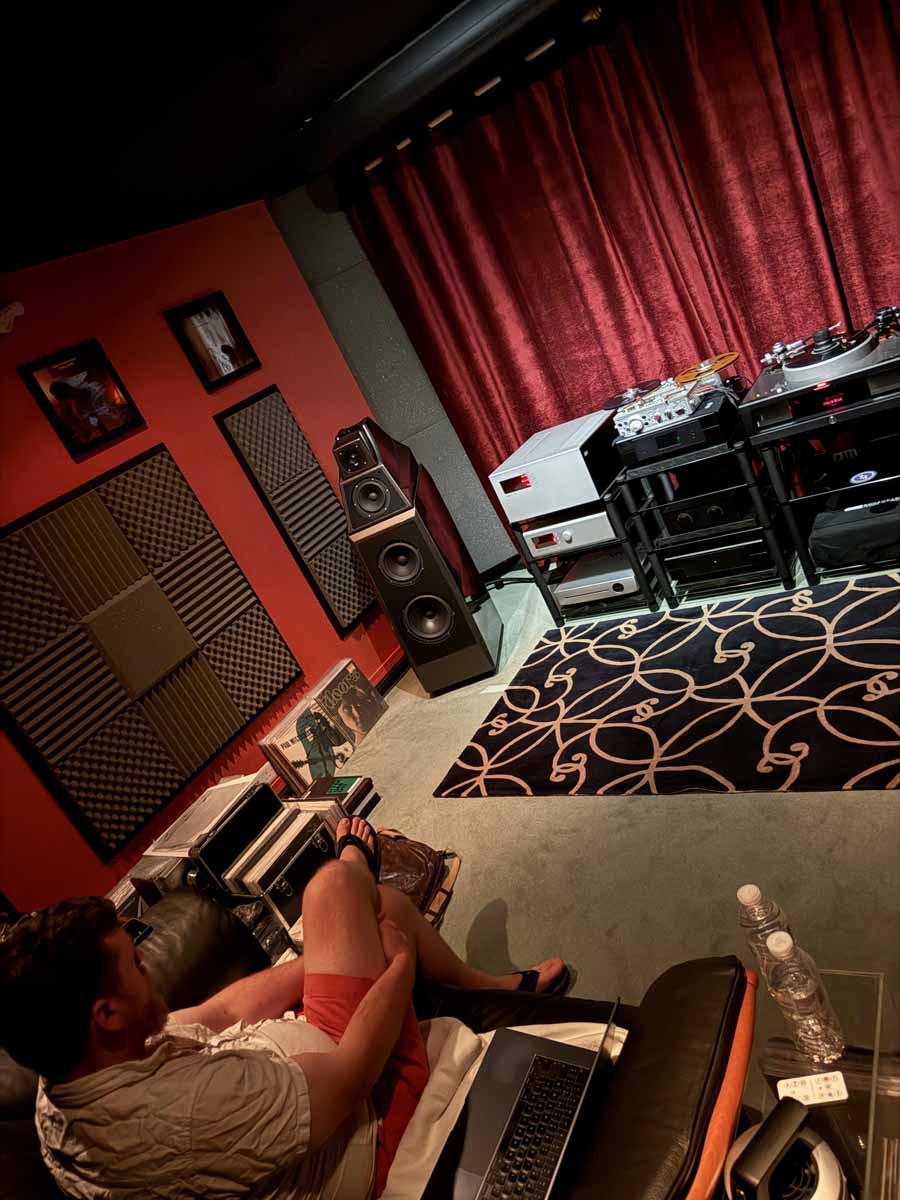
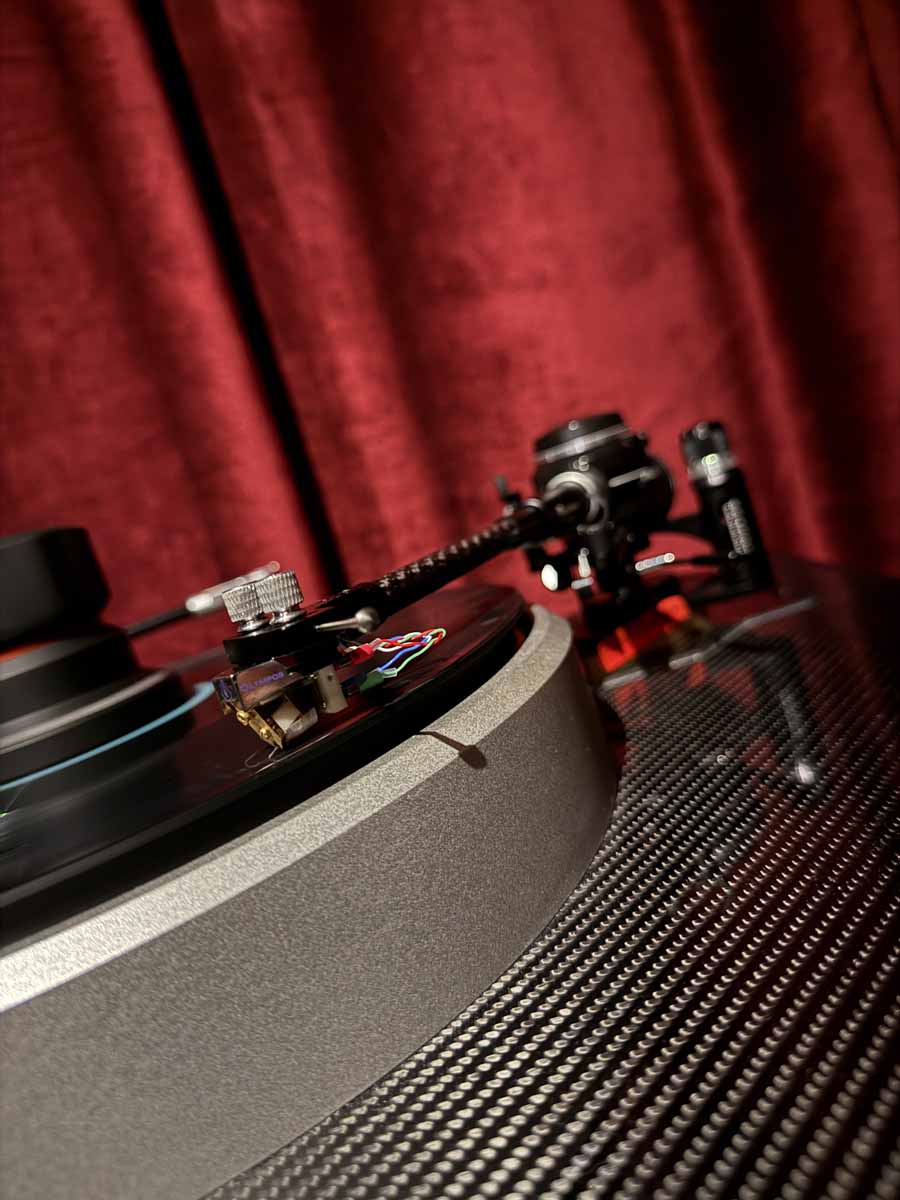
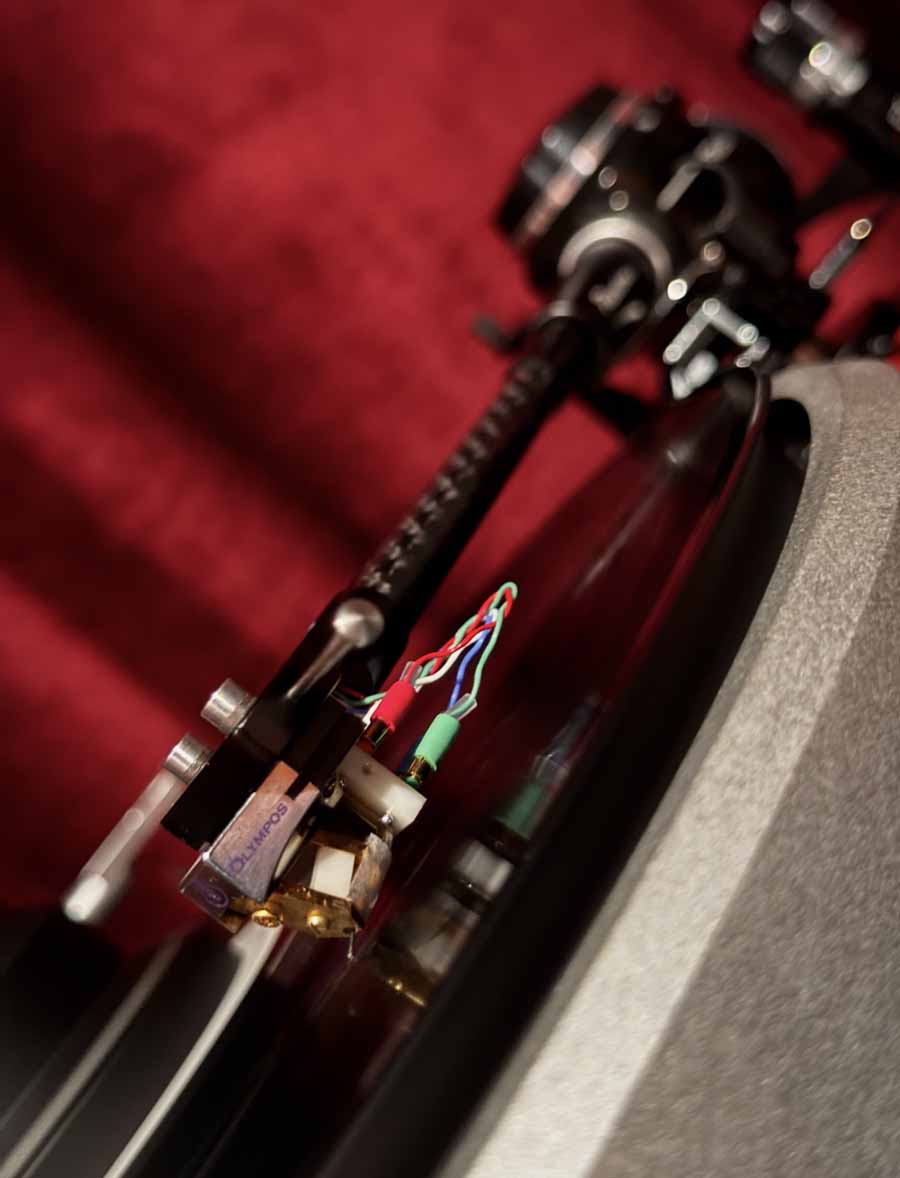
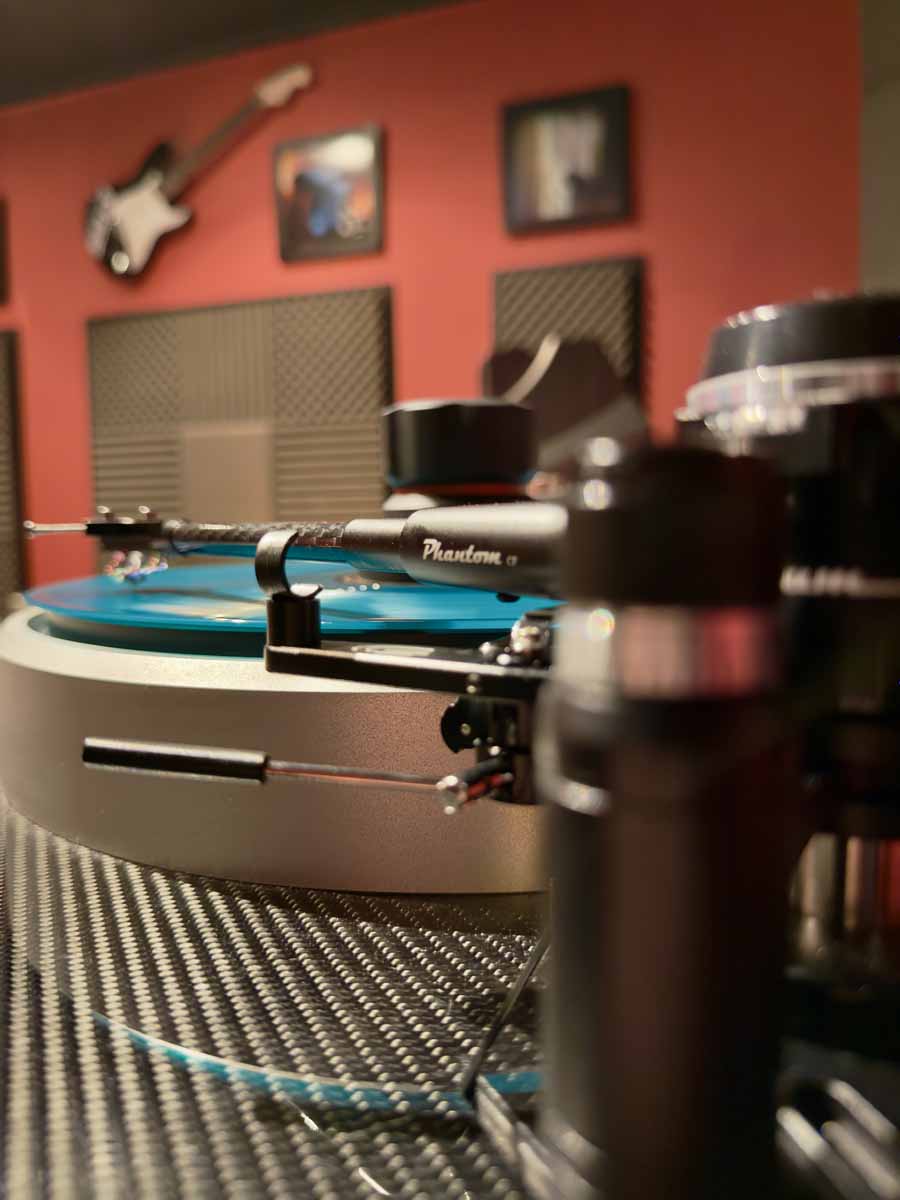
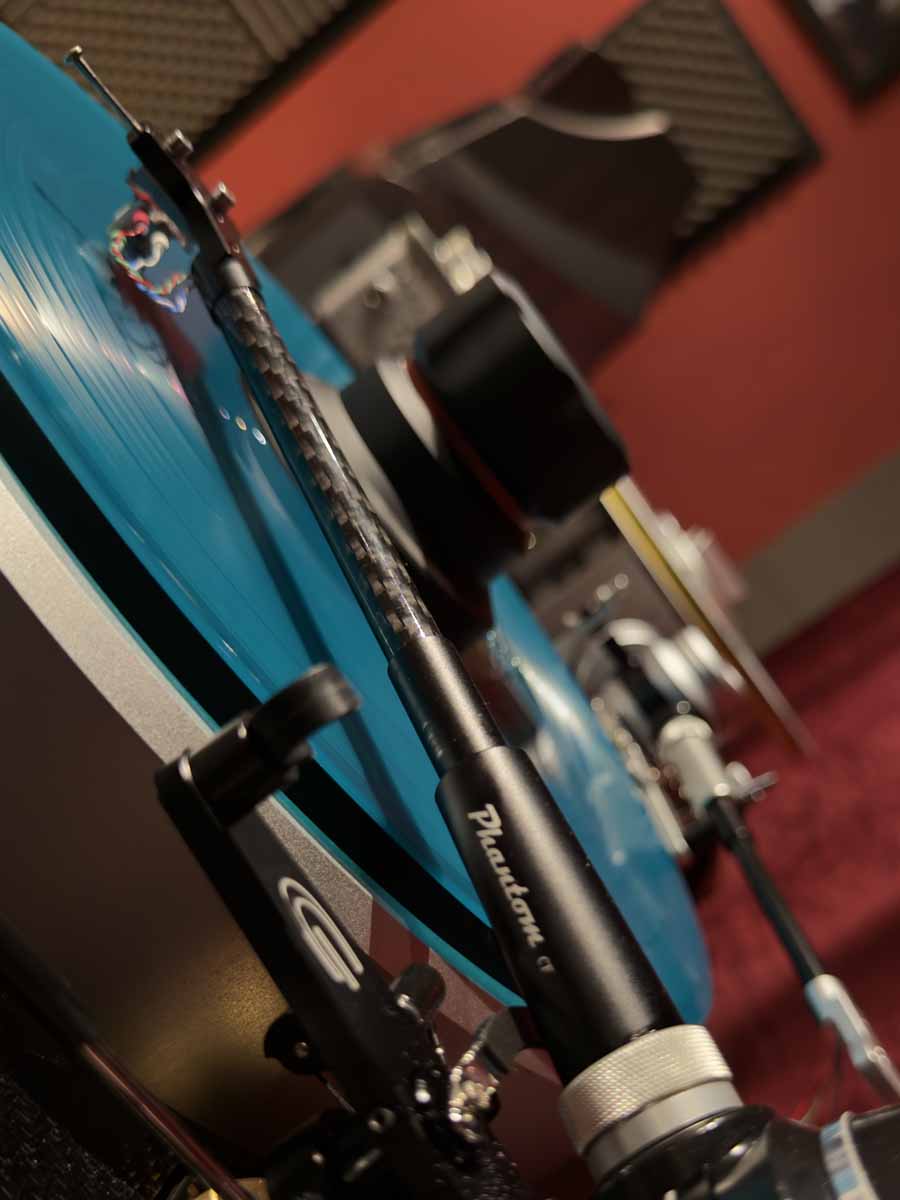
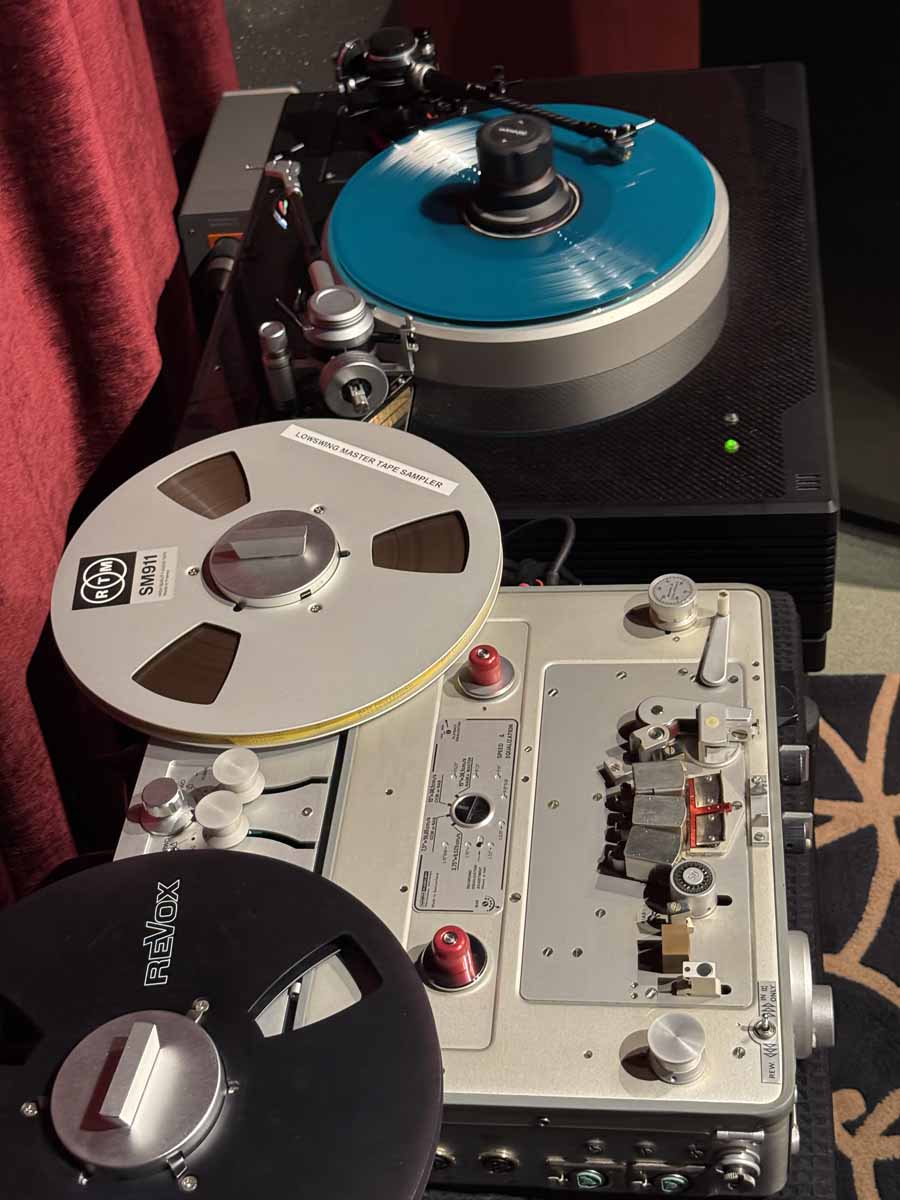
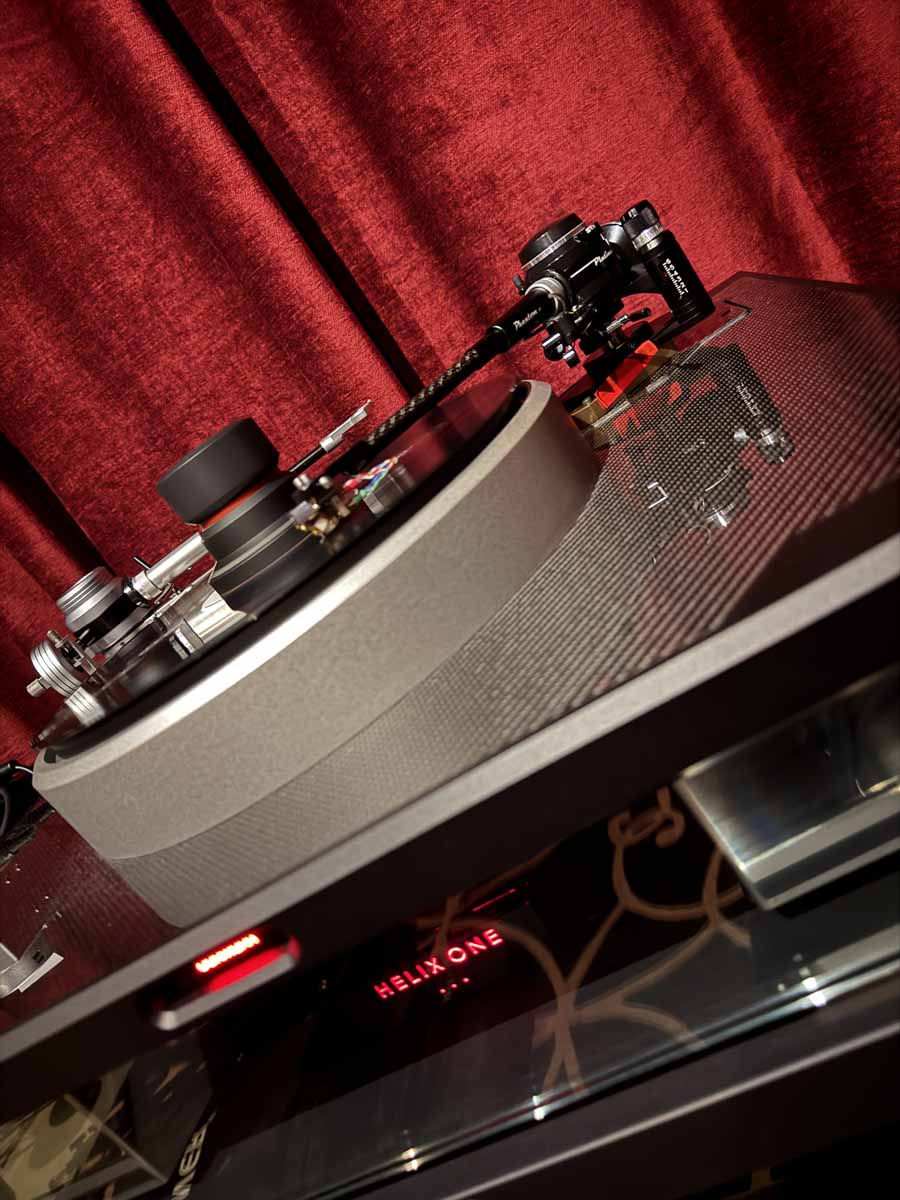
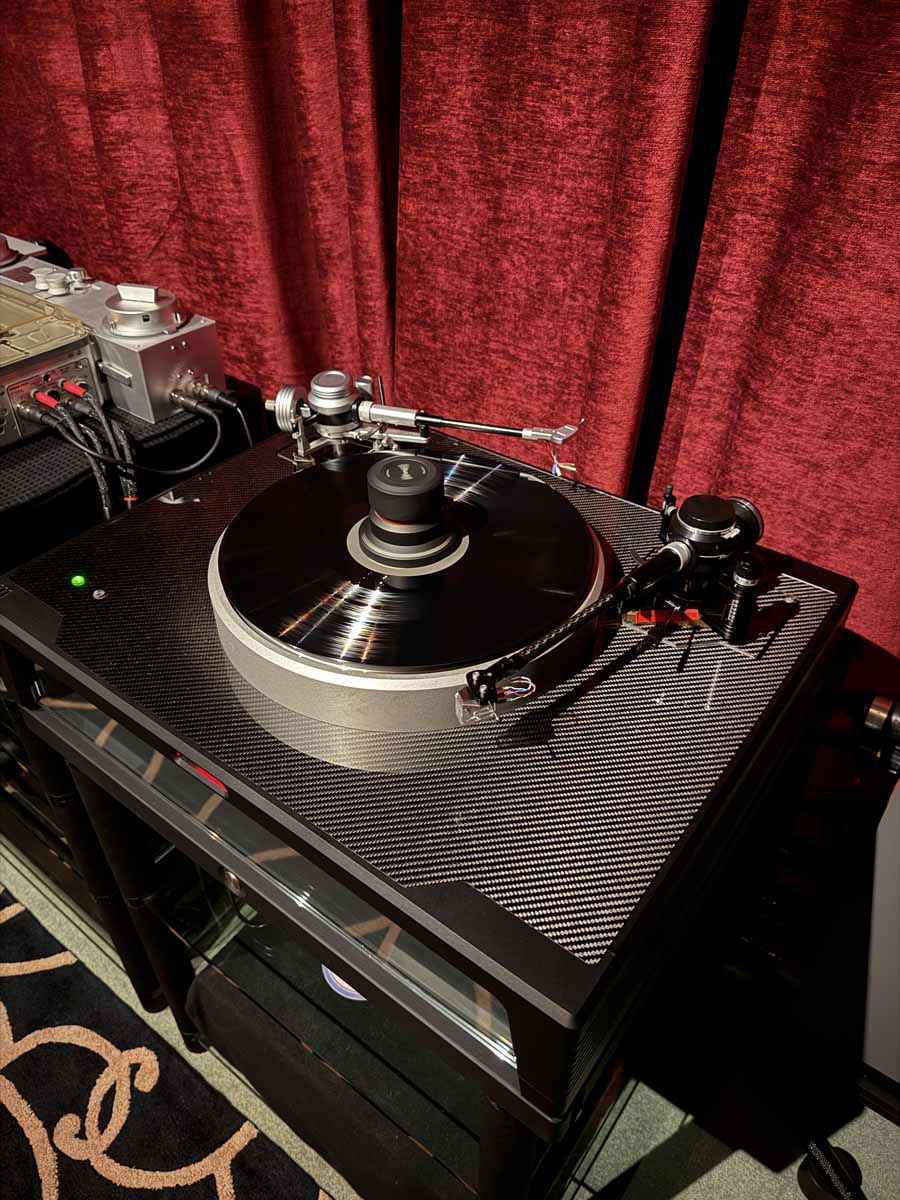
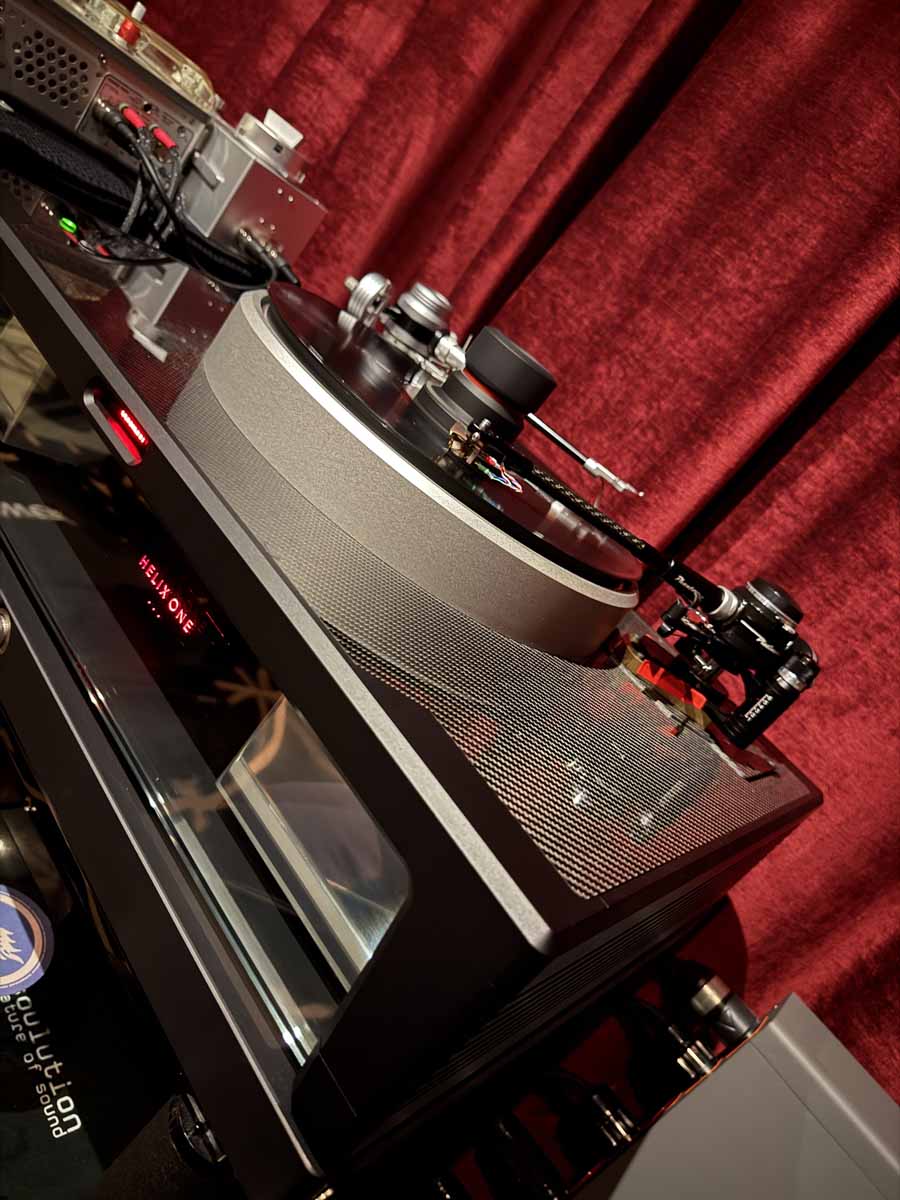
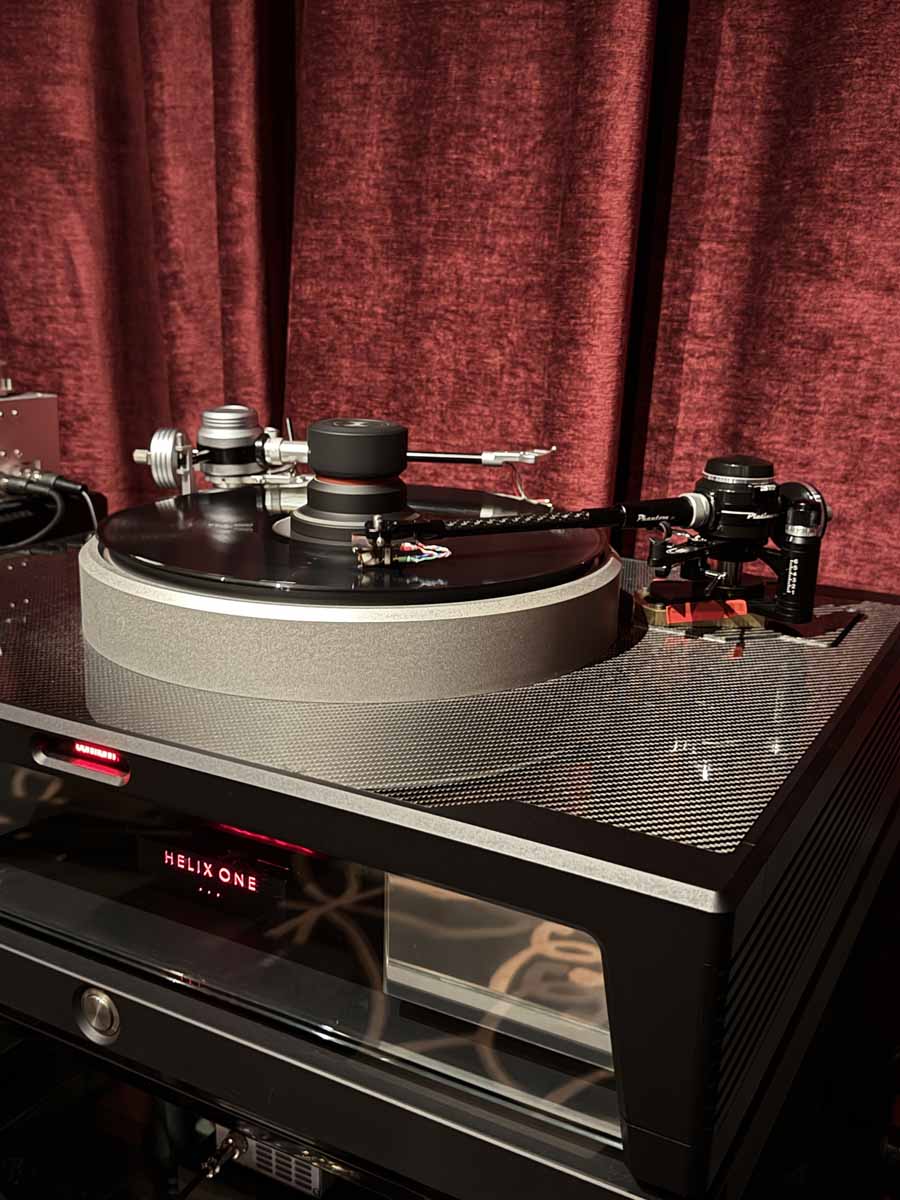
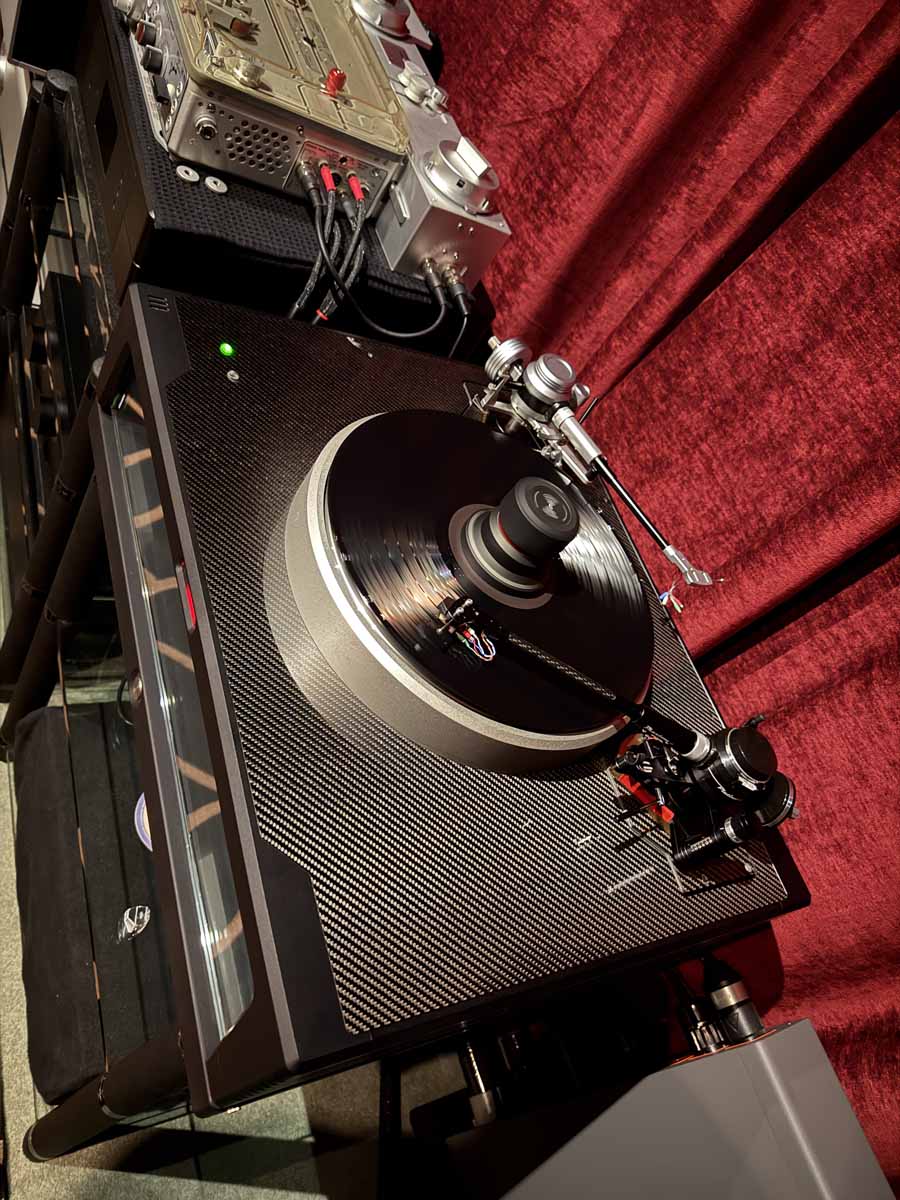
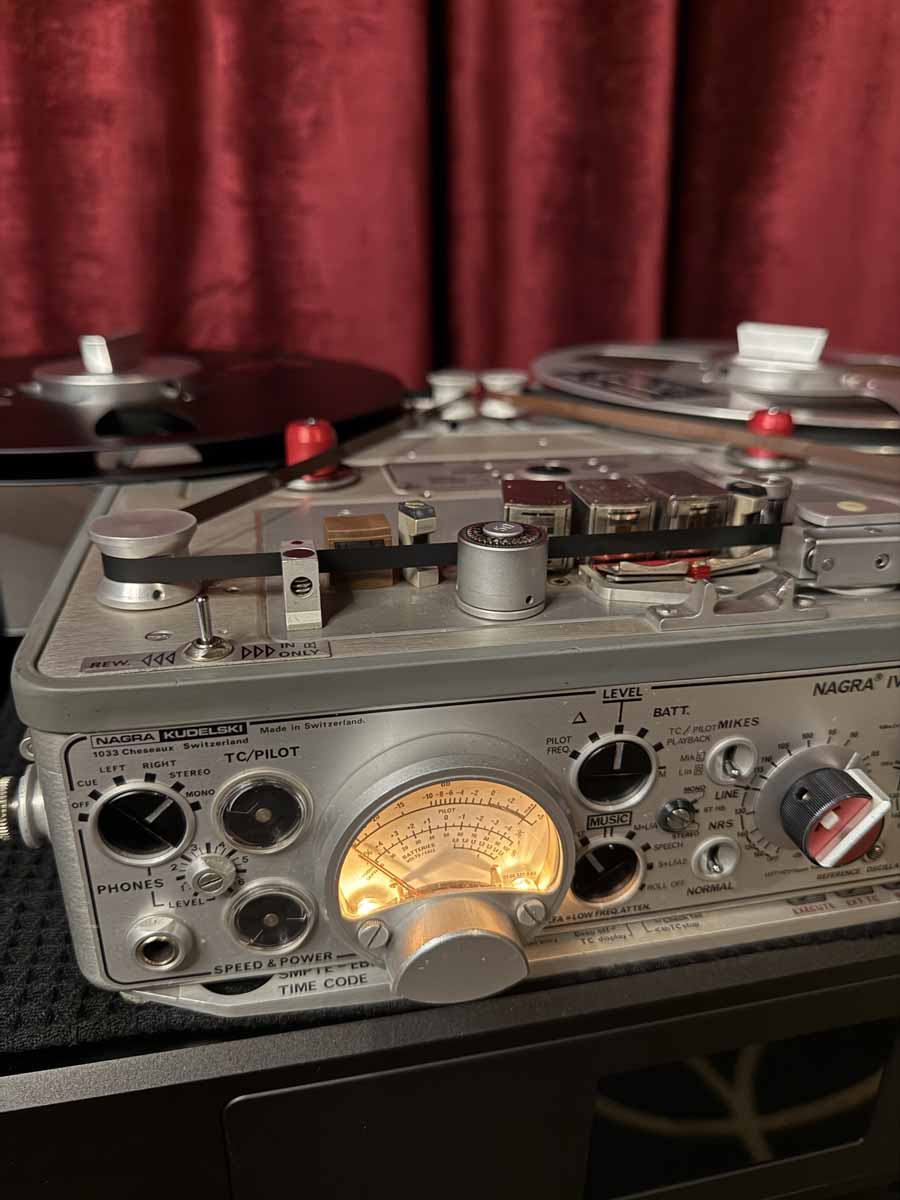
In many ways, this is what someone retaining Jason’s services is paying for – you’re getting 20 years of fanatical devotion to every possible facet of the sound of a hifi system, without having to go through all the trials and tribulations of testing all of these possible permutations yourself. Knowing what is worth trying, and what is not worth trying, in any given situation. A lot of this is also not something you can shortcut your way to, either. Later on, I’ll take you through Jason’s process for positioning a pair of loudspeakers. If it’s not something you’ve done before, I can guarantee you an improvement in how good your home system will sound. But what I cannot do is implant into your head the exact sound of those particular tracks played through a truly dialled-in setup.
This is where Jason brings a whole other facet to the party: his knowledge of record pressings. One of the things we did whilst there was listen to a number of different pressings of Nirvana’s Nevermind, specifically the track Come as You Are. This is not, of course, what one might call an “audiophile” recording, but that doesn’t mean you cannot hear really quite striking differences between the various pressings that have been issued, including the comparison between European and American pressings based on the same mastering tape. It was also a chance to hear some yet-to-be-released tracks from Lowswing, as well as some of the Supersense/MasterCut acetates he can obtain for clients.
The setup here in Jason’s room is the culmination of all that fastidious attention to detail. I’ve really never heard another system sound anything akin to what sitting in that room felt like. By far and away the most obvious facet was the soundstage. I’ve heard what I thought were great soundstages over the years, where the image could move freely about the space and comfortably extend beyond the speakers. What I’ve never heard anything else come close to is the level of precision within the soundstage. A drum kit is a pretty ideal demonstration of this, because the kit itself will usually be sat bang in the middle of the soundstage. But in most systems, I’m mentally going, “ok, there’s the drum kit in the centre”. What I am not used to is being able to physically point to where the bass drum sits, vs where the snare drum sits. Where the hi-hat sits vs the various crash and ride cymbals.








CLIENT VISIT
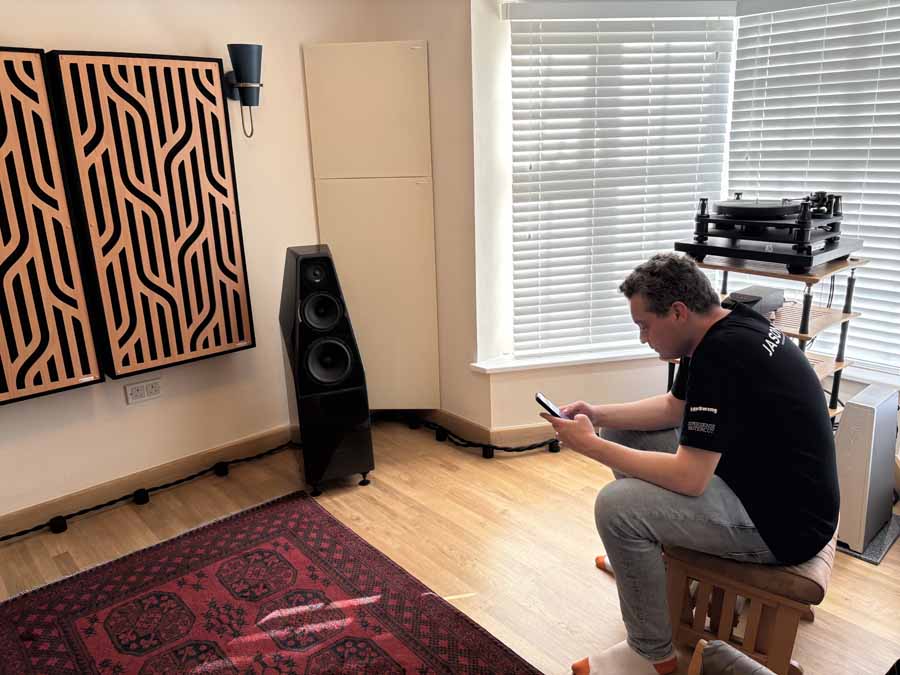
Jason’s own setup is of course already extremely dialled in, so in the afternoon we took a trip across London to a friend and client of his who has just been redoing his listening room. It’s quite telling that Jason has a significant number of clients from his time working for dealerships that have both stuck with him as their preferred supplier once he struck out on his own, but who also have really shifted far more into the category of friends than of a strictly professional relationship. It was also fascinating to observe the degree of trust this client had in Jason’s advice and recommendations; every piece in that system had been acquired through him, and the attitude the client had of “Go on Jason, do your thing” felt really quite unusual. But when you’ve found someone with such a clear level of expertise in the reproduction of music, it would be madness not to trust their experience!
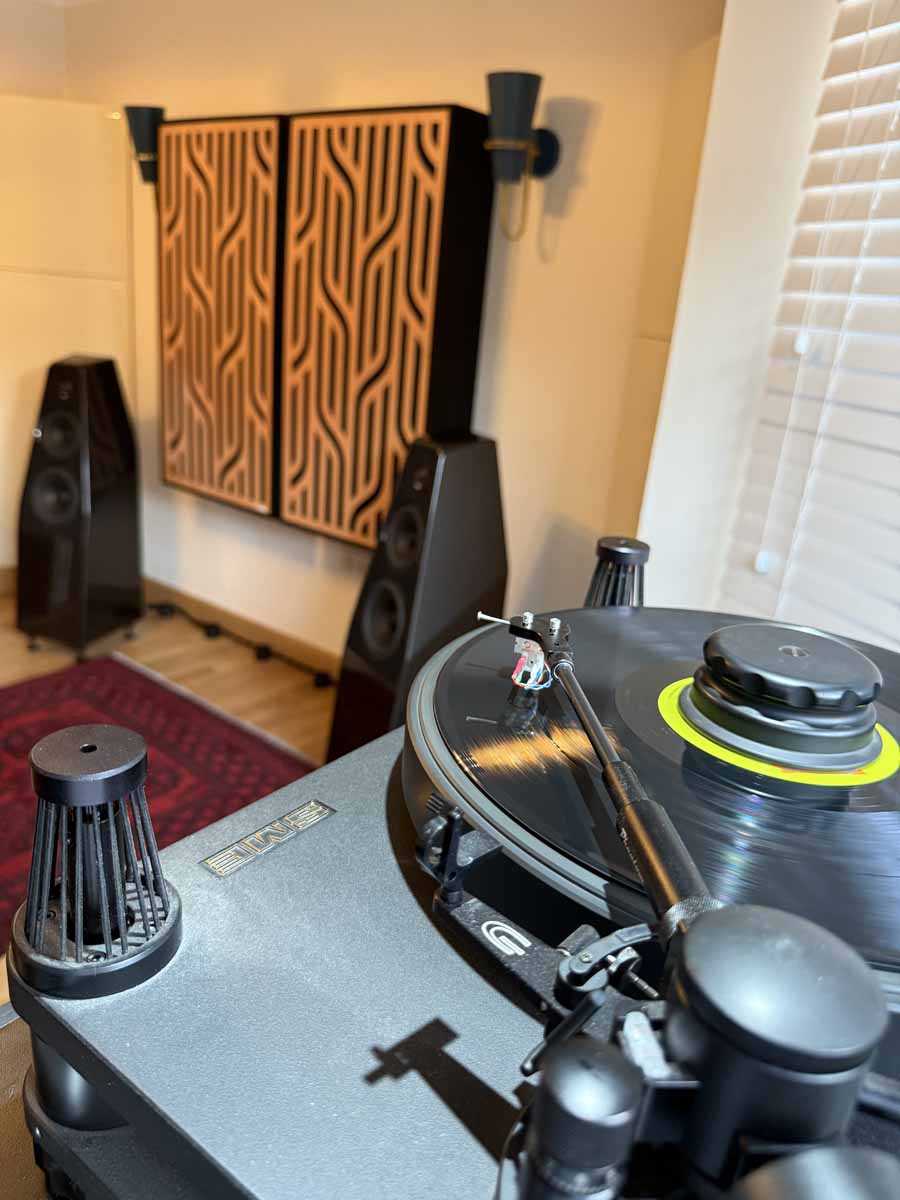

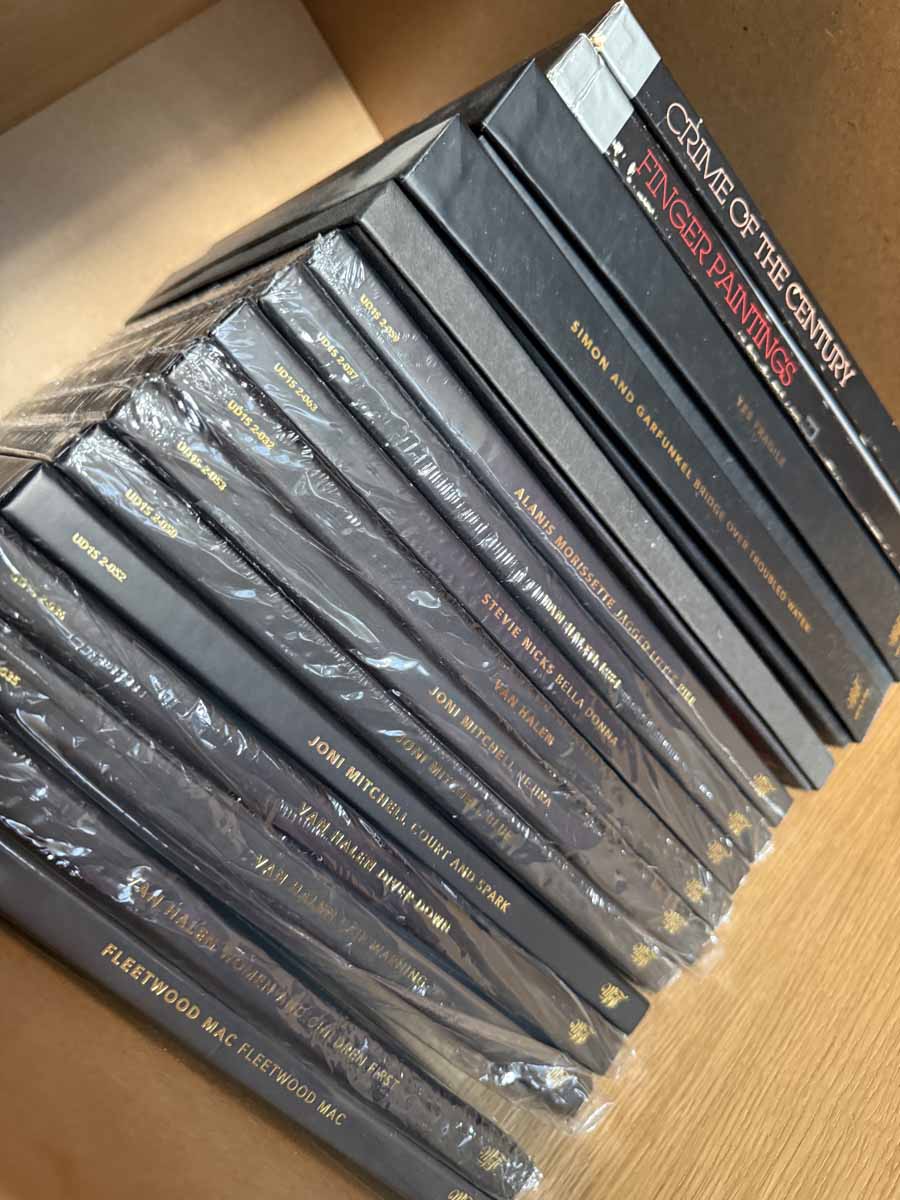
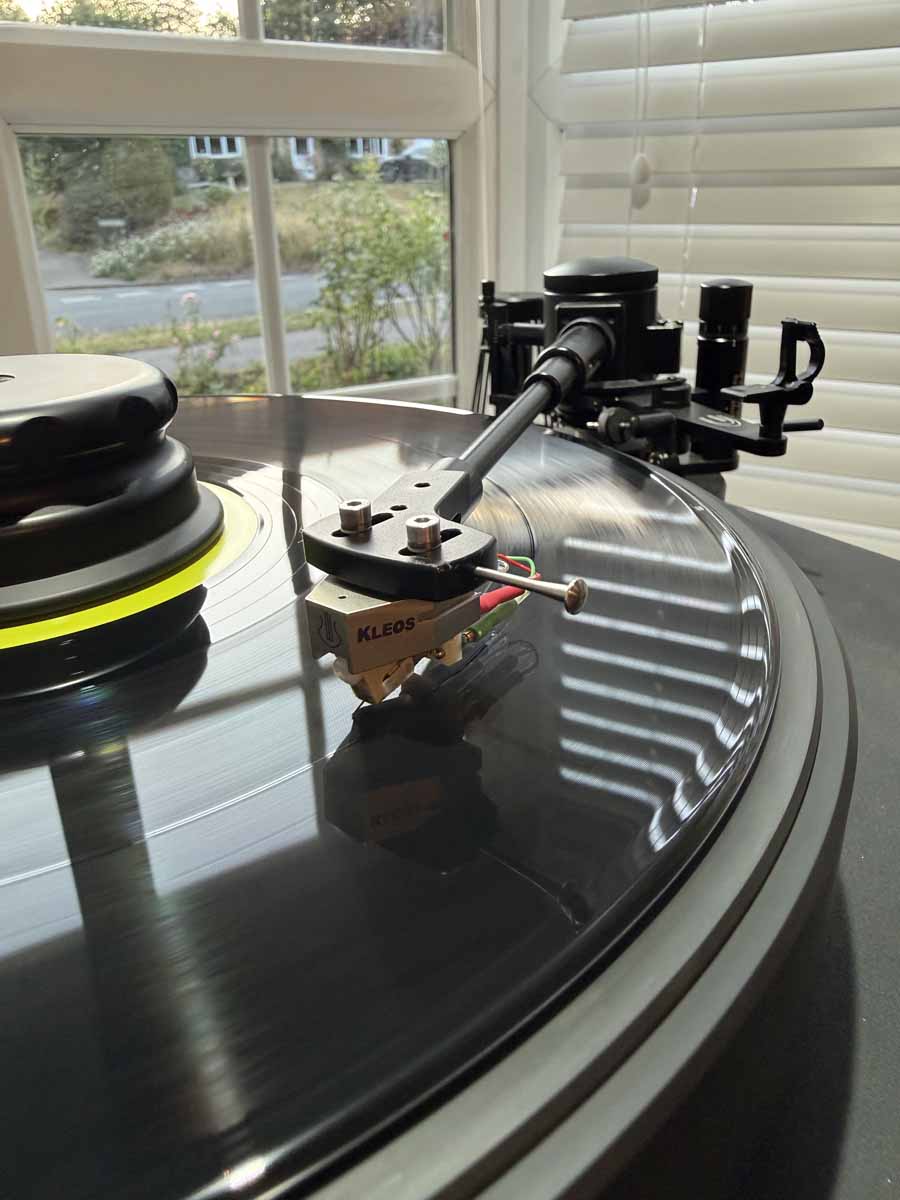
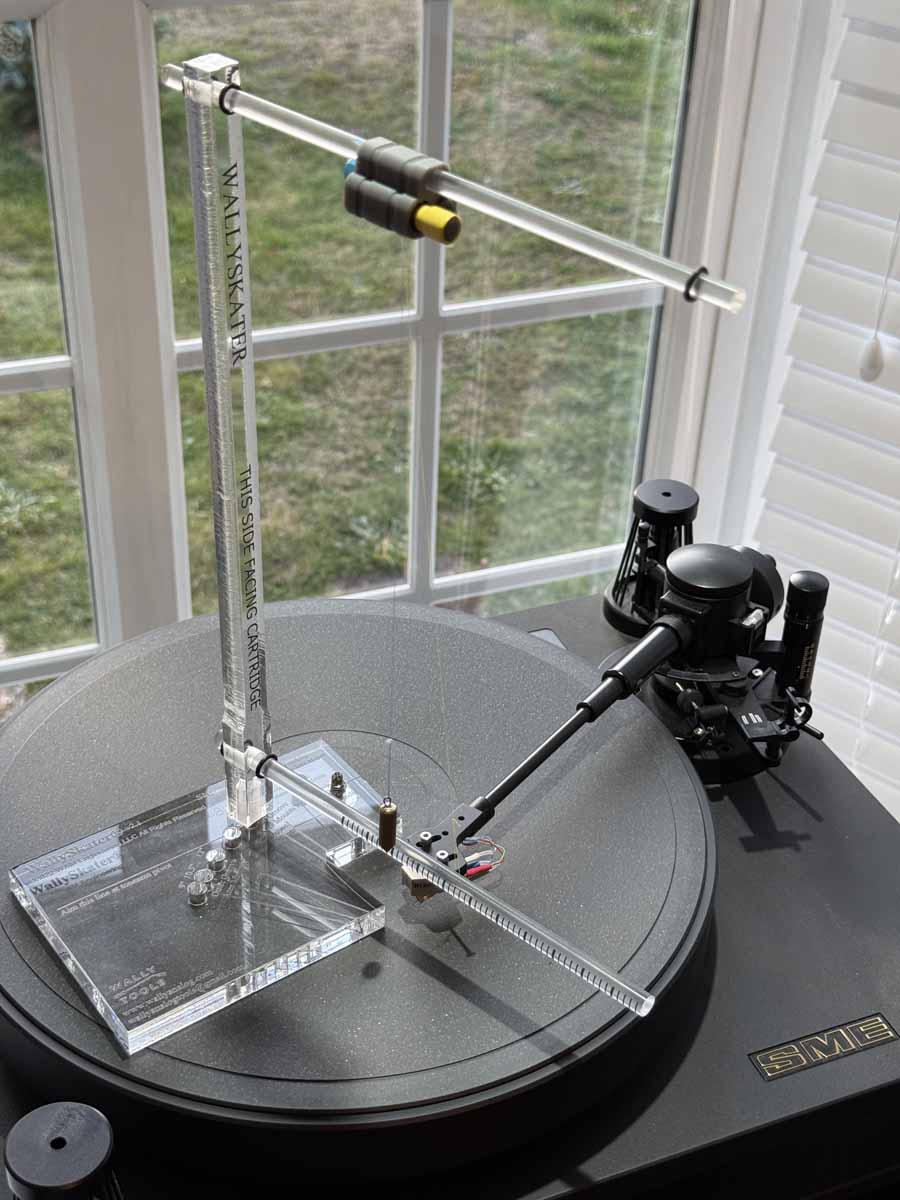
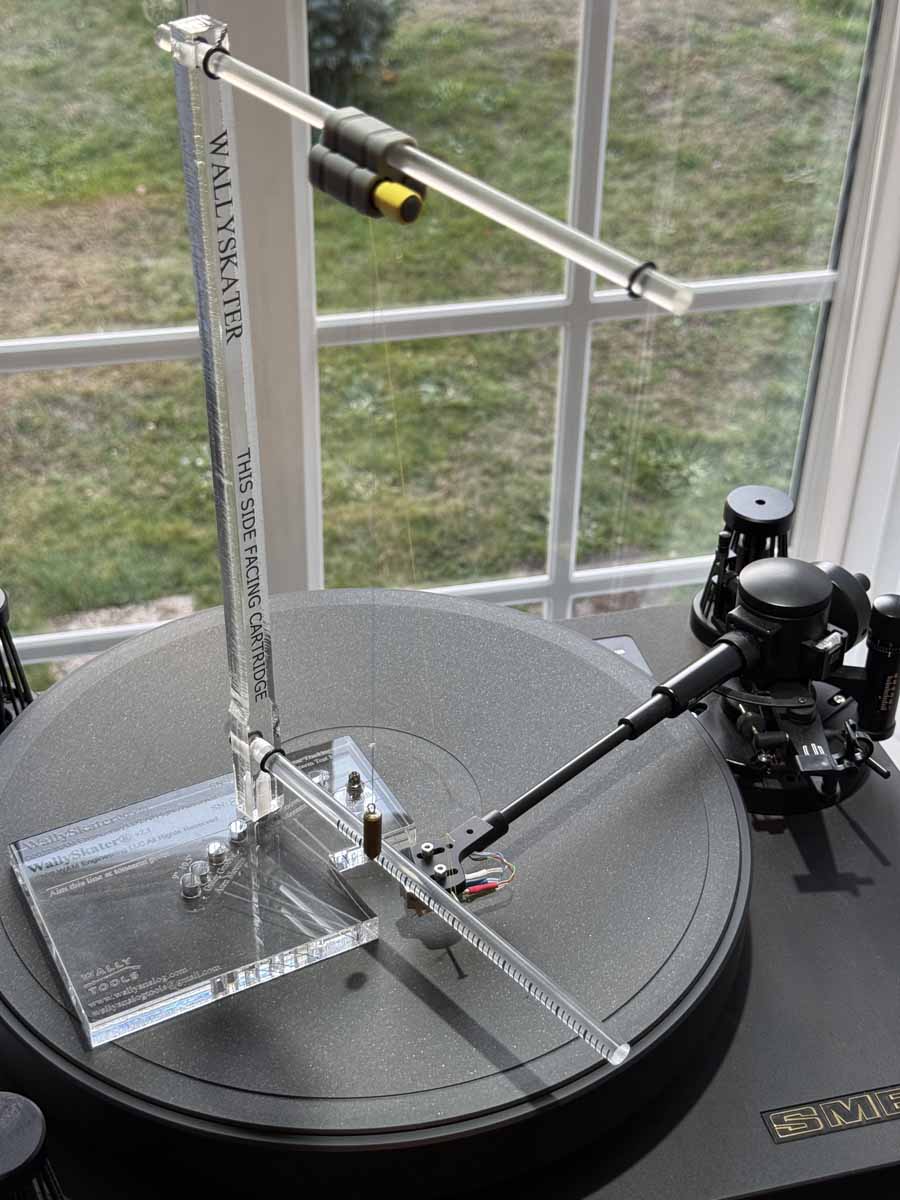
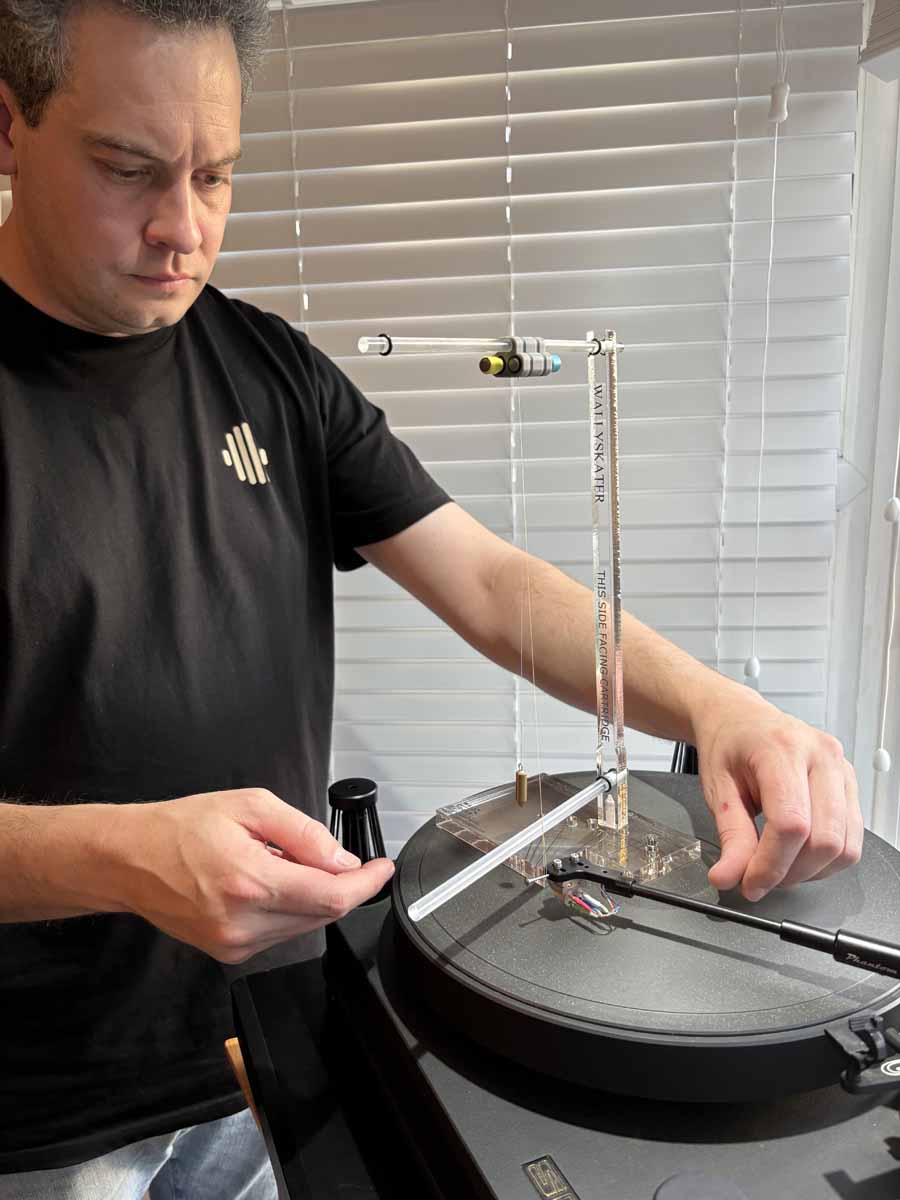
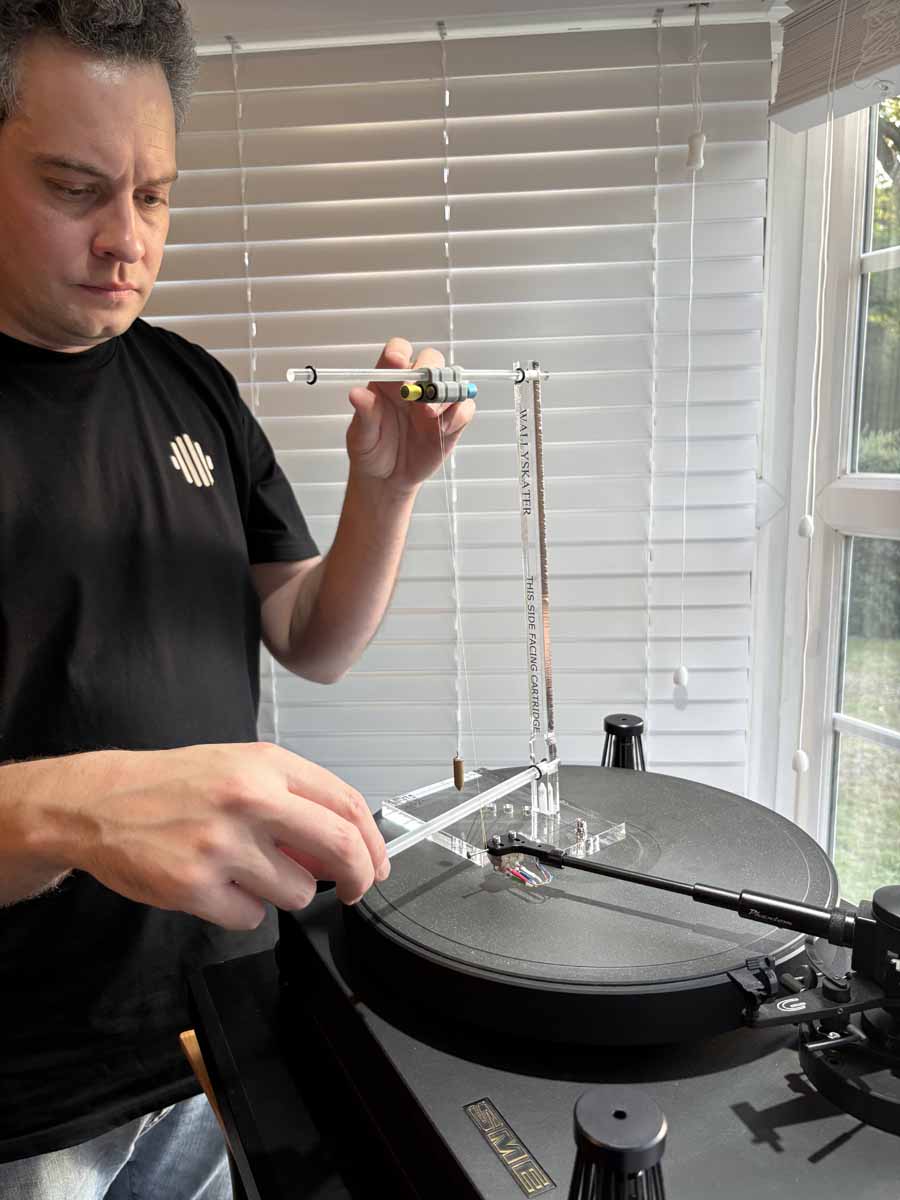
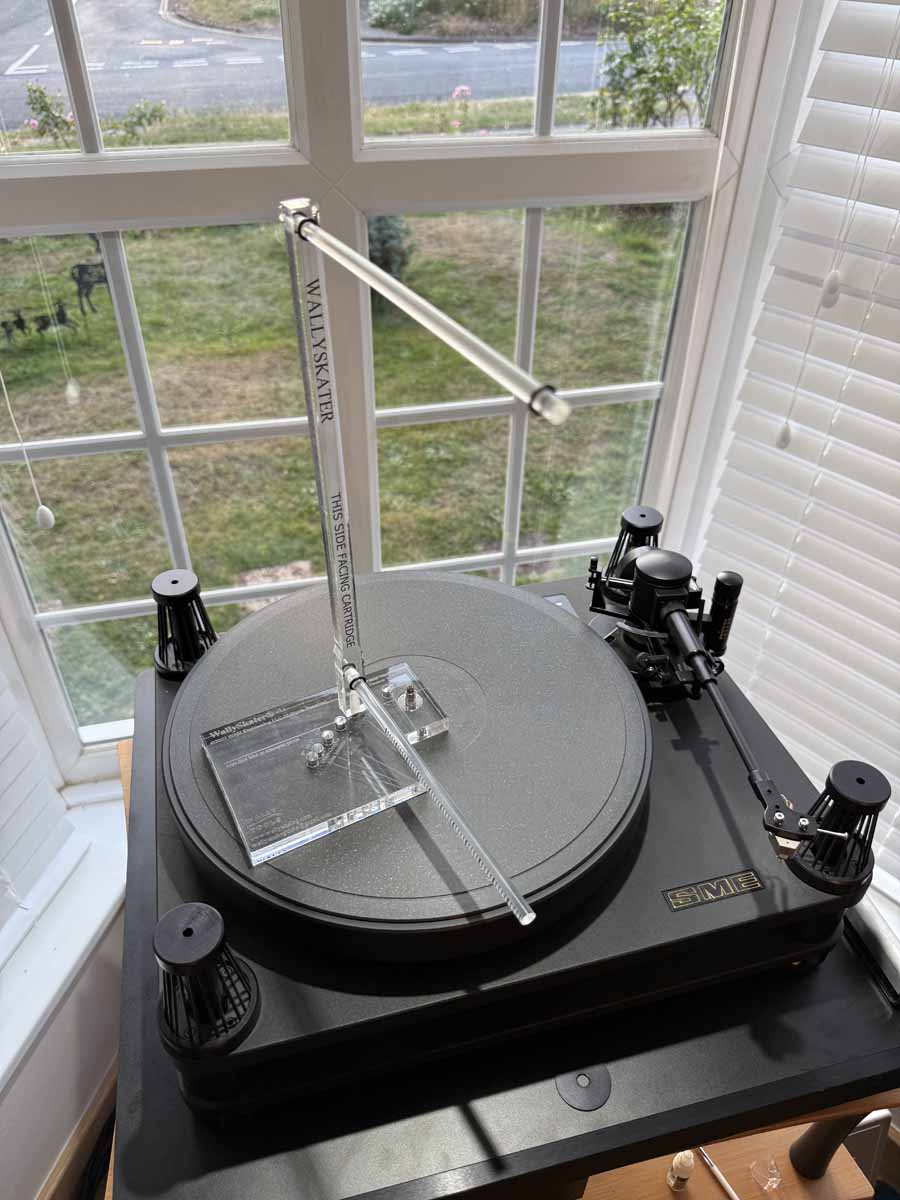
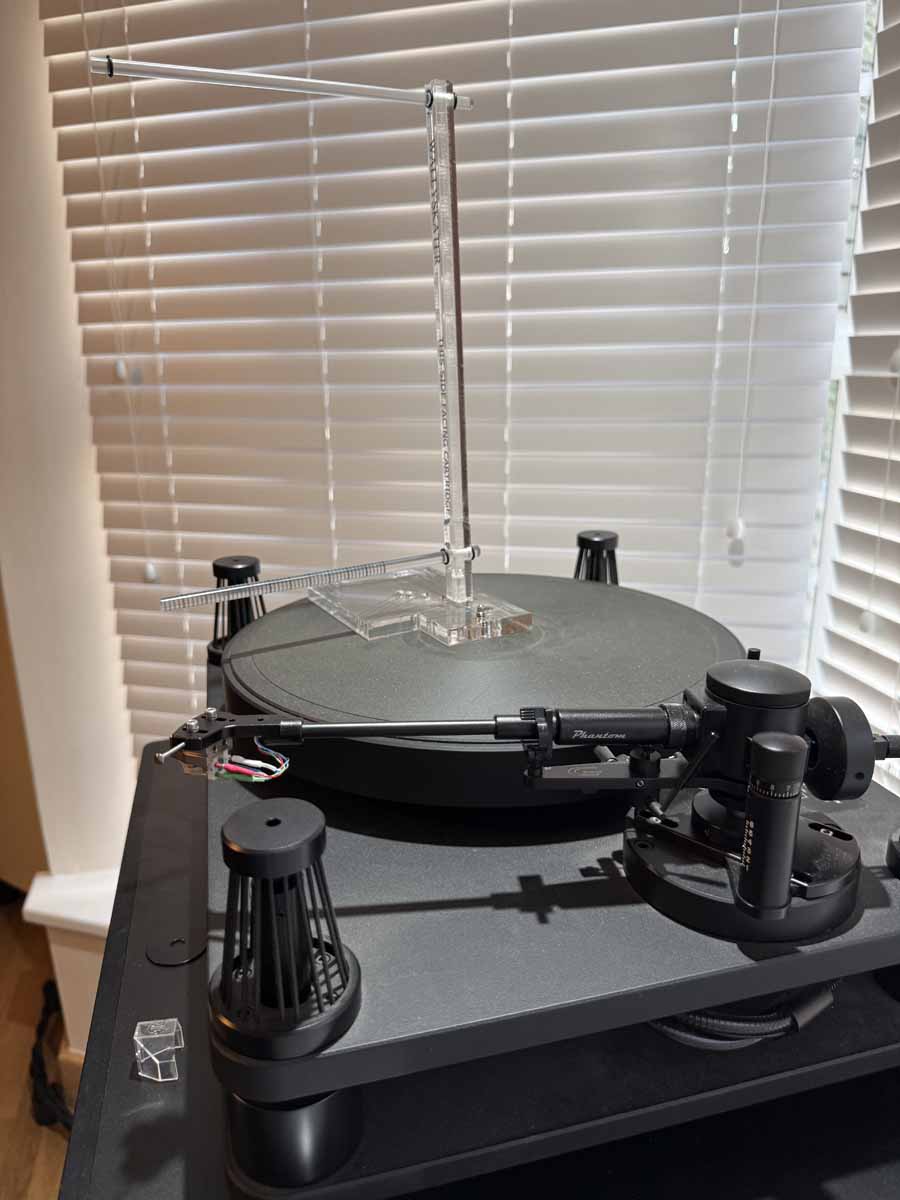
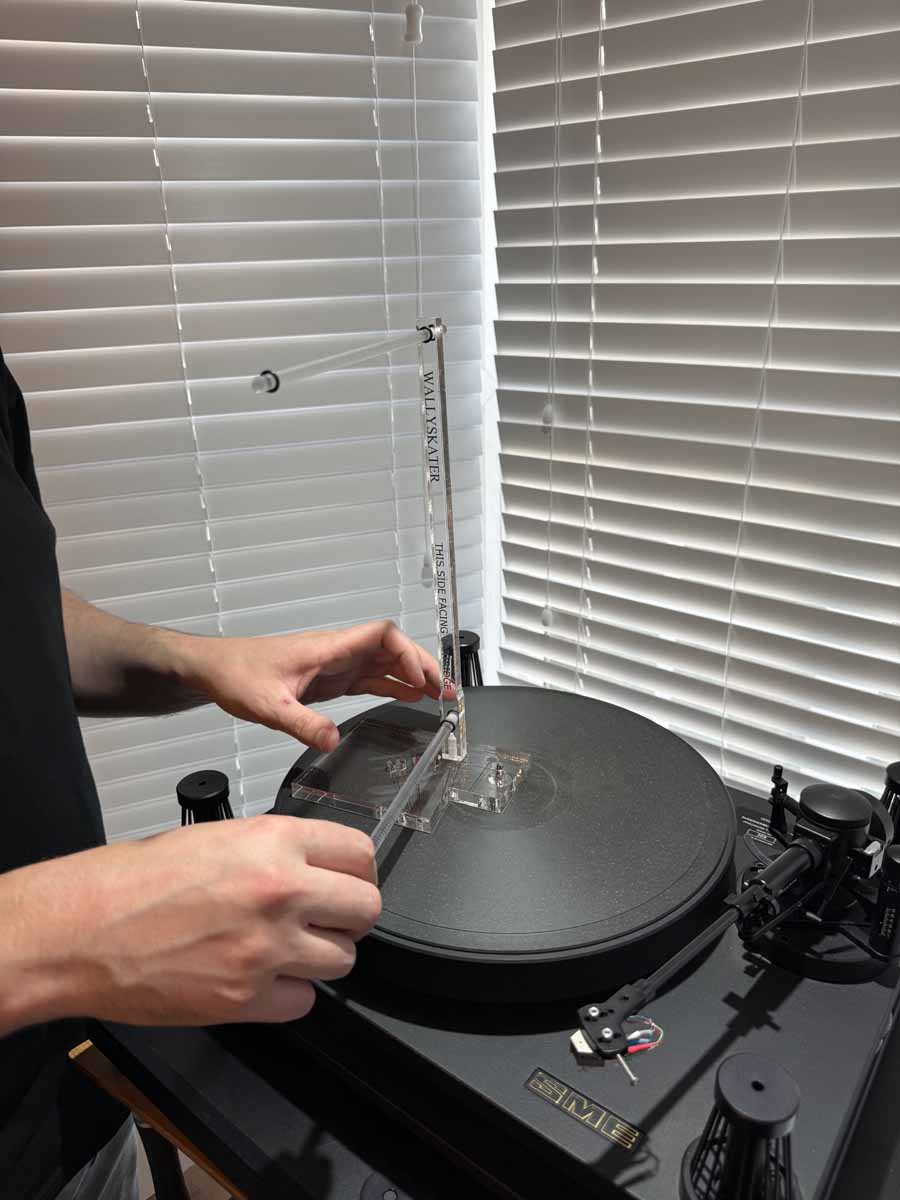
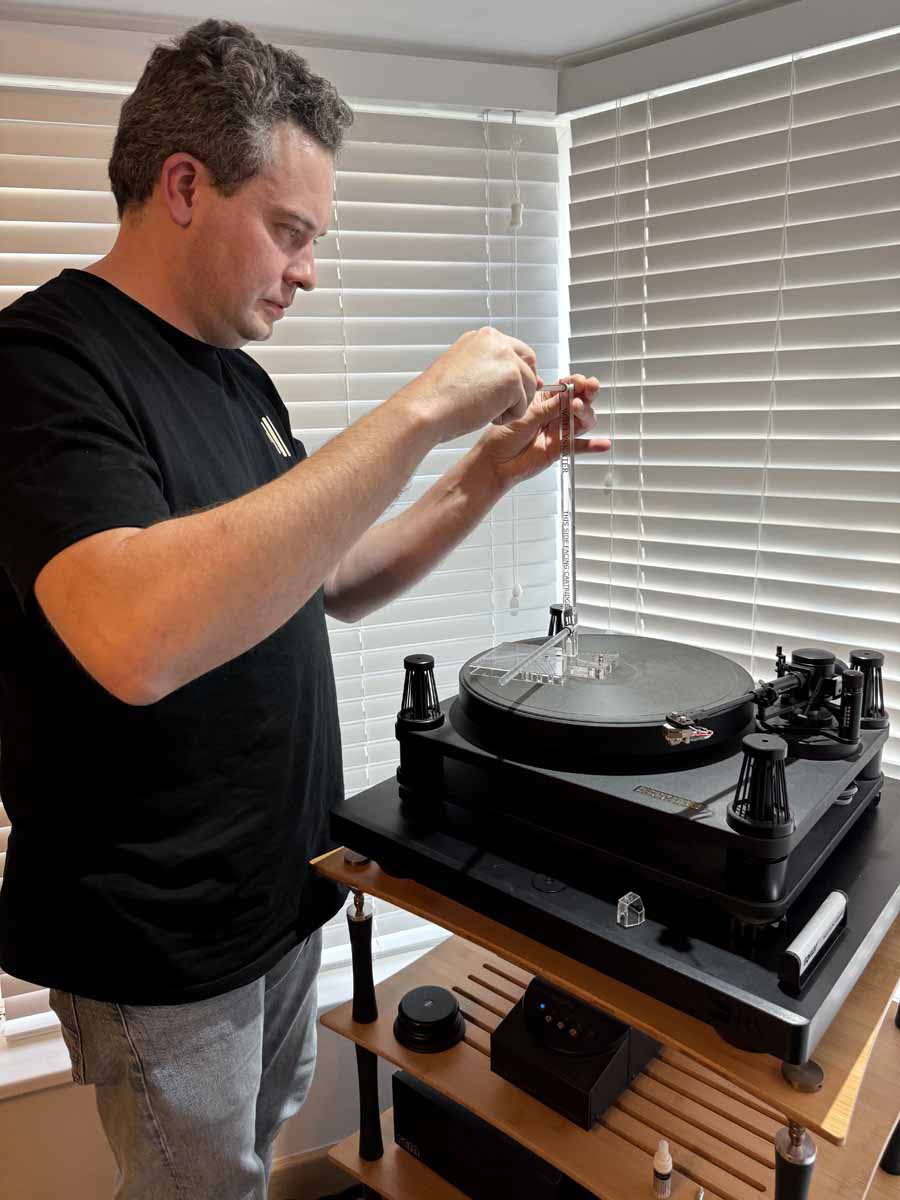
In his role as a music supplier, he’d also brought a few singular pressings of albums he’d found for this client. Again, the trust is very apparent – some of them were not just new pressings, but entirely new albums for this client, but the immediate response was, “Wonderful, make sure you stick all of them on my invoice!”
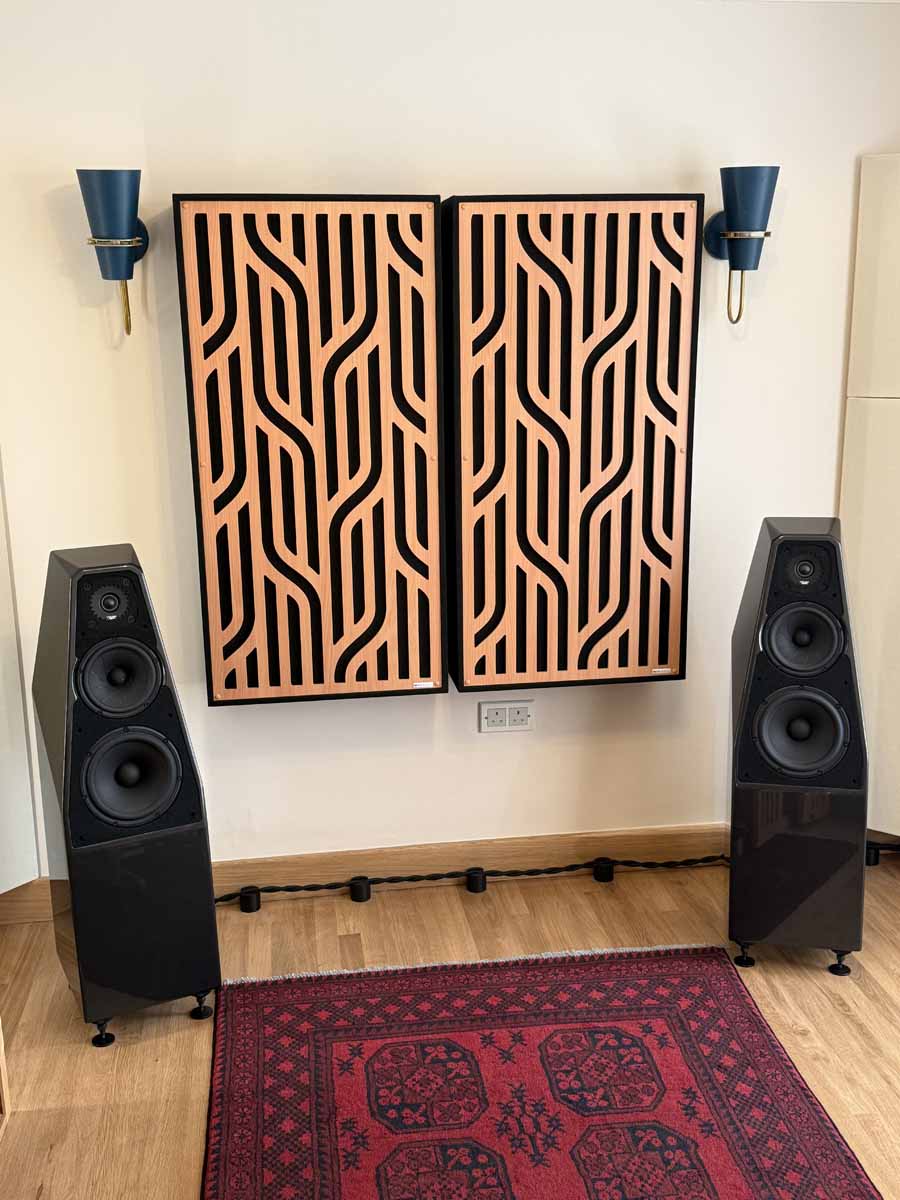
Jason had already been in the day before, fitting an array of acoustic panels from GIK Acoustics to deal with the various room nodes, and doing the rudiments of setting up the system. Speakers were sat vaguely in the sort of area they would need to be, cables run, etc. The system could make a noise at this point, but nothing had been done to optimise it.
It is not feasible to even remotely convey all of the information Jason imparted that day about bits he was doing without turning this article into War and Peace, but I thought it would be quite nice to go through his process for positioning a pair of loudspeakers in the room. This facet works nicely, because everyone has loudspeakers, but not everyone has a turntable, and so long as you can manage even basic streaming, you don’t need to spend a single penny to implement this in your own home.
SPEAKER SETUP PROCESS
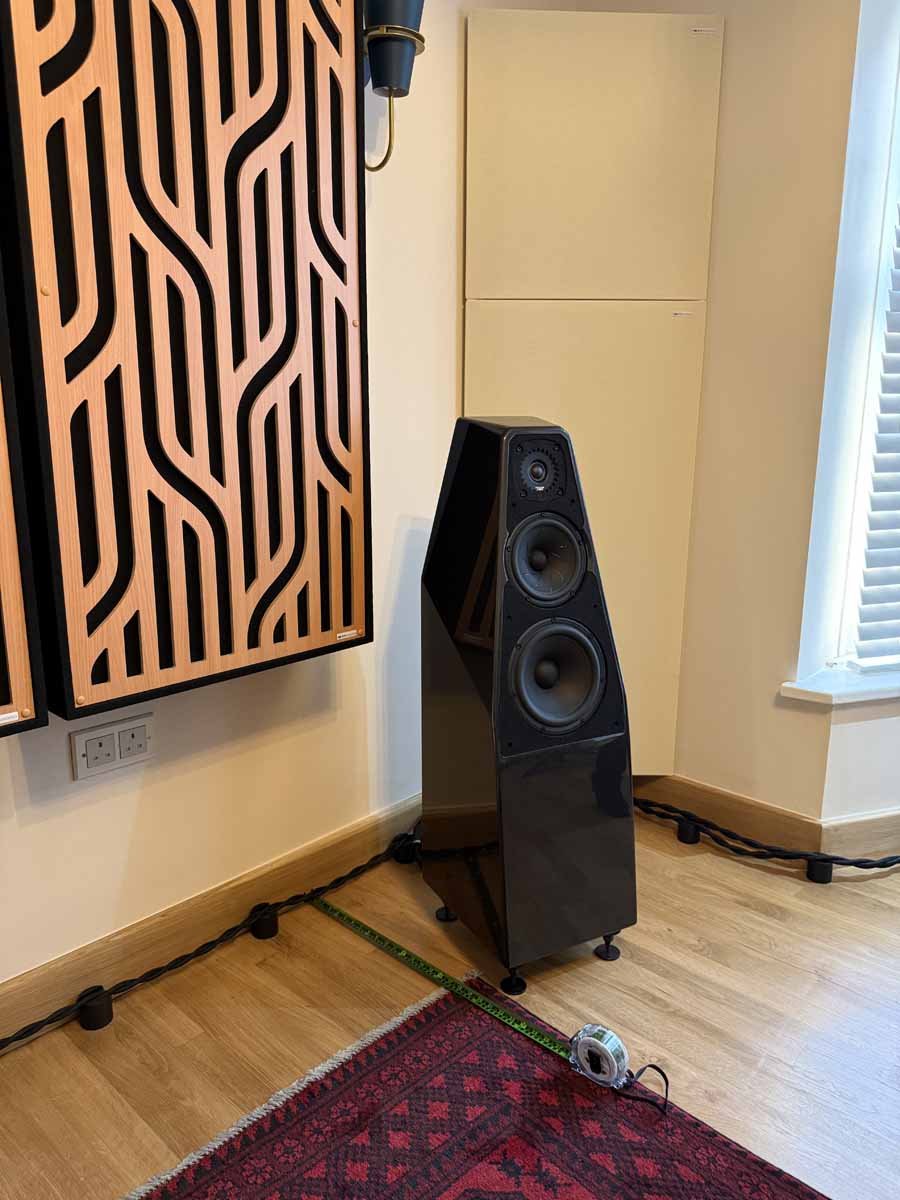
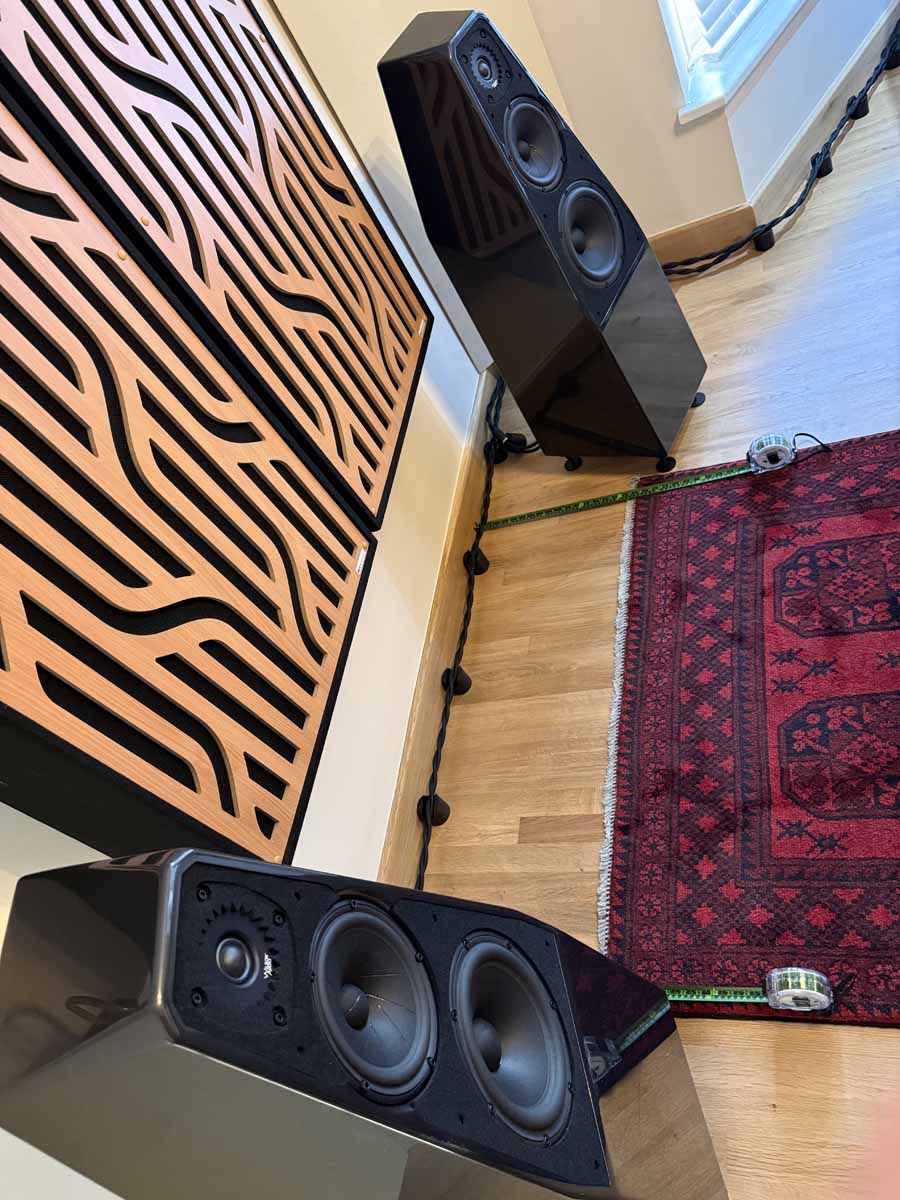
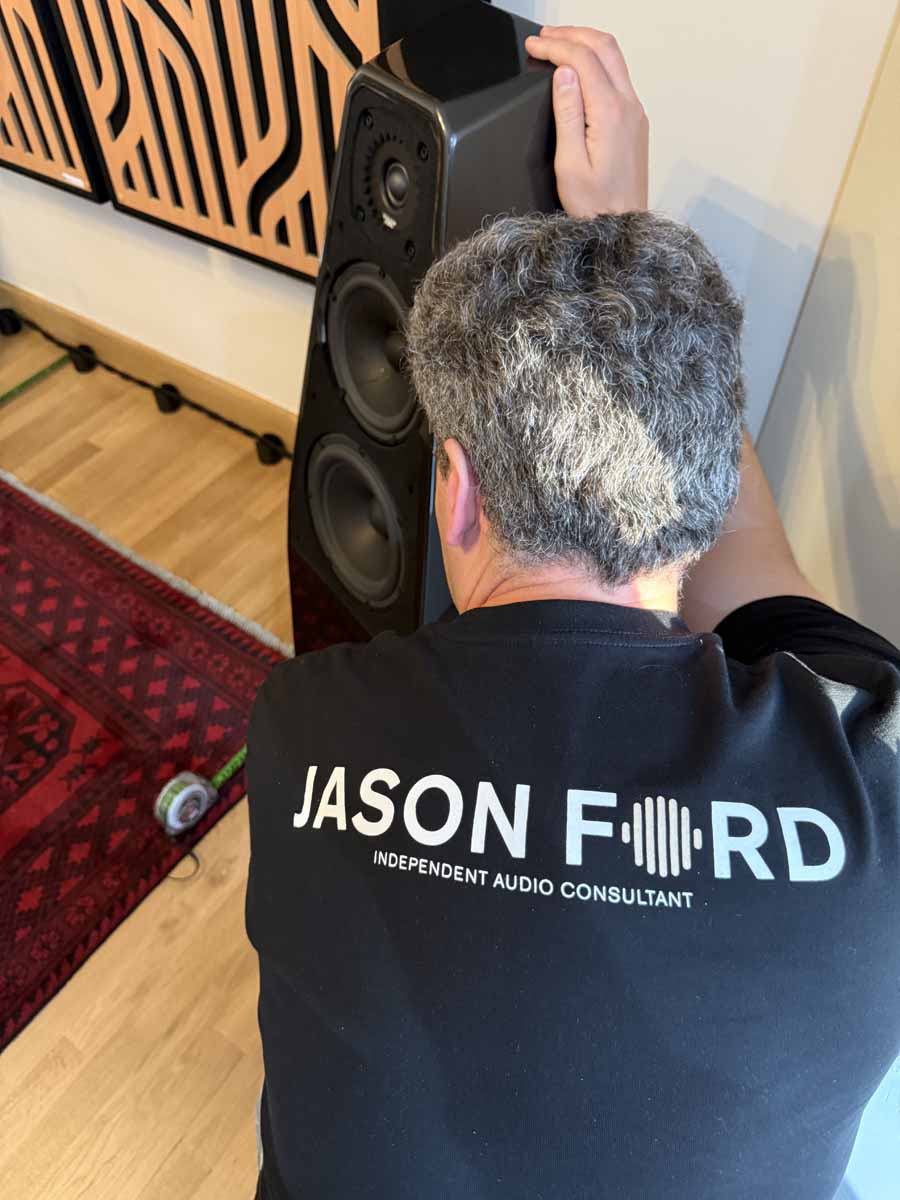
The setup process comprises three distinct stages. The first establishes how far the speakers should be from the back wall. The second configures how far apart they need to be, and then finally the degree of toe-in required. The only tool you will need is a tape measure (ideally two). Ideally, you want the speakers resting on something that will allow them to slide on the floor, rather than something like spikes. It’s not essential, but it does make the adjustment process a lot easier.
One other crucial aspect is that even if you’re the most ardent vinyl enthusiast, it’s worth doing this setup process with a digital source. First off, you don’t really have to worry about whether the digital source is really set up competently. Secondly, this process involves re-listening to tracks over and over again. It’s a lot easier to press back on a CD player or streamer than to re-cue a record each and every time.
Step 1: Distance from the back wall
Track to use: Malia & Boris Blank – Celestial Echo (from the album Convergence)
What to Listen For: All we need to hear is the first five seconds of the track, which is just the drum beats. No two consecutive drum beats should have the same tone, nor come from the same place.
The Process: Start with the speakers in a position that’s definitely too close to the back wall, and set with zero toe-in. Place each tape measure next to each loudspeaker, and make sure they are both exactly the same distance from the back wall. Play the track, and listen to the sounds of the drums. Next, move the speakers forward an inch, and re-listen to those first 5 seconds or so. You should hear tighter drum beats, clearer tones, and more precision in where they sit in the sound stage. Keep repeating this process of moving them forward an inch at a time, until you reach the point where instead of getting tighter, the definition of the sound starts to loosen again. By all means, check a few stops after this point, just in case there’s a peculiar room node interfering. Assuming no room nodes, move the speakers back to the position they were in just before the sound stopped tightening up.
Step 2: Spacing between the speakers
Track to use: Melanie De Biasio – With All My Love (from the album No Deal)
What to Listen For: You want her voice to be very natural and airy but with body.
The Process: The distance from the back wall is now locked in. At every stage here, it’s really important to make sure the speakers don’t change that distance from the back wall at all. If in doubt, re-measure as you move them parallel to the wall to make sure they’ve not drifted accidentally.
The basis of this stage is all about how Melanie’s voice comes across. There’s a huskiness to her voice, and it’s the balance on it that guides us in how far apart we want the speakers to be. If her voice sounds too light and lacking in the huskiness and body that we want, the speakers need to go closer together. If it’s too full and husky, then they need to be moved further apart. As with setting the distance from the back wall, it’s best to do this in inch increments, keeping a tape measure on the floor. It’s also worth pointing out that we want to keep the speakers an equal distance from the listening position throughout this process. If you move the right-hand speaker out by an inch, you need to move the left-hand one out by the same amount.
Step 3: Toe-in
Track to use: Wynton Marsalis – Feeling of Jazz (from the album The Magic Hour)
What to Listen For: This is a very dynamic recording, one of the best on digital. The raspiness of the brass, the depth in the double bass, the snap of the snare and cymbals, and, of course, the lady’s voice.
The Process: This is an area where things get a little harder to give a more universal process, because of how variable the dispersion characteristics can be from different sorts of loudspeakers. As mentioned previously, knowing what the target soundscape can sound like becomes quite important for getting to an optimal setup as quickly as possible. It’s worth trying graduated steps from having the speakers pointing straight forward to actually crossing somewhere in front of you at the other end of the spectrum.
CONCLUSION
There’s no denying that for a lot of folks, the sort of equipment Jason works with makes retaining his services beyond us mere mortals, and that’s absolutely fine! But for those that have a system in the right sort of territory, it almost feels like a waste not to have someone of Jason’s skill and knowledge on board to ensure you’re getting the most out of it. Up to now, if someone wanted to know how to extract the maximum performance out of a given piece of equipment that they own, I’d always be starting with “what does your dealer say?”, followed up potentially by “what does the manufacturer say?” because in my head, the manufacturer really should be the fountain of all knowledge about their product. That’s really rather changed now, having heard just how good Jason can get a system sounding. We’re back to the racing car analogy, perhaps. Adrian Newey may be the best man to design an F1 car, but you’d still hand it over to the actual drivers to get the most out of it on the track.
If you think that Jason Ford could be the person to help you get the HiFi of your dreams, click the banner below to visit his website.


Jon Lumb