Indiana Line Utah 5 Loudspeakers










INDIANA LINE UTAH 5 LOUDSPEAKERS REVIEW
Indiana Line Utah 5 loudspeakers are a large and traditional-looking speaker that sits on the floor and angles up to the listening position. Costing less than £700, they look to offer great value for money, but how do they sound? Janine Elliot finds out for HiFi PiG.
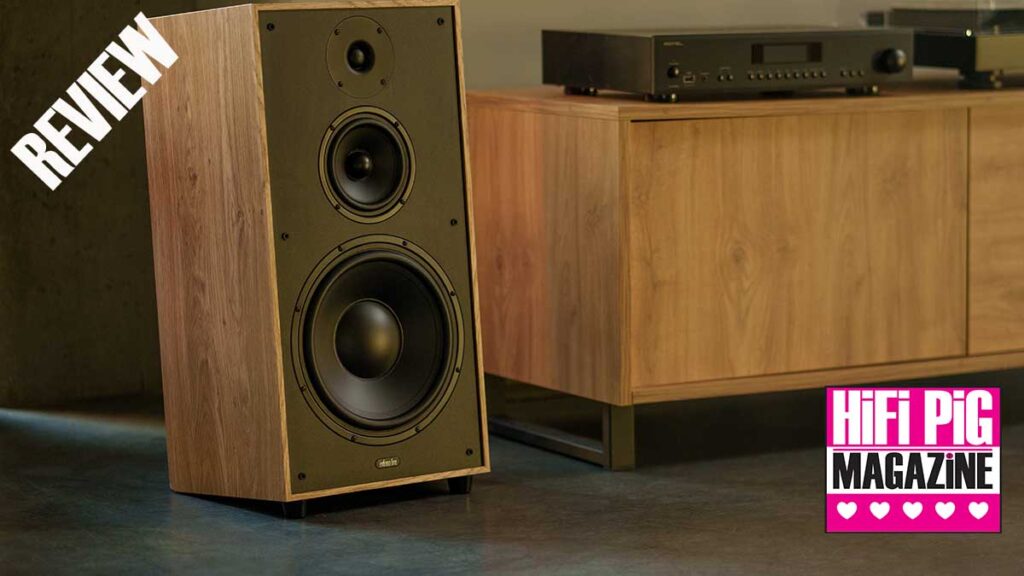
Indiana Line is one of those companies that needs much investigation and an explanation before writing about a particular product. Indiana is not from India, as I initially thought when I first heard about them many years ago; it is a company from Turin, Italy. That said, with the names of the USA states Indiana and Utah, made in China, and now owned by a Polish company, today’s high-end audio gets rather confusing, doesn’t it? So, let’s unravel it a bit before I start to listen.
It started with importing loudspeakers from USA loudspeaker company Utah in the early 70’s to the company Selectra from Turin, Italy (they also had the brand “Revac”). As the cabinets were so expensive to import (and that was long before Trump!), they started by just bringing in the drivers and then building the large speaker cabinets in Italy. The American company itself went to the HiFi graveyard in the sky, and Alcor, who took-over from Selectra, continued the brand in Italy, including producing their own products under the name “Indiana Line”. This name is very apt, not least because the area where Indian tribes in America were most pronounced was in the state of Utah. Their first loudspeakers included the 1x, 2x and 3x, using their unique Phenolic Ring Dome, gaining a reputation of exceptional linearity, high efficiency and low distortion, and the midrange speakers continue to use their light and stiff “Curv” membranes made from polypropylene which was extruded, woven and heat treated. Looking very much like the period Acoustic Research and JBL speakers from America, that retro look continues to this day, not least in the exceptional value Utah 5 at £699, up for review here. In 2006 Coral Electronic (interestingly using the same letters as “Alcor”) acquired the brand and much more recently the company was sold to their Polish distributor Audio Klan in 2020. The vast collection of speakers includes 7-ranges of floor-standers, desktop and ceiling speakers, plus centre and subwoofer models for your multi-speaker setup. With Polish research and development plus Italian engineers, the Utah 5 is making big sounds around the world.








BUILD AND FEATURES OF INDIANA LINE UTAH 5 LOUDSPEAKER
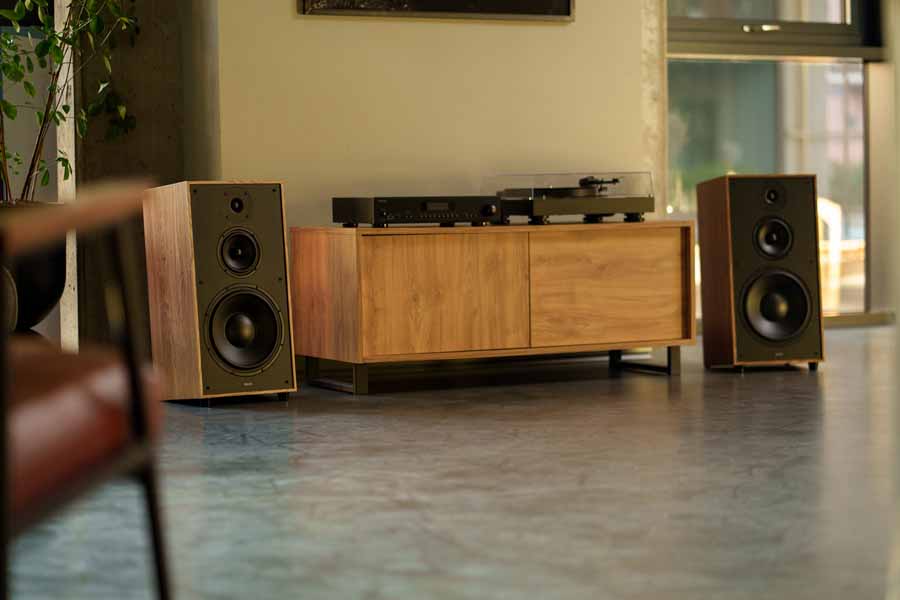
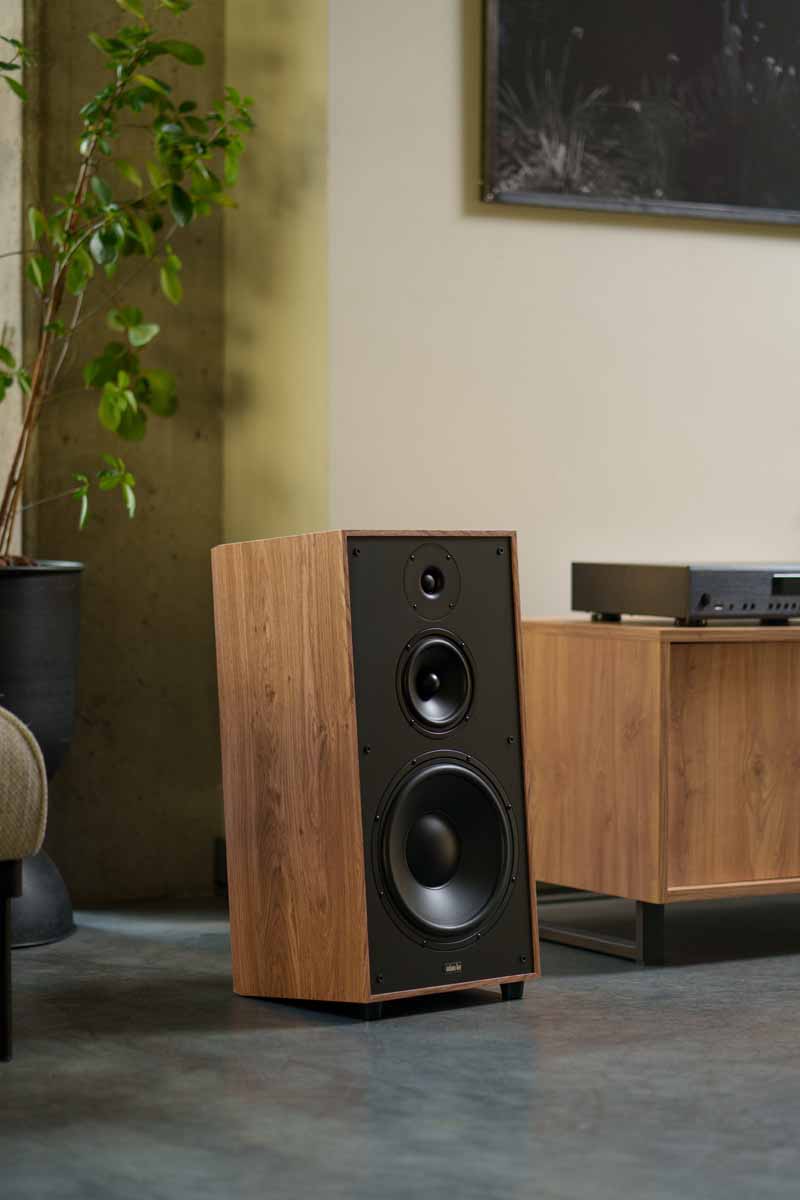
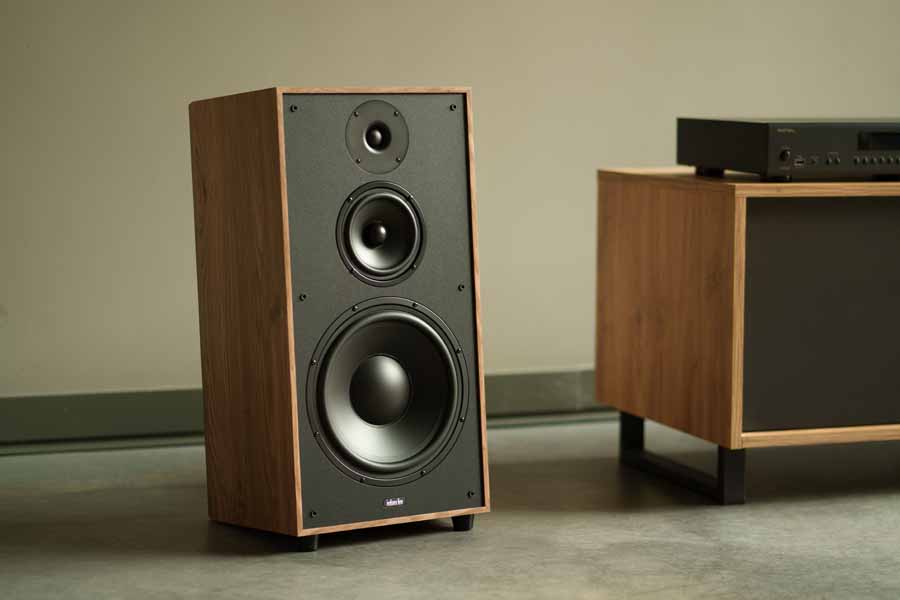
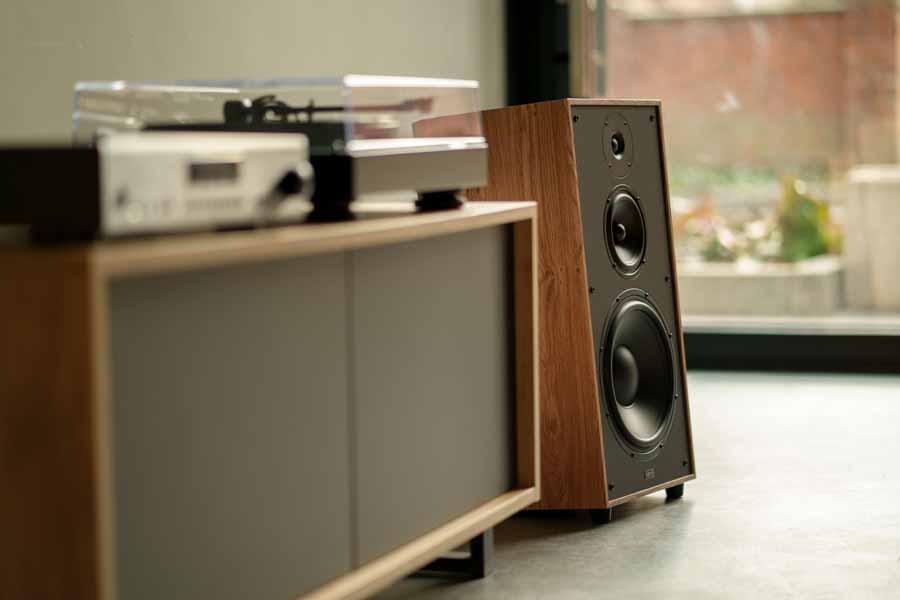
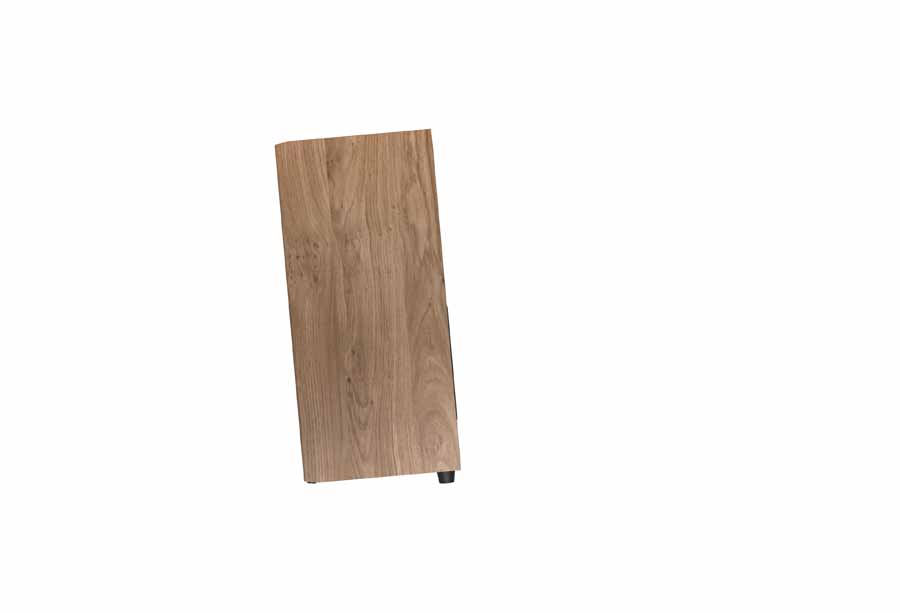
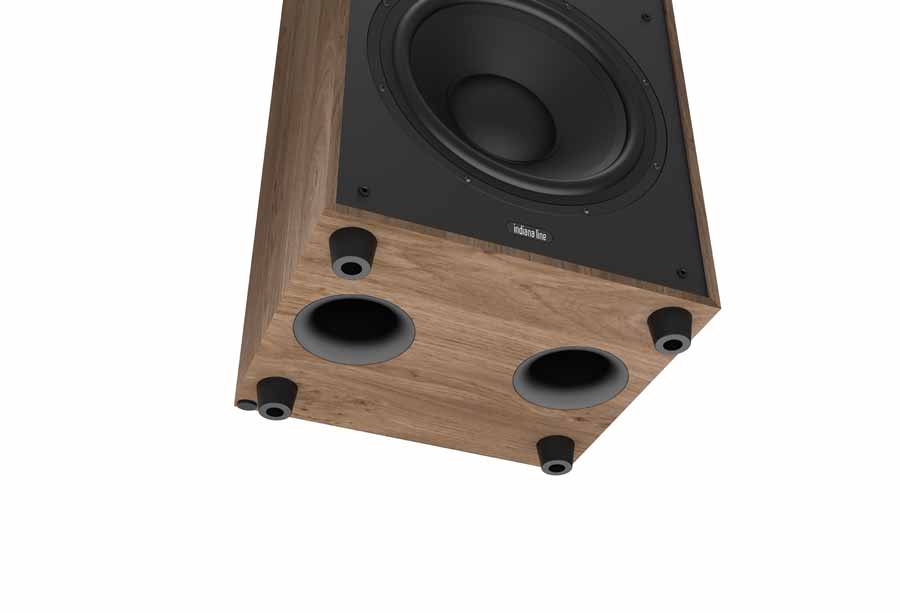
The Utah 5 is presently their most popular loudspeaker, and the smaller brother of the £1699 Utah 8, both floor-standing loudspeakers that perhaps look like they should be on low-level stands like my BC1s, especially as there are two downward-firing ports. The speaker comes with two rubber feet at the front and small rubber discs at the rear so that the speaker sits on the floor and slightly fires upward, but it is also provided with two more rubber feet should you wish to sit the speaker level on a shelf. As the tweeter is below your ear-level, it is necessary that it can be angled up slightly as well, so that the bass reflex can function properly. This is how I used the speaker for the review.
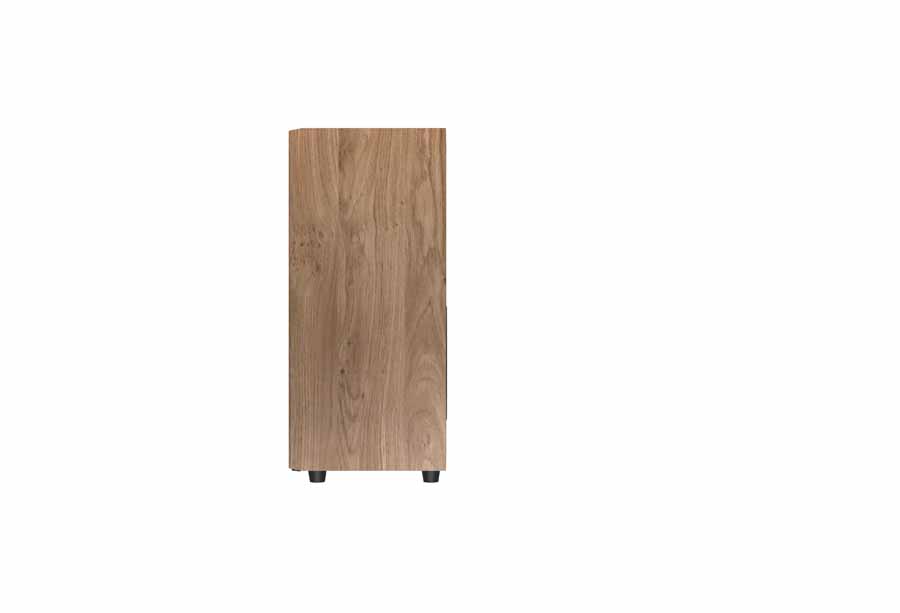
Using 18mm MDF with additional transverse reinforcements to keep that rigidity inside, plus plenty of polyester foam inside to stop resonance, the speaker is very rigid, though at such a cheap price there is the inevitable MDF cabinet resonance when placing your hands on the cabinet in loud music.
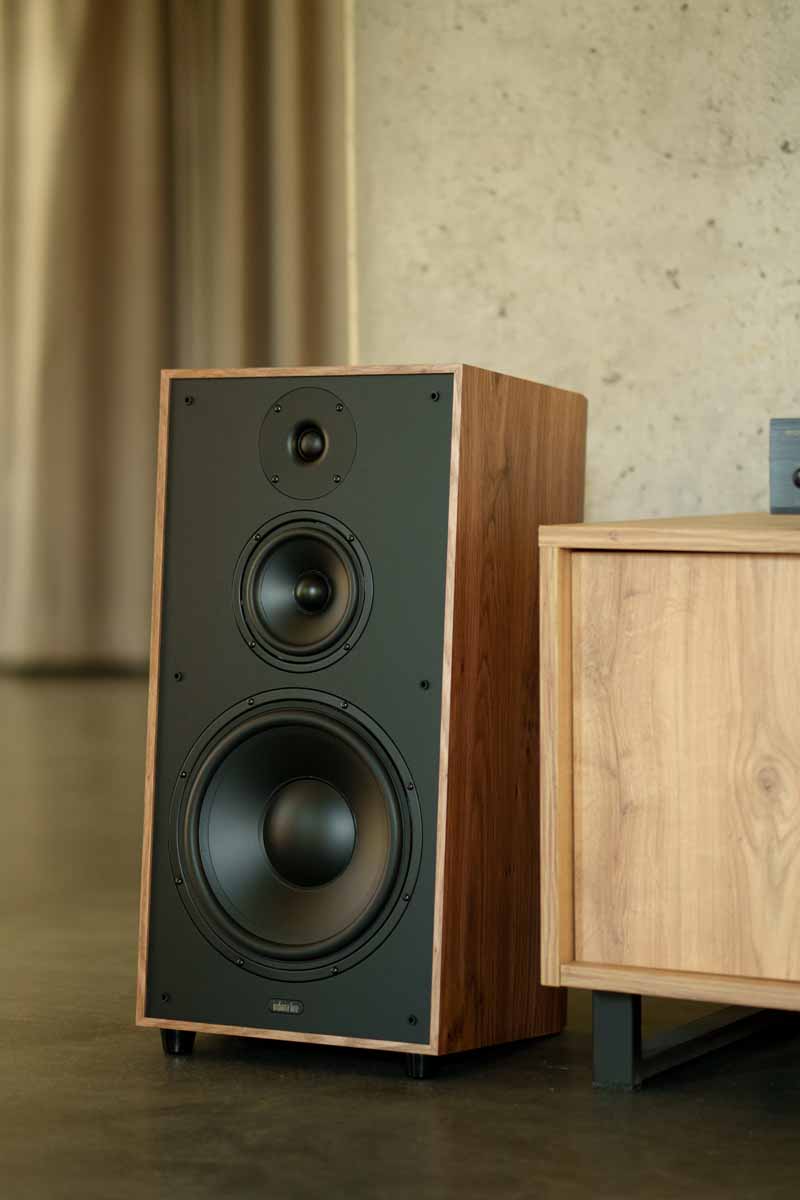
The drivers are of significant size, reminding me of all those massive floor-standers from the 60’s and 70’s from companies like Wharfedale, Acoustic Research, and Tannoy. The bass has a 10” (270mm) polypropylene “Curv” membrane with significant rigidity to dampen any resonances, a similar 5” (150mm) midrange unit operating in a separate and well-damped chamber, plus at the top a newly designed neodymium-motor 26mm textile dome tweeter. With a simple crossover, based on that seen in other top-end Indiana Line models (such as Tesi 6 and Diva 6) it has crossover points at 500Hz and 2.6kHz. That upper point is just below the 3 – 3.5kHz that I regularly see and don’t like, just where those important vocal and violin frequencies come to life.
The cabinet is very tidy, and available in black-oak or light-oak finishes, with a black front baffle. The cloth cover can be a little hard to fit (it is not a simple magnetic system, as is regularly deployed in more expensive loudspeakers, as there are 6 “studs” per grille to line-up. Not so easy in the dark!).









With a sensitivity of 94dB this is a very efficient speaker, usually found in systems with big drivers, and the dual port underneath provides extended bass down to 38Hz.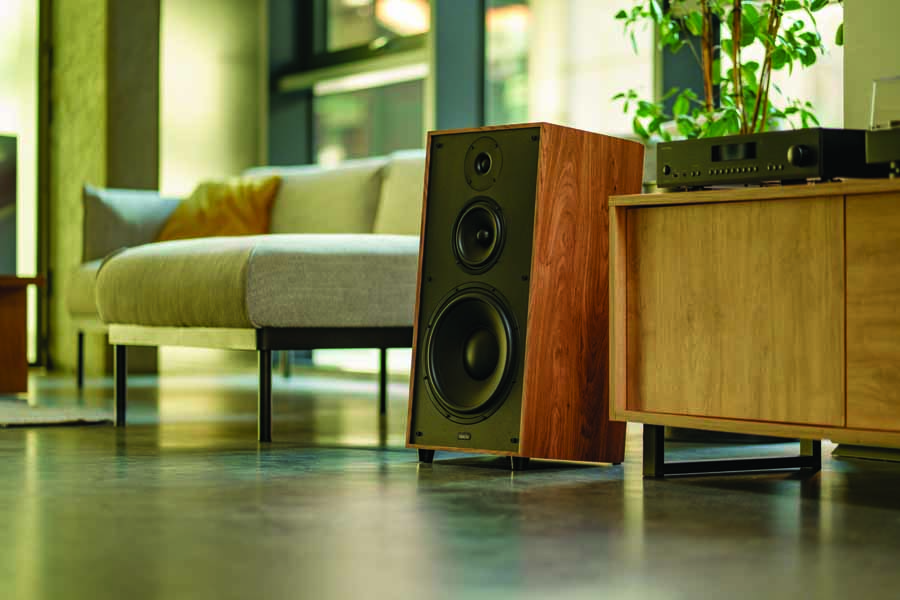
SETUP AND USE
For the review I mostly used my American Krell 250W SS power amp, plus a KT88 tube Synthesis Roma 98DC 80W amplifier from Italy. The speakers are designed for use with 30-160W amplifiers, though with their sensitivity, even my 10W Leak Stereo 20 gave a musical and full performance. With speakers toed in, 2.5m apart and angled up so that the tweeter was almost at ear-level, I initially used the speaker with the cloth grille fitted, but felt better imagery with it removed. Sources included BT, vinyl and reel-to-reel. Cabling from TQ.
SOUND QUALITY
The first piece of music to automatically start playing when I switched on my Qobuz via a Bluesound Node streamer was “One of the Few” from Pink Floyd ‘The Final Cut’. I had obviously recently used it in a review. I always find the first few seconds of listening to any review equipment gives me so much information about the product. We tend to prefer bright and loud sources to others when we do A-B tests, but that initial few seconds might not actually be preferable in the long run in terms of honesty or fatigue. When our eyes are guided to humongous 8K TVs in Curry’s with brightness and contrast off the Richter scale, we actually forget that not only is it unnatural. Whilst sunglasses might aid that scenario, in music, our ears and brains are so clever that they analyse what we hear and adjust our listening level and frequency settings. So, when I started to play the track, my initial thoughts were of large extended bass, an amazing atmosphere and a slight “boxiness” to the sound. Well, compared to my 170mm bass Arc speakers, that is not surprising. However, as me and my brain began to take in the music and a new listening environment with speakers on the floor angled up to me, I actually began to realise just how right the sound was. In this and the next track, “When Tigers Broke Free” with its repeated bass drum beats, my brain could capture the sense of the fear of soldiers going in to battle. Similarly, the bomb blast at 15” into “Get Your Filthy Hands Off My Desert” was strong enough to alarm anyone who might have been walking past my house. This speaker doesn’t take prisoners, but gives as good as it gets. With the speakers angled up and with the front dust cover on as suggested in the manual, I was reliving my youth with the sounds from my JBL L100 or Wharfedale Glendales. That initial worry of the slight boxiness was actually forgotten now as my ears immediately took in the music. No, it wasn’t perfect, but for £699 I was actually mightily impressed. As the ports are downward-firing I could place the speakers close to the wall without an issue, and the 1” gap at the front for the bass extension to exit under the cabinet, just seemed right. 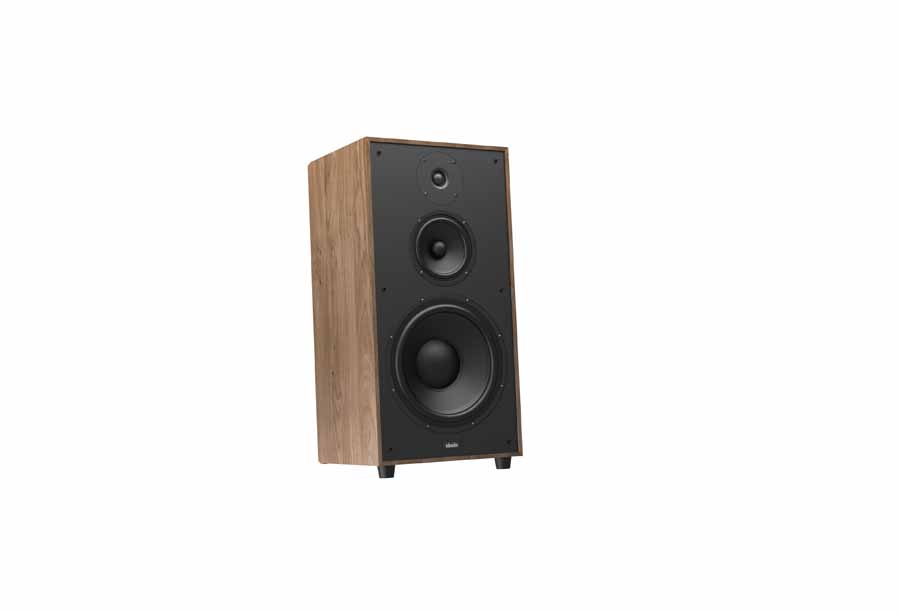
Nina Simone’s ‘Pastel Blue’ from 1965 has tons of double-bass power to add to the weighty upright piano and her gentle vocals, and the Utah 5 didn’t lose any control of those low frequencies, whilst the cymbals in “Be My Husband” could also show off the top frequencies, too. The instruments really give off a mighty 1960’s jazz sound, all aided by the excellent soundstage and atmosphere. To be honest, I expected an overpowering bass end from these 10” bass speakers when I got them out of the box, and that just wasn’t the case. These are well-balanced speaker drivers.
Patricia Barber’s equally “jazz club” sound in the track “The Thrill is Gone” was also surprisingly well focused, and top-end extension from the ride cymbals plus the atmosphere gave a solid sound-painting of a cigarette smoke-filled jazz club in New Orleans. Similarly, the space and atmosphere in Ray La Montagne’s “For the Summer”, whose style is typically that of the 1970’s despite his first release being in the 2000’s, made my living room more like a concert hall stage. With his gentle raspy and weathered voice plus wired acoustic guitar, electric guitar and drums, at times the Utah 5 slightly lost control of those lower frequencies. Technically, it is understandable that adverse vibration in large diaphragms can add to the sound signature – when lightweight, smaller drivers and electrostatics would keep sounds pin sharp and fast – but I was actually quite impressed at the control from the massive polypropylene bass unit due to its inbuilt rigidity. Only when playing my 15ips copy of a copy from the iconic Beatles ‘Abbey Road’ master tape through a Sony TC-766-2 tape recorder showed just how you really do still need to spend tons of money on speakers to get a totally accurate and full sound. The very forceful and clever percussive bassline rhythms in “Come Together” show just how carefully speakers need to mechanically perform to get this music sounding totally accurate. However, all the different guitar and organ lines plus the vocals really did all ‘come together’ to give me an enjoyable and solid performance. My favourite track, “Something”, just lacked the attachment between me and the music, largely due to the speakers being positioned so low, though raising them would probably have solved the issue. My removal of the grille did improve the top-end detail enough to provide a clearer soundstage so that I could become part of the history of this great album. Angling the speakers even more improved that ability still further. “Octopus’s Garden” showed off a greater depth to the soundstage, such as the honky-tonk piano at the rear and vocal accompaniment at the front, and the openness in “You Never Give me your Money” and “Because” illustrated just how good the speakers are in providing sensitivity in terms of placement, transients and atmosphere – and this was better with the grille removed.
The speaker’s looks and history are clearly set in the 60’s and 70’s, and the aged pop and jazz that I played really did give me a sense of that history.
Whilst the Utah 5 played rock and jazz with glowing conviction, classical music was also well catered for from this speaker. The first symphony by Brahms starts, like the Pink Floyd and Beatles tracks, with bass-drum beats setting the mood. A new version conducted by John Eliot Gardiner (Amsterdam Royal Concertgebouw Orchestra, 2025) is actually his second attempt at the 4 symphonies from the composer. The opening movement is quite hard to perform or to listen to due to its complex musical presentation of string and woodwind melodies and rhythms. I have performed it many times as a viola player, counting every bar in my head so that I could fit all my notes with the other instruments like a jigsaw. Therefore, it’s important to have speakers that can display all these melodic and rhythmical lines in such a way that you can take it all in clearly. The Utah 5 gave a good sense of fluidity in this rhythmical and thick timbred movement, his take on advancing what Beethoven had just done in his great symphonies 63 years earlier. The last movement of the 4th symphony is conversely very light and the performance here was well controlled and transparent, with great control whether that was in the bass, mids, or tops. The ends of notes were allowed their full time to decay in this “Back to Bach” style of work. Conversely, Amy Winehouse’s ‘Back to Black’ track “Rehab”, however, proved that a little bit more tact was needed to enable a musically engaging performance. This might again be 60s-singing style, but the forcefulness of the music, especially in the bassline, needs considerable speaker restraint and sensible listening levels to pull it off at its best. The music itself might be iconic but the sound engineering is perhaps unsuited to showing off top-end HiFi equipment, but luckily the extra tracks in the “deluxe” version are much better; this more restrained version of “Valerie” gives a greater sense of distance between the electric piano, guitar and drums, and permeated space and emotion from her emotionally charged persona. The reggae “Cupid” was more powerful, especially from the drums, but had a bigger soundstage and atmosphere than I am customarily used to in my living room, with an excellent smooth midrange.
QUIBBLES
My only criticism at this price is the front grille not having a magnetic fixture, however, that might introduce vibrations if not strong magnets.
CONCLUSION
At £699, the Utah 5 offers many bass-inches and dB’s for so few pounds. If you can work with large angled speakers in your living room and have clear space in front to allow the music to radiate unhindered by coffee tables, then you will be very happy. It covers all types of music with great soundstage and energy. If you like great basslines and don’t have neighbours this will be a great choice of speakers for such a low price.
AT A GLANCE

Build Quality and Features:
Basic and tidy construction with sensibly angled rear cable sockets (remember the speakers themselves are probably sat at an angle) giving easy access to those with bad backs
Sound Quality:
Extended bass power from a gigantic 10” driver, but can also be very gentle where appropriate, and musical mids/top
Value For Money:
At £699 for such a big and bold product I kept having to check that I hadn’t misread the price
We Loved:
Lots of musical presence from just 2ft-high boxes
Bass extension and grunt
Excellent soundstage
Highly efficient at 94dB/m
Competitively priced
We Didn’t Love So Much:
That bass-end could be slightly uncontrolled in highly motivated music
Elevator Pitch Review: Loudspeakers these days have a very interesting genealogy, and Indiana Line is no exception. With American names, American origins and then Italian birth, Polish adoption, and Chinese construction the Utah 5 has considerable air-miles at its fingertips. At £699 for a 3-way floor-mounter with 10” bass and two downward firing ports, I did wonder if I had misread the asking price, as this was a speaker that had plenty to shout about, and boy, was I glad to give it a listen. With 60’s looks and 60’s music at my fingertips, I relived my childhood and felt much younger at the end of it!
Price: £699
Janine Elliot
SUPPLIED BY REFERENCE AUDIO DISTRIBUTION
SUPPLIED SPECIFICATIONS
Technical specifications:
Alignment: 3-way floor standing
Acoustic loading: lower bass-reflex
Drivers: tweeter: 26 mm, textile dome, mid-woofer: 150 mm, woofer: 270 mm
Frequency Response: 38 – 22000 Hz
Sensitivity (2.8 V/1 m): 94 dB
Crossover points: 500 and 2600 Hz
Amplifier impedance: 4 – 8 ohms
Recommended amplifier: 30 – 160 W
Dimensions (H x I x D): 620 x 320 x 295 mm
Weight: 14 kg
Color: black oak or light oak