AVID HIFI Relveo Turntable

























































AVID HIFI RELVEO TURNTABLE REVIEW
AVID HIFI’s Relveo Turntable costs just shy of 7K and is part of the British manufacturer’s Master Series of vinyl spinners that also includes the Acutus Dark Iron, and Ingenium Plug and Play. Janine Elliot takes a listen for HiFi PiG.
AVID has been a name I have grown to love over the years; learning a lot about the mechanics and science behind their turntable, amplifier, loudspeaker and phono-stage design each time I have been fortunate enough to “take them apart” in my reviews. Conrad Mas has been designing HiFi and other equipment since 1995, and is based in Kimbolton, near Huntington, Cambridge – the capital of famous HiFi names from the past and present, plus a few of the greats, including 3-letter “inventions” like DNA, IVF and, the most important, OXO – the first graphical computer to do noughts and crosses. His engineering empire has included making fixtures and fittings for both audio and auto, and not just his own HiFi. His past included working in a foundry to learn about the casting of metals, and even a career in insurance and glazing, plus the HiFi names of Musical Fidelity and Acoustic Arts, the latter operated from a building I passed every time I went for piano and violin lessons at the Watford School of Music as a child. From his inquisitive mind at the age of 16, trying to improve his stock Connoisseur BD1 and Acos Lustre arm, he has taken turntable design to a completely new level. What Conrad knows about audio would take volumes to notate, and what I really like is that he is never satisfied with “OK”; His products are designed to be the very best in their particular range, and the price tag only arrived at the very end. The Relveo is therefore not just another turntable. This enters his range specifically to fill a gap.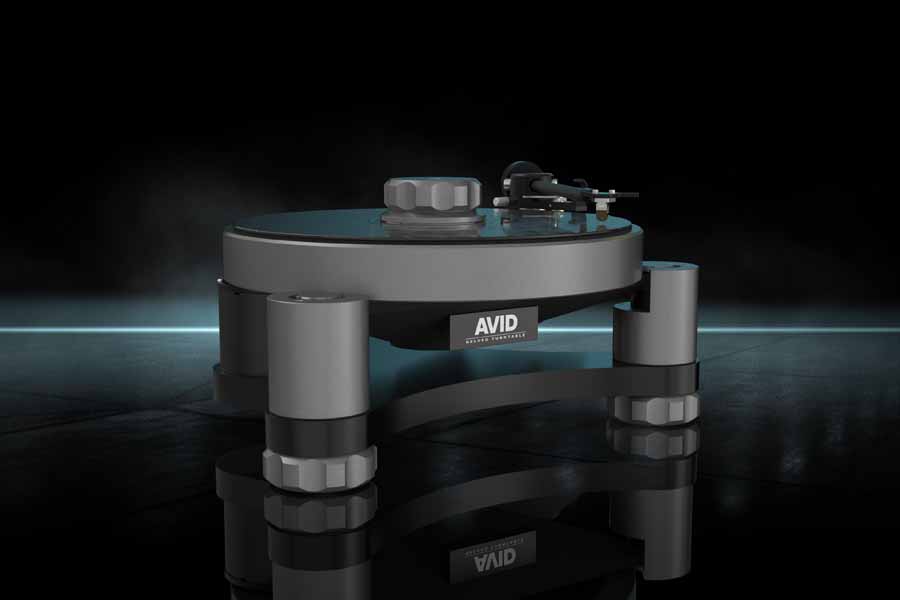
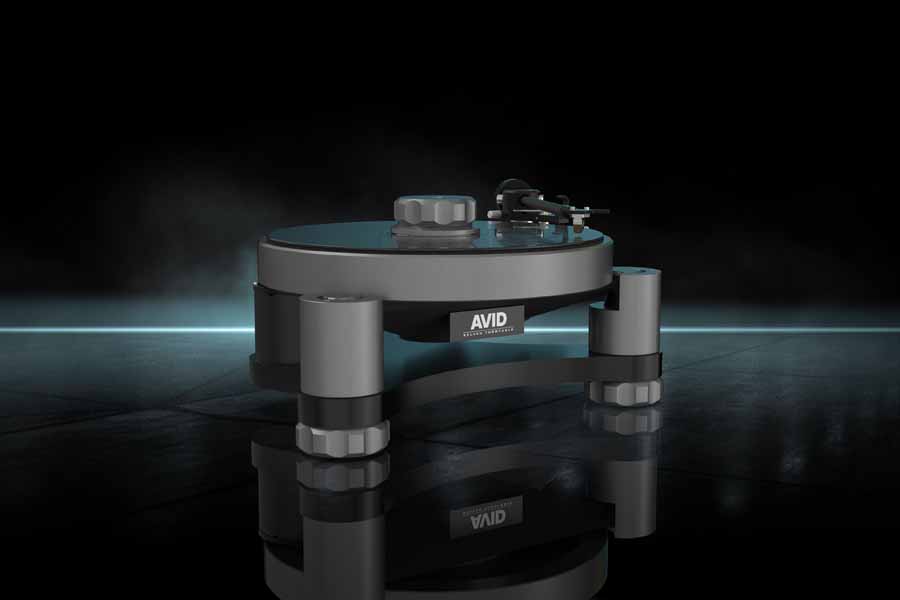
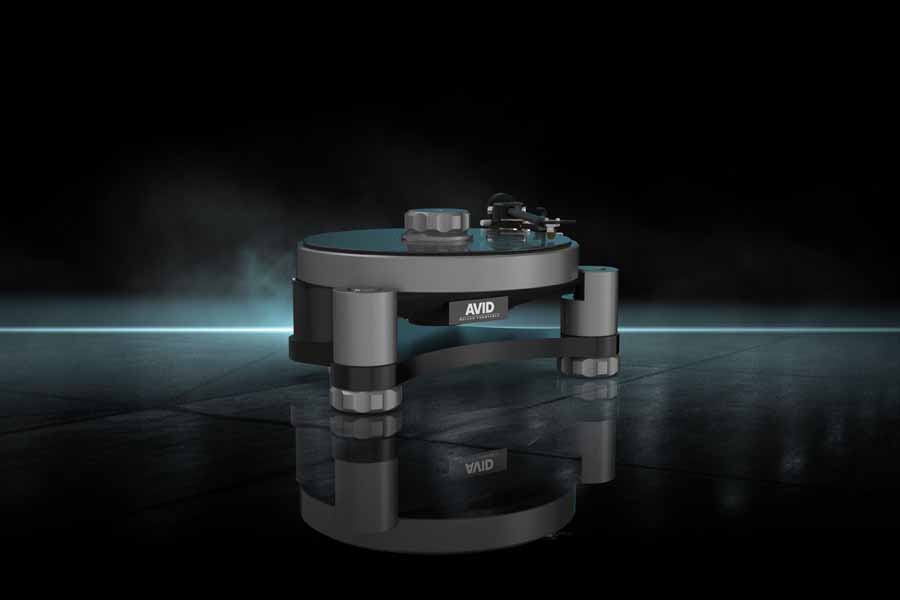
Let me explain: with three ranges of turntables, they fit into two departments – the “Master Series” and the “Statement Series”. At £6,900, the Relveo fits neatly into the Master Series, carefully sat between the Dark Iron Acutus (between £10,000 and £13,000) and the entry model Ingenium at £1500. The Statement Series (from £10,000) includes the chrome Acutus series of Classic, Reference and the Mono Reference. The new model-choice architecture is simpler and therefore easier to traverse; as Conrad put it to me; Imagine standing outside a cake shop with 500 cakes in the window. How on earth could you make your choice! The Relveo, marking 30 years of AVID products, therefore replaces the Diva, Volvere and Sequel, using and improving on ideas from those spinners. Where the Ingenium (introduced way back in 2013) is a plug-and-play turntable, removing the need to spend hours setting up and nail-biting worries, Conrad refers to the Relveo as a “hi-end plug and play”. Set up is almost as simple, and if you read the excellent instruction manual or download the QR-code videos, it will show you everything from unpacking to switching on (see SET UP AND USE later). In discussion with Conrad, we both came to the conclusion that there are only two types of vinyl fans; those who want an easy set up and simply want to play their disc (they perhaps fit into the “Master Series” of customers), and others who are technically competent and keen enough to spend hours and hours setting it all up to get the sound to be absolutely perfect. Alas, this, the “Statement Series” of customers is not as profound as it was when we both first got our hands into HiFi in the last century. Therefore, the Relveo, AVID’s first “all new” turntable design since the Ingenium, is designed for those who don’t need to spend so much time setting up, and whilst considerably more complex in design than that £1500 turntable is “not going to scare them”. Conrad’s focus on the wellbeing of the customer even extends to creating a set-up video that even shows you how to put all the turntable pieces back into the box should you ever have to do that.
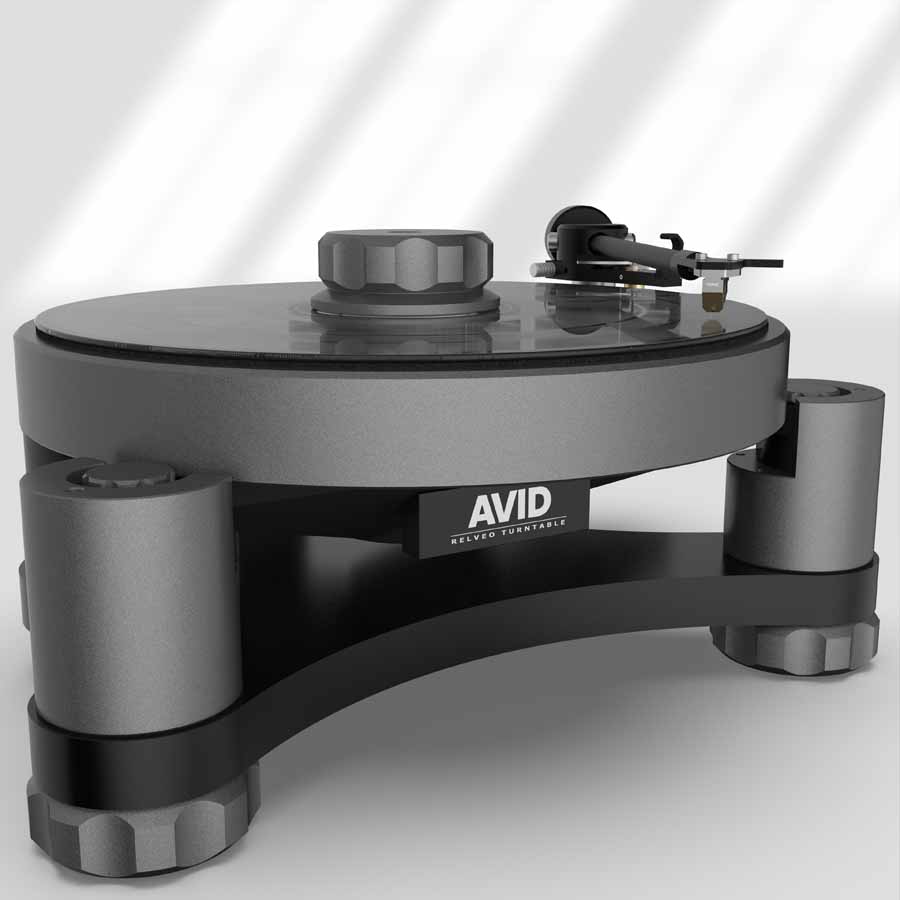
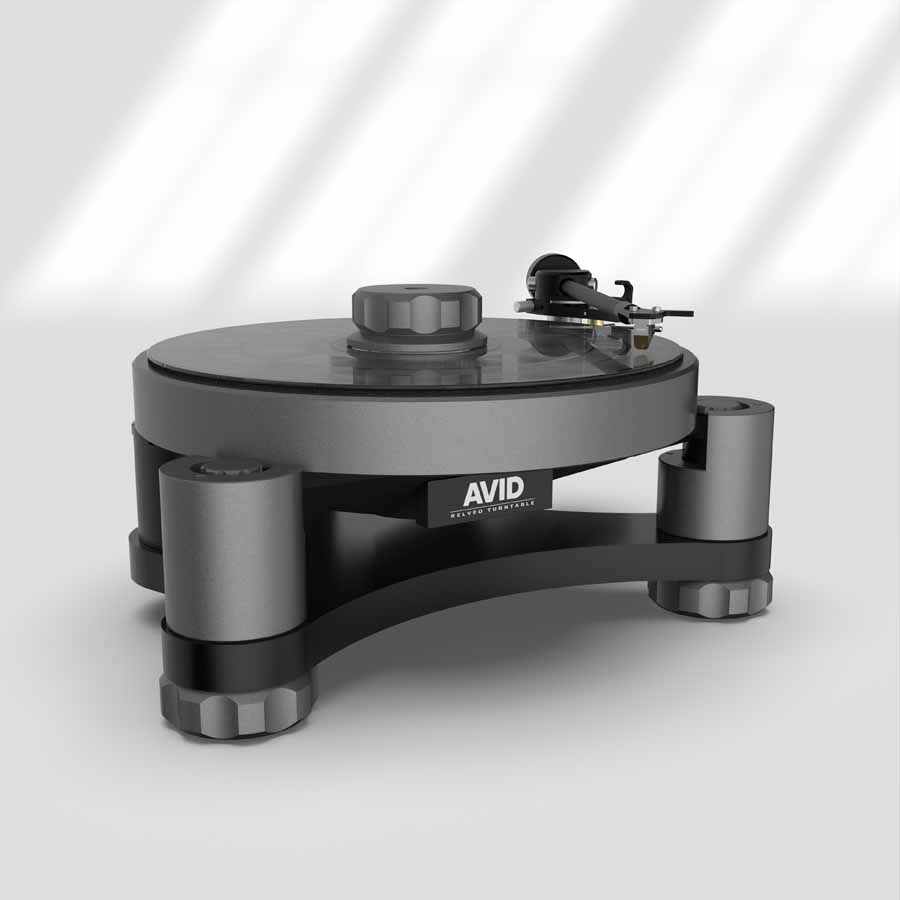
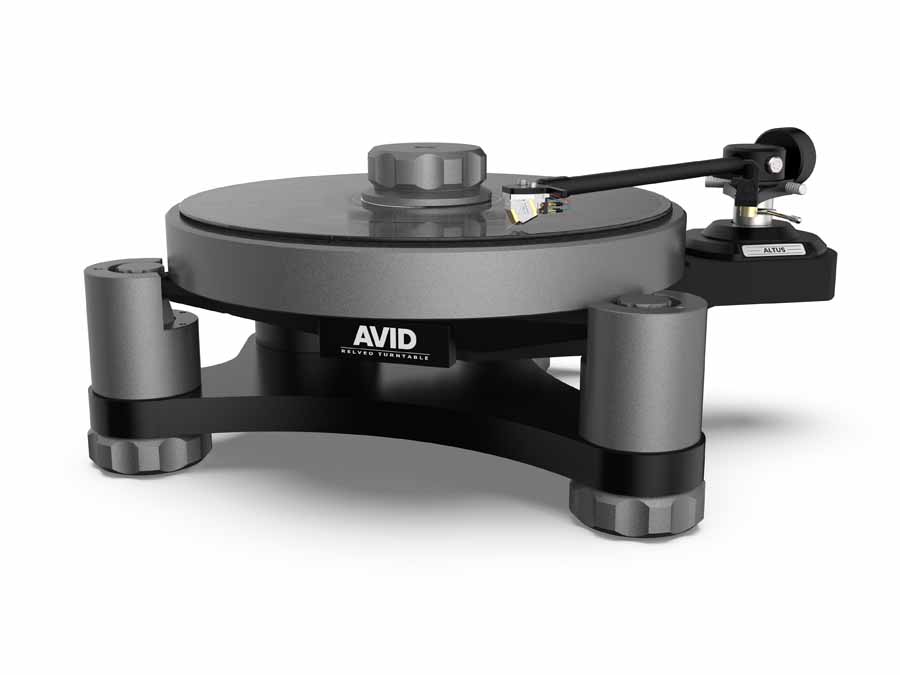
BUILD AND FEATURES OF RELVEO TURNTABLE
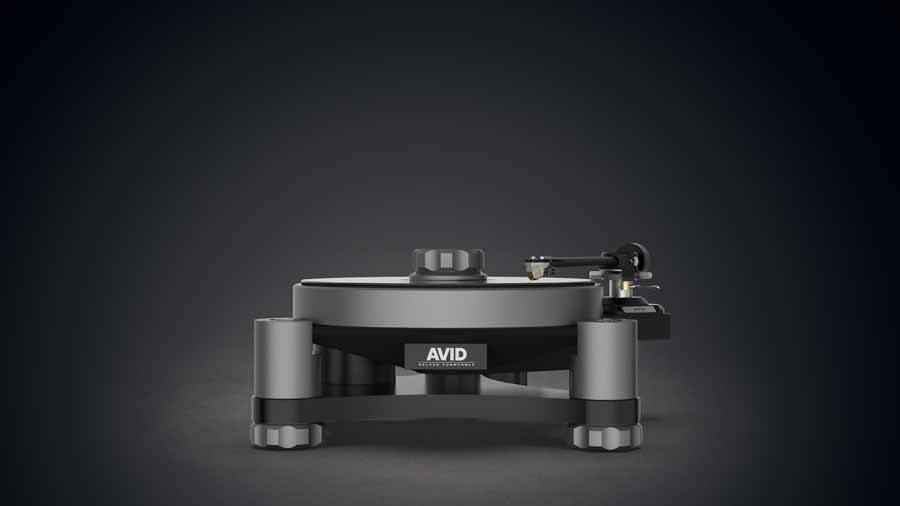
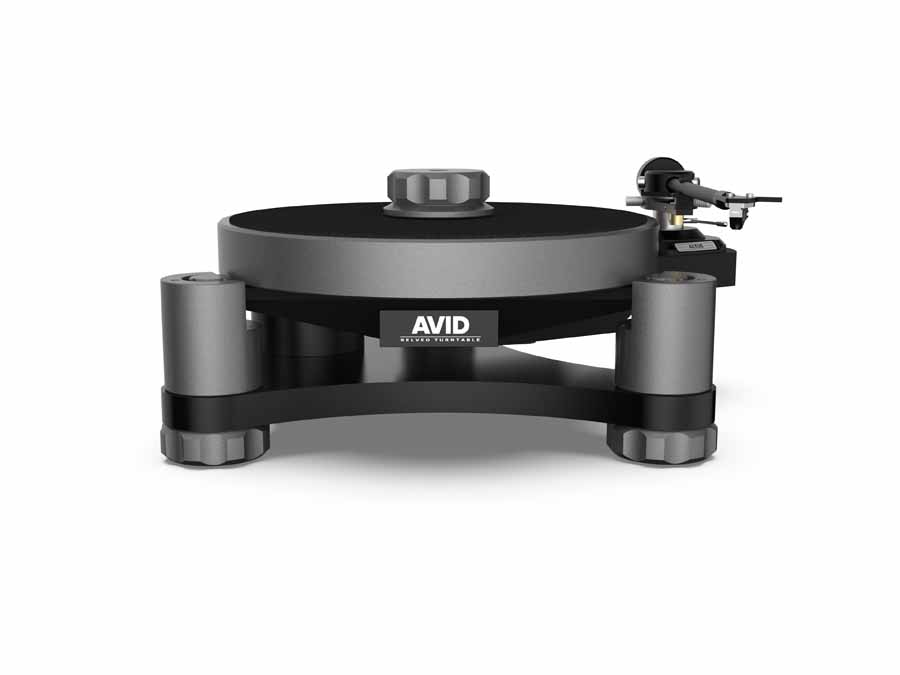
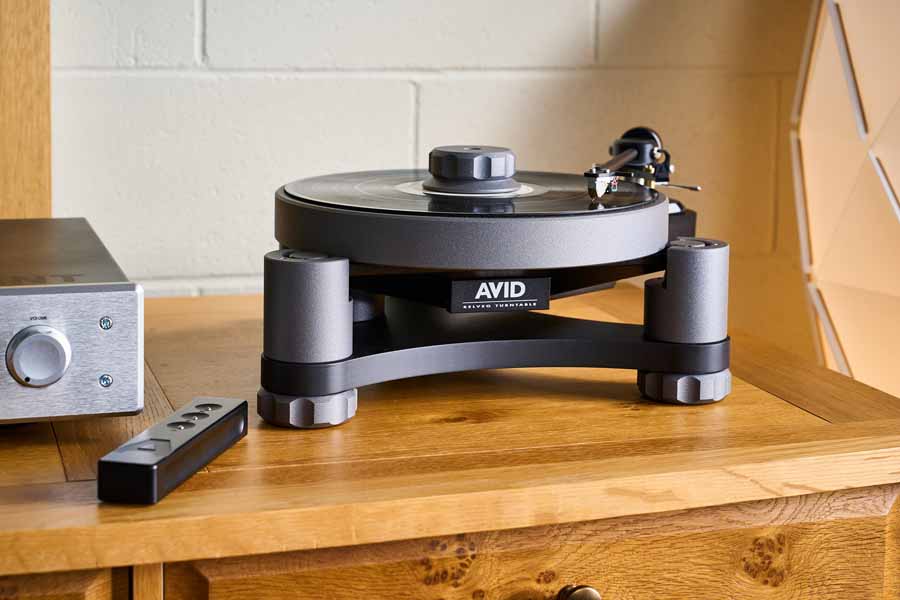
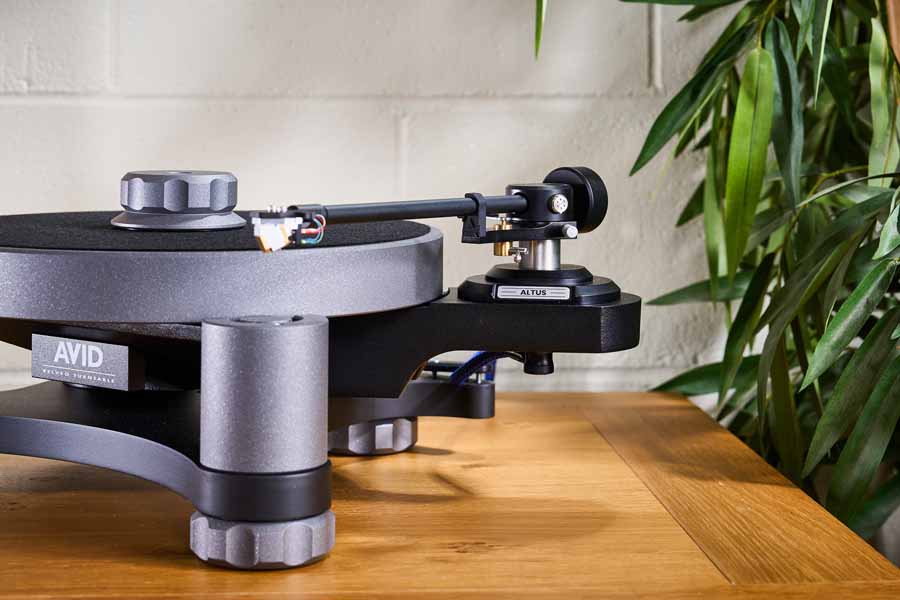
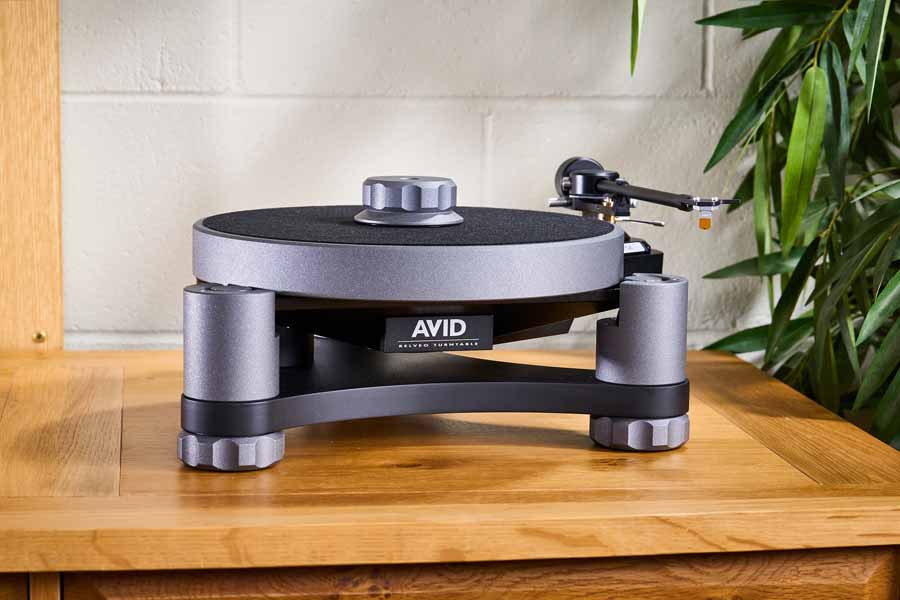
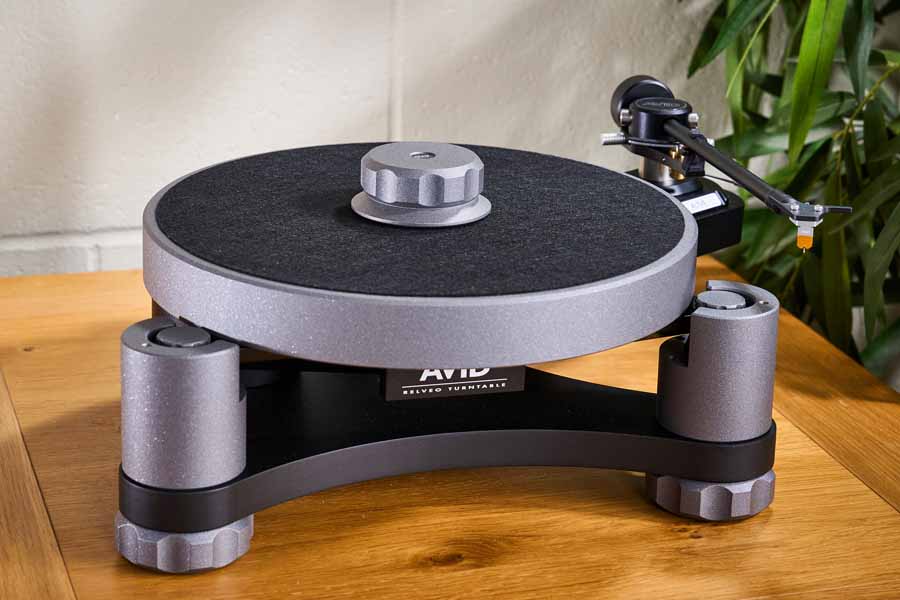
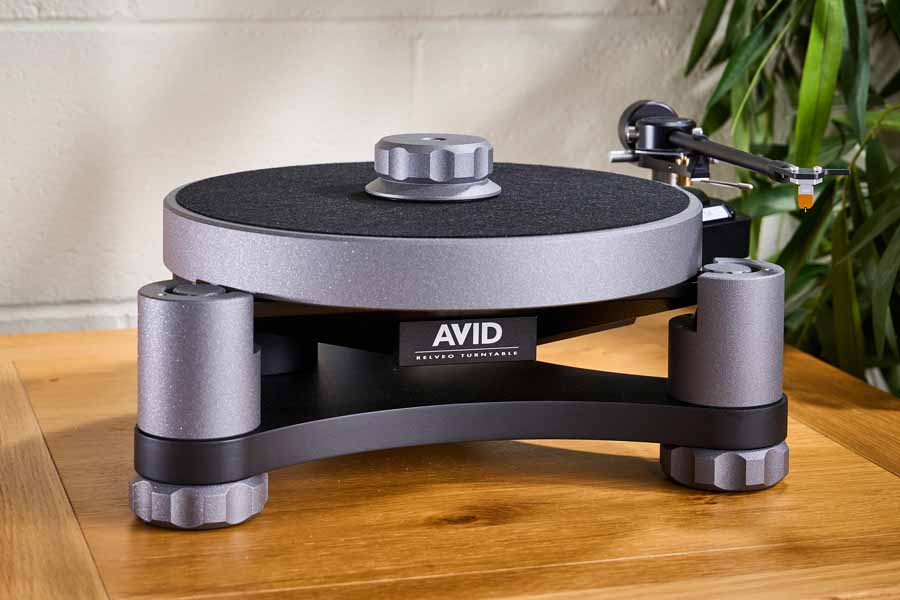
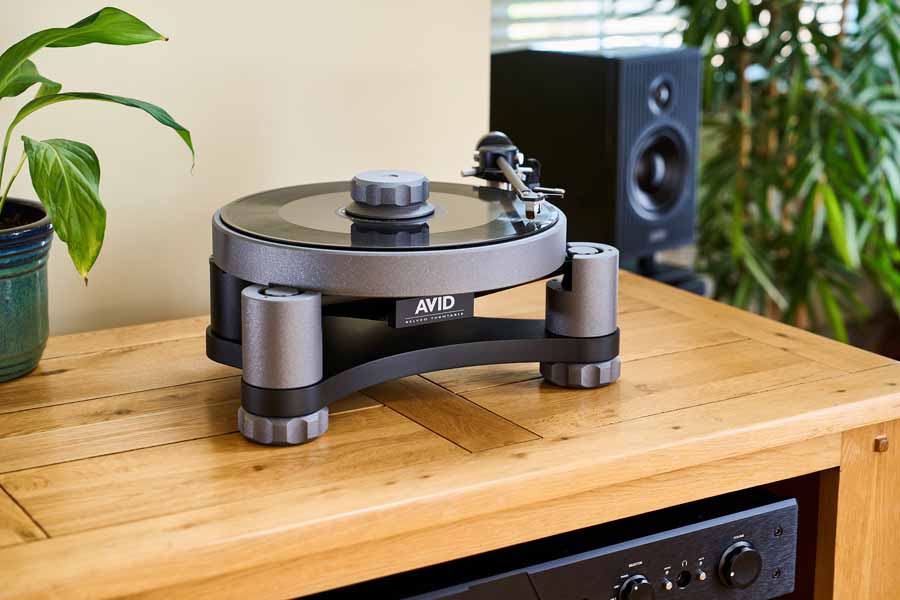
Conrad’s experience with the Connoisseur BD1 and Acos Lustre arm of the 70’s – at the time an archetypal duo for the bourgeoning audiophile – led to him realise that the real enemy of the turntable wasn’t just rumble or wow and flutter, but predominantly the suspension. Whilst the Relveo doesn’t deploy the spring suspension system of the more expensive Dark Iron and other Acutus turntables, it is no-less cleverly designed. It has the same rigid chassis structure with suspension via conical Sorbothane members inside the suspension housing on the three unmistakably AVID feet. Sorbothane is a high-absorption elastomer, which effectively dampens both vertical motion and micro-vibrations. This makes the Relveo particularly suitable for rooms with suspended floors; turntables with sprung suspensions are more likely to be affected by the low-frequency vibration in wooden floorboards or badly sprung stands; the Acutus Mono Reference customer is therefore most likely to have researched and bought the appropriate platform. That said, when I reviewed the Dark Iron I purposely set the turntable bouncing up and down to show that the excellent design meant the stylus didn’t even skip a groove. The three feet are also adjustable so that you can level the unit, though there is no spirit level on this model to assist you. But, you can always buy the AVID Level 45 spirit level that sits on the spindle (therefore the centre of balance), and as it weighs 180g is exactly the same as a modern vinyl LP.
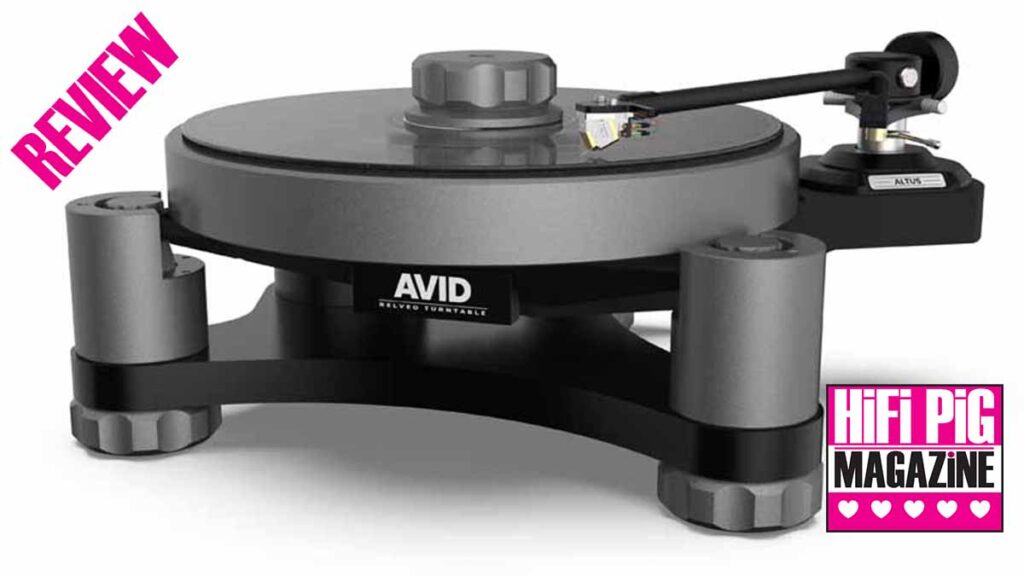
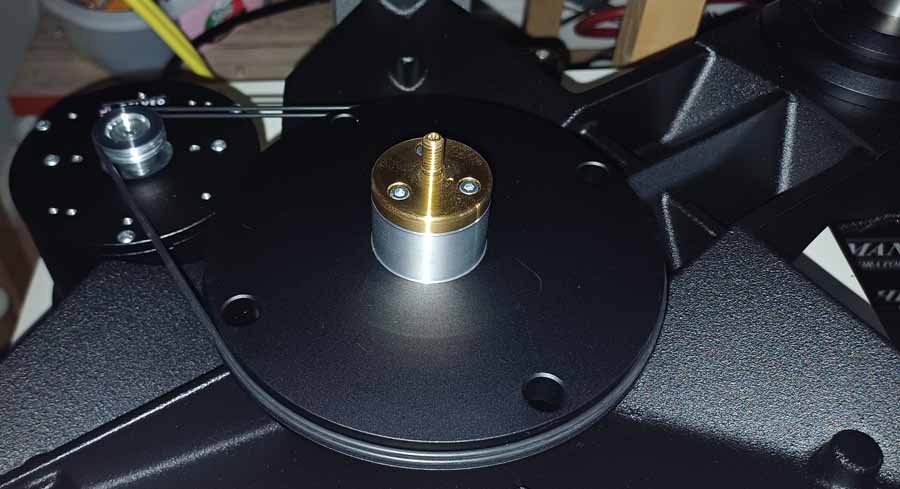
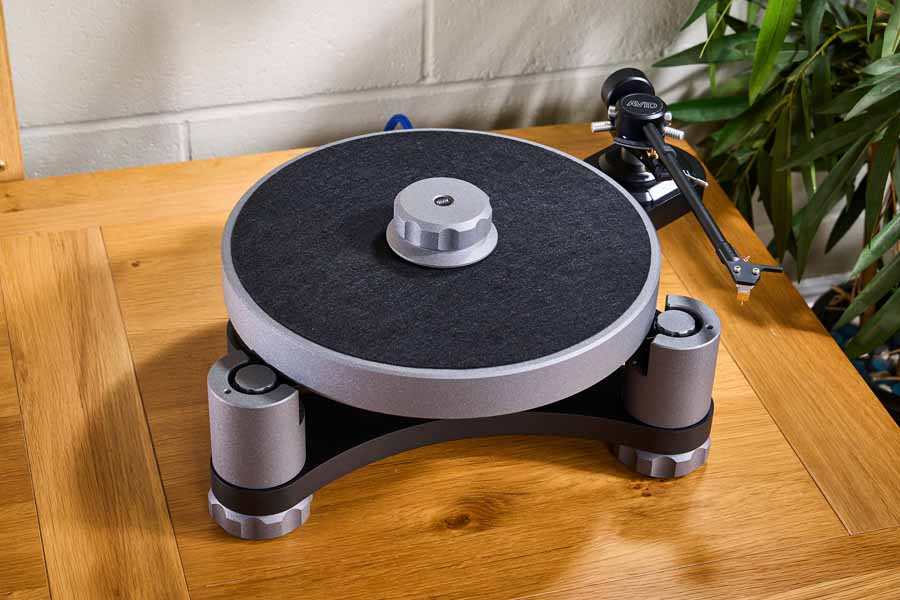
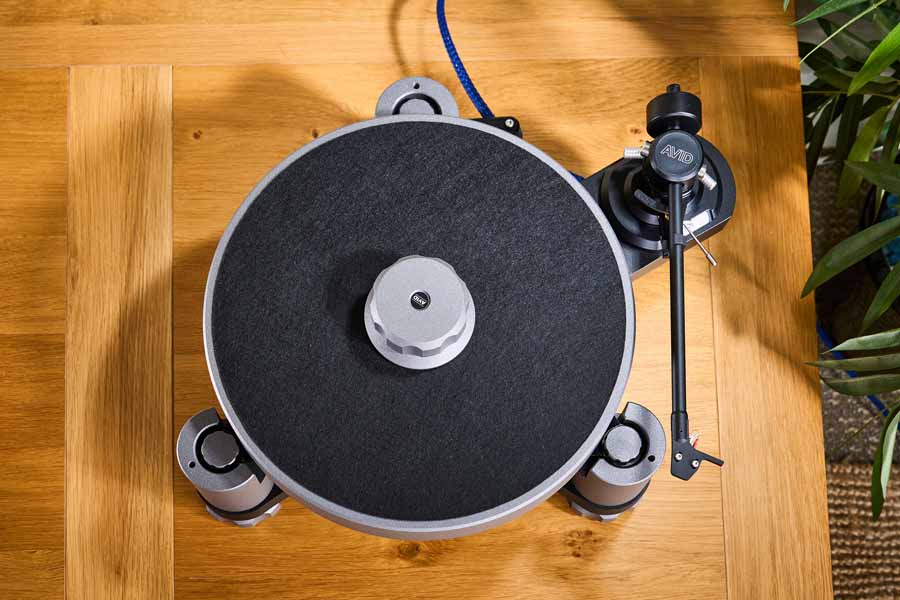
The platter is precision-machined and balanced from a solid billet of aluminium, and mass-loaded at the edge, giving it a high rotational inertia and reduced wow and flutter. The new resin-impregnated felt mat creates an interface that reflects vibration, keeping it in the record so it can pass through the spindle more efficiently. The coupling to the drive hub with its unique bearing, with no lateral movement, ensures there is no rumble that is common to other designs. The heavy platter fits onto the sub platter below, with 4 nuts to ensure it doesn’t slip. This platter is heavier than the earlier Volvere and Sequel, and twin belts connect securely with the brand-new 24V 12mNm AC synchronous motor. The motor is significantly more powerful than standard turntable motors, though it is less than that in the Volvere and Sequel. It needs two belts to revolve the platter; imagine a 2025 F1 sports car starting at Silverstone with thin 1950 car tyres, it just wouldn’t get very far quickly! The motor has very high torque, which allows for better timing in the music, and so music starts and stops are accurately positioned, as I am to find out later in the review.
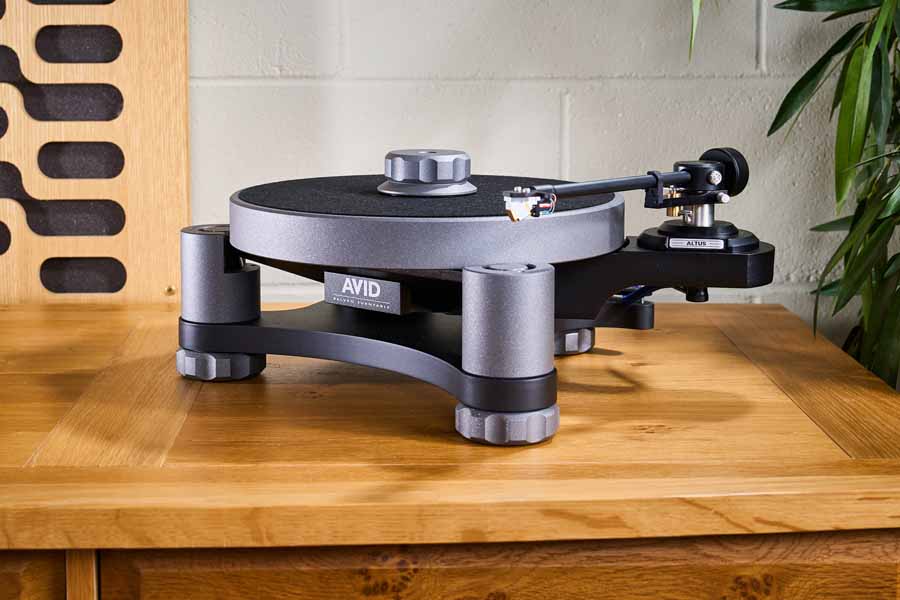
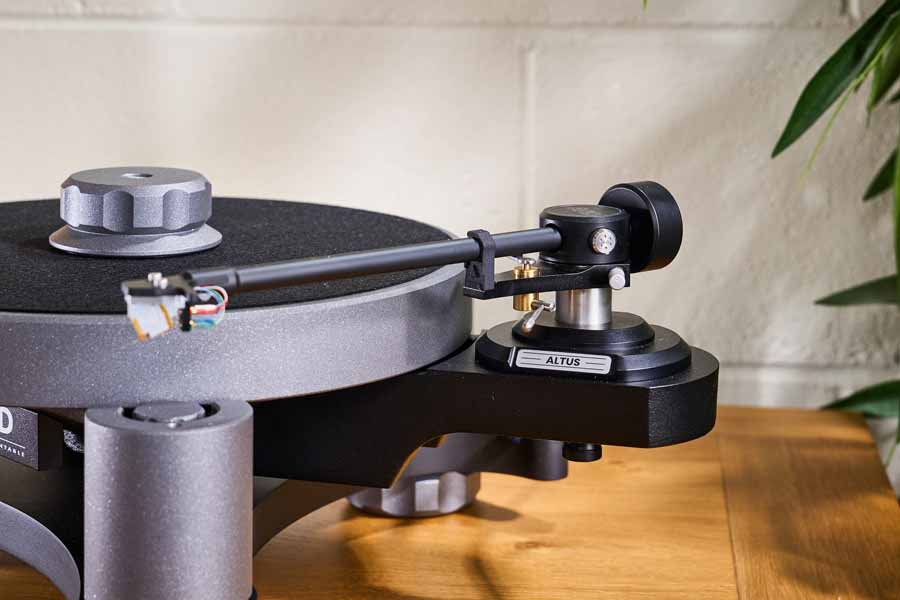
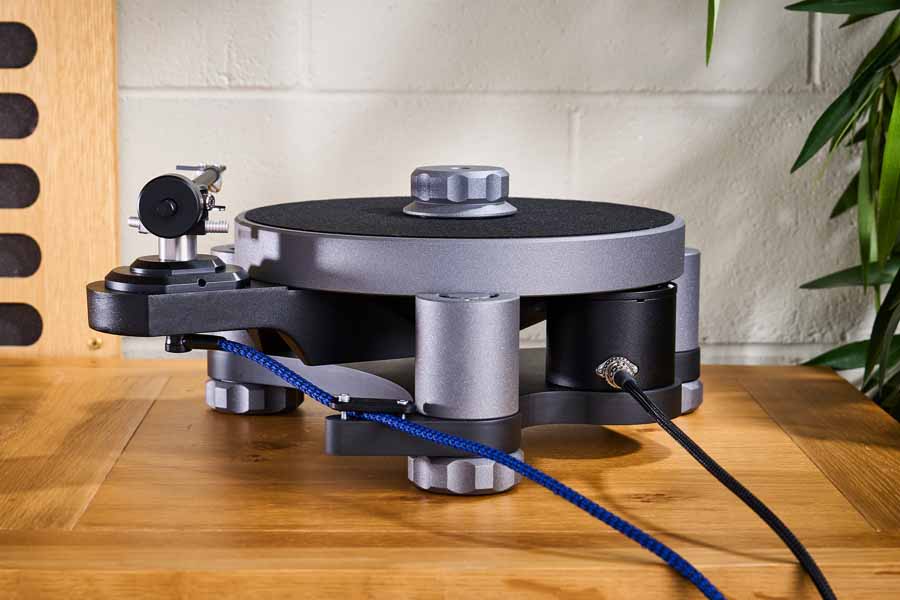
The turntable comes supplied with the Altus v2 tonearm, itself using ideas borrowed from their flagship models. It is equipped with micron-tolerance bearings and features their dual adjustable bias-compensation system adjusted on each side of the arm base, designed to ensure pin-point accuracy and musicality from the grooves from start to end of the record. Where most arms tend to have a single bias-compensation that can only get things just right at a single point on the record, Conrad has solved that issue.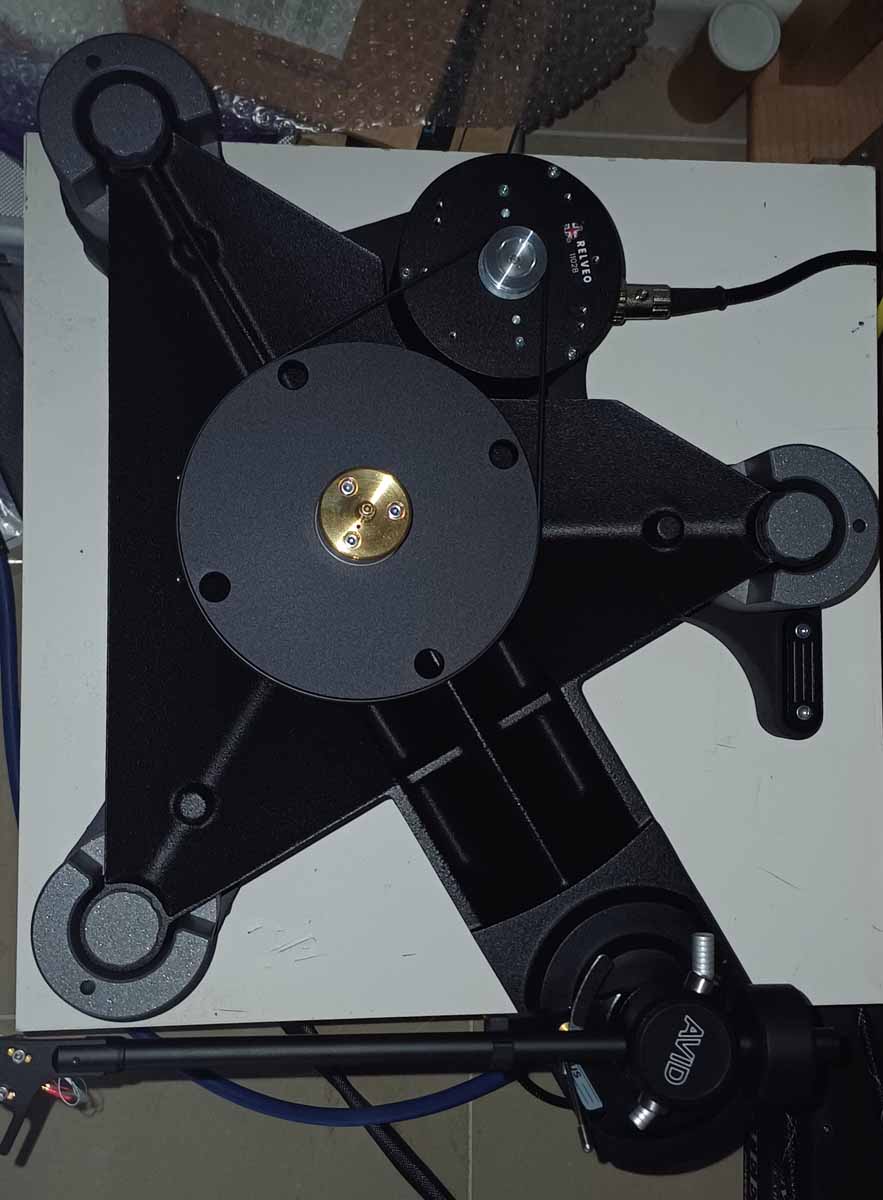
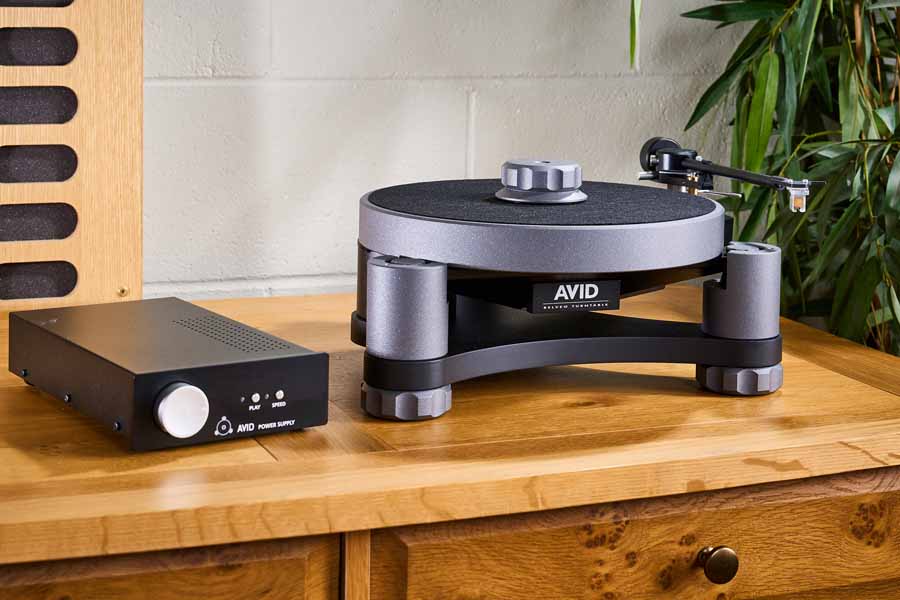
The power supply unit is an essential part of the kit, and with its distinctive AVID off-on knob that wouldn’t look out of place in a Frankenstein’s Monster film, I knew that the motor would come to life very quickly. Typical of AVID’s reference turntable designs, it uses their bespoke DSP signal-generating interface to keep control of speed from its large transformer, calibrating the speed with impeccable accuracy. As with all their turntables, each power supply is calibrated to the drive motor, tuning out vibration and maximising all the torque power. The turntable can run at both 33 and 45rpm, and by pressing the two speed selectors simultaneously, you can varispeed a recording with pinpoint accuracy from the DSP, should the music sound slightly incorrect or your perfect pitch can’t cope with the baroque pitch of a historically-correct performance.
Once you have cleaned the vinyl and set it on the platter, you need to (carefully) screw the matching AVID vibration transfer clamp into position. As I wrote in the Dark Iron review, this is a very clever unit; crafted from solid aluminium with a stainless-steel grounding point, where the outer aluminium flattens the record to the platter surface and the stainless-steel centre threaded section filters any vibrations present within the record so that they pass through the spindle to the sub-chassis below, so that they are dissipated far away from the stylus. This reduces the noise floor of the record itself, and so in the quiet music that I played, it allowed me to hear more of the music and atmosphere, so I could get more engrossed in the performance. The spindle is derived from the Acutus; press-fitted into the sub-chassis. In common with all AVID turntables, the captive tungsten carbide ball-bearing is placed at the top of the spindle and locates centrally in their unique sapphire-jeweled thrust-point. Hence, rumble can be removed as there is no lateral movement, and the bearing – due to the tungsten carbide-sapphire compound – is actually self-lubricating. Had it been tungsten carbide-diamond, that would not have been the case. So, once set up, you should never need to take it apart again for maintenance.
That sub-chassis is cast from large-grain aluminium, so as well as being highly rigid, it is directly coupled to the tonearm, and comes with a coating that dampens high-frequency vibrations that would otherwise colour the sound. According to Conrad, “both high and low frequency vibration is time aligned during dissipation, giving a clear, focused and neutral sound”. Time aligning the damping of high frequencies is important, as you want both low and high frequency elements to finish at the same time. Conrad experimented with coating a metal surface, then stimulating one end and reading the time delay at the other end; getting that coating on the surface just right reduced the vibration decay time. Low frequencies tend not be on the surface (just as in cables), so they cannot be reduced in time this way.
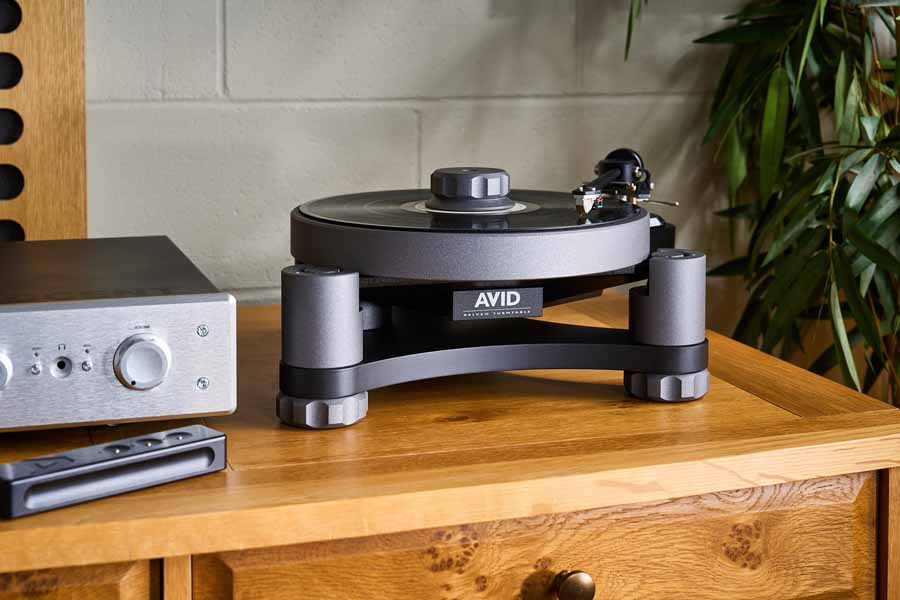
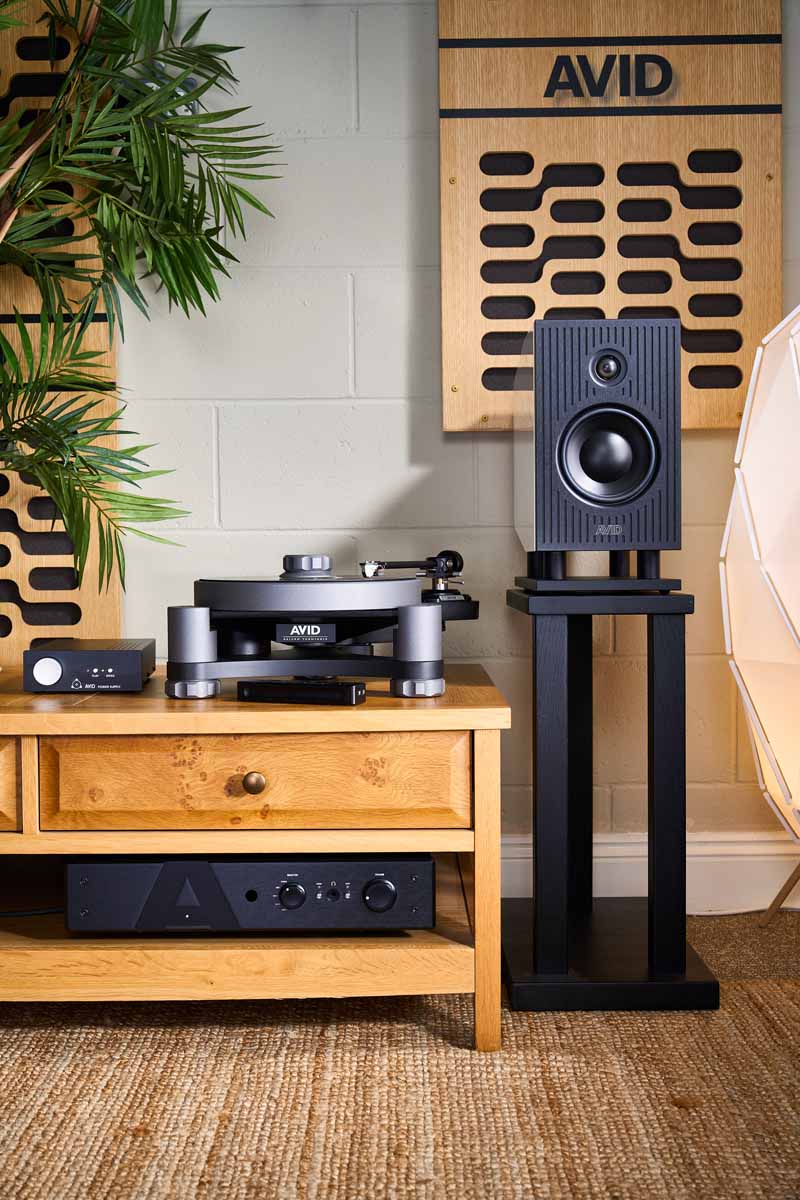
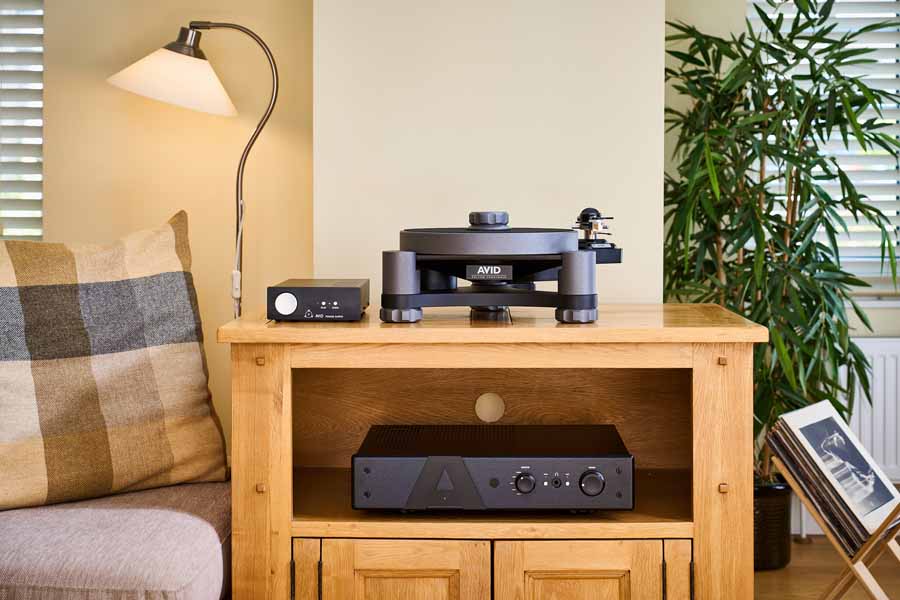
The turntable looks really fetching and serious business in its metallic grey and matt black colours, though the power controller didn’t have the usual “A” etched into its front as seen in the Acutus series. However, the shape of its power knob, plus that of the matching record clamp and three adjustment feet, clearly shows this is unmistakably AVID.
SETUP AND USE
Setting up this turntable is very easy, both with one of the very best instruction manuals out there, plus video links available if you need to see it all happening in real life. Illustrated with someone wearing white gloves and complemented with happy background music, it did make me think that perhaps Kenny Everett dressed as a clown might suddenly appear in view. All done is the best possible taste, of course. Apparently, the gloves were worn so that you didn’t get distracted by the hands. Conrad thinks of everything.
The hardest task is fitting the two belts simultaneously, but even that task has been thought out by Conrad and shouldn’t cause any issues. Only that the left-right phono cables are too close together to connect to my 19” Manley Steelhead, so made connecting a bit DIY. If I were to design a phono-stage, I would have it as two mono amps, and so the input connectors would be as far apart as possible. Luckily, MFA’s new Class-A and LCR RIAA EQ phono-stage (the LP 103 LCR, also here for review), whilst still monobloc in design, was easier to connect up, and so I used that for much of the review. The tonearm itself is easy to adjust height and tracking weight, and comes complete with a handy aluminium alignment gauge. Unlike my Townshend Rock and Michell Hydraulic Reference decks, there was no need to add oils and damping compounds. At the rear of the turntable chassis is a screw-held clip for you to attach the cable from the arm so it doesn’t go walkabouts.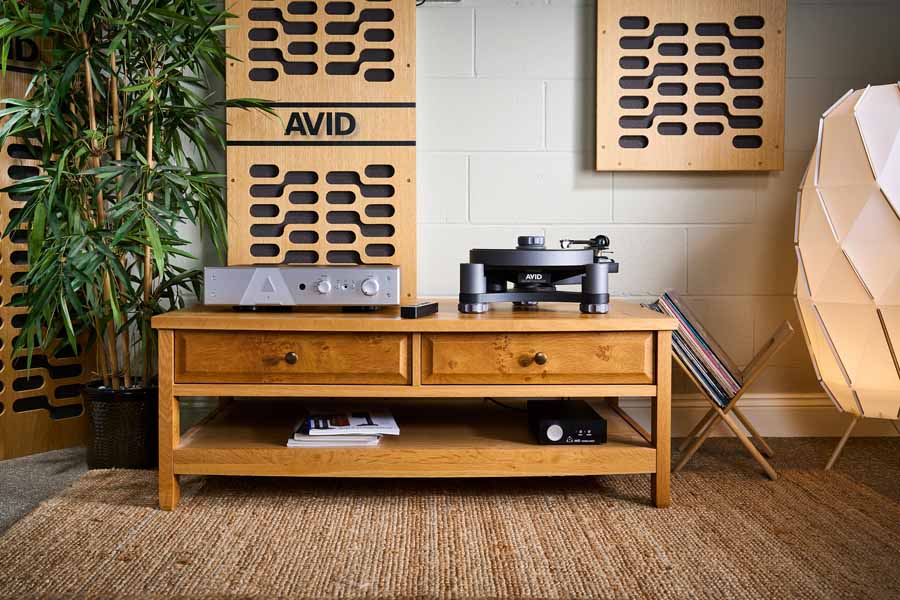
SOUND QUALITY
With its high-torque motor and DSP control, the first record to be played was the excellent Jean Michel Jarre’s ‘Oxygene’ album, recorded between August and November 1976. With lots of 3D synthesiser sounds, a highly accurate spinner is needed to show off the control and detail, and with tons of very low and high frequencies, I wanted to hear the union between arm and motor and breathe in all the Oxygen. The synthesisers used read like candy; ARP, VCS, RMI, Farfisa, Eminent, and Mellotron, each have their own distinctive personality, and the turntable was able to give me great musical satisfaction; an open, vivid and detailed sound with incredibly low wow and flutter and an enviable noise-floor. Like all AVIDs I have spun, this turntable gave a very controlled and masterful performance, and with great depth to the purposeful synth melody in “Part II”. The lowest bass sounds were similarly fully in control, with lots of definition and space between them and other instrumental sounds. I always love playing Jarre (though not his latest 2025 album) because every time you play you hear something new that you hadn’t noticed before, and the AVID accentuated this with both control, detail and power. The Hana ML cartridge supplied for the review is a low-output MC, but beautifully captures even the quietest grooves to perfection, augmented by the Relveo’s quiet motor.
Time to liven things up in terms of mood, dynamics and genre with another album created in 1976, this time started a month earlier. Queen’s 5th album, ‘A Day at the Races’, is now my favourite from their extensive discography. Freddie labels his contribution to this album as “vocal, piano, choir meister and tantrums”, and certainly this album delivers a lot more passion and resolution than Jarre’s ‘Oxygene’. The multi-vocals at the start of “Take My Breath Away” certainly filled the room with an air of colour in this emotional ballad. The eerie piano melody adds to the classic nature of this excellently recorded and re-mastered album (part of the Queen Studio Collection). That classical bent concludes with the same melodic line on piano, followed by an a cappella vocal coda. In this and my regular Jethro Tull ‘The Zealot Gene’, the ease with which the music was performed showed just how masterly this spinner was at capturing not only the notes but also the timing and passion of the music. The music was performed with ease; no grunt or edginess. Bass extension, flute detail and percussion timing were all immaculate. This could have been the original master.
That control and timing extended in Clannad’s ‘Magical Ring’. By now, any thoughts of w/f and s/n were long forgotten. Something about the Relveo just got me almost as excited as the Dark Iron. Maybe my own preference for unsprung turntables like my Pre-Audio was an influence here. Some turntables keep me on edge and not able to really get inside the music, but this deck calmed me with the secure knowledge that it was in control. This album hasn’t sounded so good for ages; not only the excellence of the Hana ML cartridge, but also the amount of detail captured by the Altus arm. “The Theme from Harry’s Game” was both clearly laid out and perfectly timed. The album has a slightly nasally and heavily reverbed’ vocal with pin-sharp guitars, woodwind and percussion. Each part of this jigsaw was positioned tightly; the main vocal reverb behind the voice itself, and the instruments and other vocals positioned around it. That high motor torque ensured that there were no fluctuations in speed and vibration that would otherwise affect the sound. That performance was even more gripping in “Tower Hill”, and a comparison with my own turntable made me think that perhaps I need to now change it, or at best modify it. Whilst that turntable has a tangential tonearm, which means no lateral tracking error and the air balancing means no pick up of motor noise, the AC motor is not regulated at all. Maybe I need to build a designated power supply, or better, a new motor. The use of a new motor in the Relveo must therefore be another reason for the excellence of this player. Initial transients of the acoustic guitars, plus the melodic lines in “Seachran Charn tSiail” made a lot more sense to me than the track’s name. The music was more fluid and focused.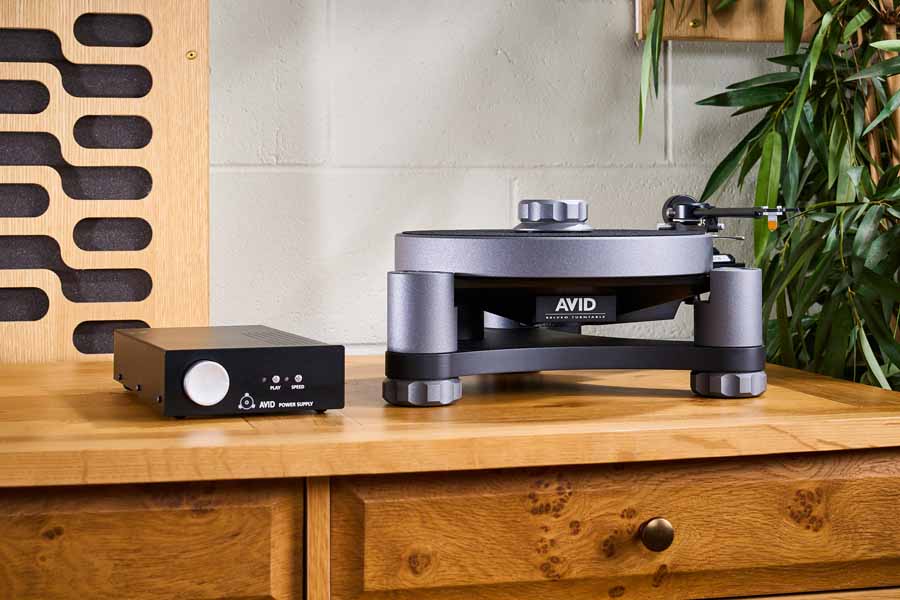
Turning to the brilliantly recorded Sky3 album, masterfully put together at Studio 3 Abbey Road, this includes the masterful playing from guitarist John Williams plus the talents of other great musicians encompassing everything from synthesisers, 7 different acoustic guitars, percussion and a Steinway Grand, all the way to Tuba, harpsichord, clavinet, and an unusual bowed instrument called the waterphone. The Hana tracked each note and sound meticulously with such great detail and timing that I was as struck by the music’s excitement as I had been the very first time that I played this album in the ‘80s. The “Dance of the Fairies” with a deep tuba solo didn’t sound stodgy, but rather each note started and finished with perfect timing. The tight harpsichord in “Hello” was immaculate. Performing through the new Music First Audio phono-stage (review coming soon) just gave it that extra bite and detail, making for a great listen. Timing and gusto were also equally great in the classical music I played. All my records were performed with great detail in the pitch, dynamics and the timing of starts and finishes of notes. Mozart’s Violin Concerto 2 K 211, was tightly caressed with great depth to the violin tone, a 1703 Stradivarius played by Anne-Sophie Mutter (with the Philharmonia Orchestra). No part of the playing, whether loud or soft, sounded out of place. The sound was transparent but still offered power and conviction when needed. 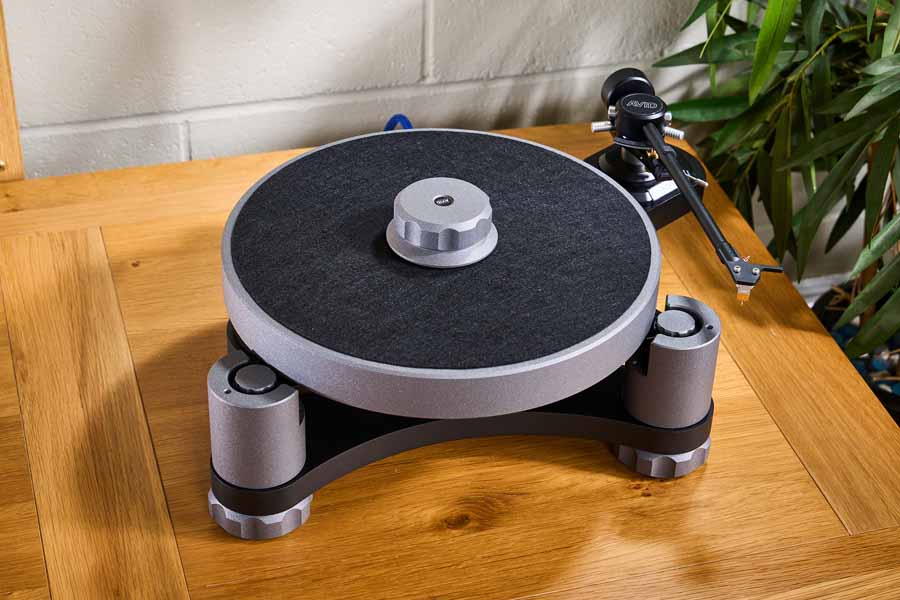
QUIBBLES
AVID have got everything right in this model in terms of sound and ease of operation. A built-in levelling tool would just be the icing on the cake for setting up on your table.
CONCLUSION
Turntables have gone up leaps and bounds since Conrad’s first BD1/Acos set-up as a child, and that’s largely due to his and other manufacturers’ hold on what lets down the technology; motor noise and rumble, plus – significantly for AVID – the suspension.
What I loved about the Relveo was the amount of detail and timing extracted from the vinyl at a lot less than the asking price of his Acutus series, whilst using many ideas taken from, and improved on, earlier decks. Nothing got in the way of the music in any of my listening. I wasn’t listening to a turntable or even a HiFi system; I was listening to the musicians and the emotions that they put into their playing. The Relveo, therefore, well deserves its award of 5 Stars.
AT A GLANCE

Build Quality and Features:
Precision in the build and attention to detail in all aspects from motor to spindle – even in the excellent instruction book – make this a highly appealing turntable
Sound Quality:
Controlled and focused sound getting you as close to the music as the rest of your kit will allow you to
Value For Money:
With such attention to science, design and build, you know AVID will be good value – whatever the price
We Loved:
Timing excellence
Quiet noise floor
The fact that I could just concentrate on the music
We Didn’t Love So Much:
Would love one in pink
Elevator Pitch Review: Conrad’s done it again. Another masterpiece for the vinyl lover from AVID. Their last completely new turntable was the Ingenium in 2013, so it was time for something new that would fit the gap between this and the Dark Iron. Whilst this time I couldn’t get the turntable to bounce up and down and still play the music without interruptions in the music – as I did with the Dark Iron – the new Relveo still gave an equally balanced performance.
Price: £6900
Janine Elliot
SUPPLIED SPECIFICATIONS
DRIVE: TWIN BELT DRIVE
SPEEDS: 33.3 & 45.0 RPM (ADJUSTABLE)
PLATTER MASS: ALUMINIUM 7.0KG
BEARING: INVERTED STAINLESS STEEL
THRUST POINT: TUNGSTEN CARBIDE/SAPPHIRE
SUSPENSION: CONICAL 3 POINT ELASTOMER
TONEARM FITTING: ALTUS v2 TONEARM
ADAPTERS AVAILABLE: ALTERNATIVE TONEARM ADAPTERS AVAILABLE
MOTOR: 24V 12mNm AC SYNCHRONOUS
POWER SUPPLY: DSP VARI-SPEED CONTROL UNIT
VOLTAGE INPUT: 100-240VAC 50/60Hz 20 WATTS Max.
DIMENSIONS: 440 X 370 X 200mm (WxDxH OVERALL)
NET WEIGHT: 13.3KG (29LB) EX. PSU