
Arcam SA45 Integrated Streaming Amplifier
ARCAM SA45 INTEGRATED STREAMING AMPLIFIER REVIEW
Michael Fairbairn takes the very well-specified Arcam SA45 integrated streaming amplifier for a spin.
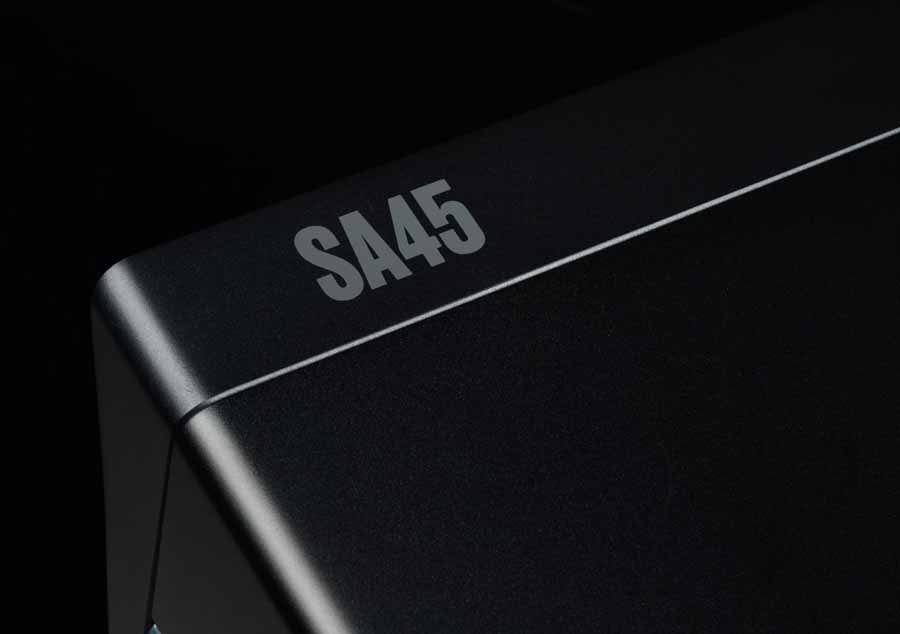
I have a soft spot for Arcam. My first proper HiFi system was from the brand in the late nineties: specifically, an integrated amplifier and CD player from the Alpha 7 series. Most of my student loan was spent on that investment, and both components are still in good working condition, some thirty years later. When the opportunity came along to check out their flagship component from the Radia series, I jumped at the chance. Designed and engineered in Cambridge, the SA45 feels like a confident statement of intent from Arcam. Drawing on the legacy of the acclaimed A49 integrated amplifier, it brings together fully balanced digital and analogue audio paths, a new streaming platform, a redesigned linear toroidal power supply, a refreshed user interface, and a companion app in a bid to deliver the brand’s signature sound for the modern streaming era.










BUILD AND FEATURES OF ARCAM SA45 INTEGRATED STREAMING AMPLIFIER
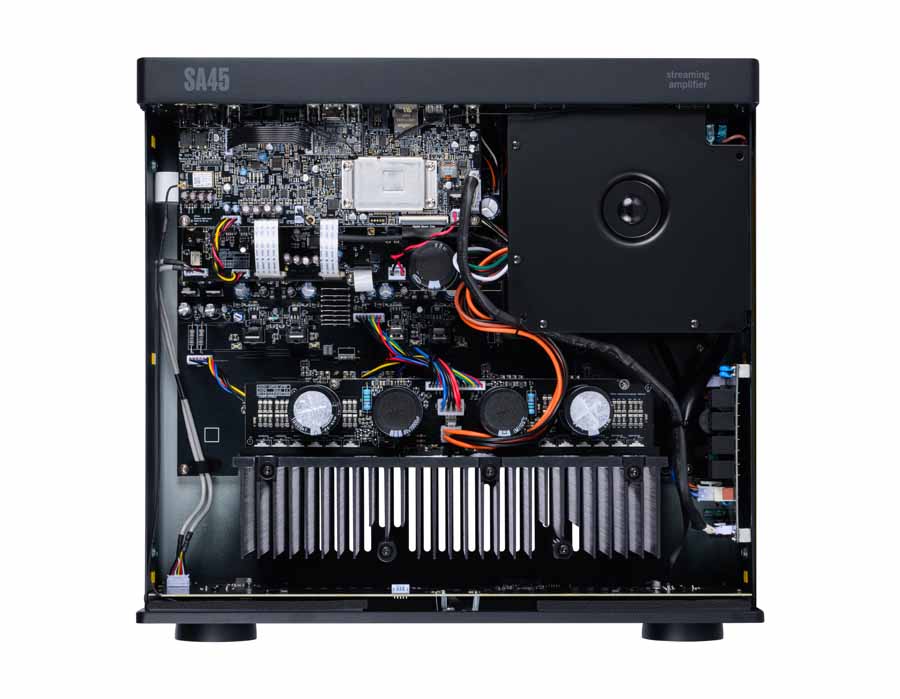
I could tell straight away that Arcam isn’t messing about with the SA45. It combines an ESS Sabre DAC implementation with high-resolution streaming support, built-in Dirac room correction, Class G amplification, and connections that make it feel ready for most modern two-channel systems. Power is quoted at 180W per channel into 8 ohms, which gives it plenty of headroom. Arcam’s focus here is on low distortion and a very quiet noise floor.
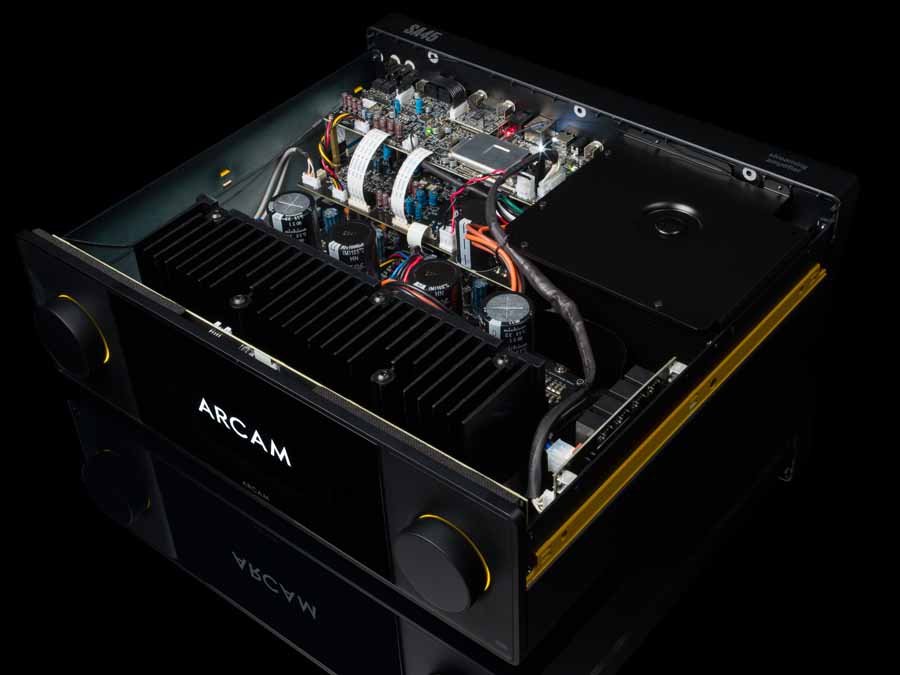
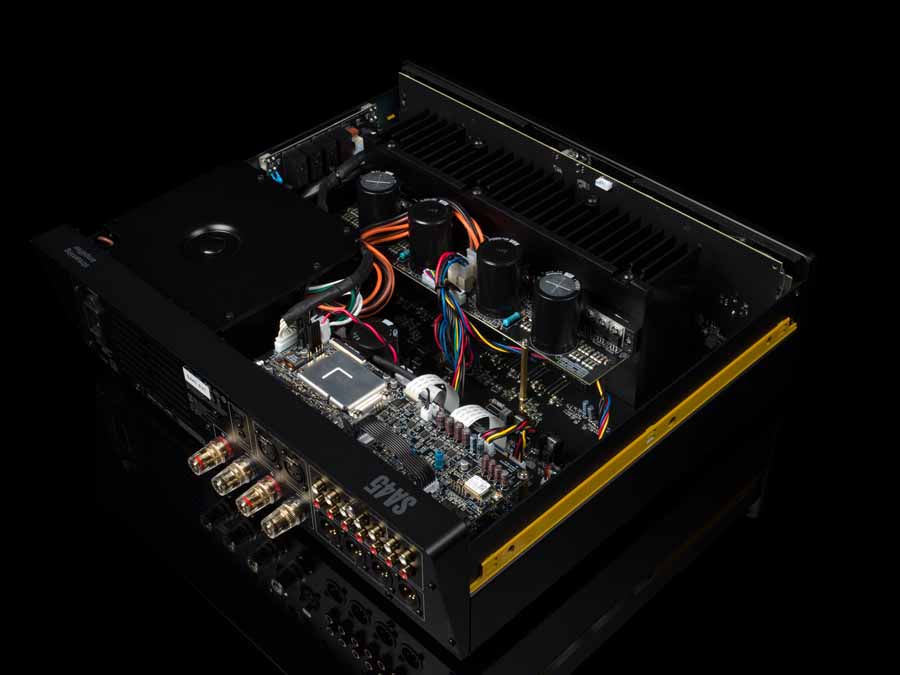
Streaming is equally well served. The SA45 is Roon Ready and supports Google Cast, AirPlay 2, and aptX HD, with playback extending up to 32-bit/384kHz for high-resolution files. That gives it the flexibility you would likely want from a serious integrated streaming amplifier: enough audiophile cred for critical listening, but enough day-to-day convenience that it doesn’t ever feel like a chore to use.
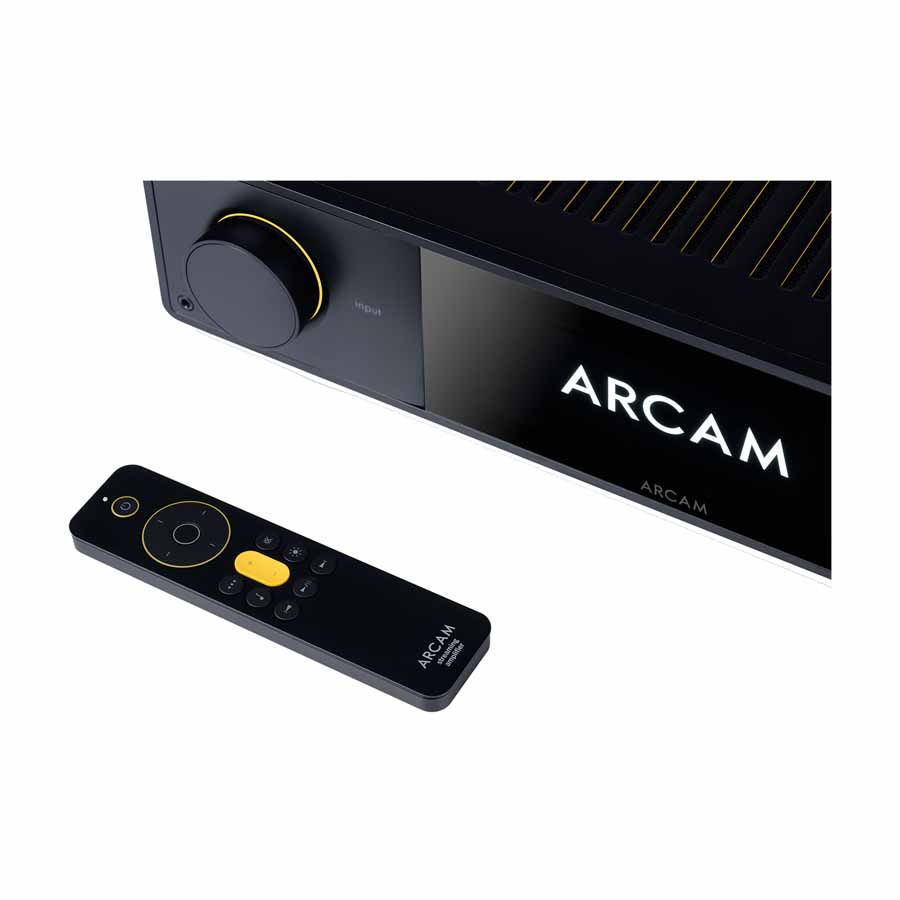
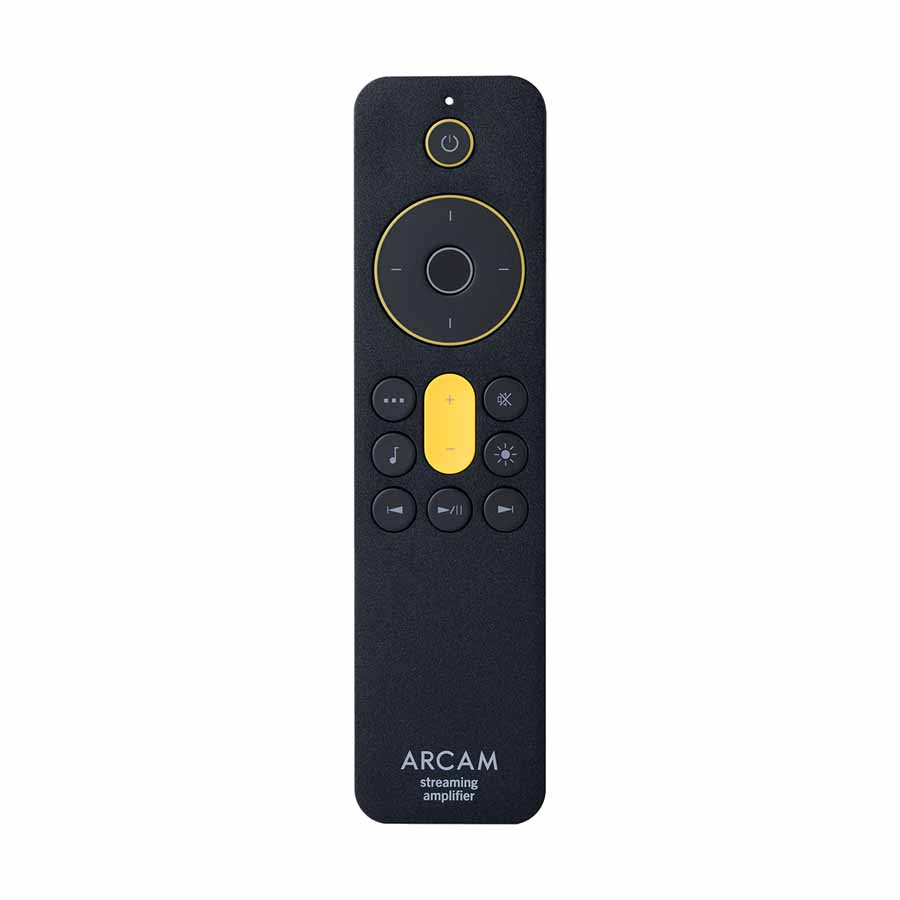
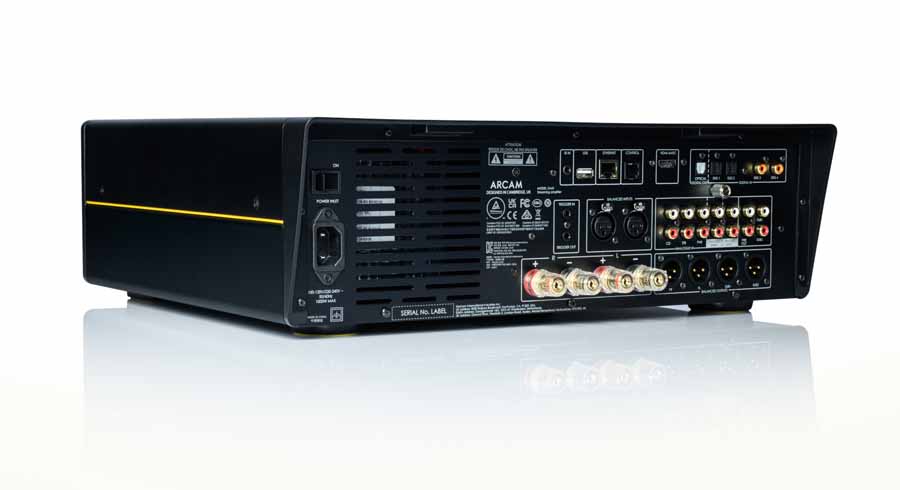
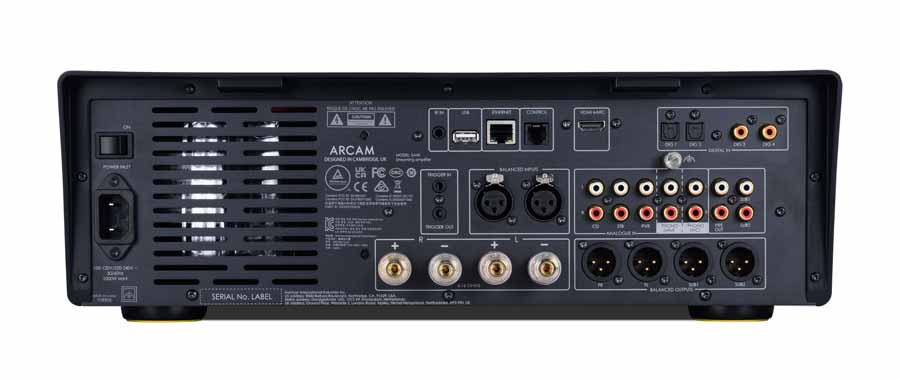
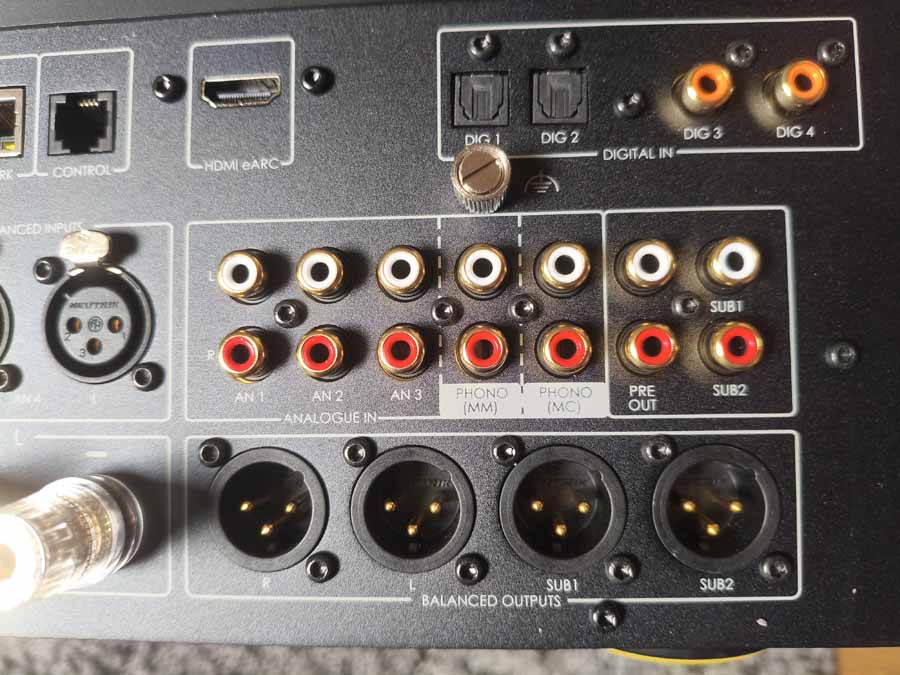
Connectivity is another strong point. HDMI eARC makes the SA45 easy to integrate with a television or Blu-ray player, as I did during my time with it, while the wider connection set gives it the functionality to sit at the centre of a proper HiFi system rather than just act as a streamer with speaker terminals. The supplied accessories are basic but serve their purpose and are practical. You get a remote control, a measurement microphone (both matching the colour scheme of the amp), and a USB cable included. Some may want a better-quality mic, but the essentials for setup are already in the box, so you needn’t go investing in any additional bits and pieces.










The SA45 also gives plenty of attention to system-building. The inclusion of both moving-magnet and moving-coil phono inputs means vinyl users are well catered for, while the subwoofer provision is especially welcome. Outputs, plural, give the amplifier proper scope for low-frequency integration, and I was able to try it with a basic Yamaha subwoofer (on loan from fellow HiFi PiG contributor, John Scott) to explore how convincingly it could underpin a two-channel setup. More on that later.
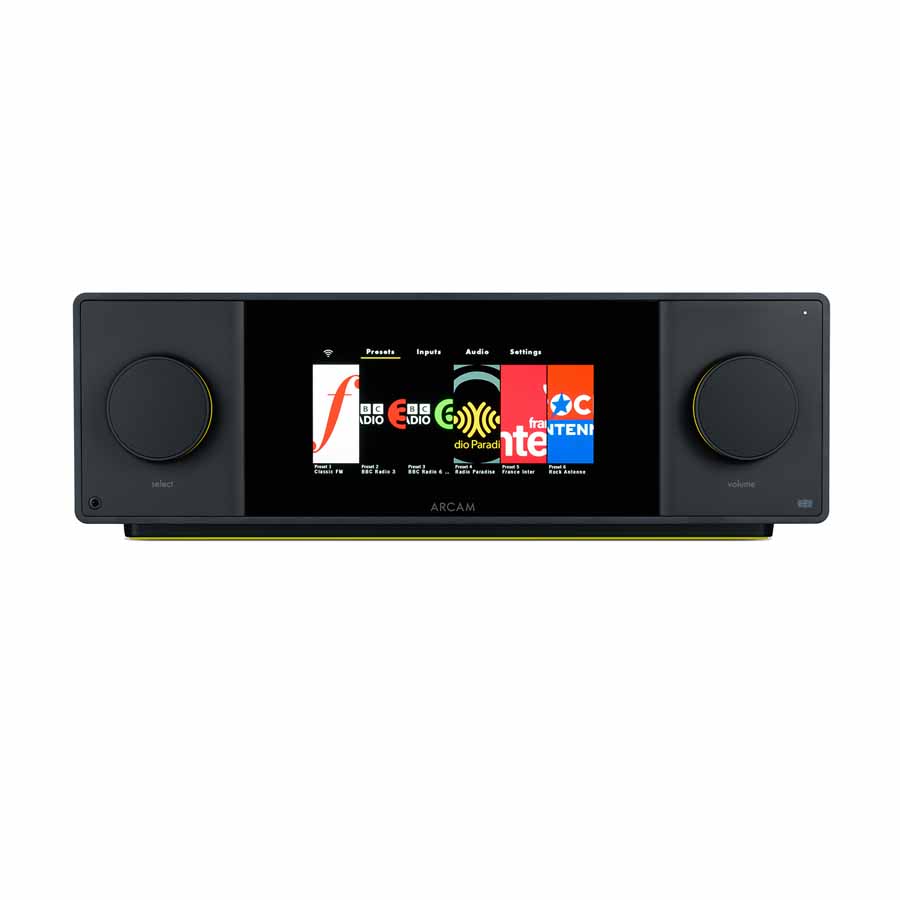
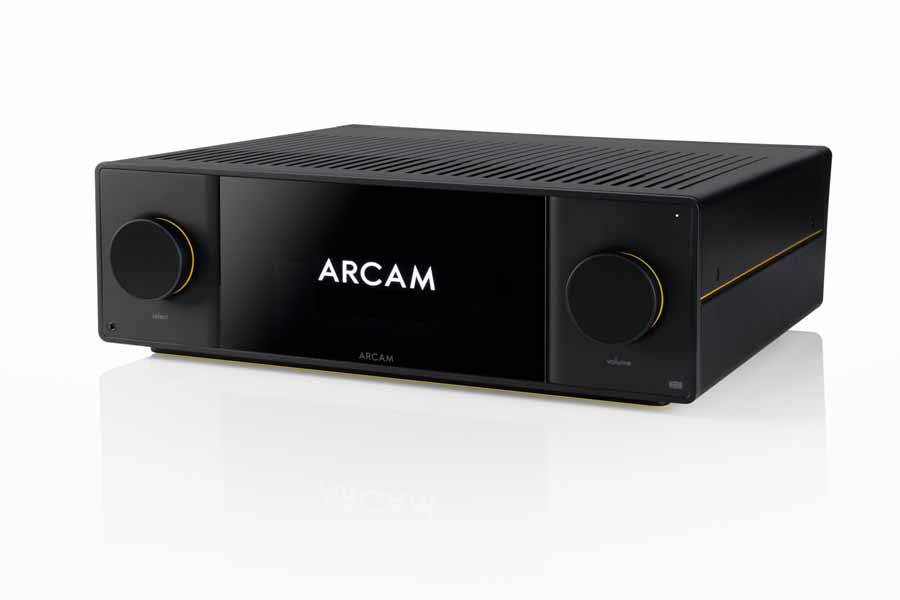
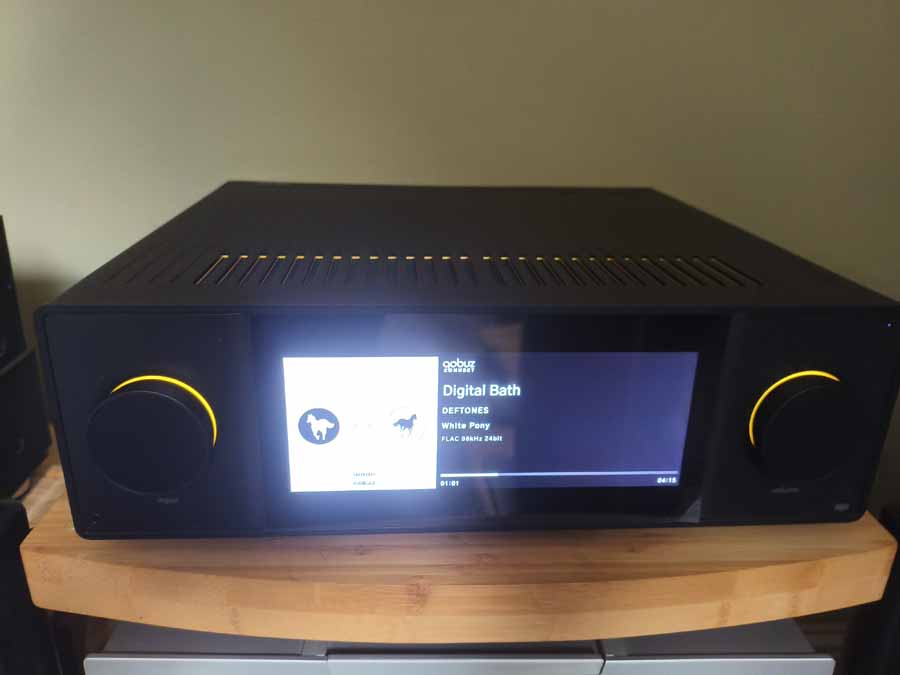
The SA45 has also got the look and feel of a premium component. The chassis is solid, the layout is thoughtfully arranged, and the unit runs quietly in use. Its black-and-yellow Radia styling gives it a distinctive appeal, which drew me to it when I first saw it at North West Audio Show last year.
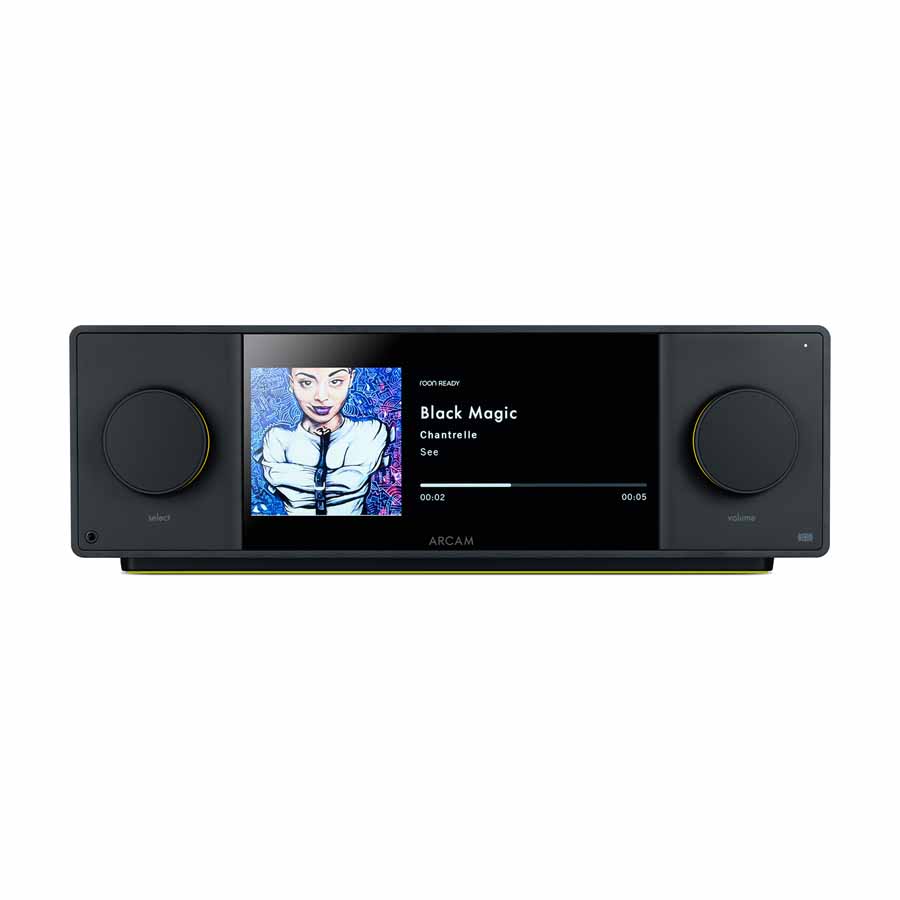
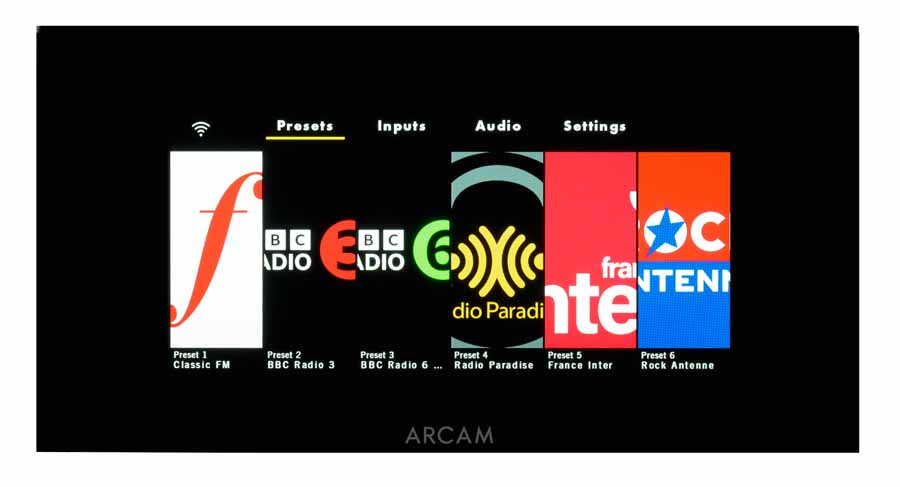
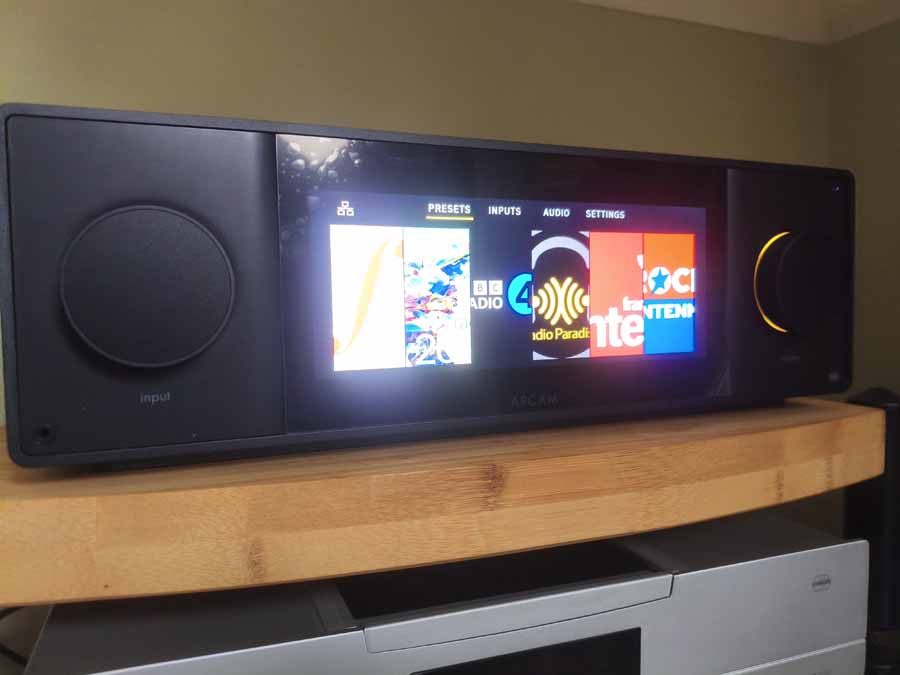
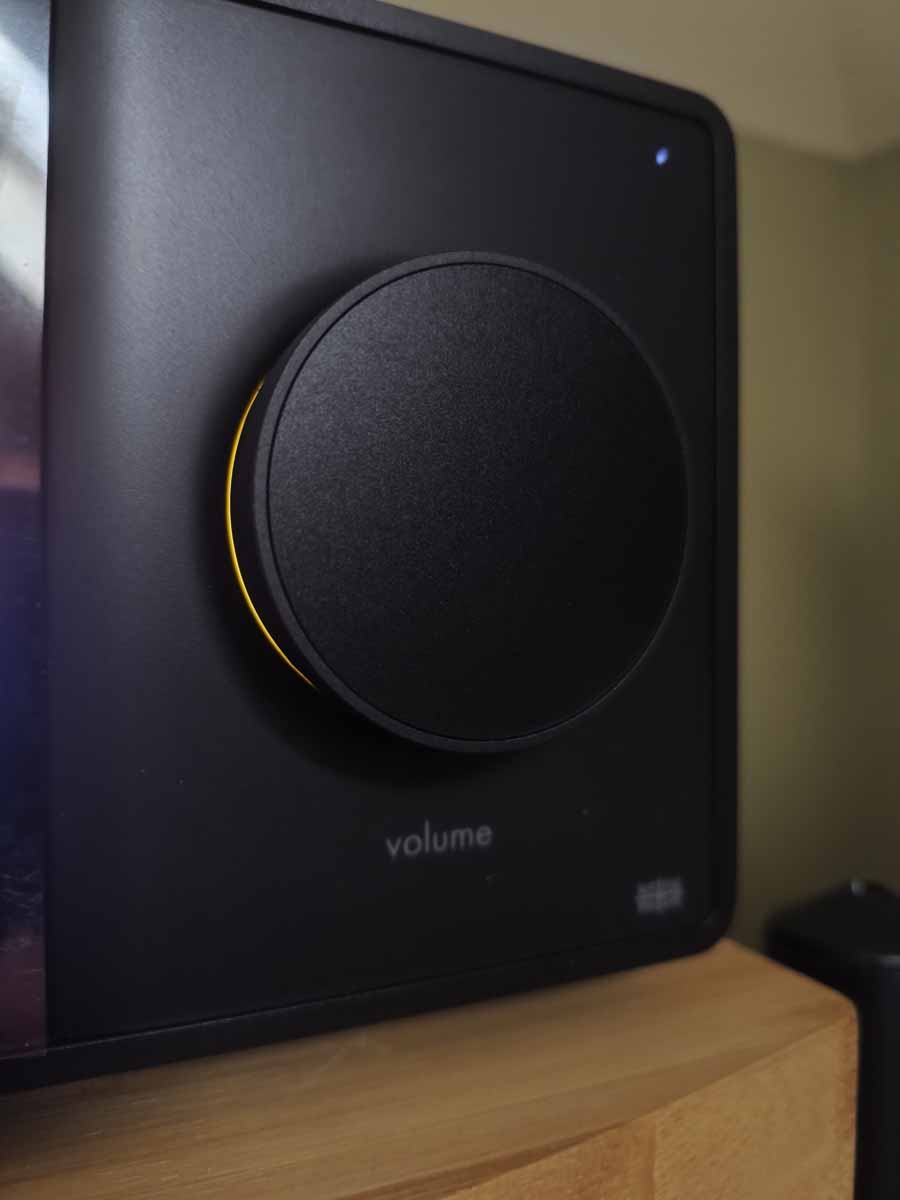
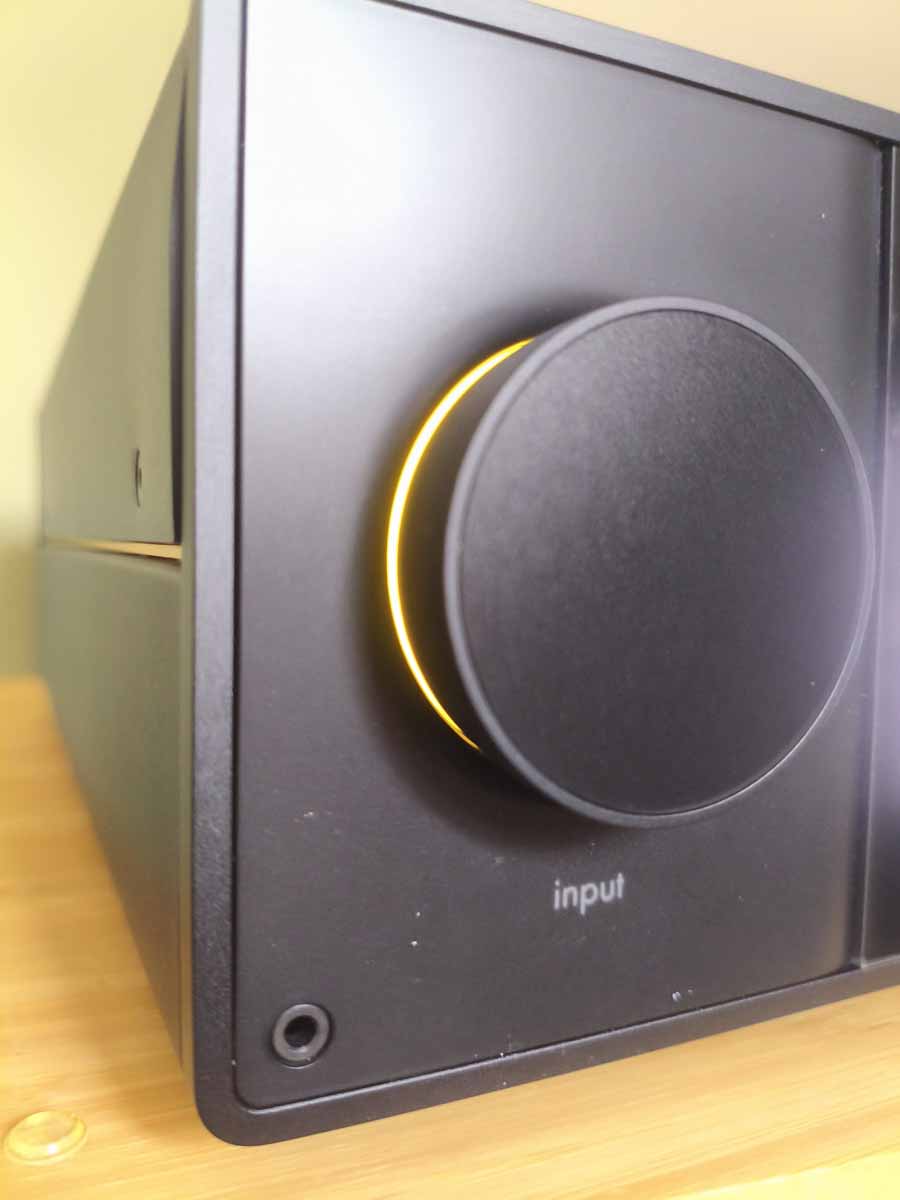
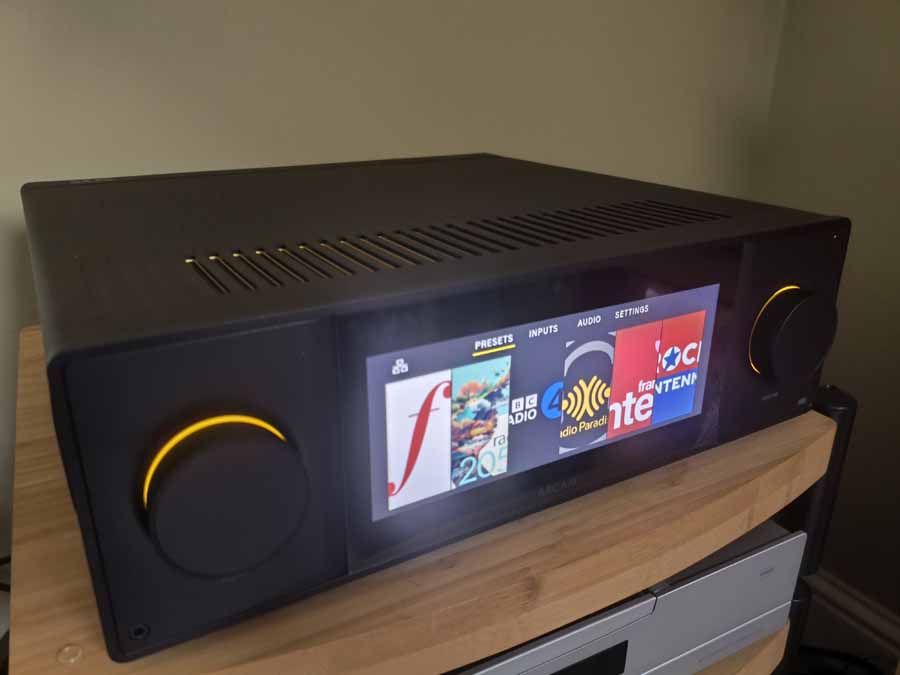
The front panel follows the same minimalist approach as my ageing but beloved Alpha Series gear. Two large rotary dials keep operation simple, while the 8.8-inch colour display brings artwork and metadata to the front of the unit. It looks smart and modern, but the text can be difficult to read from a normal listening distance, which feels like a missed opportunity given the generous size of the screen. Also, those plastic dials aren’t of the premium quality I would have expected for a product in this price range, and I found them to be ‘shoogly’. The definition of ‘shoogly’ in British English is as follows: adjective, dialect, mainly Scottish (of an object or structure), prone to shaking, swaying or rocking back and forth; not firmly fixed; unstable.
Despite those missed opportunities to deliver a better consumer experience, it was encouraging to see some thought given to the overall ownership experience, from the broad feature set to the apparently plastic-free packaging. My lasting impression is that the SA45 has been designed not just as a powerful amplifier, but as a polished, future-facing hub for music and movie sound, for the modern buyer. With a price tag just shy of £4,500, you may expect just a tad more refinement from those features.
SETUP AND USE
Setup proved refreshingly straightforward. The network wizard, accessed through the Arcam Radia app, gives the choice of wired or wireless connection, and in my case the whole process was almost disarmingly simple. I connected the SA45 to my network via Ethernet, plugged everything in, and was playing music through Qobuz Connect in less than ten minutes. For me, that kind of simplicity matters a great deal in HiFi, and the Arcam made an excellent first impression by simply getting out of the way.
The same sense of ease carries through to everyday use. The app gives access to internet radio, podcasts, Amazon Music, Qobuz, Spotify, Tidal, UPnP, and USB playback from a locally stored music collection, while presets and favourites can be created for quick access. It is not showy, but the interface, app integration, and general “just works” factor are among the SA45’s strongest lifestyle-friendly qualities.
Connecting to Roon was equally painless. The SA45 appeared as an endpoint without any fuss, and playback was stable from the start. Having recently spent time with BubbleUPnP while reviewing the ONIX XM2 Tocata digital audio player, I came to the SA45 with fairly high expectations for network behaviour and connectivity. Happily, it met them without any fuss whatsoever. It’s quite refreshing when stuff just does what you need it to. Life can be stressful enough without further investments adding to that frustration.
That convenience is important, because the SA45 is designed to be more than a purist amplifier with streaming added as an afterthought. Seamless playback, stable connectivity, intuitive control, multiroom friendliness, and HDMI eARC all help it feel like a modern living-room hub as much as a traditional HiFi component. For listeners who want serious sound without giving up day-to-day convenience, that balance is likely to be a major part of its appeal. It certainly ticked all those boxes for me and, had my limited budget stretched far enough, would have been a strong contender to sit at the core of a soon-to-be-installed HiFi/AV system at home.
There were some nice extras too. When I took delivery of the SA45, it was bundled with a generous complimentary three-year Roon subscription, which only reinforced the sense that Arcam understands how many people are likely to use a product like this. Bluetooth is also more than a box-ticking exercise, with Snapdragon Sound and Auracast support adding another layer of flexibility.
Dirac Live proved to be more than just a headline feature. In my main listening room, it helped address a balance issue that would otherwise have been harder to tame, and that makes its inclusion feel genuinely practical rather than merely impressive on the spec sheet. Used sensibly, it gives the SA45 another route to sounding settled, controlled, and properly adapted to the space it is playing in. I had faffed about with minor adjustments to different speaker positions for my Blumenhofer Fun13 MKII floorstanders and even shifted my sofa along a bit to get the balance right. I got close, but the Dirac analysis nipped the issue in the bud with ease. As a side note, I’ve since resolved the quirk with acoustic room treatment and some tweaks to other furniture positions. If that level of effort and intervention doesn’t appeal to you, this amp with the bundled room correction EQ could be right up your street.
SOUND QUALITY
When I got down to some serious listening, my first impression, based on the visual impact of the black-with-yellow-accents styling, was that the output was giving me more bumblebee or honeybee than wasp or hornet: softer, more unassuming, and less interested in grabbing attention for the sake of it. The more I listened, though, and adjusted to what I was hearing, the more enjoyment I found from the SA45’s capabilities.
That initial feeling, that the amp was a touch on the polite side, wasn’t entirely baseless. Arcam has long been known for their ‘Arcam sound’: smooth, controlled, fatigue-free, balanced, refined, non-aggressive, and ideal for long listening sessions. That’s what I recall from my many years of thoroughly enjoying music via my Alpha 7 integrated amplifier. When I settled in to appreciate that same vibe from the SA45, I was much more accepting of those qualities. Quite often, our ears just take a little time to get used to a different quality of sound. Persistence tends to pay dividends and can be very rewarding. To recap, putting it a slightly different way, Arcam has clearly voiced the SA45 for neutrality, smoothness, and long-term comfort rather than visceral excitement.
For my first listening session, I opted to stream via Roon (Qobuz), for simplicity as much as anything. ‘Tornado of Souls’ from Megadeth’s classic Rust in Peace album was a bit hollowed out in the midrange, but otherwise had smooth, detailed treble and never sounded harsh, sharp or brittle. There was also good, natural midrange texture, with vocals and guitars that sounded real rather than overhyped. I did find myself notching up the volume just a bit to coax some extra excitement out of this one. That’s no criticism, mind you. Hard rock and metal deserve to be played at higher volume, if you ask me. Don’t get me wrong. This Arcam amp can rock out with the best of them, but it was less suited to the heavier end of the genre, in my experience. I found some smearing with these denser arrangements and layered recordings featuring distorted guitars, grunt vocals and thunderous rhythm sections.
One exception that made me sit up and take notice was ‘Twisted’ from Mason Hill. The slick, modern production seemed to be a good match for the amp, bringing out the forward vocal mix, giving Tom Ward the central focus and showcasing his versatility. His voice resonated with me, commanding my attention. Dynamics shifted effortlessly from clean and melodic to a much more aggressive attack. The huge guitar sounds were full of life. I got enough of that essential energy and presence that are needed to make dark, heavier music feel vibrant and impactful. The powerful riffs were driven, but with a very balanced, clean midrange. Lower registers were never lost, with the thick bass guitar having clarity and focus against the punch and weight of the drums.
For the most part, the SA45 proved to be more at ease with what would typically be classed as alternative/indie rock. The Kills’ ‘Last Day of Magic’ was vibrant and pulsing, and had more of a primal feel; there was that essential tension with the push and pull of the track. Guitars had a real lift in the transients and were borderline guttural. That’s what I wanted to hear!
The same was true of ‘Supersonic’ (Oasis), which still gave me ‘the feels’ (frisson/goosebumps). The whole album is not at all what could be considered an audiophile recording, but it’s rocking!! That recognisable drum intro sounded so human, and the swagger could be felt when the full band was ushered in via Noel’s arpeggiated chords and the guitar pick scrapes. Both of those parts had a real shimmer and sparkle. The band sounded real too, with plenty of space for each player’s part to shine (or should that be ‘scheeiiiiineahhhh’?). At points, when I cranked the volume, Liam’s vocals and the overall track were a bit shouty in the upper mids, but it was never unpleasant. Also, I should stress that I kind of expected that from this recording.
Shifting genres a bit to introduce some electronic elements, while staying within the rock sphere, I found that Nine Inch Nails’ ‘Only’ had much more of a lively and energetic presence. The soundstage imaging showed off room-filling, atmospheric swells, and I could just feel the beat and groove of this track even more. In fact, it got me up out of my seated listening position and moving about. The dynamic builds towards the chorus lifted more and more, with loads of space and air. When the drop landed, it was so impactful and near-tangible.
‘The Ghost Inside’ (Broken Bells) has a cool, simple arrangement, which the amp handled incredibly well. I got snappy transients from the bass line, processed drums, and handclaps. Elsewhere, the dreamy vibe pulled me in and carried me along with the music, so much so that I stuck with this band for a few more tracks. The strings on ‘The Mall and Misery’ were so lush. Guitar picking and the tasteful, sparse slide parts were clearly audible and very well placed in the mix. When the chorus arrived, it was with a feeling of euphoria from gorgeous, layered backing vocals. As a musician, it was sufficiently infectious to make me want to be playing along and joining in, not just being a casual listener or spectator. I wanted to be in the band!
Next, I drew on some local files from the laptop I use to run a Roon server, and my focus shifted to a more cinematic and ambient style. ‘It’s No Good’ (Depeche Mode) had a restraint that played well to the strengths of the amplifier. I was immersed in the mood of this one, drawn in by the atmosphere. There was nothing aggressive about the recording, but there was an ample sense of grip and control from the amp to create plenty of emotional tension, which made this feel thoroughly engaging. I popped the CD version of the same track on with my CEC player and was delighted to hear even more depth and ambient reach to fill the room. Dave Gahan’s vocals were much more human, and I was hanging on every word due to the immediacy of his performance. Overall, the track had more gravitas, most noticeably in the low end.
Jill Scott’s ‘Gettin’ In The Way’ was simply lush and languid. It had fantastic depth to the soundstage, with superb background detail from the horn section swells and occasional synth pads. I was also surrounded by women, or so it seemed, with fantastic harmony vocals. Sadly, they weren’t in the room with me, but I got close to imagining they were; such was the realism of the recording. One feature that was so viscerally present that I could feel it inside my body was the undulating deep sub-bass pulse.
‘Atlas’ by Battles had me wanting just a bit more exuberance and craziness, but everything in the mix was well-controlled, with a strong sense of dynamics. I also got the impression that the amp was holding back a little rather than fully unleashing the potential of this frenetic track; it didn’t fully hit me in the chest or gut. Despite that, the excellent drums and overall rhythm section were super clear. In particular, the cool breakdown section was expertly delivered, with superb placement of instrumental parts as the arrangement expanded back up to full throttle. That sure got my attention.
Once I’d established the strengths of this Class-G amp (utilising multiple power supply rails and kicking in with the higher voltage only when required by transient spikes), I fired some more targeted musical choices its way and found it really hitting the mark again and again. On ‘Disco Science’, a brilliant slab of electronic exuberance from Mirwais, I could really feel the bass and heard swirling elements like the gunshots/slaps all around the room. Suffice it to say, the soundstage was impressive. Elsewhere, the looping bass riff/line was completely clear and precise; funky guitars had a genuinely snappy edge, while the synth-driven sirens were just awesome. This track made my head bob along like one of those toy noddy dogs you see in some vehicles. I was already fully invested in the song; then more details came spitting out at me with even more attack and presence. The excellent definition between parts was crucial for the groove to hit just right, and it got me bopping in my seat with my shoulders doing their own enthusiastic twitches.
After that level of sheer excitement, I needed to mellow out a little. Comeback (Light Therapy) from Josh Rouse was just the right choice and couldn’t have been more different in terms of genre, production, and acoustic instrumentation. Where the two tracks had similarities was in their foot-tapping qualities from the kick and bass lines. Each of the respective musicians was so locked in, controlled, and bang on the money. Just as the Mirwais track had done, this also took me along for the ride and was funky as hell! I love the mix of this track, and the separation of instruments was spot on, especially the percussive acoustic guitar, the gorgeous placement of strings, and the flourishes of flute. It was such a joy to hear.
So, that was phase one of my time with the SA45. For the next one, I moved the whole kit and caboodle from my mancave listening room to the living room in my house. It was quite a novelty to have my lovely walnut-finished Blumenhofers in this space for the first time. I even placed a matching wooden unit between the speakers, on which to position the amplifier, and found myself appreciating the simplicity of this neat, tidy and attractive setup. Even when I introduced a subwoofer and Blu-ray player, the whole system worked well from an aesthetic perspective. That’s something worth considering if you’re looking at this amplifier for use in the hub of your own home.
Enough about how it all looked. How did it sound? Well, simply put, it made me happy. I was chomping at the bit to put on a film and wasn’t patient enough to concern myself with optimal speaker placement or run the Dirac process yet. First up, I watched the opening bank robbery scene from The Dark Knight, knowing that it’s got a great level of intensity, expertly supported by the brilliant Hans Zimmer soundtrack. To say I wasn’t disappointed would have been a gross understatement. I was instantly hooked by the track ‘Why So Serious’, with its sub-bass impact and percussive attack. The combination of musical tension, controlled explosions, and edgy dialogue was all so vivid. Even while using a modest Yamaha subwoofer, on loan for the purposes of this review only, I loved the experience. This was all before I’d even gone to the minimal effort of taking a new set of Dirac room measurements. Suffice it to say, I was already impressed.
Given that I was now taking over our family room, albeit in a very neat way and temporarily, I wasn’t about to go to any great lengths to optimise the listening position. That meant that trying out various speaker positions, rearranging the space or moving the TV weren’t exactly on the cards. That’s where the Dirac Live room EQ really came into its own. As with the balance issue it addressed so effectively in my main reference HiFi listening space, the versatile functions performed incredibly well in this much bigger room. I wasn’t quite sure what to expect, given the high ceilings, a large open-plan archway at one side of the room, and a wide bay window at the other. Also, there was no acoustic room treatment here. Dirac gave me the options to specify a single, central listening position for just myself, a sofa/loveseat for a couple of people, or more of a surround cinema spread with several people in various seats around the room. As it was just me indulging myself with this fun, I opted for the first setting.
Taking the measurements with the supplied USB microphone connected to my laptop couldn’t have been easier, as was the case out in my mancave. That worked for me because I was itching to settle in to watch a full movie. Integrating the subwoofer was a doddle too, I’m pleased to say. On the face of it, the process was straightforward, but I could see how it might be less so for the uninitiated, as it requires you to do the readings with the sub before you then do the rest for the overall sound. You can then adjust one of the menu settings to tell the SA45 whether you are using no sub, one sub, or two. I was fine with that and didn’t consider it an issue to get up and running. Also, it gave me the flexibility to easily disengage the Yamaha when I went from watching a Blu-ray to listening to music, as was my preference.
My initial focus was on having a full evening of entertainment, with my feet up, to enjoy a couple of brilliant films. I’m happy to report that I loved the experience the Arcam SA45 brought to my living room with the whole of The Dark Knight and then an all-time favourite, Blade Runner. I’d been fairly content with a basic but decent JBL soundbar and accompanying subwoofer for most TV/film watching, but this amp cranked up my enjoyment factor significantly. That might sound like an obvious outcome, but it was even better than I had expected, so much so that, within budget, I’ll be ditching the soundbar at the first opportunity in favour of a better AV solution like this. I’ll wait until the JBL gives up the ghost, though, as I’m not one to just get rid of equipment on a whim. Once I hit the upgrade path, I also fully intend to expand my Blu-ray film collection, purely on the strength of how impressed I was with the SA45 as the heart of this sound.
I also opted to get the best of both worlds, with music and video, by checking out the Alice Cooper live concert disc ‘Theatre of Death – Live At Hammersmith 2009’. I absolutely loved this too. I’d watched it before, several times, but never experienced it sounding this good. I love that I was able to revisit this Blu-ray and feel I was getting something entirely new after all these years. My whole enjoyment of the show was elevated by the solid, controlled bass and sheer oomph of the whole band. I wouldn’t quite go so far as to say it felt like I was in the audience, but I got that little bit closer via this setup, and this was from a 2.1 setup, not even the 5.1 surround mix.
QUIBBLES
Screen metadata text is small, as are the input icons, despite the very generous LCD size. Wobbly plastic rotary dials could have been of a more premium quality. The accompanying Radia app is limited but serves its basic function.
CONCLUSION
The Arcam SA45 is a confident, capable and very easy-to-live-with streaming amplifier that brings together serious HiFi credentials with everyday convenience. It’s not the last word in outright attack, and heavier rock or metal could leave me wanting a little more bite, but giving it cleaner productions, atmospheric music, or a Blu-ray soundtrack really allowed it to come into its own. Setup was a breeze, Dirac proved genuinely useful, and the whole experience felt polished, flexible, and thoroughly enjoyable. A few bits of hardware could feel more premium at this price, but none of that would put me off. If you want a modern all-in-one hub that sounds smooth, controlled, spacious, and consistently enjoyable, the SA45 makes a very strong case for itself.
AT A GLANCE

Build Quality And Features:
Solid, smart-looking and thoughtfully laid out
Loads of useful connectivity and streaming options, without feeling overcomplicated
Setup was an absolute breeze, and Dirac Live proved genuinely useful
Small screen text and slightly wobbly plastic dials take a little shine off at this price
Sound Quality:
While homing in on tracks that had the most impact on me, I found that the SA45 got on best with more of the stuff that has cleaner, slick production. Traditional heavy rock/metal recordings, to which I tend to gravitate first when putting gear through its paces, came across as slightly less impressive, showing some shortcomings at the hands of the amp. The overall audio experience for films on Blu-ray and even when watching regular TV was superb. I would even go so far as to say it was ‘awesome’, which is a term I use very rarely
Value For Money:
Overall, it is great value, especially for an all-in-one unit when you consider what you get for the outlay. Some minor refinement upgrades to some of the plastic hardware elements wouldn’t have gone amiss, but these aren’t what you might consider deal-breakers.
We Loved:
The setup could not have been more seamless
We Didn’t Love So Much:
A touch on the polite side for some harder-hitting rock tracks
Screen metadata text is small, despite the generous LCD size. Perhaps this could be addressed with a firmware update
Elevator Pitch Review: The Arcam SA45 is a slick, easy-to-live-with streaming amplifier that sounds smooth, spacious and controlled, with enough features to sit happily at the heart of a modern music and movie system. It may not be the most savage thing with heavier rock and metal, and a few hardware touches could feel more premium, but when it clicks, it really does make listening feel effortless and thoroughly enjoyable.
Price: £4499

Michael Fairbairn
SUPPLIED SPECIFICATIONS
Services
Works with (apps):
ARCAM Radia
Spotify (Connect)
Tidal (Connect)
Qobuz (Connect)
Roon Ready
Works with (services):
Apple AirPlay
Google Cast
ARCAM Radia supported services (Global):
Internet Radio
Podcasts
UPnP
USB Media (using USB-A mass storage input)
Continuous power output (0.5% THD), per channel
2 channels driven, 20Hz—20kHz, 8O: 180W
2 channels driven, 1kHz, 4O: 300W
Harmonic distortion, 80% power, 8O at 1kHz: 0.002%
Analogue Inputs
Number of inputs: 3x RCA pairs + 1 XLR pair
Phono Inputs: MM and MC
Frequency response: 20Hz—20kHz ± 0.2dB
Signal/noise ratio (A-wtd, ref. 50W, 1V input): 106dB
Digital Inputs
Supported Streaming media: FLAC, WAV (LPCM), AAC, ALAC, AIFF, DSD (up to 256), MP3, MP4, OGG, WMA
Supported Streaming Bit depth: 16, 24, 32
Supported Streaming sample rates (kHz): Up to 384 kHz
Gapless Playback: Yes
Digital Audio Inputs: 1x HDMI eARC, 2x Coaxial (RCA), 2x Optical (Toslink)
Supported Digital input Bit depth: 16, 24
Supported Digital input sample rates (kHz): Up to 192 kHz
Frequency response (filter 1): 20Hz—20kHz ± 0.2dB
Signal/noise ratio (A-wtd, ref. 50W, 0dBFS): 110dB
Wireless Specifications
Bluetooth Profile 5.4; A2DP Sink/Source, AVRCP, BLE, Snapdragon Sound, AAC, LE Audio, Auracast
Bluetooth Transmitter Frequency and Power: 2,400 MHz to 2,483.5 MHz: <20dBm
Wi-Fi Network: IEEE 802.11 a/b/g/n/ac/ax (2.4GHz/5GHz)
2.4G Wi-Fi Transmitter Frequency Range and Power:
2400-2483.5 MHz (USA 11 Channels, Europe and Others 13 Channels): <20dBm
5G Wi-Fi Transmitter Frequency Range and Power:
5150-5250 MHz <23dBm
5250-5350 MHz <20dBm
5470-5725 MHz <20dBm (Not used in China)
5725-5850 MHz <14dBm for EU, <33dBm for other regions.
General
Mains voltage: 100V or 110–120V or 220–240V, 50–60Hz
Power consumption (maximum): 1000W
Power consumption (standby): <0.5W
Dimensions W x D (including speaker terminals) x H (including feet):
432 x 390 x 140mm
Weight (net): 17 kg
Weight (packed): 20 kg
Supplied accessories:
Mains lead(s)
Remote control with 2 x AAA batteries
Measurement Microphone
5m USB Cable
Quick Start Guide
Important Safety Instructions