
Titanic Audio Anchor Plate Isolation Platform and Catalyst Cartridge Stabiliser
TITANIC AUDIO ANCHOR PLATE ISOLATION PLATFORM AND CATALYST CARTRIDGE STABILISER REVIEW
Eric van Spelde tried out two products from Titanic Audio: The Audio Anchor isolation platform and the Catalyst cartridge stabiliser. Read on to find out what he made of these two audio tweaks.
Titanic Audio is a sister company to Northern Irish mains-treatment boffins Titan Audio and, besides a trio of MC cartridges ranging from the ambitious to the utopian (as a play on the brand name, the body of each resembles the bow of a ship…), it carries a series of isolation products to get the best out of whatever equipment one chooses to use them with. We try the Anchor Plate isolation platform and the Catalyst cartridge stabiliser, a nifty little thing to place between your turntable cartridge and the tonearm headshell, in effect creating an ‘isolation bubble’ for that cartridge.
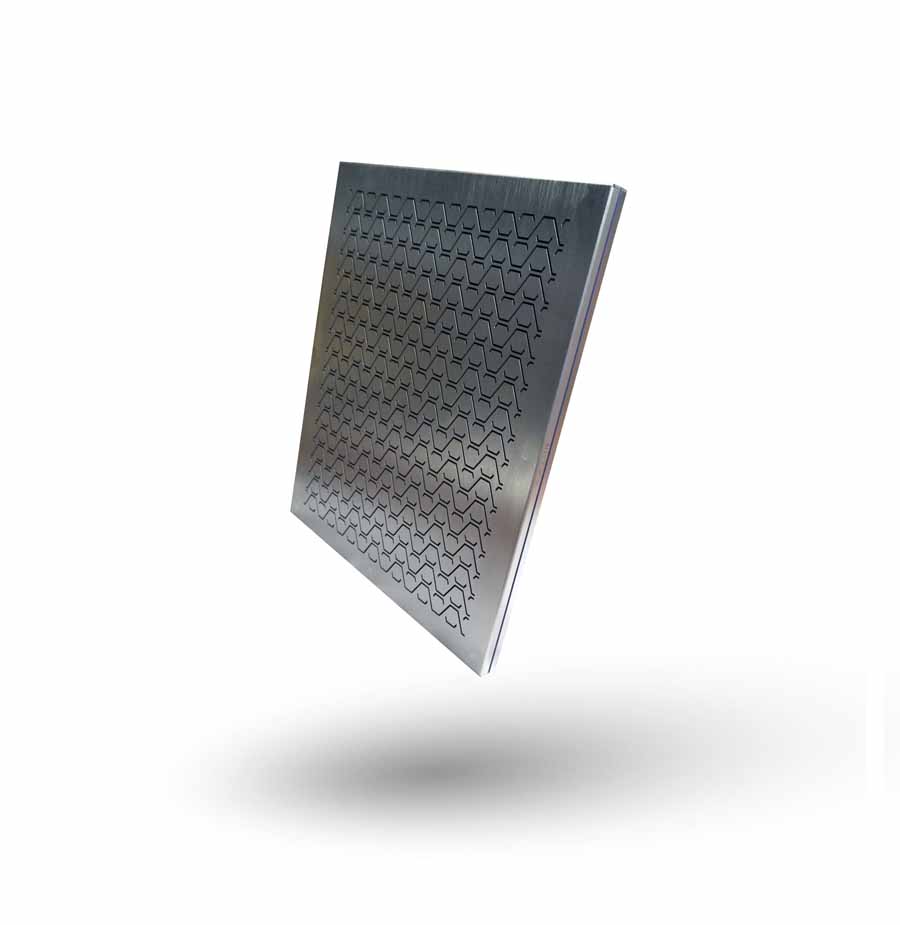
Isolation platforms have come a long way since Mission first came out with its Isoplat back in the early 1980s, and the concept of putting your HiFi items on a platform that strives to: a) isolate the delicate electronics/mechanics placed on it from vibrations and resonances that might negatively affect their performance; and b) absorb and/or provide an ‘escape path’ for those that occur within the equipment when in use has become widely accepted in the interim. While most current examples I’ve seen or used are based on some variation of the constrained-layer damping principle, Titanic Audio’s Anchor Plate employs a rather more sophisticated strategy in what the manufacturer describes as a Tri-Axis Isolation System. This approach separates vibration management into three functional areas, each targeting a different frequency range.

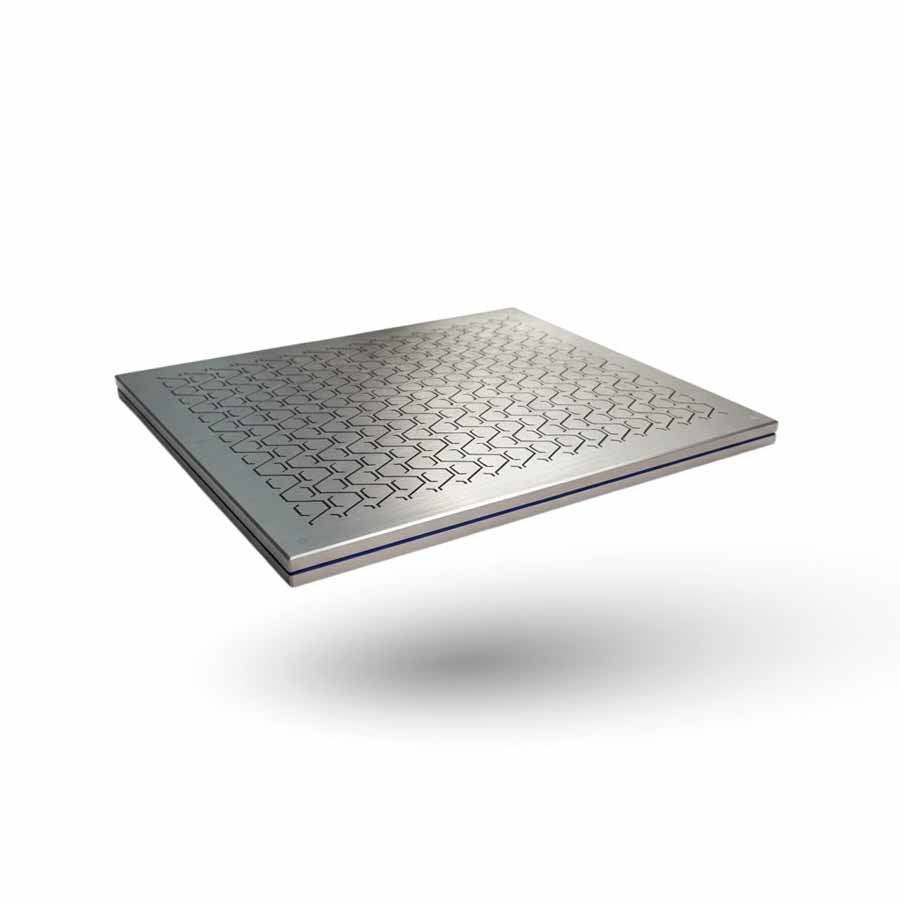
High-frequency vibration is addressed using a surface pattern known as HEX-DNA geometry, intended to disperse small-amplitude energy across the platform surface rather than transmitting it vertically. This geometry is engineered to address fast, low-amplitude vibration generated directly by audio components such as transformers, motors and power supplies. By redirecting energy laterally across the surface, HEX-DNA prevents high-frequency resonance from travelling directly downwards into the support structure. The constantly changing contours are meant to disrupt standing waves, reduce resonance build-up and encourage rapid energy decay, with a view to improving clarity, focus and low-level detail. HEX-DNA is also applied within the upper layer of the internal core, ensuring high-frequency vibration is addressed both at the point of entry and within the isolation system itself.
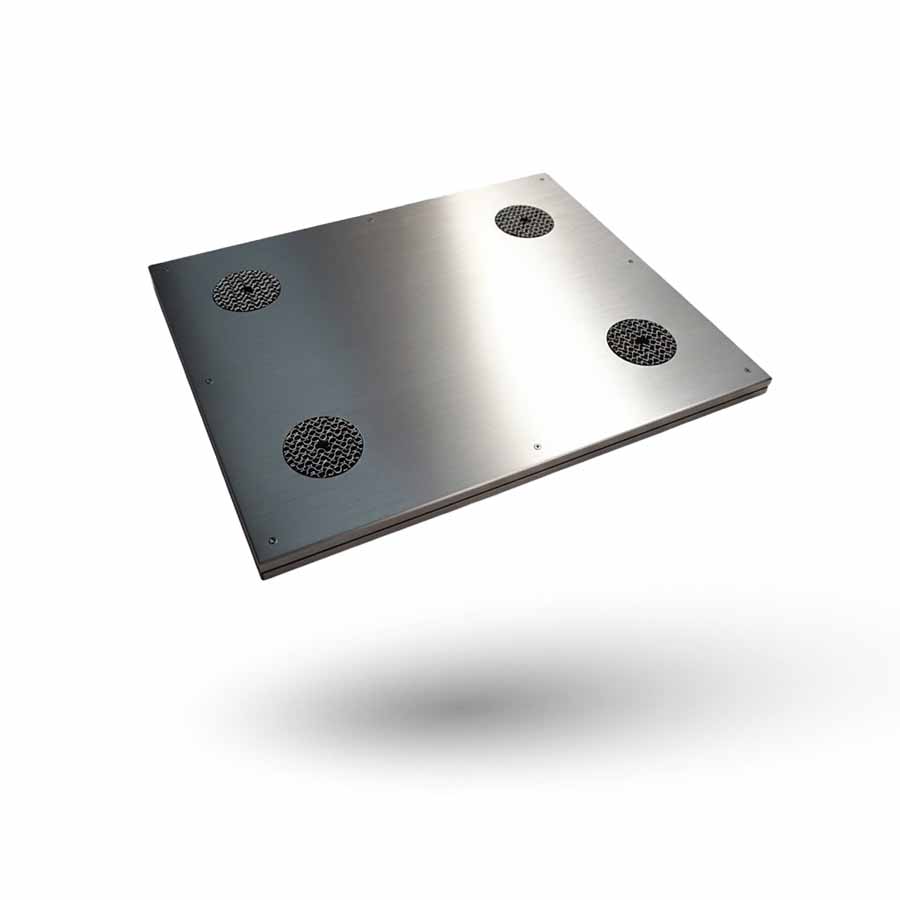
Low-frequency vibration carries the greatest energy and is the most difficult to control. To manage this, the Titanic Plate uses a system of spring-loaded hexagonal suspension pins supporting the internal isolation core. Each pin allows controlled vertical movement while expanding laterally under load. This converts vertical vibration into distributed lateral energy within the surrounding core, where it can be dissipated efficiently. By sharing the mechanical load, the suspension pins prevent over-compression of the isolation core and ensure consistent performance across a wide range of component weights — without bottoming out or becoming overly compliant. Hence, the manufacturer does not state a minimum or maximum weight for audio components placed on the platform for it to work optimally.
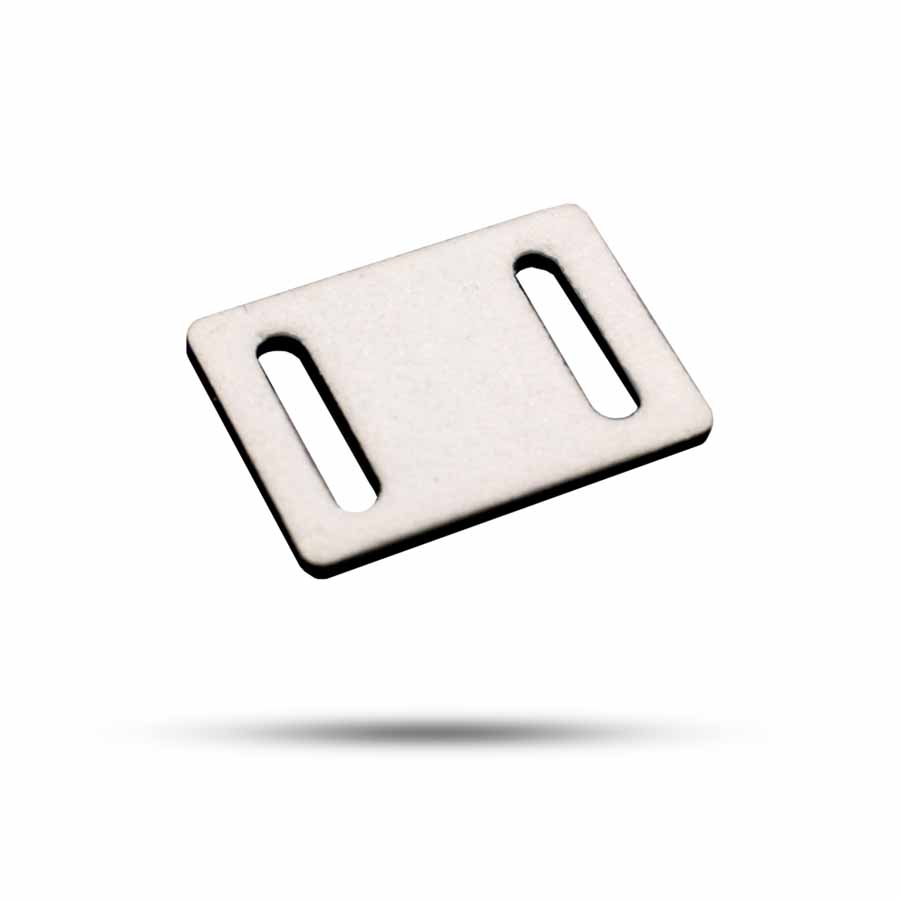
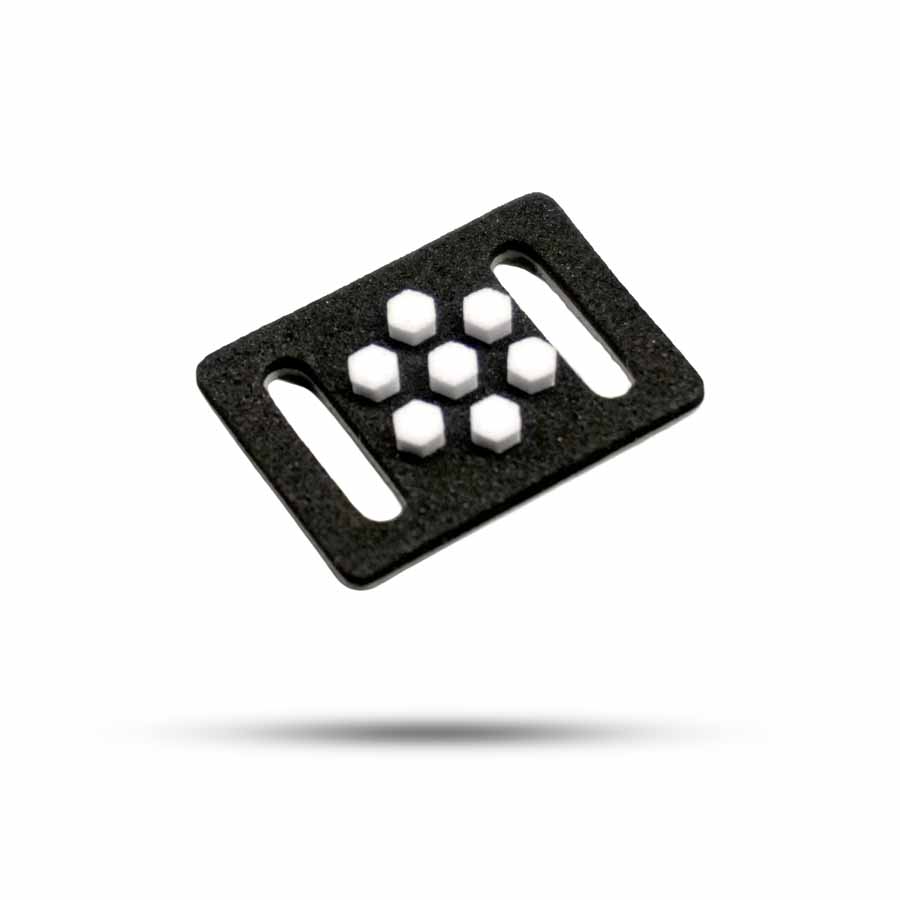
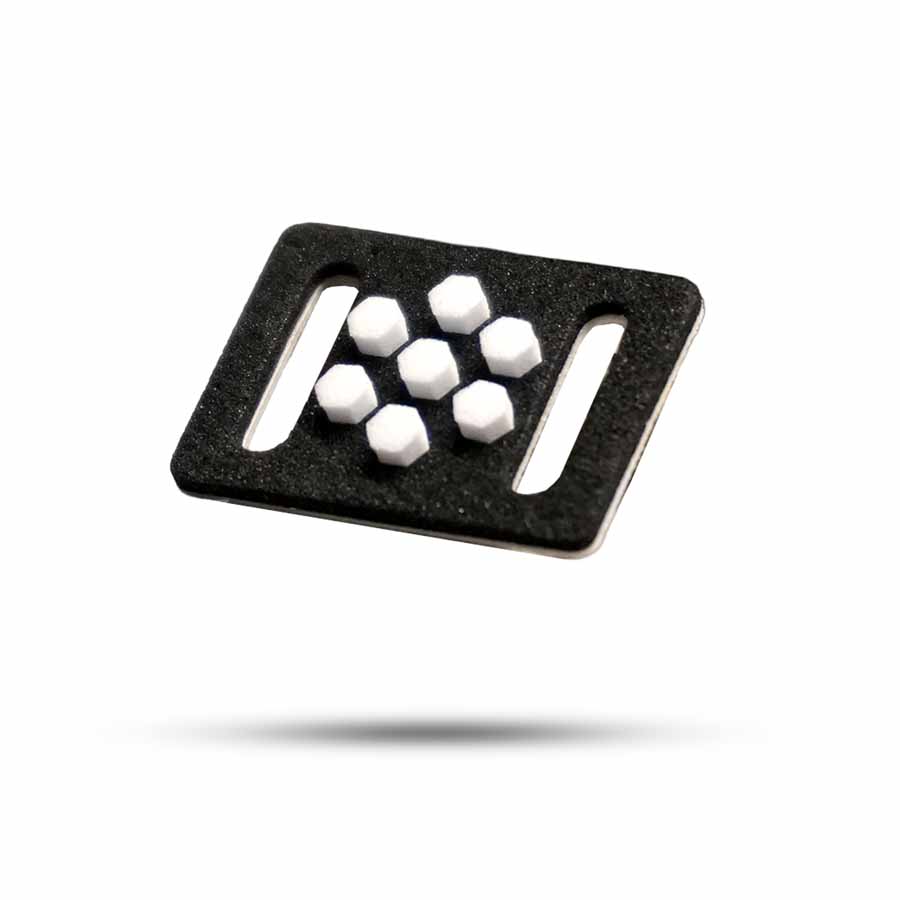
The Catalyst Cartridge Stabiliser is intended to reduce the transfer of unwanted vibration without altering cartridge alignment or tonearm geometry. Its construction combines a rigid polymer mounting layer with a viscoelastic isolation core. The rigid layer is intended to maintain accurate mechanical alignment, while the internal layer is designed to reduce the transmission of vibration from the tonearm and mounting hardware into the cartridge body.

BUILD AND FEATURES OF THE TITANIC AUDIO ANCHOR PLATE AND CATALYST CARTRIDGE STABILISER
The Anchor Plate comes in a single size that accommodates the majority of regular-sized components and turntables — in fact, its surface dimensions are within millimetres of those of the Rega Planar 3 I ended up using it with — and it adds very little height, being less than an inch thick and resting on four ‘sticky pads’, which, despite being only a millimetre or two thick, add a degree of resonance control by themselves, rather than footers. This low-profile design makes the platform, which sports an attractive brushed-metal finish, very easy to integrate into a rack or furniture, being unobtrusive and classy-looking. It can also be used to support equipment like power amplifiers sitting directly on (solid) floors. The hexagonal pattern cut into the upper surface looks intricate, but is supported well enough by the core underneath not to sag under the weight of heavy equipment placed on small feet. I guess with the once-popular cone-shaped accessory feet placed under equipment, you might want to make sure that the pointy ends are resting on a surface part rather than a void, and there would be a risk of leaving tiny dents in the metal — this is not supported by actual experience, though. As you would expect at a not-insubstantial (but also far from unreasonable) 500 quid or 650 euros, the build and finish of the Anchor Plate are very good indeed; however, those who judge the value proposition of an equipment platform on its size and weight are likely to be disappointed.
The latter, of course, applies to the Catalyst even more, as it is small enough (even when still in its packaging) that one should take care not to lose it (the instruction leaflet that comes with it also tells you not to consume it, in all caps) and is, by design, made from a high-tech but, to the uninitiated, insubstantial-feeling, ‘rubbery’ material mix: a high-modulus polymer layer on top of a viscoelastic isolation core, with seven white hexagonal ‘dots’ sticking through the surface of the former. These should face the cartridge body when installed. As the Catalyst adds about three millimetres to the height of the cartridge, you might need to find longer screws to remount the cartridge, and a reset of the tonearm’s vertical tracking angle (i.e. raising the tonearm at its mounting base) is mandatory. The Catalyst will work with the vast majority of tonearms and cartridges; however, arms with very ‘reduced’ headshells (such as the Acoustic Signature TA-1000 in my small collection of arms) that only support the Catalyst on a small part of its surface and/or those that are designed to incorporate a cartridge resonance-control strategy of their own (like the Nelson Hold headshell supplied with the Viv Labs Rigid Float arms) won’t be likely candidates.
SETUP AND USE
I chose to use the Anchor Plate and Catalyst as a package for a small project: take a Rega Planar 3 turntable, which had already been equipped with the full factory upgrade package — external power supply/motor control unit, upgraded drive belt and tungsten tonearm counterweight — sitting on a regular sideboard rather than a dedicated audio rack for reasons of space and aesthetics, as far as it would go under these conditions. Why the Planar 3 and not some super-high-end record-playing system? Well, for starters, it’s a known quantity, having sat unchanged at the top of its class for the past decade and been sold in the many thousands during that period. Being of a stiff and lightweight design with no specific means of isolation beyond the three hollow rubber feet, not only was there nothing to potentially interfere — positively or negatively — with the way the platform functions; it also stood to reason that the otherwise fairly highly developed Rega, known for its ability to convincingly transport the timing, dynamics and emotional impact of music rather than being particularly adept at the audiophile ‘niceties’ such as extreme resolution, a massive soundstage with pinpoint imaging within, and authority in the lower registers, would benefit from an extra layer of isolation from its surroundings, more so than a 60-pound mass-loaded leviathan or a deck of a particularly sophisticated suspended design. Likewise, the RB330 tonearm is a straightforward and fundamentally correct design, majoring on the structural integrity of its single-piece cast-aluminium tube and general simplicity rather than pretending to be all too clever in terms of resonance control, which means a cartridge isolation device can potentially do a lot of good without compromising anything. As Rega favours a mechanically solid connection of the tonearm to the turntable plinth over adjustability, there is no way to set vertical tracking alignment other than by inserting a spacer between the plinth and tonearm base. For this purpose, Rega offers clever two-piece spacers (which means you can loosen the screws and insert both parts from the front and rear rather than having to remove the tonearm, including the cable) in 0.5 mm increments; therefore, an extra 3 mm spacer was inserted to compensate for the extra height from installing the cartridge isolator. A Hana ML MC cartridge was used for the test, which is normally considered a bit above the Planar 3’s pay grade, but again this is a well-known quantity, and we wanted to know how far we could take this deck in sonic terms, anyway…
THE TITANIC AUDIO ANCHOR PLATE
THE TITANIC CATALYST CARTRIDGE STABILISER
SOUND QUALITY
Does it work? Hell, yeah! In short, the combination of Anchor Plate and Catalyst takes the best aspects of the Rega package – its ability to provide structure to the music in terms of temporal, tonal and spatial cohesion, and present it in an involving and enticing way – and runs with it, to the point that, in pure musical terms, decks from a class or two above have a hard time justifying their price tags and greater visual impact on their surroundings. What those bigger, more expensive decks usually do is add scale, authority and a greater sense of stability, which tends to bring everything more into focus, with deeper silences between the notes (the (in)famous, oft-cited ‘blacker backgrounds’), and sheer physical impact when we go another couple of spots up the price and performance ladder. The Titanic Audio combo allows the Planar 3 to bridge that gap to a large extent, bringing a sense of ‘grown-upness’, a higher level of precision and focus, and a more powerful and better-defined low end, without curbing its youthful enthusiasm. The higher registers become smoother and more informative at the same time; the overall impression is one of a clearer, more ‘certain’ and self-effacing quality that allows you to get deeper into the music because your brain is less occupied subconsciously with making sense of the sound. And isn’t that what this whole HiFi lark is (or should be) all about?
QUIBBLES
None, really; these are well-thought-out products that do what they say on the tin, are largely intuitive to set up and use, and don’t draw attention to themselves visually or functionally. To the uninitiated, the cartridge isolator might not look like a hundred-quid product (but what does these days?) – the sonic benefit, however, might well be greater than that of putting an extra hundred quid into a cartridge purchase…
CONCLUSION
As tested as a package for use with a turntable, these products are an easy recommendation, providing a cumulative beneficial effect that goes well beyond the investment. As the Anchor Plate is engineered as a universal product for use under any kind of equipment you care to name, its cost/benefit ratio needs to be judged on a case-by-case basis — short experiments with different items indicate that you are unlikely not to get improvements along the same lines as the above with anything you place on it, but it stands to reason that, for instance, CD transports or valve phono preamplifiers will be more susceptible to vibrations and resonances than, for instance, solid-state gear built into massive, solid, elaborately machined and resonance-proofed enclosures on proprietary isolation feet. Luckily, it takes just a few seconds to place the isolation platform under a component and see for yourself. Meanwhile, I would consider the combo as tested an essential upgrade for Rega and similar turntables and, in that case, a Reviewers’ Preference award would be in order.
AT A GLANCE

Build Quality And Features:
Slim, smart appearance of the Anchor Plate, unobtrusive in use, with build and finish well beyond reasonable criticism
Sound Quality:
The more susceptible to vibrations a piece of equipment is, the larger the benefit – but there is always a benefit: it structures and brings the music into focus without squishing the life out of it in any way
The Catalyst simply gets more from whatever combination of tonearm and cartridge you use, provided the headshell provides a stable basis for it
Value For Money:
Given that isolation platforms range from the low three figures up to deep into four figures (or five, if you add ‘active’ platforms into the mix), you get a lot of sophisticated resonance-control technology for £500. As a package for turntables, the Anchor Plate and the Catalyst cartridge isolator bring a big improvement at a very reasonable cost. The cost/benefit ratio for the Anchor Plate naturally depends on what you put on top of it – if it’s a £100 amplifier or a very basic turntable, you might want to spend those 500 notes on a better one to begin with… but even then, you might want to try it and be surprised (there’s a €32.90 DVD player looking at me now, which has seen off some very expensive gear used as a CD transport – it might not be so mad to try the Anchor Plate with that – can we have a half-sized version, please? …)
We Loved:
The modest and practical dimensions of the Anchor Plate, the build and finish of both products, the sophisticated resonance-control technologies speaking to our inner nerd, and the sonic improvements.
We Didn’t Love So Much:
Not having a stack of Anchor Plates to do an entire system (or two)! The Catalyst, in theory, fits between any headshell and cartridge, but in some cases (the aforementioned Viv Labs Rigid Float), the aesthetics and functional value might, at the very least, be compromised.
Elevator Pitch Review: Isolation platforms are a popular way of keeping harmful vibrations away from, or draining them from, your HiFi gear, and for good reason. Titanic Audio’s Anchor Plate uses a sophisticated three-tier isolation system within a practically sized, well-finished and versatile package that structures and organises the sound from your system, bringing things into better focus with a more open soundstage and a deeper silence between the notes, without robbing the energy from it in any way. Combining the Anchor Plate with the Catalyst cartridge isolator makes for a strong turntable upgrade package, the sonic benefits of which go well beyond the investment.
Price: Anchor Plate: £500/€650, Catalyst £100/€650

Eric van Spelde
SUPPLIED SPECIFICATIONS
Anchor Plate: Size: 440 x 360 x 25 mm
Weight: 1.5 kg