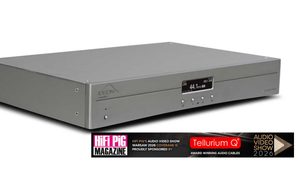

Eversolo DAC-Z10 DAC
EVERSOLO DAC-Z10 REVIEW
Eversolo DAC-Z10 is the £1940 flagship DAC from this popular brand. It boasts a fully balanced architecture, pre-out, and a few other novel features. Oscar Stewart sees how it stacks up in this review for HiFi PiG.

BUILD AND FEATURES OF THE EVERSOLO DAC-Z10
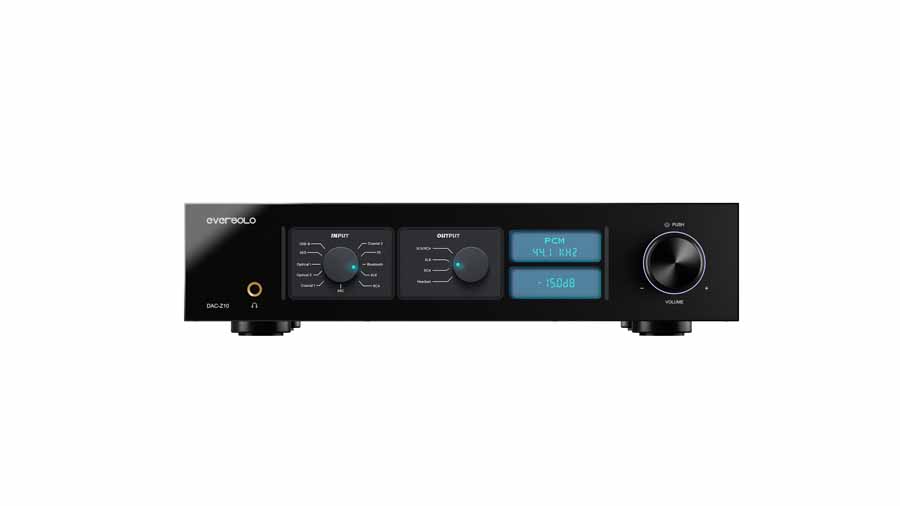
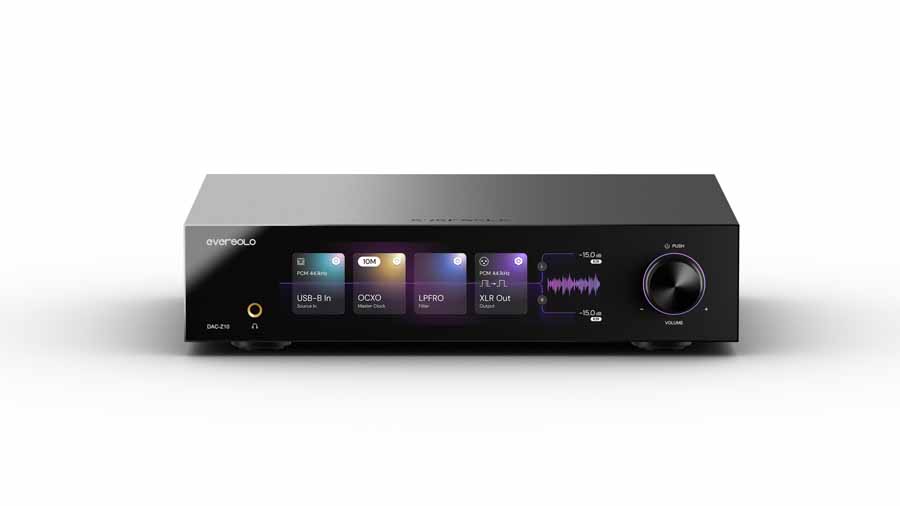
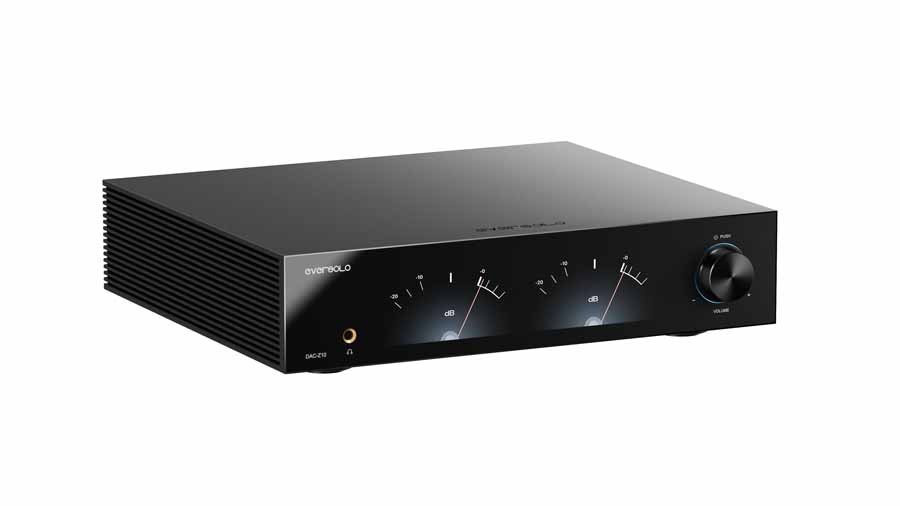
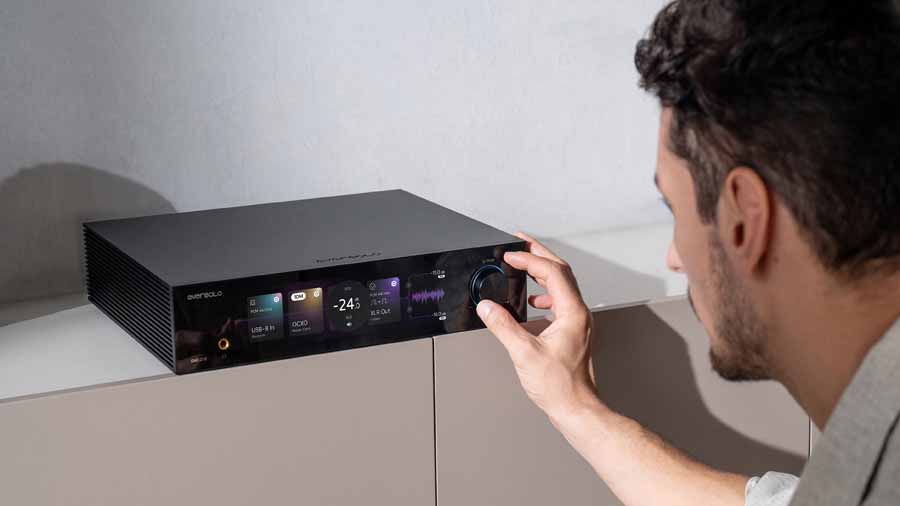
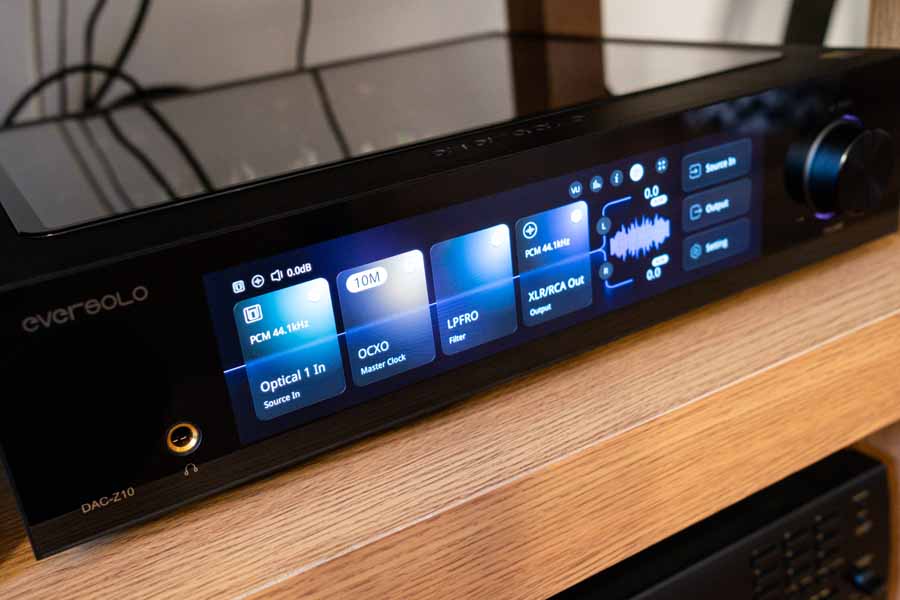
Eversolo know how to make a well-designed device, and the DAC-Z10 is no different. The aluminium casing feels premium and is well put together, the large front panel houses a responsive and crisp touchscreen, and the front encoder is a pleasure to use. There is a remote included in the box which gives you all the usual functions. One thing I really liked about the remote is the fact that it is rechargeable via USB-C.
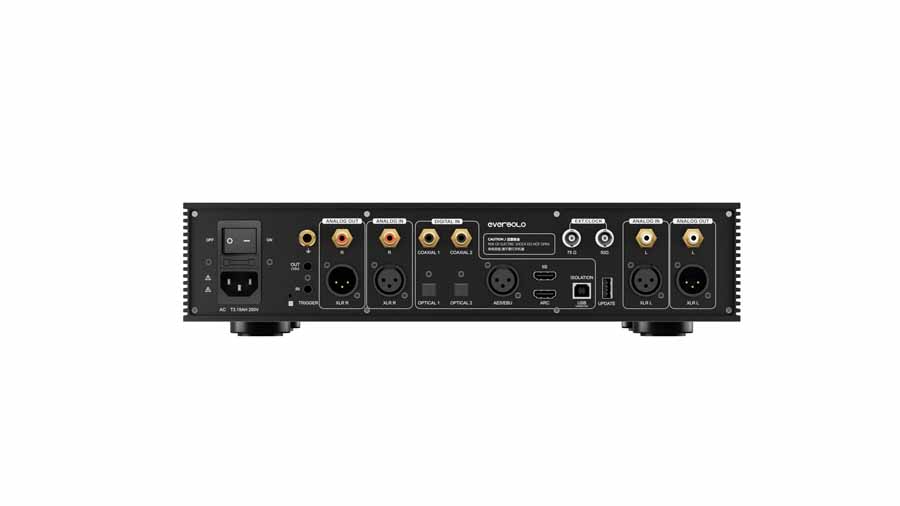
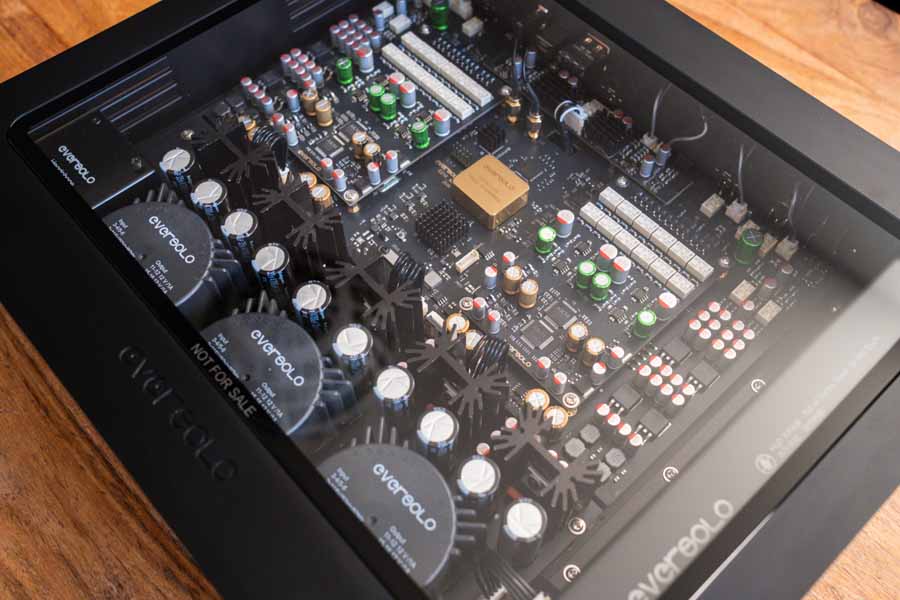
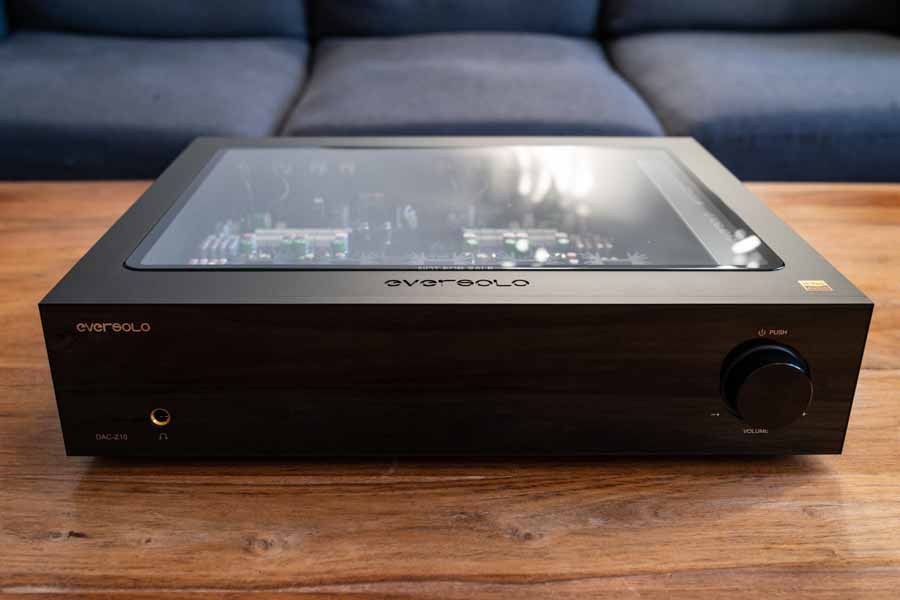
Around the back, you have a plethora of inputs/outputs, more on those later, all of which use high-quality sockets, and there is no play anywhere on this device. Please note that as this is a show sample, it has an acrylic panel on the top that retail devices would not have (a shame as the internals look so good). There are no issues whatsoever with the DAC-Z10, it is solidly built and made to last.










Feature-wise, though, it has lots to offer. We should start with what Eversolo call their FIA – Fully Isolated Architecture, which separates out the analogue and digital circuitry with individual boards and power supplies. These aim to ensure the highest possible signal purity, with three individual linear power supplies, powering the Left channel, the system, and the Right channel independently.
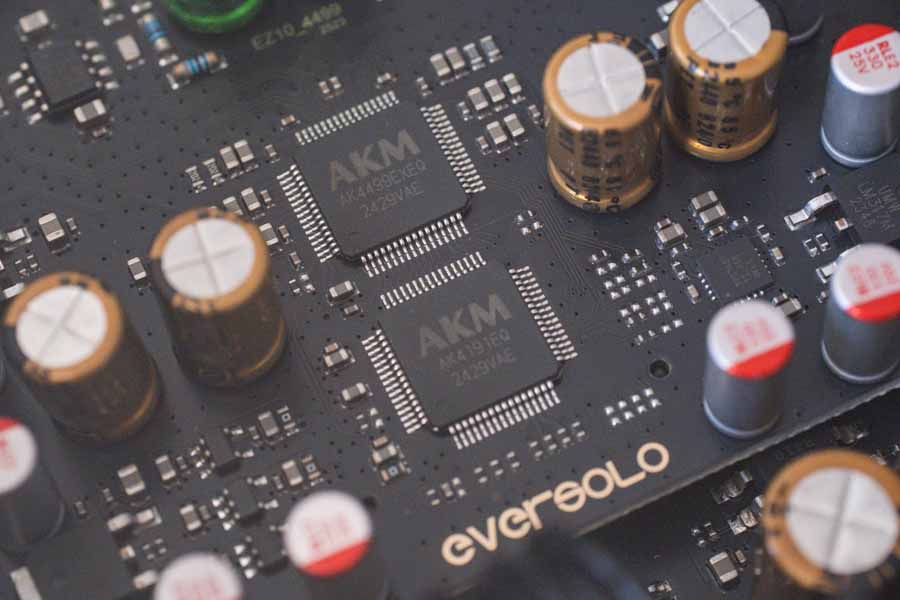
This also means Eversolo are using dual DAC chips, with an AKM AK4191 / AK4499 combo per channel, increasing channel separation.
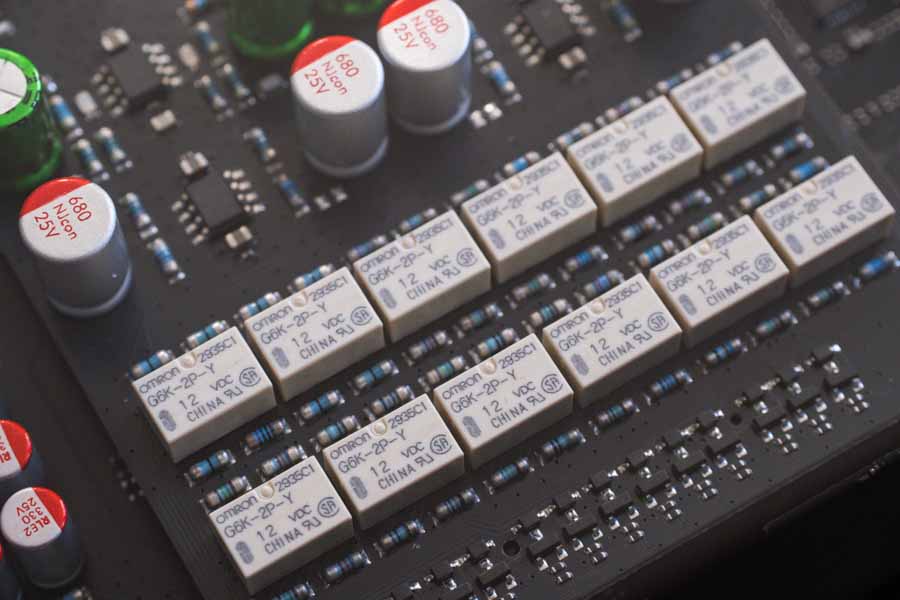
On the output side, Eversolo have opted for R2R volume control on the DAC-Z10, which preserves the original signal at all volume levels.

There is a fully balanced pre-amp in the DAC-Z10, so not only do you have digital inputs (USB, II2S, Coaxial, Optical, eARC and AES/EBU), you also have both balanced and single ended analogue inputs – making this a full featured DAC/Pre-Amp. It does seem to be the case that analogue inputs are digitised prior to routing out.
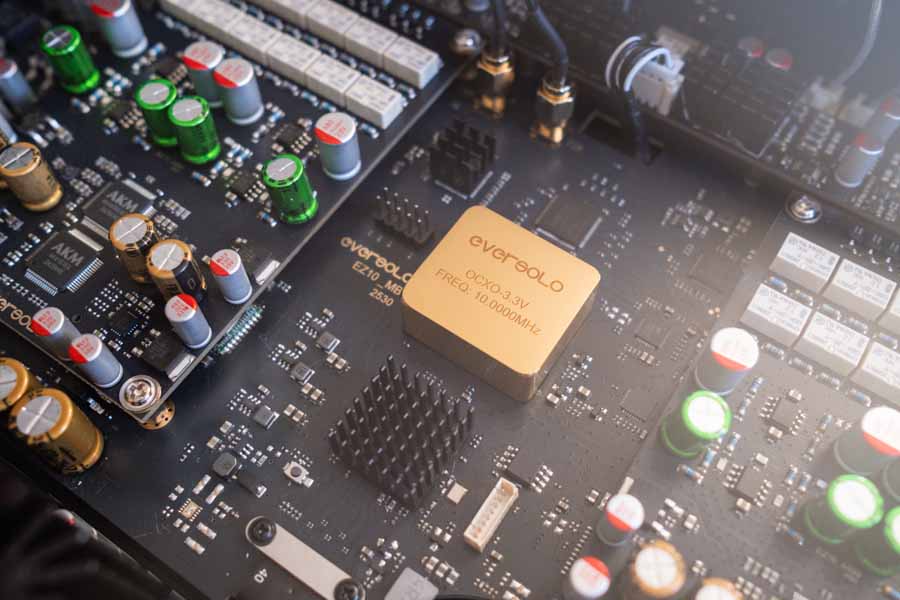
Eversolo are using an OCXO temperature-controlled crystal oscillator and PLL tech for improved clock reconstruction, and there is support for an external clock on the rear via BNC connectors.
There’s a built-in FPGA that shapes the data and refines the clock, this can be enabled or disabled in the menu. The HDMI ARC input can be toggled between ARC or eARC in the menu system too. There is also L/R balance control in the menu, which is useful.
On the rear, you have a grounding post for lowering the noise floor should you have any grounding issues in your setup, along with Trigger in and out for ease of placement in a system using a 12v trigger system (something I use). There is a 6.3mm headphone output socket on the front, and the internal headphone amp can output 1W at 16 Ohms and 32Ohms – which makes this a half-decent headphone amp. There is Bluetooth built in as a source too, making it convenient for when friends pop over and want to listen to music through your system.
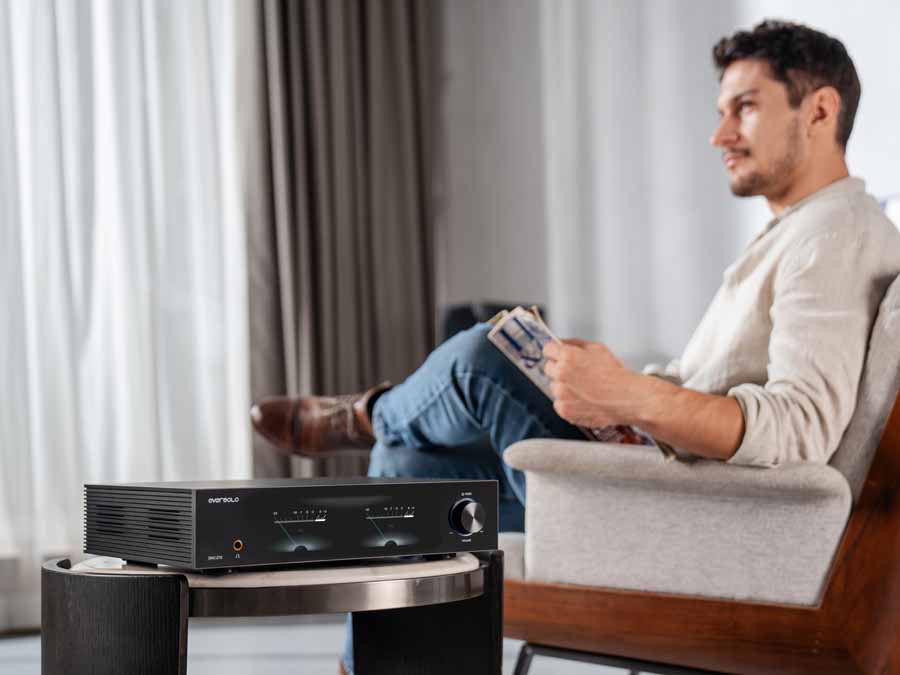
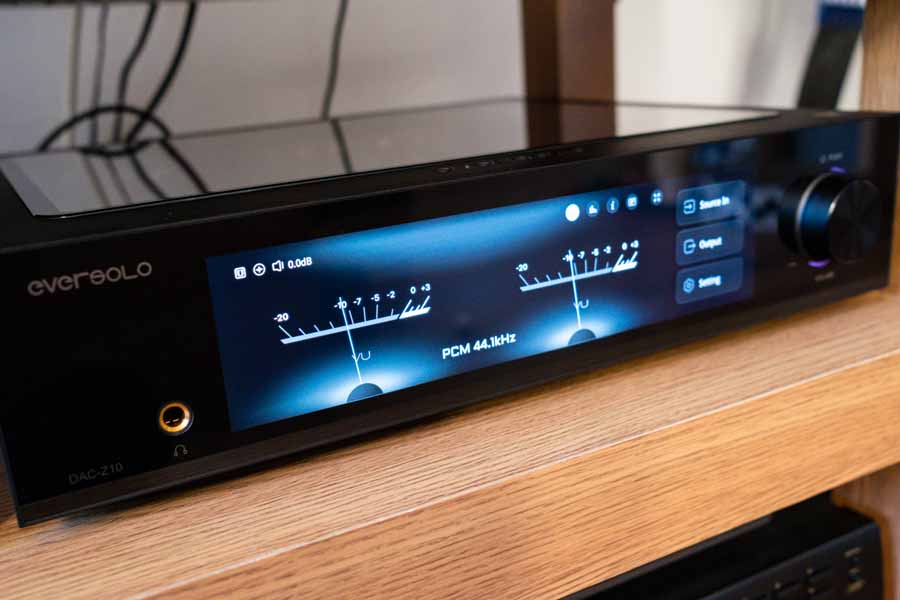
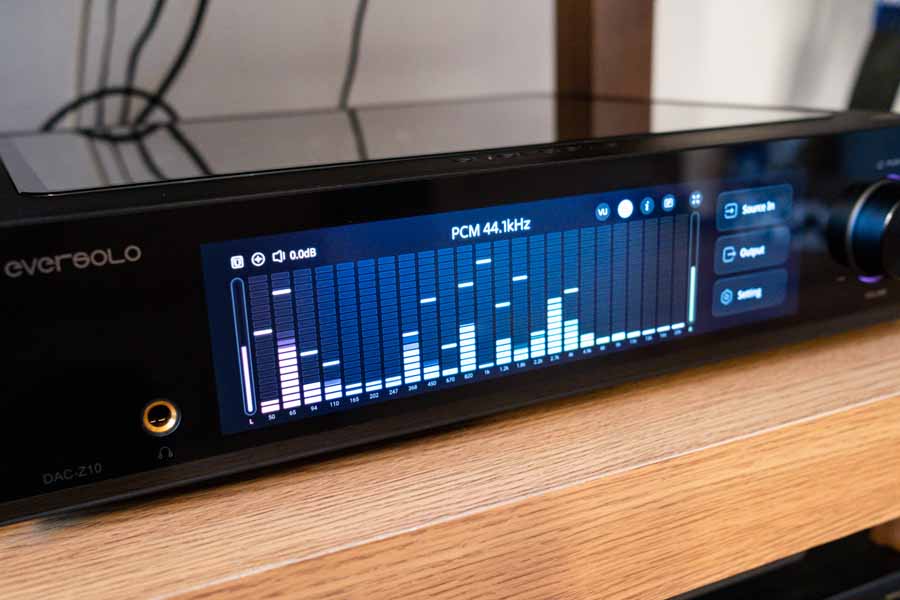
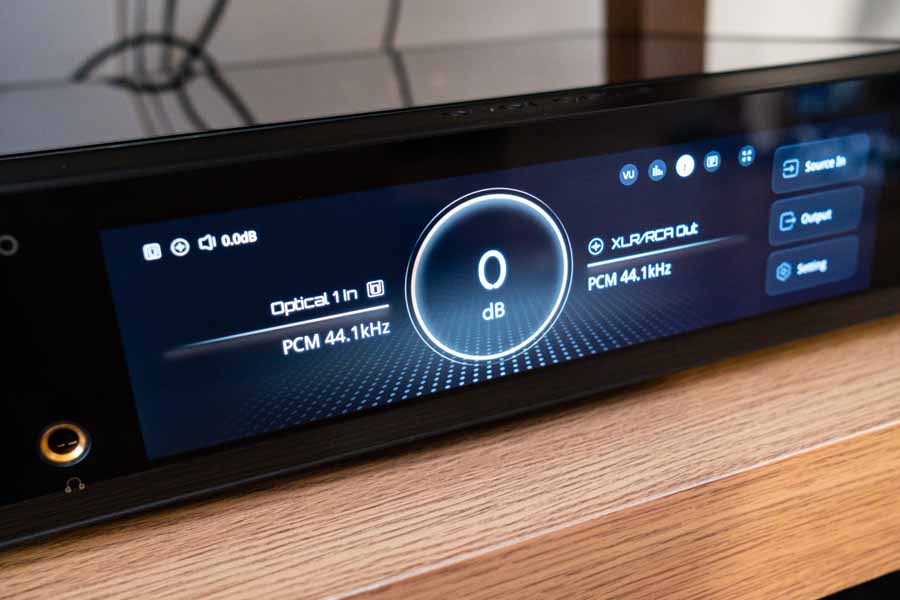
As you would expect from Eversolo, you get multiple skins for the display on the front, VU meters, Spectrum analyser, info etc… You can also have the screen time-out after a certain time, useful for people who use this with a TV and don’t want the distraction of a screen. You can also change the colour of the light ring around the volume knob, with quite a few options to choose from.
Overall, the DAC-Z10 has a lot of both useful and fun features, allowing for plenty of customisation, enabling you to set it up just how you want it in your system. One thing I found missing is auto-source switching, something I would find very handy here; this isn’t something many products do, though.
SETUP AND USE
I’ve been using the DAC-Z10 in my main system using a Cambridge Audio MXN10 streamer feeding the DAC-Z10 via Optical, Roon Rock (NUC8 i7 – fanless) via USB, and LG TV via HDMI eARC as sources. This has then been fed out via XLR to my reference Keces S4 / S300+ pre-power combo, into my Alchris Audio TX-1 speakers. I have also used the RCA output into the Cayin HA-6A MKII headphone amp, and I did also test the 6.3mm headphone output on the DAC-Z10 with the Meze 109 Pro.
SOUND QUALITY
The first thing I noticed when putting this in my setup was that it is a very clean-sounding DAC. There is a lot of detail and resolution here. Now, I’ve been using the Matrix TS-1, which is a little more musical, so it took a little time for my ears to adjust to the Eversolos DAC’s sound signature.
Starting with We Are Life by Emarosa. Jonny Craig’s vocals are pitch-perfect here and cut through the mix with impressive clarity. This is a DAC that leans more on the analytical side of sound with great separation and control over the mix. The kick drums still have adequate punch and depth, whilst there are clear transients and plenty of shimmer and air in the treble. It manages to paint a wide and spacious sound in terms of its staging, with very accurate L/R positioning.
On to Love Somebody Else by George Ezra, a little more mainstream, yet a great recording nonetheless. Once again, the DAC-Z10 shows its ability to deliver impeccable detail whilst at the same time delivering an articulate and full bass beat. It’s still not what I would call an emotional or euphoric-sounding DAC, yet what it does is deliver accuracy. And in this respect, it delivers exactly what a good DAC should: it’s neutral and removes itself from the signal chain as much as possible. There is air to the strings in this song, depth to the bass, intricacies in the vocals are well-defined, and it is effortlessly clean and controlled.
Rodrigo y Gabriela – live in Japan. During Rodrigo’s Solo, there are lots of references to famous songs throughout, and the depth and body of the acoustic guitar are well presented by the DAC-Z10. Timing seems to be fantastic, and the dynamics in this track are precise and effortless. There is separation between the artist and audience, tonality is accurate, and you don’t miss a single bit of detail. This DAC is a master of fine detail retrieval, allowing you to hear every little nuance in your favourite tracks.
Okay by As It Is is a bouncy pop-punk anthem I know very well came on and through the DAC-Z10 everything is there, in its right place, yet it comes across a little more mature and controlled. Yes, this DAC lets me hear every little detail, but it does lose a little bit of that joyful musicality that songs like this need. It is impressive, the amount of insight into the recording that the Eversolo is capable of, and I am hearing things that I would normally have to strain to hear; however, depending on the system you put it in, it may sound a little too clean.


Changing it up a little, I decided to listen to Concerning Hobbits, from the Lord Of The Rings soundtrack, a great orchestral score from a fantastic film. Here is where the DAC-Z10 comes into its own, being able to accurately place each part of the orchestra within the soundstage, and the impressive detail retrieval comes through once again. Subtleties cutting through, whilst still having an underlying sense of body and weight to the sound. This is a track that highlights what this DAC does well, in terms of accuracy and separation.
Moving on to using the DAC-Z10 with headphones, the Meze 109 Pro are not exactly hard to drive yet their clarity does help when it comes to testing kit like this. The aforementioned clarity and control do feed through to the headphone output, yet the 109s don’t sound clinical, and there is good impact and body to the sound from the headphone output here. Take Open Car by Porcupine Tree, the bass beat is driving and dynamic, the guitars are well placed and separated from the vocals, whilst the treble has great clarity and air, teetering on what some may find bright (which can be a trait of these headphones). Overall, though, the headphone amp section does justice to these headphones and is more than at home driving the slightly easier-to-drive headphones that owners are likely to pair with it.
I have also been using the DAC-Z10 for TV duties, be it films or series, and I have not had any issues when using the HDMI input. The sound is spacious and clean, which is a benefit when using it for this kind of application.
I did test the FPGA shaping; however, in my system, both with headphones and through my speakers, the effect wasn’t audible to me. It may be one of those things that if you leave it on long enough, that when you turn it off, the audibility may be noticeable. In my testing, though, I didn’t find it to make any appreciable difference.
The DAC filters are always going to make a very subtle difference to the sound, however this is always going to be a clean, and precise DAC, no matter the filter you choose.
QUIBBLES
May be “too” clean, depending on your system.
CONCLUSION
Eversolo have done a fantastic job at making a reference DAC here, and it is one of those devices that shows that implementation is everything when it comes to DAC chips. This is an exceptionally clean, detailed, and spacious DAC that is built around AKM chips, and whilst it may not be the most engaging or musical-sounding device, it converts digital signals to analogue in a very precise way.
The DAC-Z10 has plenty of features built in, a ton of inputs, and a well-thought-out design that keeps everything as clear, and separated as possible which translates to a device which excels in terms of imaging, and channel separation.
AT A GLANCE

Build Quality And Features:
Solid build, as expected from Eversolo
Tons of inputs and features
Sound Quality:
This DAC has a more reference sound, that is precise, clear, and detailed
It is spacious, and exceptionally well separated
Value For Money:
Whilst this isn’t the cheapest DAC out there, you can tell some clever design has gone into this model and the parts are very high quality
So, whilst it’s not a bargain, you certainly don’t feel short changed when looking, and listening to it
We Loved:
The UI and overall build quality
The utterly clear and clean sound quality
We Didn’t Love So Much:
Depending on your system, you may want something with a little more musicality
Elevator Pitch Review: Eversolo have shown time and time again that they know how to make a great product, and the DAC-Z10 is no different. It has some very clever design gubbins that lead to it having a more neutral and slightly analytical quality to its sound. It’s a brilliant bit of reference kit and will do well in many systems. If you want something that isn’t going to add any flavour of its own, then this is the DAC for you. The numerous inputs and outputs further increase the flexibility of the DAC-Z10, and it even has a decent headphone output. There is a lot to love about this DAC.
Price: £1940

Oscar Stewart
SUPPLIED SPECIFICATIONS
Basic Parameters:
- Model: Eversolo DAC-Z10
- Display: 8.8″ IPS
- Chassis Material: Aluminium alloy
- Main Processor: DCP8568
- DAC: Left Channel: AK4191+AK4499, Right Channel: AK4191+AK4499
- Audio Processor: Multi-core USB audio processor
- OPA Chip: OPA1612
- Power: Triple ultra-low noise linear power supplies
Audio Inputs and Outputs:
- Bluetooth Audio Input
Qualcomm QCC5125 Bluetooth module, Bluetooth version: BT5.0; supports SBC/AAC Bluetooth audio protocols
- USB-B Audio Input
Compatible with Windows 10 and above, macOS, Android, and iOS; supports up to Stereo DSD512 / PCM 768kHz 32Bit
- IIS Input
Supports 8 mode configurations, up to Stereo DSD512 / PCM 768kHz 32Bit
- AES/EBU Input
Up to Stereo PCM 192KHz/24Bit / DSD64 DoP
- Optical Audio Inputs *2
Up to Stereo PCM 192KHz/24Bit / DSD64 DoP
- Coaxial Audio Inputs *2
Up to Stereo PCM 192KHz/24Bit / DSD64 DoP
- ARC Input
Up to Stereo PCM 192KHz/24Bit
- Analog Audio Inputs
XLR (Balanced), RCA
- Analog Audio Outputs
Pre-out: XLR (Balanced), RCA; Headphone out: 6.35mm single-ended
- External Clock Input
Supports 10M/25M clock inputs with 50Ω or 75Ω impedance
- Recommended Headphone Impedance
16–300Ω (Low Gain: 16–32Ω / High Gain: 32–300Ω)